



Question: Individual Assignment: Problem Solving in Leadership GBMT 2006: Global Management & Leadership Instructor: Adam Riggio, PhD Submission Date: 7 June 2023 Instructions Read the case
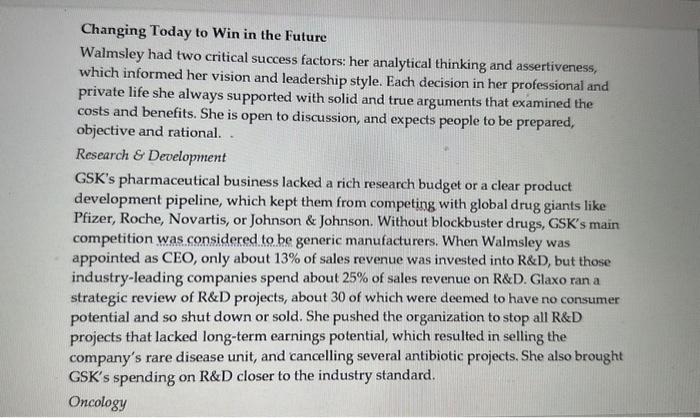
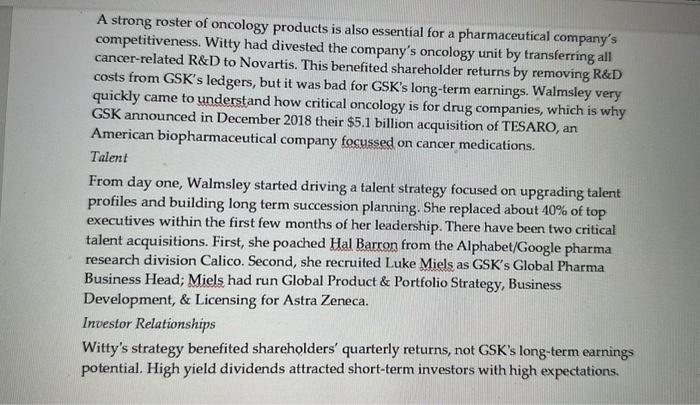
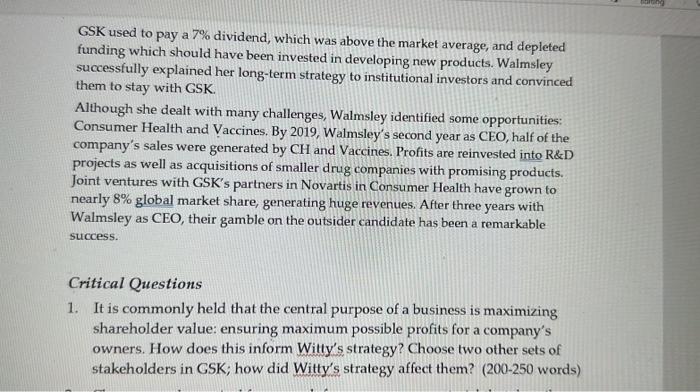
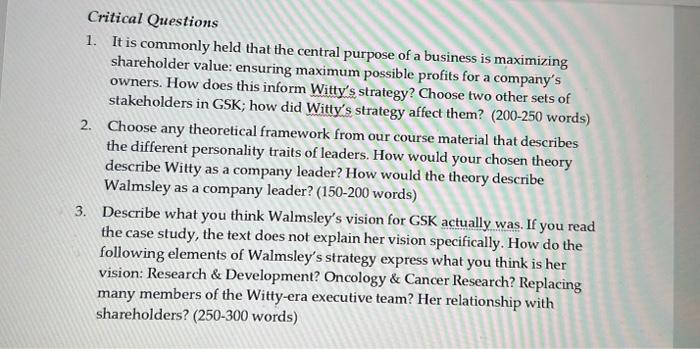
Individual Assignment: Problem Solving in Leadership GBMT 2006: Global Management \& Leadership Instructor: Adam Riggio, PhD Submission Date: 7 June 2023 Instructions Read the case below and answer the questions that follow it. The questions focus on what makes good leadership, by comparing several different theories of leadership. Use your own ideas about effective leadership and leadership's purpose in your response. You will not find everything necessary to give complete answers to the questions in the text of the case study itself. The purpose of the questions is to develop your own answer by analyzing key details in the case. You must apply the different leadership theories in our course material to your creative response to the questions. Word counts for each section are given, but will not be strictly enforced. Their purpose is to guide you in approximately how much detail and background research you need to accomplish the goals of the section well. Case for Analysis: Emma Walmsley at GlaxoSmithKline On 1 April 2017, the GSK Board of Directors appointed Emma Walmsley as the first female CEO in the company's 300 year history. Many key stakeholders doubted the decision since it was inconsistent with executive hiring practices at GSK and the UK more generally. She was the first woman to ever lead a major pharmaceutical company. Walmsley took over from Sir Andrew Witty, the man who had led GSK for almost a decade, a period that had not gone well for the company. GlaxoSmithKline's Lost Decade When Sir Andrew Witty was appointed as CEO, his profile ticked all the boxes of a successful CEO. He joined GSK as a management trainee in 1985 and he held many UK and global leadership positions within the company. It was obvious that somebody who spent 23 years of his professional life in GSK and who knows the company in and out, has a license to succeed, would win the market and would put the pharma giant back on performance course. However, on 2 July 2012, GSK pleaded guilty to criminal charges in the USA and agreed to a \$3-billion settlement. To drive performance in the largest drug market globally, GSK implemented off-label promotion practices, which was illegal in the USA. The company also bribed doctors to promote their drugs and failed to report data on user safety to United States regulators. It was the largest healthcare fraud case and the largest fine ever paid by a drug company. Another knockdown hit GSK a year later, when Chinese authorities investigated GSK's illegal practices in China. GSK had paid out bribes to doctors and hospitals to promote their own products. The company's penalty was almost $490-million, the largest corporate penalty in China's history. Four executives were arrested and spent several years in jail before eventually being deported. Witty later claimed that he knew nothing about the China fraud, but most of his focus was on improving internal processes rather than the corporate diplomacy the Chinese scandal needed. With more people openly criticizing Witty's strategy and execution, he announced a deal with another pharma giant, Switzerland's Novartis. GSK was to acquire Novartis ' global vaccines business (except for their influenza vaccines) for \$5.25-billion. Witty's plan was to create a new world-leading Consumer Healthcare joint venture with Novartis in which GSK would have majority control and an equity interest of 63.5%. GSK divested from its Oncology business in exchange for $16-billion cash, which brought in a lot of money for shareholder payouts, but left the company uncompetitive on the cancer treatment market. Taking a Risk With a New CEO GSK first headhunted Emma Walmsley to become their chief executive for Consumer GSK first headhunted Emma Walmsley to become their chief executive for Consumer Health in Europe. Nobody thought that she may eventually lead the entire firm. Her expertise was with the consumer business. She had spent 17 years at the cosmetics firm L'Oreal, holding various general management and marketing roles; her last position was head of L'Oreal's Chinese consumer business. In October 2011, she was promoted to become President of GSK's Consumer Healthcare global joint venture with Novartis. Under her leadership, the division's sales had doubled. The Board of Directors were impressed with her work on the Novartis partnership, which overshadowed whatever Sir Witty had arranged for the deal. All these achievements encouraged the board members to consider appointing her as the new CEO, despite her outsider' status. Some in the company and the business press reacted to Walmsley's appointment with shock. Not only was the new CEO of GSK a woman, but she did not have a university science degree, and her pharmaceutical management experience was only in Consumer Healthcare, and not in drug development or vaccines. Investors did not like it at all. In May 2017, just after Walmsley was appointed CEO, the British fund manager Neil Woodford sold all his company's GSK shares. He said in the press that his decision was driven by the company's disappointing results over the previous decade, but his timing was suspicious. Changing Today to Win in the Future Walmsley had two critical success factors: her analytical thinking and assertiveness, which informed her vision and leadership style. Each decision in her professional and private life she always supported with solid and true arguments that examined the costs and benefits. She is open to discussion, and expects people to be prepared, objective and rational. Research \& Development GSK's pharmaceutical business lacked a rich research budget or a clear product development pipeline, which kept them from competing with global drug giants like Pfizer, Roche, Novartis, or Johnson \& Johnson. Without blockbuster drugs, GSK's main competition was considered to be generic manufacturers. When Walmsley was appointed as CEO, only about 13% of sales revenue was invested into R\&D, but those industry-leading companies spend about 25% of sales revenue on R\&D. Glaxo ran a strategic review of R\&D projects, about 30 of which were deemed to have no consumer potential and so shut down or sold. She pushed the organization to stop all R\&D projects that lacked long-term earnings potential, which resulted in selling the company's rare disease unit, and cancelling several antibiotic projects. She also brought GSK's spending on R\&D closer to the industry standard. Oncology A strong roster of oncology products is also essential for a pharmaceutical company's competitiveness. Witty had divested the company's oncology unit by transferring all cancer-related R\&D to Novartis. This benefited shareholder returns by removing R\&D costs from GSK's ledgers, but it was bad for GSK's long-term earnings. Walmsley very quickly came to understand how critical oncology is for drug companies, which is why GSK announced in December 2018 their $5.1 billion acquisition of TESARO, an American biopharmaceutical company focussed on cancer medications. Talent From day one, Walmsley started driving a talent strategy focused on upgrading talent profiles and building long term succession planning. She replaced about 40% of top executives within the first few months of her leadership. There have been two critical talent acquisitions. First, she poached Hal Barron from the Alphabet/Google pharma research division Calico. Second, she recruited Luke Miels as GSK's Global Pharma Business Head; Miels had run Global Product \& Portfolio Strategy, Business Development, \& Licensing for Astra Zeneca. Investor Relationships Witty's strategy benefited shareholders' quarterly returns, not GSK's long-term earnings potential. High yield dividends attracted short-term investors with high expectations. GSK used to pay a 7% dividend, which was above the market average, and depleted funding which should have been invested in developing new products. Walmsley successfully explained her long-term strategy to institutional investors and convinced them to stay with GSK. Although she dealt with many challenges, Walmsley identified some opportunities: Consumer Health and Vaccines. By 2019, Walmsley's second year as CEO, half of the company's sales were generated by CH and Vaccines. Profits are reinvested into R\&D projects as well as acquisitions of smaller drug companies with promising producis. Joint ventures with GSK's partners in Novartis in Consumer Health have grown to nearly 8% global market share, generating huge revenues. After three years with Walmsley as CEO, their gamble on the outsider candidate has been a remarkable success. Critical Questions 1. It is commonly held that the central purpose of a business is maximizing shareholder value: ensuring maximum possible profits for a company's owners. How does this inform Witty's strategy? Choose two other sets of stakeholders in GSK; how did Witty's strategy affect them? (200-250 words) Critical Questions 1. It is commonly held that the central purpose of a business is maximizing shareholder value: ensuring maximum possible profits for a company's owners. How does this inform Witty's strategy? Choose two other sets of stakeholders in GSK; how did Witty's strategy affect them? (200-250 words) 2. Choose any theoretical framework from our course material that describes the different personality traits of leaders. How would your chosen theory describe Witty as a company leader? How would the theory describe Walmsley as a company leader? (150-200 words) 3. Describe what you think Walmsley's vision for GSK actually was. If you read the case study, the text does not explain her vision specifically. How do the following elements of Walmsley's strategy express what you think is her vision: Research \& Development? Oncology \& Cancer Research? Replacing many members of the Witty-era executive team? Her relationship with shareholders? (250-300 words)
Step by Step Solution
There are 3 Steps involved in it

Get step-by-step solutions from verified subject matter experts