Question: INFO FOR THE ASSIGNMENT: INFO FOR THE ASSIGNMENT: Public Sector Supply Chain Management Public Sector Supply Chain Management colleague running by What happened? and got
INFO FOR THE ASSIGNMENT:
INFO FOR THE ASSIGNMENT:
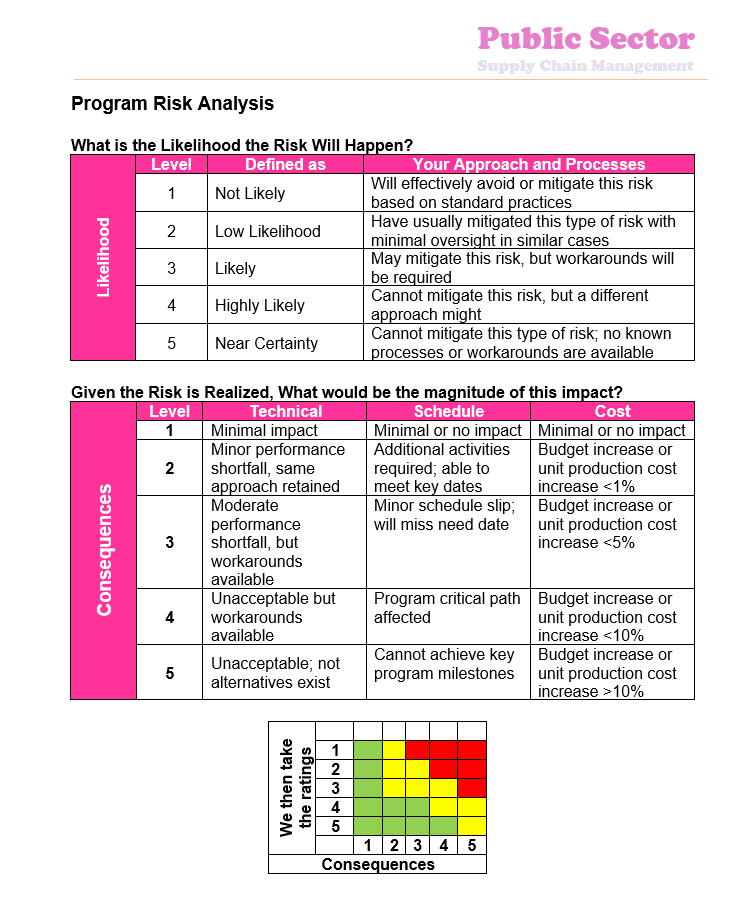
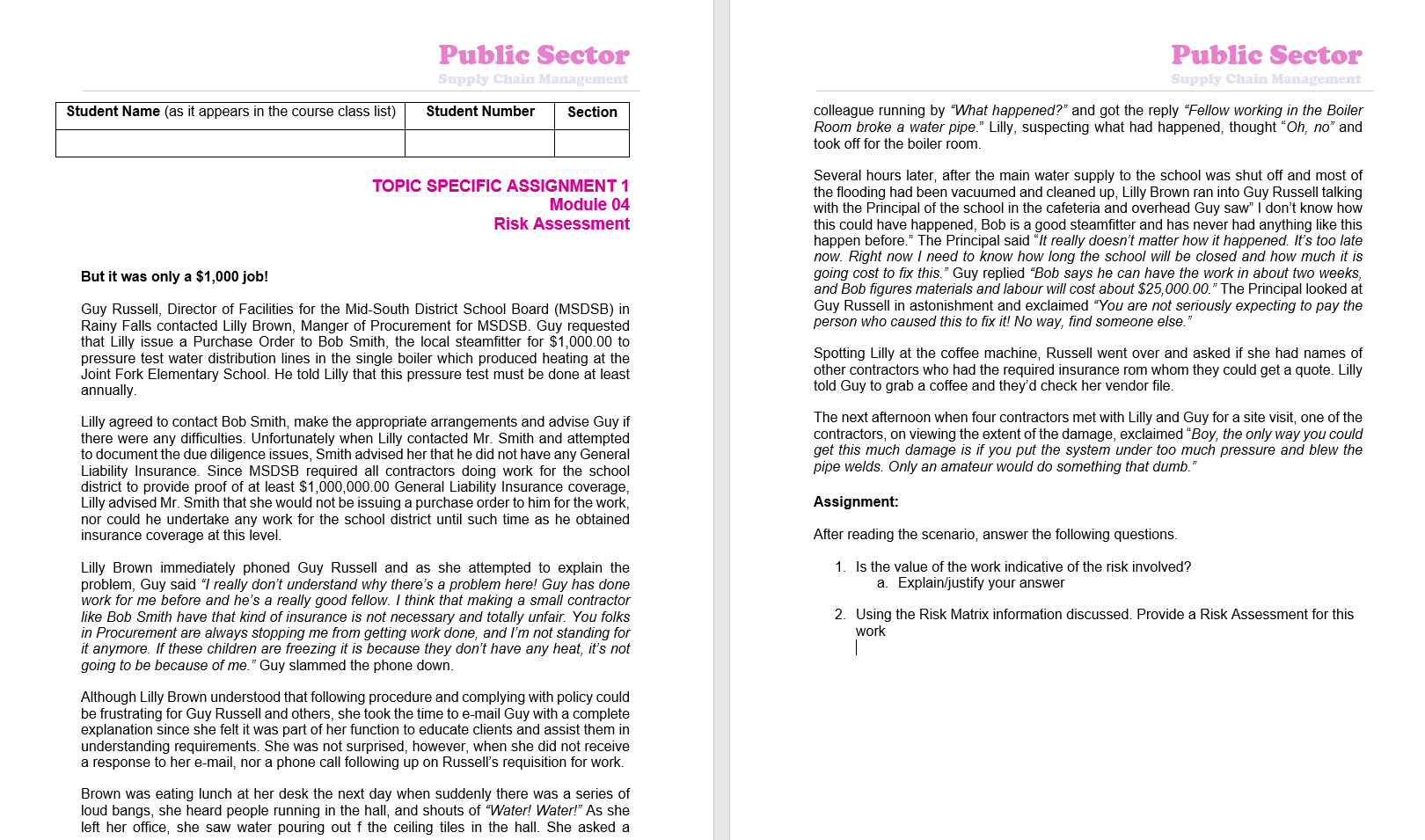
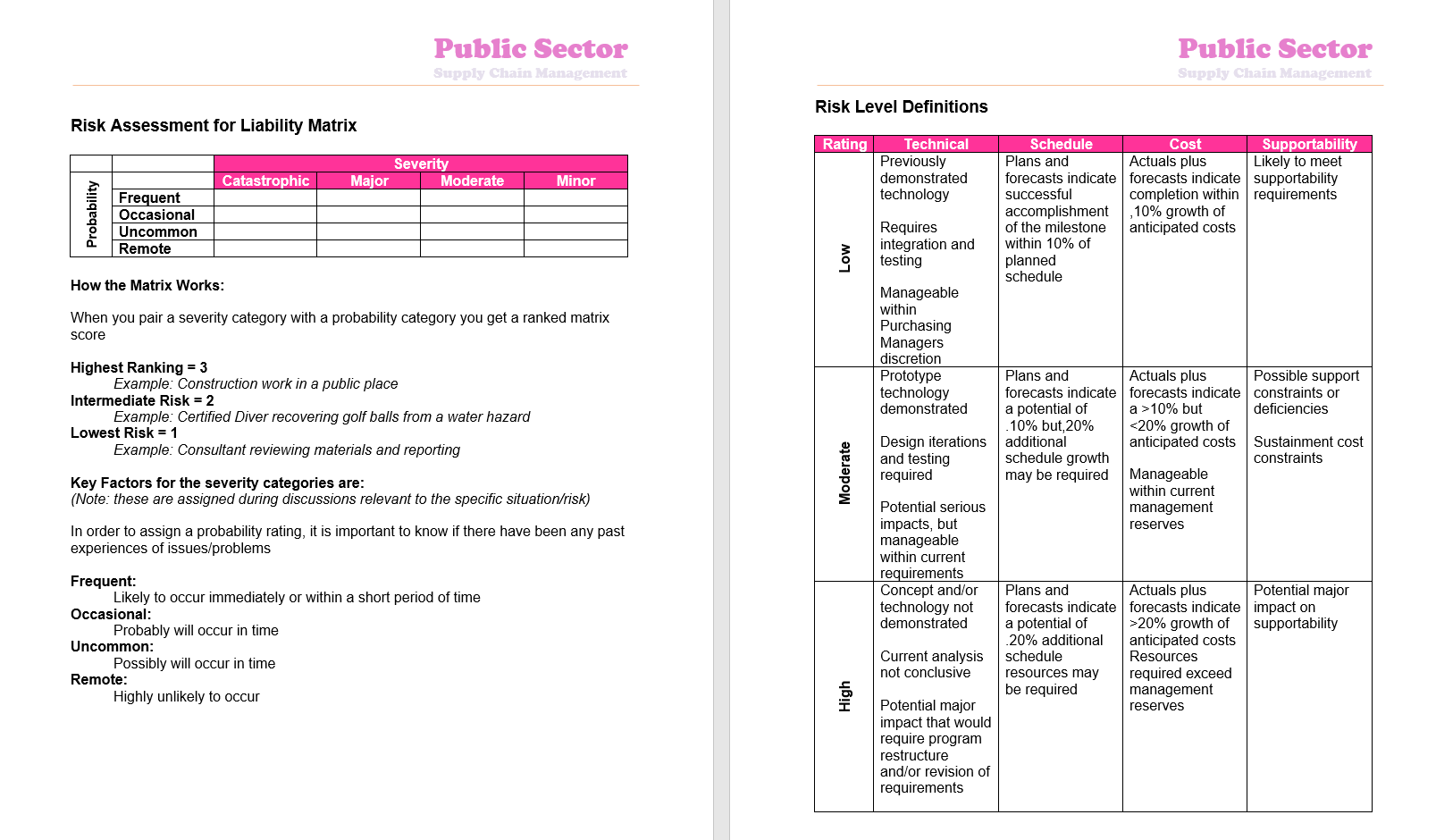
Public Sector Supply Chain Management Public Sector Supply Chain Management colleague running by "What happened?" and got the reply "Fellow working in the Boiler Room broke a water pipe." Lilly, suspecting what had happened, thought "Oh, no" and took off for the boiler room. Student Name (as it appears in the course class list) Student Number Section TOPIC SPECIFIC ASSIGNMENT 1 Module 04 Risk Assessment Several hours later, after the main water supply to the school was shut off and most of the flooding had been vacuumed and cleaned up, Lilly Brown ran into Guy Russell talking with the Principal of the school in the cafeteria and overhead Guy saw" I don't know how this could have happened, Bob is a good steamfitter and has never had anything like this happen before." The Principal said "It really doesn't matter how it happened. It's too late now. Right now I need to know how long the school will be closed and how much it is going cost to fix this." Guy replied Bob says he can have the work in about two weeks, and Bob figures materials and labour will cost about $25,000.00." The Principal looked at Guy Russell in astonishment and exclaimed "You are not seriously expecting to pay the person who caused this to fix it! No way, find someone else." But it was only a $1,000 job! Guy Russell, Director of Facilities for the Mid-South District School Board (MSDSB) in Rainy Falls contacted Lilly Brown, Manger of Procurement for MSDSB. Guy requested that Lilly issue a Purchase Order to Bob Smith, the local steamfitter for $1,000.00 to pressure test water distribution lines in the single boiler which produced heating at the Joint Fork Elementary School. He told Lilly that this pressure test must be done at least annually Spotting Lilly at the coffee machine, Russell went over and asked if she had names of other contractors who had the required insurance rom whom they could get a quote. Lilly told Guy to grab a coffee and they'd check her vendor file. The next afternoon when four contractors met with Lilly and Guy for a site visit, one of the contractors, on viewing the extent of the damage, exclaimed "Boy, the only way you could get this much damage is if you put the system under too much pressure and blew the pipe welds. Only an amateur would do something that dumb." Lilly agreed to contact Bob Smith, make the appropriate arrangements and advise Guy if there were any difficulties. Unfortunately when Lilly contacted Mr. Smith and attempted to document the due diligence issues, Smith advised her that he did not have any General Liability Insurance. Since MSDSB required all contractors doing work for the school district to provide proof of at least $1,000,000.00 General Liability Insurance coverage, Lilly advised Mr. Smith that she would not be issuing a purchase order to him for the work, nor could he undertake any work for the school district until such time as he obtained insurance coverage at this level. Assignment: After reading the scenario, answer the following questions. 1. Is the value of the work indicative of the risk involved? a. Explain/justify your answer Lilly Brown immediately phoned Guy Russell and as she attempted to explain the problem, Guy said "I really don't understand why there's a problem here! Guy has done work for me before and he's a really good fellow. I think that making a small contractor like Bob Smith have that kind of insurance is not necessary and totally unfair. You folks in Procurement are always stopping me from getting work done, and I'm not standing for it anymore. If these children are freezing it is because they don't have any heat, it's not going to be because of me." Guy slammed the phone down. 2. Using the Risk Matrix information discussed. Provide a Risk Assessment for this work | Although Lilly Brown understood that following procedure and complying with policy could be frustrating for Guy Russell and others, she took the time to e-mail Guy with a complete explanation since she felt it was part of her function to educate clients and assist them in understanding requirements. She was not surprised, however, when she did not receive a response to her e-mail, nor a phone call following up on Russell's requisition for work. Brown was eating lunch at her desk the next day when suddenly there was a series of loud bangs, she heard people running in the hall, and shouts of "Water! Water!" As she left her office, she saw water pouring out f the ceiling tiles in the hall. She asked a Public Sector Supply Chain Management Public Sector Supply Chain Management Risk Level Definitions Risk Assessment for Liability Matrix Rating Technical Previously demonstrated technology Severity Major Moderate Catastrophic Minor Probability Frequent Occasional Uncommon Remote Schedule Cost Supportability Plans and Actuals plus Likely to meet forecasts indicate forecasts indicate supportability successful completion within requirements accomplishment 10% growth of of the milestone anticipated costs within 10% of planned schedule Low Requires integration and testing How the Matrix Works: When you pair a severity category with a probability category you get a ranked matrix score Manageable within Purchasing Managers discretion Prototype technology demonstrated Highest Ranking = 3 Example: Construction work in a public place Intermediate Risk = 2 Example: Certified Diver recovering golf balls from a water hazard Lowest Risk = 1 Example: Consultant reviewing materials and reporting Moderate Design iterations and testing required Plans and Actuals plus Possible support forecasts indicate forecasts indicate constraints or a potential of a>10% but deficiencies .10% but, 20% 20% growth of supportability 20% additional anticipated costs schedule Resources resources may required exceed be required management reserves Current analysis not conclusive High Potential major impact that would require program restructure and/or revision of requirements Public Sector Supply Chain Management Program Risk Analysis What is the Likelihood the Risk Will Happen? Level Defined as Your Approach and Processes 1 Not Likely Will effectively avoid or mitigate this risk based on standard practices Have usually mitigated this type of risk with 2 Low Likelihood minimal oversight in similar cases May mitigate this risk, but workarounds will 3 Likely be required Cannot mitigate this risk, but a different 4 Highly Likely approach might 5 Near Certainty Cannot mitigate this type of risk; no known processes or workarounds are available Likelihood Given the Risk is Realized, What would be the magnitude of this impact? Level Technical Schedule Cost 1 Minimal impact Minimal or no impact Minimal or no impact Minor performance Additional activities Budget increase or 2 shortfall, same required; able to unit production cost approach retained meet key dates increase 10% Consequences We then take the ratings 1 2 3 4 5 1 2 3 4 5 Consequences









 Study Help