







Question: INSTRUCTIONS: PLEASE READ BEFORE YOU BEGIN Below are sample answers provided by my friends. Your task is to follow a similar structure and format, but
INSTRUCTIONS: PLEASE READ BEFORE YOU BEGIN
Below are sample answers provided by my friends. Your task is to follow a similar structure and format, but make sure to modify the examples, graphs, and wording. Your goal is to create a visually appealing document. Please refrain from copying any examples verbatim.
Instructions:
- Change the wording and phrasing to enhance clarity and readability.
- Modify the format and layout for improved presentation.
- For the handwritten section, provide an example and write it manually.
Remember, the objective is to deliver a document that closely resembles the example below, but without directly copying any of its content.
here is my friends answer :
This unit focused on expanding previous knowledge from eleventh grade about trigonometry and its ratios. In the first two lessons, we learned about radians and how they relate to degrees.
Radians are a unit of measurement used in mathematics to quantify angles. Unlike degrees, which are commonly used in everyday life, radians provide a more natural and fundamental way to express angles in trigonometry. To understand radians, it's crucial to grasp the concept of a radian as a ratio between an arc and the radius of a circle. In a unit circle (a circle with a radius of 1), if an arc length along the circumference of the circle is equal to the radius, then the angle subtended by that arc at the center of the circle is defined as 1 radian. To put it simply, a radian is the angle subtended by an arc whose length is equal to the radius...
The ratio of the arc length to the radius of a circle give angle ? in radians: ? =arclength/radius
The relation between radians and degrees can be shown by converting degrees to radians:
? degrees (180/?rad)
It can also be shown by converting radians to degrees: ? rad(180/?rad)
It is important to note that radians can be expressed in two forms:
- Approximate form; Often when no special case is involved in a question, then an approximated answer with rounded decimals is expected.
- Exact form which involves a fraction and ? ? This is for special cases or exact values and is the most accurate and appropriate way to represent radians when and if possible.
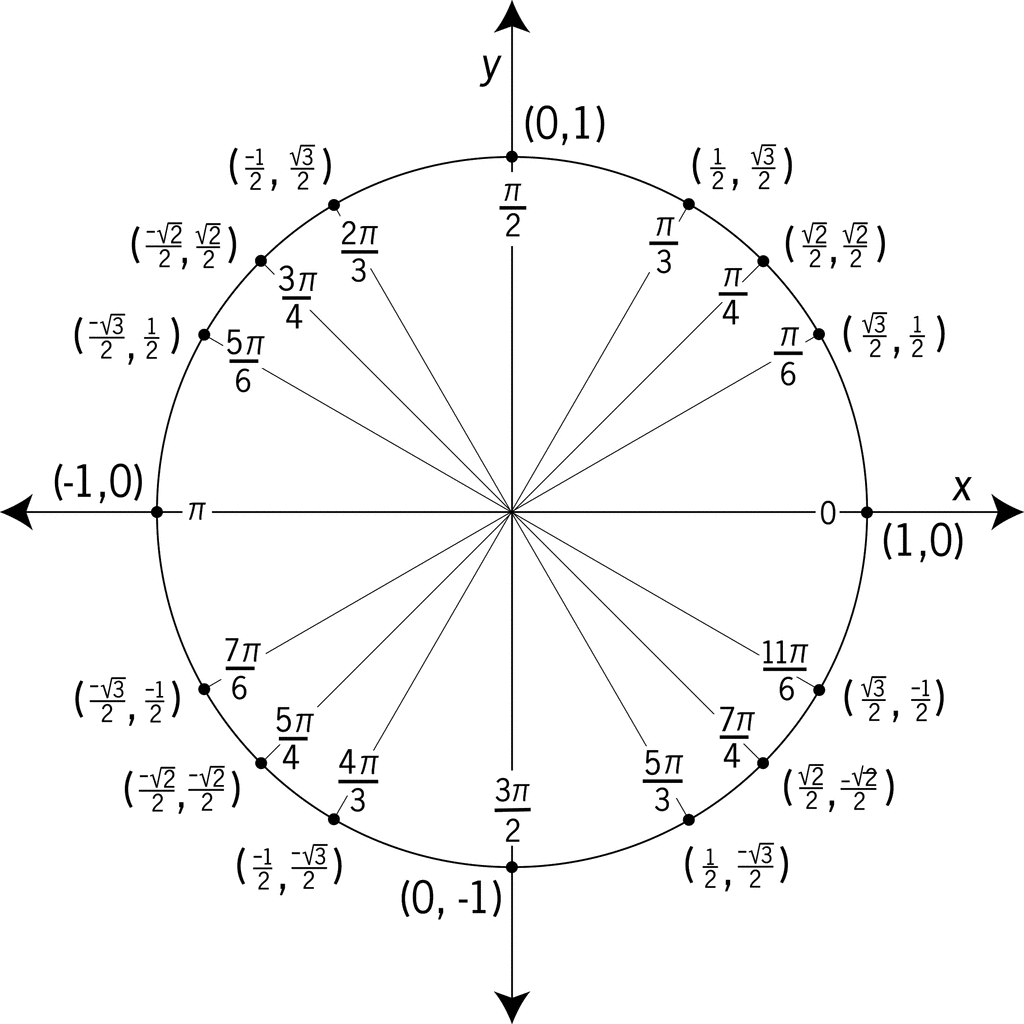
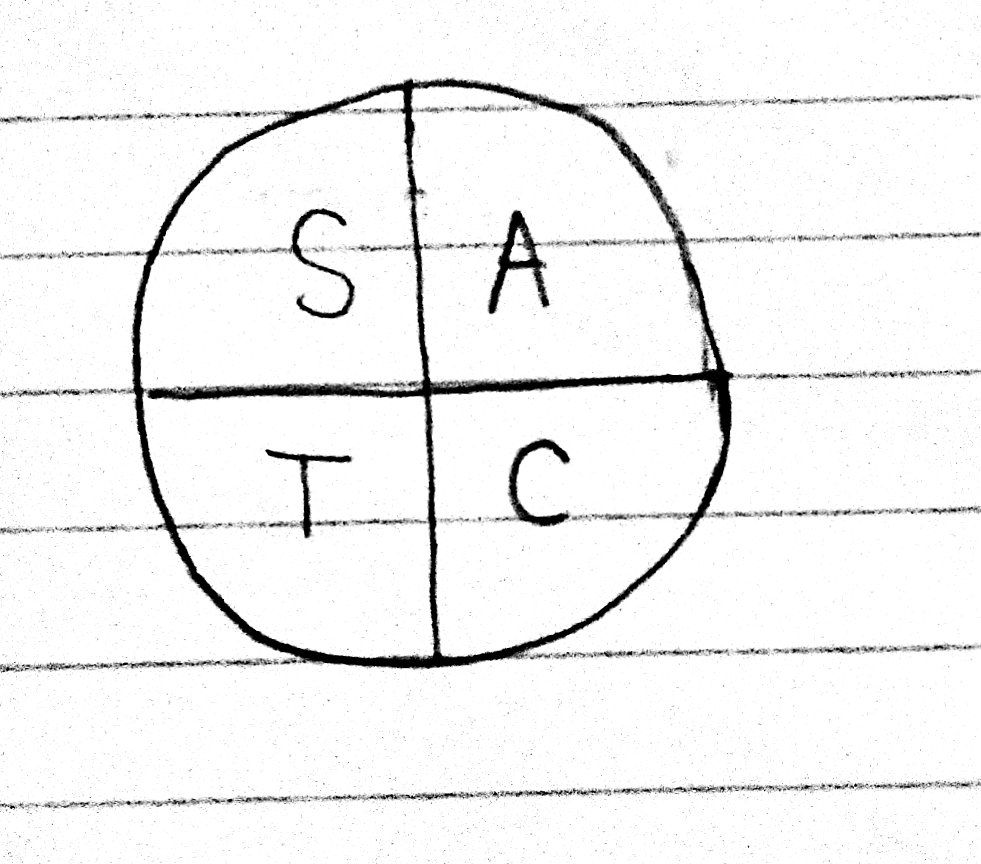
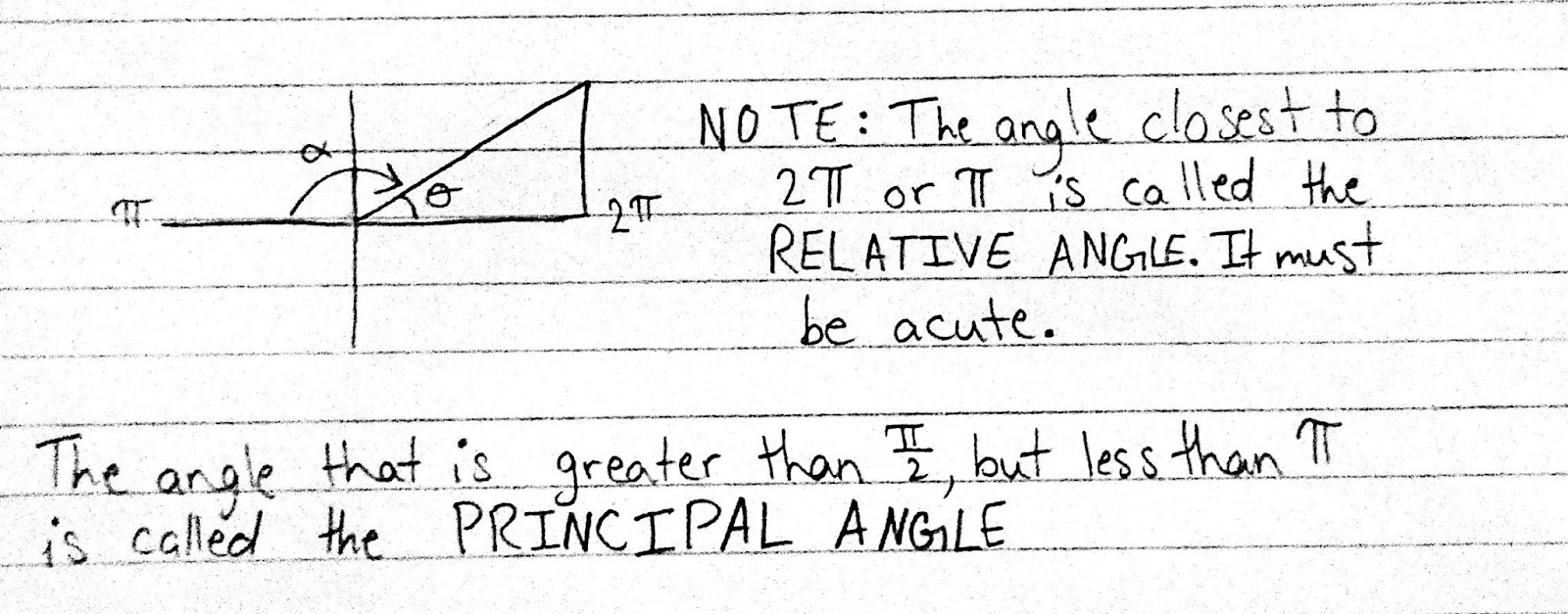
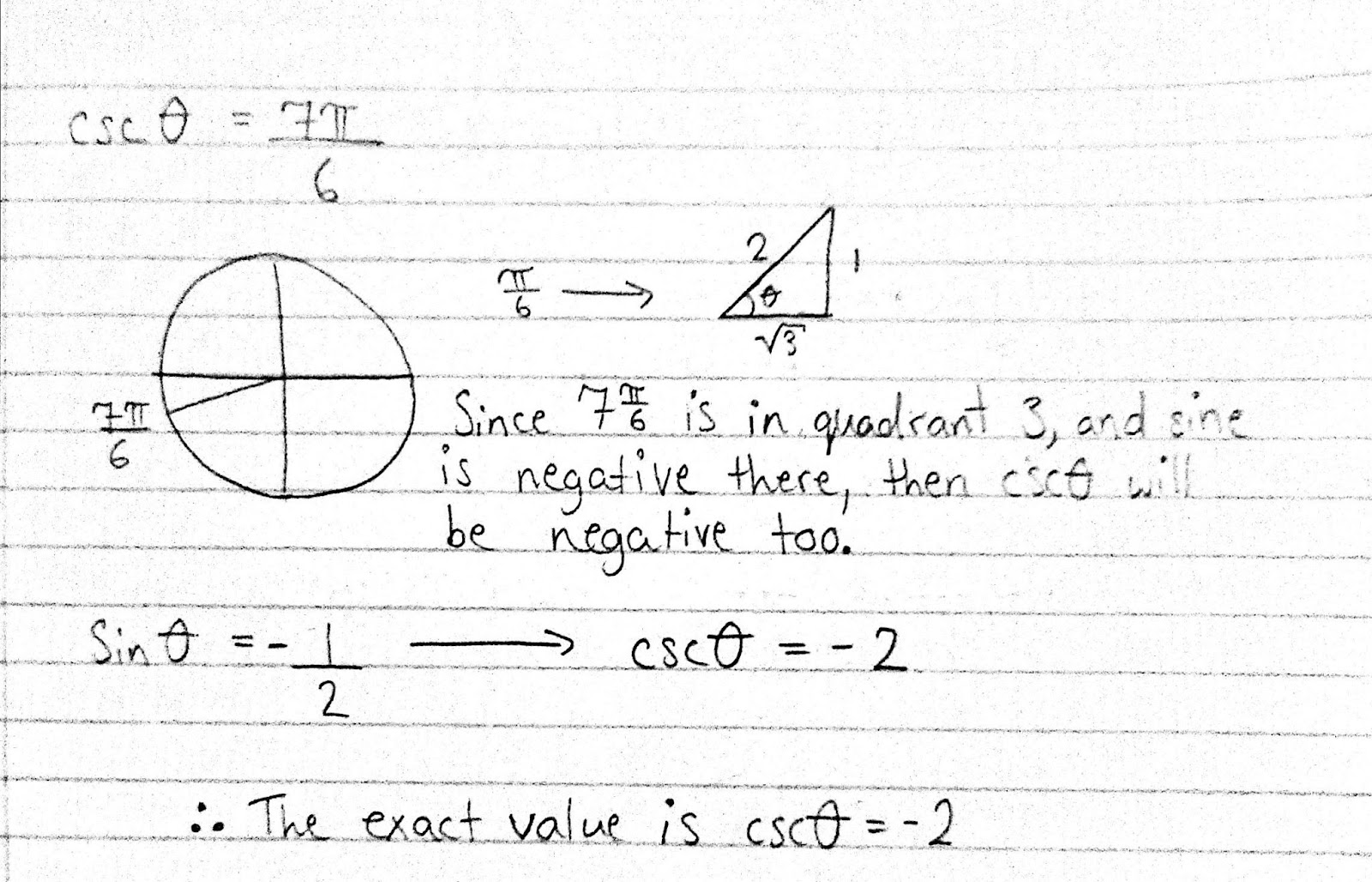
Exact form derives from a unit circle that has four quadrants, and different fractions that each symbolize a specific special case...
Step by Step Solution
There are 3 Steps involved in it

Get step-by-step solutions from verified subject matter experts
 Study Help