







Question: Instructions The beginning inventory at Midnight Supplies and data on purchases and sales for a three month period ending March 31 are as follows: Date
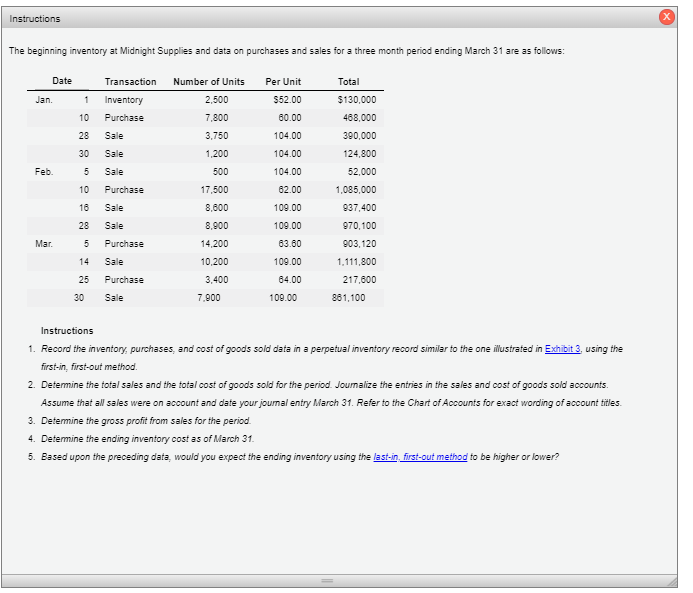
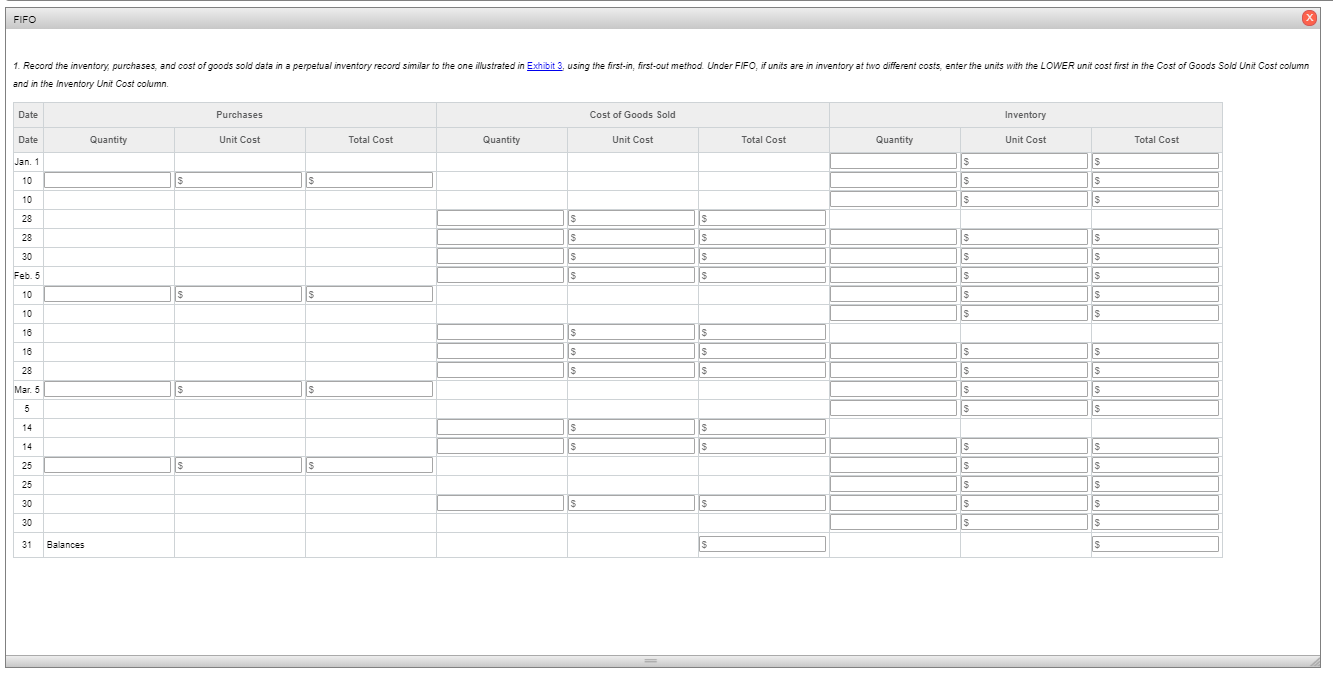
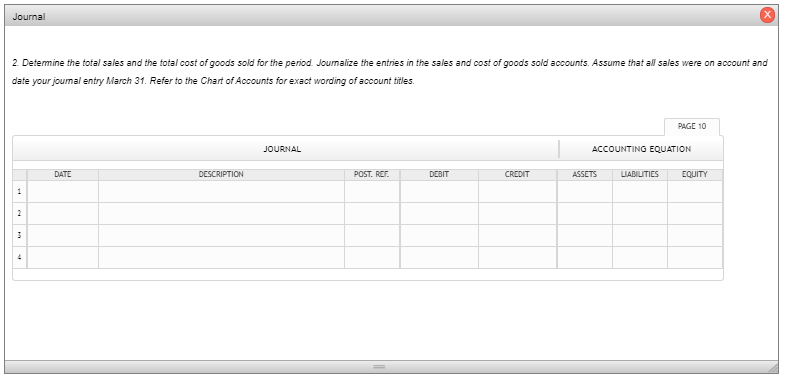
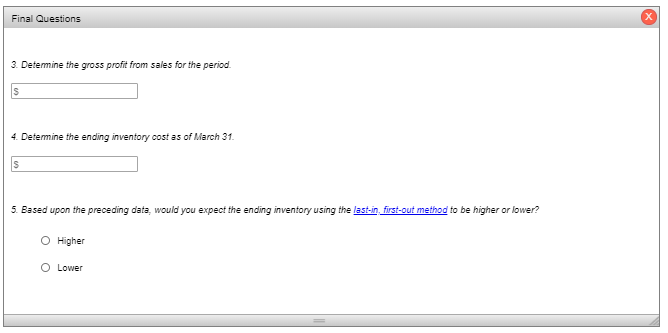
Instructions The beginning inventory at Midnight Supplies and data on purchases and sales for a three month period ending March 31 are as follows: Date Per Unit S52.00 Jan. Transaction Inventory Purchase 1 Number of Units 2,500 7,800 3,750 Total $130,000 488,000 390,000 10 60.00 104.00 28 Sale 30 Sale 1,200 500 Feb. 5 Sale 104.00 104.00 82.00 109.00 124,800 52,000 1.085,000 937,400 10 Purchase 16 Sale 17.500 8,600 8.900 28 109.00 Sale Purchase 970,100 903, 120 Mar. 5 83.60 109.00 14 14,200 10,200 3,400 Sale 25 Purchase 84.00 1.111.800 217,600 861,100 30 Sale 7.900 109.00 Instructions 1. Record the inventory, purchases, and cost of goods sold data in a perpetual inventory record similar to the one illustrated in Exhibit 3, using the first-in, first-out method 2. Determine the total sales and the total cost of goods sold for the period. Journalize the entries in the sales and cost of goods sold accounts. Assume that all sales were on account and date your journal entry March 31. Refer to the Chart of Accounts for exact wording of account titles. 3. Determine the gross profit from sales for the period 4. Determine the ending inventory cost as of March 31. 5. Based upon the preceding data, would you expect the ending inventory using the last-in, first-out method to be higher or lower? FIFO 1. Record the inventory, purchases, and cost of goods sold data in a perpetual inventory record similar to the one illustrated in Exhibit 3, using the first-in, first-out method Under FIFO, if units are in inventory at two different costs, enter the units with the LOWER unit cost first in the cost of Goods Sold Unit Cost column and in the Inventory Unit Cost column Date Purchases Cost of Goods Sold Inventory Date Quantity Unit Cost Total Cost Quantity Unit Cost Total Cost Quantity Unit Cost Total Cost Jan. 1 $ S 10 s s $ s S $ 10 28 s 28 s S $ S $ Is s S $ 30 Feb. 5 s s s $ 10 s s $ $ $ s 10 18 s 18 s 5 $ s $ s S Is on 28 Mar 5 s s $ $ 5 $ 14 s S s S 14 $ s $ s 25 s $ 25 s 30 s $ $ s s 30 s 31 Balances $ s Journal 2 Determine the total sales and the total cost of goods sold for the period Jourmalize the entries in the sales and cost of goods sold accounts. Assume that all sales were on account and date your journal entry March 31. Refer to the Chart of Accounts for exact wording of account titles. PAGE 10 JOURNAL ACCOUNTING EQUATION DATE DESCRIPTION POST. REF. DEBIT CREDIT ASSETS LIABILITIES EQUITY 1 3 4 Final Questions 3. Determine the gross profit from sales for the period. S 4. Determine the ending inventory cost as of March 31. 5. Based upon the preceding data, would you expect the ending inventory using the last-in. first-out method to be higher or lower? O Higher O Lower
Step by Step Solution
There are 3 Steps involved in it

Get step-by-step solutions from verified subject matter experts
 Study Help