







Question: intro to information systems case study #2 CASE STUDY #1 Google Glass and Wearable Technologies ther concern is that a visual display could be a
intro to information systems case study #2
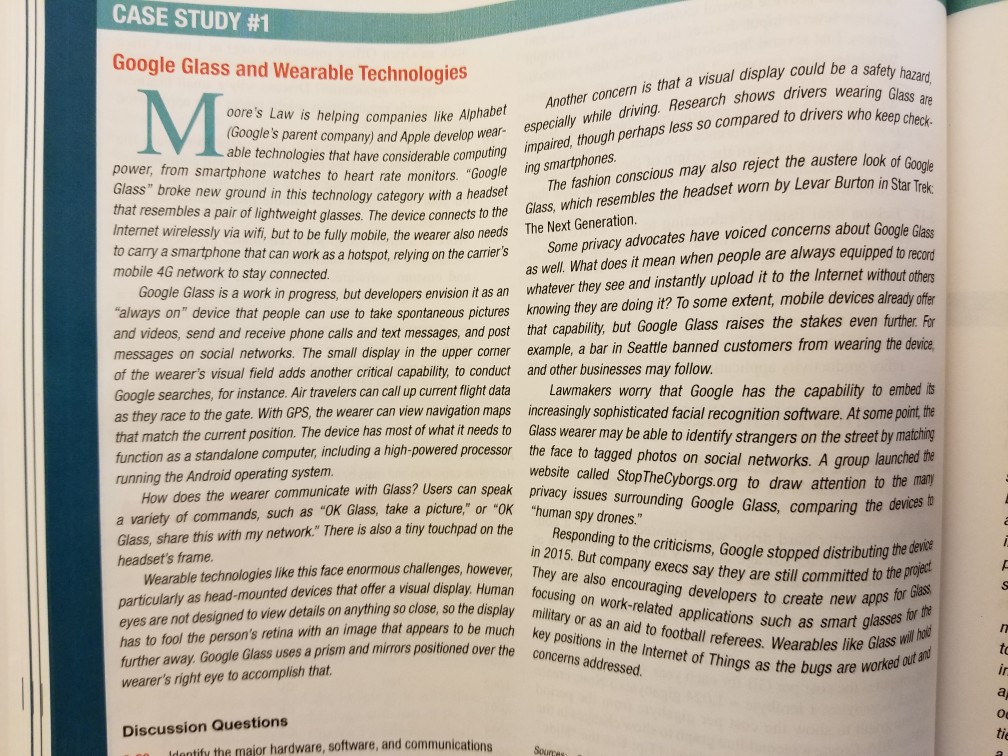
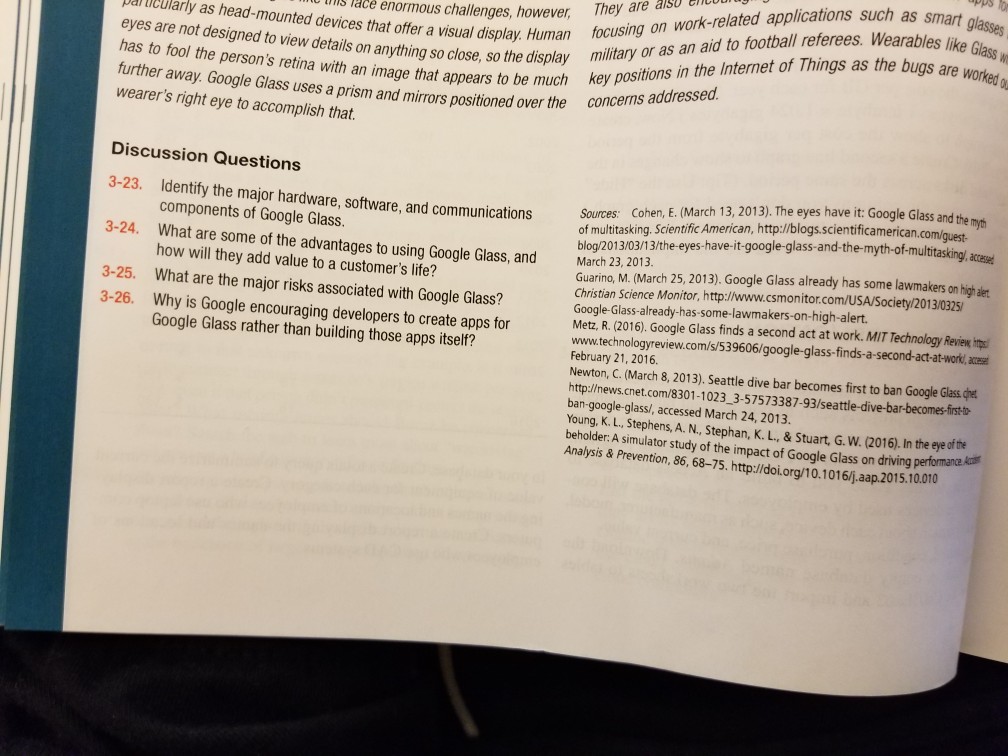
CASE STUDY #1 Google Glass and Wearable Technologies ther concern is that a visual display could be a safete are ping companies like Alphabet Google 's parent company) and Apple develop wear able technologies that have computing power, from smartphone watches to heart rate monitors. "Google oore's Law is hel ecially while driving. Research shows drivers wearino ology category with a headset The fashion conscious may also reject the austere look of glasses. The device connects to the Glass, which resembles the headset worn by Levar Burton in Star eulconsiderable computing impaired, though perhaps less so compared to drivers who keep rate monitors. "Google ing smartphones Glass" broke new ground in this technology category with a headset Internet wirelessly via wifi, but to be fully mobile, the wearer also needs he to carry a smartphone that can work as a hotspot, relying on the carrier s Some privacy advocates have voiced concerns about Go as well. What does it mean when people are always equipped to recard ork in progress, but developers envision it as an whatever they see and instantly upload it to the Internet without others use to take spontaneous pictures knowing they are doing it? To some extent, mobile devices alreadyofer pability, but Google Glass raises the stakes even further. For bar in Seattle banned customers from wearing the device mobile 4G network to stay connected Google Glass is a progress,b "always on" device that people can and videos, send and receive messages on social networks. The small display in the upper corner example,a of the wearer's visual field adds another critical capability, to conduct and other businesses may follow Google searches, for instance. Air travelers can call up current flight data Lawmakers worry that Google has the capability to embe as they race to the gate. With GPS, the wearer can view navigation maps increasingly sophisticated facial recognition software. At some point the that match the current position. The device has most of what it needs to Glass wearer may be able to identify strangers on the street by matchin function as a standalone computer, including a high-powered processor the face to tagged photos on social networks. A group launched the running the Android operating system that ca phone calls and text messages, and post website called Stop TheCyborgs.org to draw attention to the How does the wearer communicate with Glass? Users can speak a variety of commands, such as "ok Glass, take a picture," or "OK surounding Google Glass, comparing the devices "human spy drones." tiny touchpad on the Glass, share this with my network." There is also a on the challenges, however. Responding to the criticisms,Google stopped distrib in 2015. But company execs say they are still committed that offer a visual display.Human focusing on work-related applications such as smart gl uting the headset's frame They are also encouraging developers to create new apps Wearable technologies like this face enormous The to the new apps for lasses close, so the display military or as an aid to football referees. Wearables like Gldo display m the eyes are not designed to view details on anything so has to fool the person's retina with an image that appears to be much mirrors positioned over the further away, Google Glass uses a prism and mirrors positioned over the concerns addressed of Things as the bugs are worke wearer's right eye to accomplish that ay Discussion Questions Idantify the major hardware, software, and communications
Step by Step Solution
There are 3 Steps involved in it

Get step-by-step solutions from verified subject matter experts
 Study Help