Question: Java Mountain Coffee Case Study and Assignment Company Information: Jova Mourtoja Java Mountain is a thirty year old, privately held company with Coffee revenues of
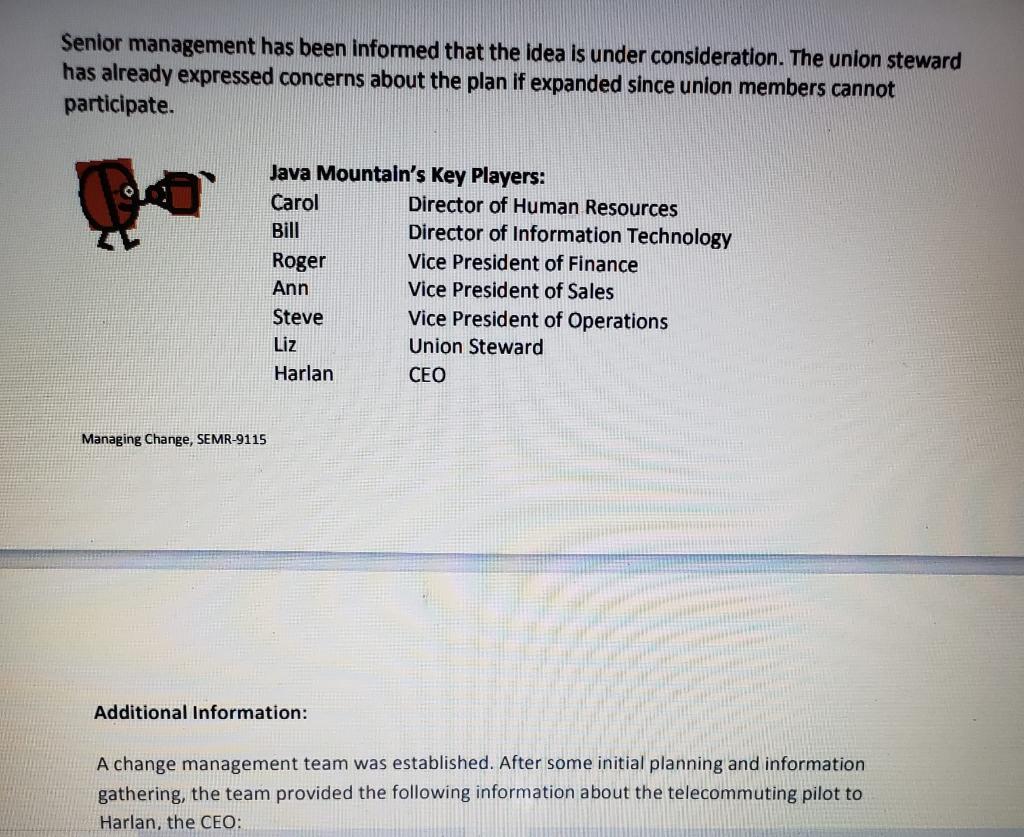
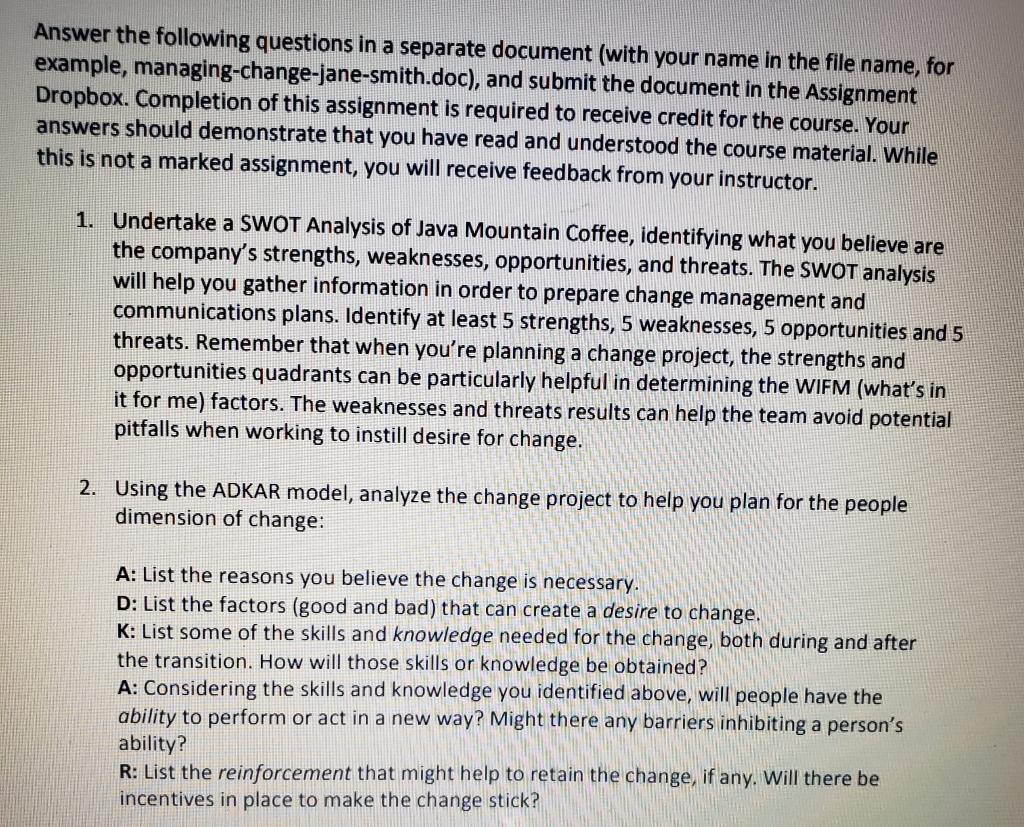
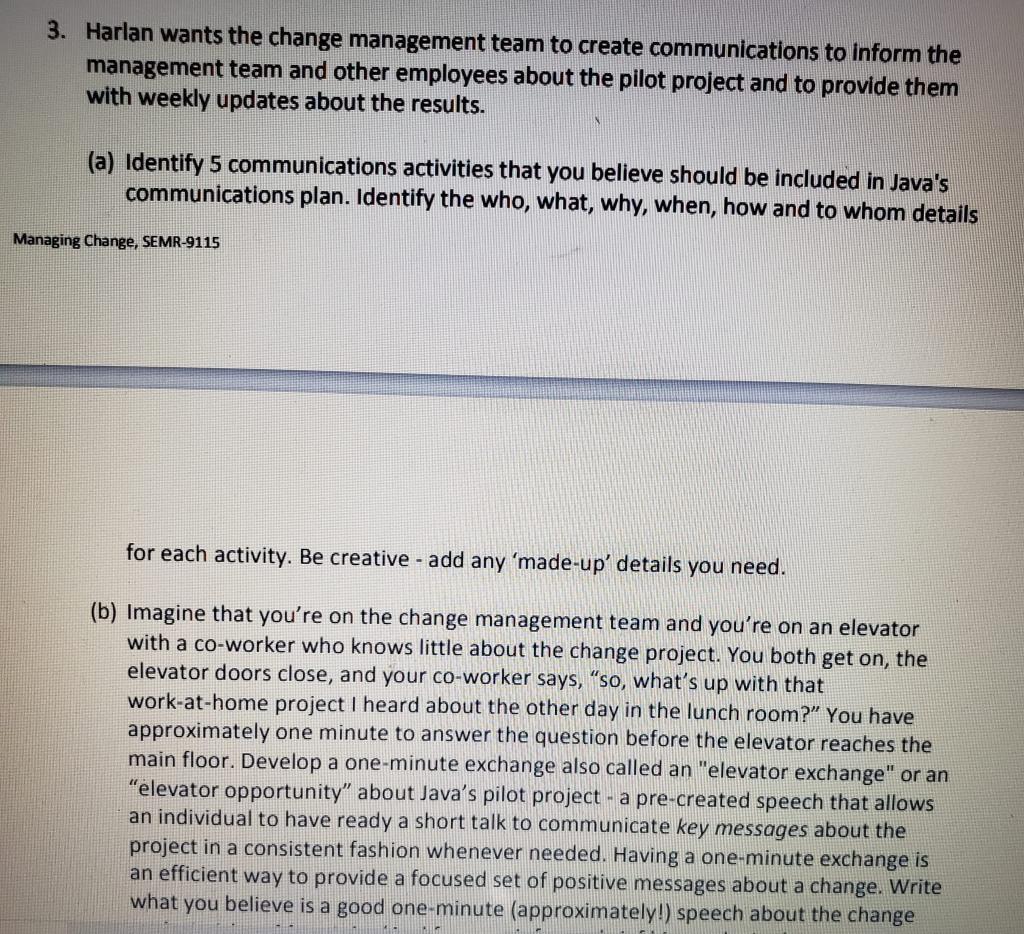
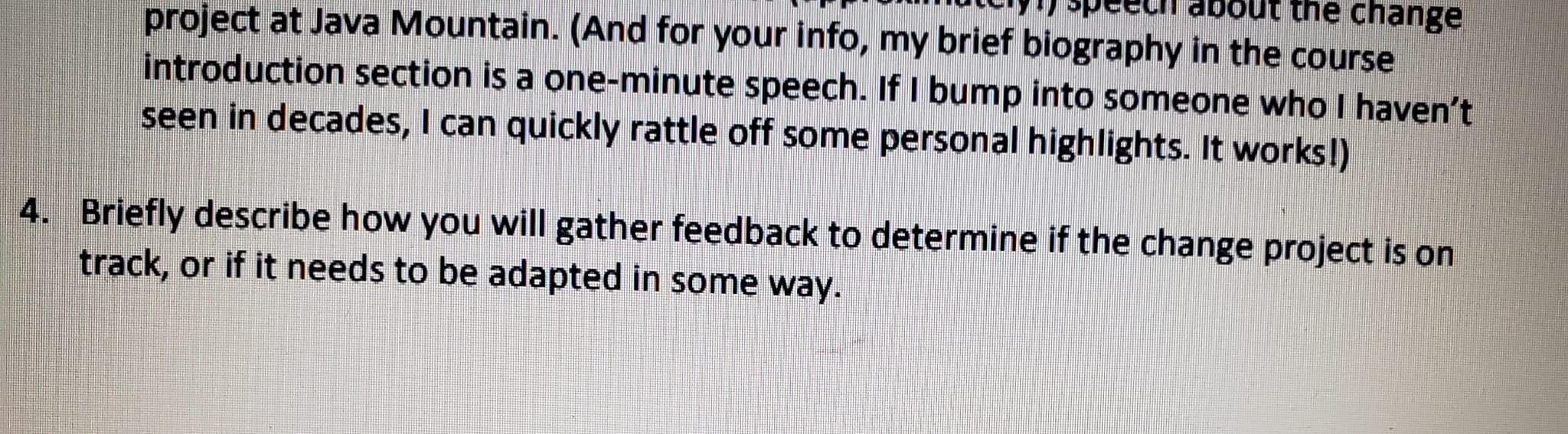
Java Mountain Coffee Case Study and Assignment Company Information: Jova Mourtoja Java Mountain is a thirty year old, privately held company with Coffee revenues of approximately $100 million. The company, headquartered in Vancouver, processes and sells commercial coffee and related products. It serves a wide variety of markets and has a few subsidiaries in cities out of province. The CEO has been in place for more than twenty years, but most of his direct reports have been with Java less than ten years. The processing, warehousing, and shipping departments are unionized. There is a direct sales force, and also a direct sales subsidiary that sells a custom-branded line to smaller accounts. Java Mountain has a good track record with many long-term customers. The company is innovative, and has a strong state of the art Information Technology department that successfully implemented SAP, an enterprise resource planning system within the past ten years. SAP is used for all human resources functions, as well as for the company's production, sales and marketing activities. In fact, Java Mountain has seen increases in productivity (efficiency of production) and sales since SAP was introduced. The Change: Java is undergoing growth and has begun hiring office and support staff. More office space is needed, but the physical facility is being used to capacity. And due to the company's location in the city, adjacent land isn't available for a new building. To address this challenge, the CEO has decided to begin a pilot project. Ten of the professional staff from headquarters will begin 'telecommuting' (working from home) for a one-month trial period. If the project is deemed successful, it will be expanded. Senior management has been informed that the idea is under consideration. The union steward has already expressed concerns about the plan if expanded since union members cannot participate. Java Mountain's Key Players: Carol Director of Human Resources Bill Director of Information Technology Roger Vice President of Finance Ann Vice President of Sales Steve Vice President of Operations Liz Union Steward Harlan CEO Managing Change, SEMR-9115 Additional Information: A change management team was established. After some initial planning and information gathering, the team provided the following information about the telecommuting pilot to Harlan, the CEO: Ten exempt (non-union) employees have been identified and have agreed to participate in the pilot project. The pilot will begin on October 1 and end on October 31, after which the project stakeholders will gather feedback from the participants and assess the potential expansion of the program. . Each one has certified that he or she has a quiet, dedicated place at home from which to work, and agrees to adhere to normal business working hours. . Pilot participants will be provided with a company-standard laptop, personal printer, company-paid high speed internet access (if needed), and a smartphone. (Reimbursement will be made to employees who have and are willing to use existing high speed internet access.) The project team will assess results of the project through interviews with the participants' direct supervisors to ensure that the employees' work performance levels are consistent with expected performance levels if they were working in their normal offices. The team will also ask the participants to complete a self-assessment of their impressions of the pilot. An additional goal is to document any emerging or additional unidentified benefits of the pilot. The budget for the pilot project is $30,000 (hardware and software, internet, phone, project team expenses, etc). An IT project manager has been identified to implement equipment and communications for each participant and provide training so that participants can use the VPN network (virtual private network) to reach the company servers. . Prior to the start date of the pilot, the Human Resources department will provide an overview of the expectations for an employee in a telecommuting role, and the Controller's office will explain a new weekly reporting requirement for the participants. The team indicates that the risk of not undertaking the pilot is to (a) inhibit business growth or (b) incur high costs leasing office space not adjacent to Java Mountain. Managing Change, SEMR-9115 Assignment: This assignment is designed to help you plan parts of a change management project. This is an opportunity for you to think about what you've learned in this course and apply it in a practical way. In this case, the change is at Java Mountain Coffee, but it could really be in any organization. Think about the change from different perspectives - put yourself in Harlan's shoes, in Carol's shoes, in Liz's shoes, and in the shoes of the employees who will be telecommuting. If the case study does not contain the information you believe you should have, please feel free to add your own details. Answer the following questions in a separate document (with your name in the file name, for example, managing-change-jane-smith.doc), and submit the document in the Assignment Dropbox. Completion of this assignment is required to receive credit for the course. Your answers should demonstrate that you have read and understood the course material. While this is not a marked assignment, you will receive feedback from your instructor. 1. Undertake a SWOT Analysis of Java Mountain Coffee, identifying what you believe are the company's strengths, weaknesses, opportunities, and threats. The SWOT analysis will help you gather information in order to prepare change management and communications plans. Identify at least 5 strengths, 5 weaknesses, 5 opportunities and 5 threats. Remember that when you're planning a change project, the strengths and opportunities quadrants can be particularly helpful in determining the WIFM (what's in it for me) factors. The weaknesses and threats results can help the team avoid potential pitfalls when working to instill desire for change. 2. Using the ADKAR model, analyze the change project to help you plan for the people dimension of change: A: List the reasons you believe the change is necessary. D: List the factors (good and bad) that can create a desire to change. K: List some of the skills and knowledge needed for the change, both during and after the transition. How will those skills or knowledge be obtained? A: Considering the skills and knowledge you identified above, will people have the ability to perform or act in a new way? Might there any barriers inhibiting a person's ability? R: List the reinforcement that might help to retain the change, if any. Will there be incentives in place to make the change stick? 3. Harlan wants the change management team to create communications to inform the management team and other employees about the pilot project and to provide them with weekly updates about the results. (a) Identify 5 communications activities that you believe should be included in Java's communications plan. Identify the who, what, why, when, how and to whom details Managing Change, SEMR-9115 for each activity. Be creative - add any 'made-up' details you need. (b) Imagine that you're on the change management team and you're on an elevator with a co-worker who knows little about the change project. You both get on, the elevator doors close, and your co-worker says, so, what's up with that work-at-home project I heard about the other day in the lunch room?" You have approximately one minute to answer the question before the elevator reaches the main floor. Develop a one-minute exchange also called an "elevator exchange" or an "elevator opportunity" about Java's pilot project - a pre-created speech that allows an individual to have ready a short talk to communicate key messages about the project in a consistent fashion whenever needed. Having a one-minute exchange is an efficient way to provide a focused set of positive messages about a change. Write what you believe is a good one-minute (approximately!) speech about the change the change project at Java Mountain. (And for your info, my brief biography in the course introduction section is a one-minute speech. If I bump into someone who I haven't seen in decades, I can quickly rattle off some personal highlights. It works!) 4. Briefly describe how you will gather feedback to determine if the change project is on track, or if it needs to be adapted in some way









 Study Help