Question: Joe Whinney case study has to make a decision. How is this decision related to the four concerns for commodities production (Hira and Ferrie 2006)?
- Joe Whinney case study has to make a decision. How is this decision related to the four concerns for commodities production (Hira and Ferrie 2006)?
Hira, A. and Ferrie, J. (2006), Fair Trade: Three Key Challenges for Reaching the Mainstream, Journal of Business Ethics, Vol. 63 No. 2, pp. 107-118.
- Select two moral theories that you think would be most helpful in Joe's decision and explain what they would suggest. Explain what you think is the correct decision and justify your answer.
Utilitarianism ethics and Kantian ethics (two moral theories)
Case study "Joe Whinney"
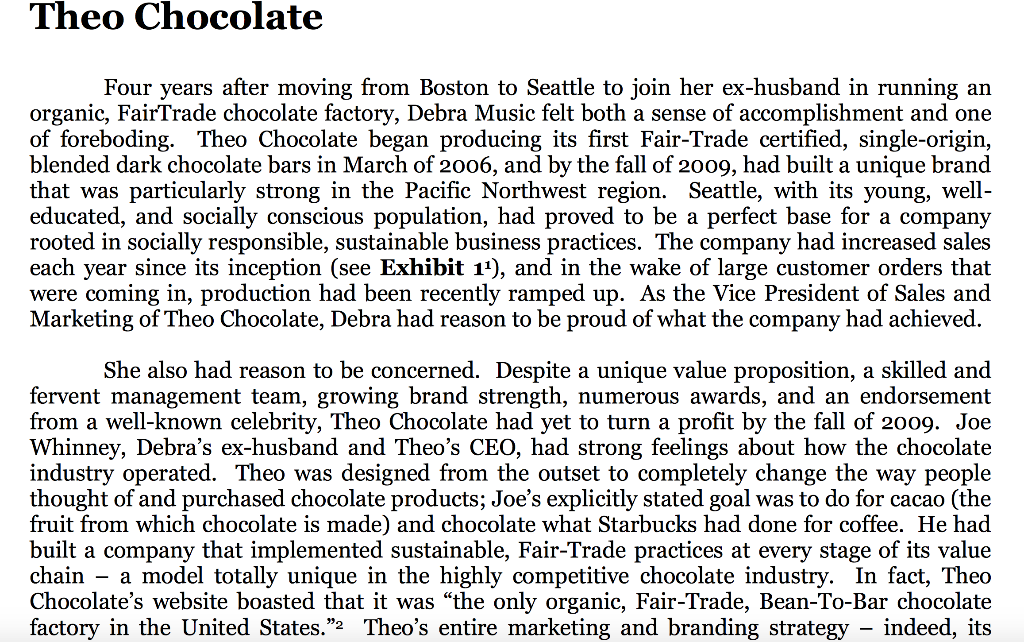
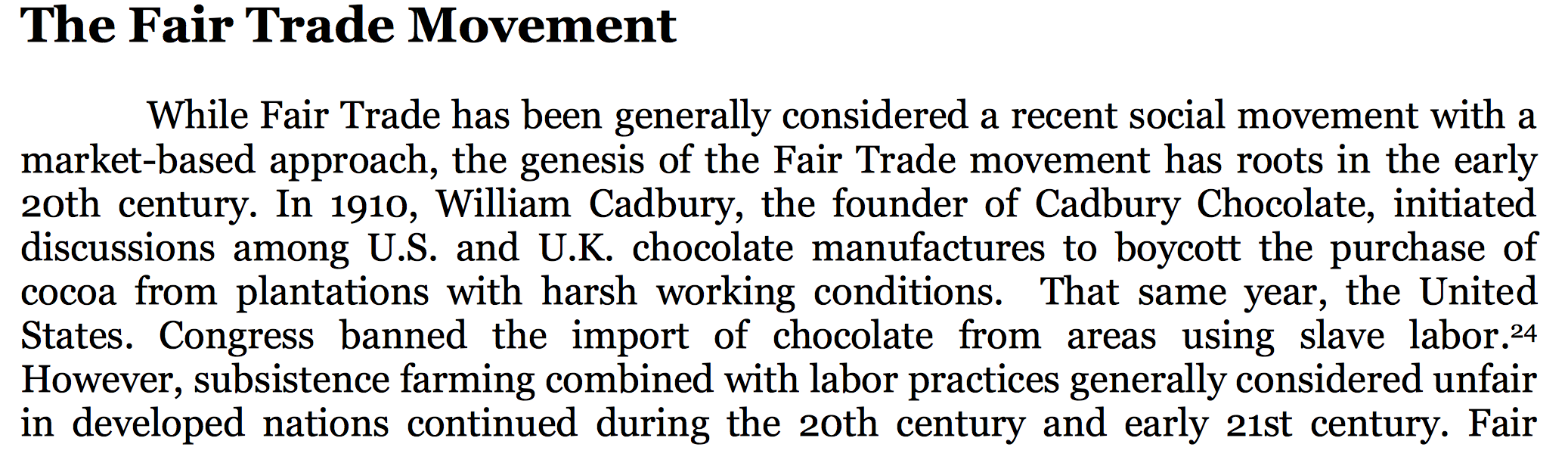
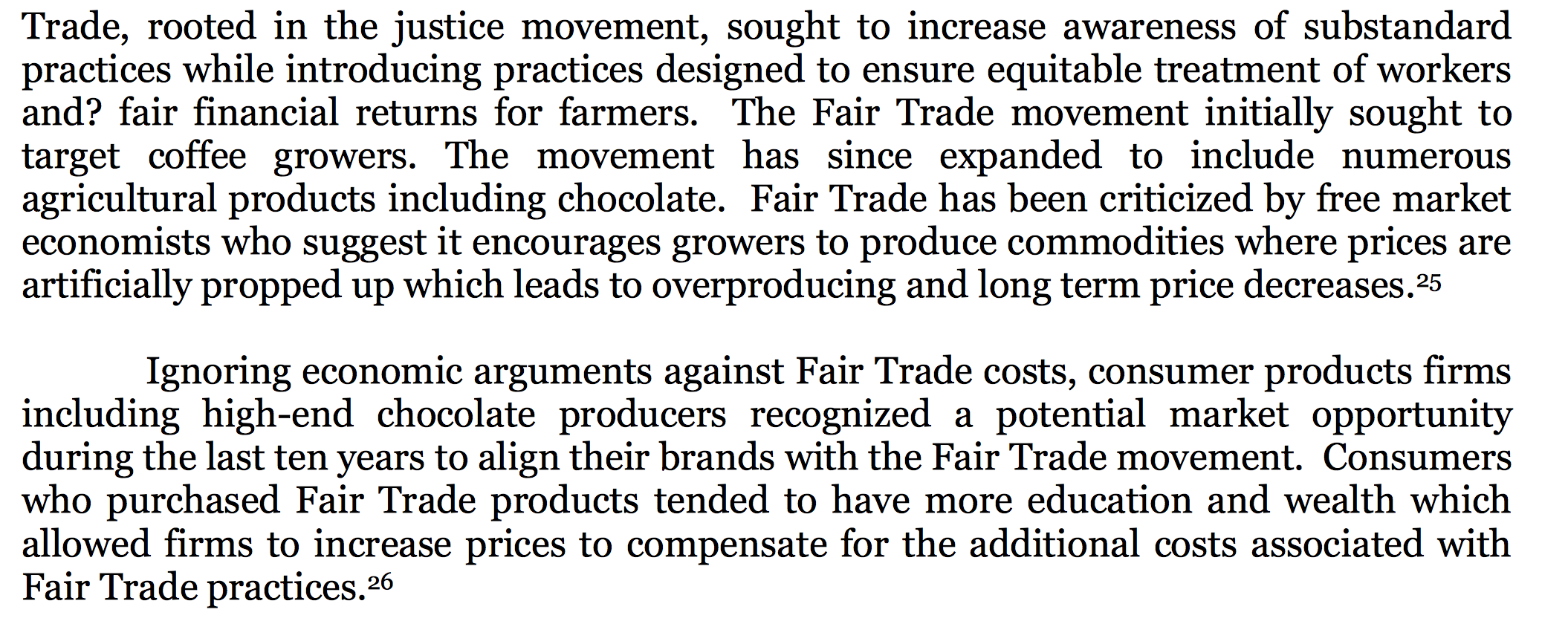
Theo Chocolate Four years after moving from Boston to Seattle to join her ex-husband in running an organic, FairTrade chocolate factory, Debra Music felt both a sense of accomplishment and one of foreboding. Theo Chocolate began producing its first Fair-Trade certified, single-origin, blended dark chocolate bars in March of 2006, and by the fall of 2009, had built a unique brand that was particularly strong in the Pacific Northwest region. Seattle, with its young, well- educated, and socially conscious population, had proved to be a perfect base for a company rooted in socially responsible, sustainable business practices. The company had increased sales each year since its inception (see Exhibit 14), and in the wake of large customer orders that were coming in, production had been recently ramped up. As the Vice President of Sales and Marketing of Theo Chocolate, Debra had reason to be proud of what the company had achieved. She also had reason to be concerned. Despite a unique value proposition, a skilled and fervent management team, growing brand strength, numerous awards, and an endorsement from a well-known celebrity, Theo Chocolate had yet to turn a profit by the fall of 2009. Joe Whinney, Debra's ex-husband and Theo's CEO, had strong feelings about how the chocolate industry operated. Theo was designed from the outset to completely change the way people thought of and purchased chocolate products; Joe's explicitly stated goal was to do for cacao (the fruit from which chocolate is made) and chocolate what Starbucks had done for coffee. He had built a company that implemented sustainable, Fair-Trade practices at every stage of its value chain a model totally unique in the highly competitive chocolate industry. In fact, Theo Chocolate's website boasted that it was "the only organic, Fair-Trade, Bean-To-Bar chocolate factory in the United States."2 Theo's entire marketing and branding strategy indeed, its The Fair Trade Movement While Fair Trade has been generally considered a recent social movement with a market-based approach, the genesis of the Fair Trade movement has roots in the early 20th century. In 1910, William Cadbury, the founder of Cadbury Chocolate, initiated discussions among U.S. and U.K. chocolate manufactures to boycott the purchase of cocoa from plantations with harsh working conditions. That same year, the United States. Congress banned the import of chocolate from areas using slave labor.24 However, subsistence farming combined with labor practices generally considered unfair in developed nations continued during the 20th century and early 21st century. Fair Trade, rooted in the justice movement, sought to increase awareness of substandard practices while introducing practices designed to ensure equitable treatment of workers and? fair financial returns for farmers. The Fair Trade movement initially sought to target coffee growers. The movement has since expanded to include numerous agricultural products including chocolate. Fair Trade has been criticized by free market economists who suggest it encourages growers to produce commodities where prices are artificially propped up which leads to overproducing and long term price decreases.25 Ignoring economic arguments against Fair Trade costs, consumer products firms including high-end chocolate producers recognized a potential market opportunity during the last ten years to align their brands with the Fair Trade movement. Consumers who purchased Fair Trade products tended to have more education and wealth which allowed firms to increase prices to compensate for the additional costs associated with Fair Trade practices.26 Theo Chocolate Four years after moving from Boston to Seattle to join her ex-husband in running an organic, FairTrade chocolate factory, Debra Music felt both a sense of accomplishment and one of foreboding. Theo Chocolate began producing its first Fair-Trade certified, single-origin, blended dark chocolate bars in March of 2006, and by the fall of 2009, had built a unique brand that was particularly strong in the Pacific Northwest region. Seattle, with its young, well- educated, and socially conscious population, had proved to be a perfect base for a company rooted in socially responsible, sustainable business practices. The company had increased sales each year since its inception (see Exhibit 14), and in the wake of large customer orders that were coming in, production had been recently ramped up. As the Vice President of Sales and Marketing of Theo Chocolate, Debra had reason to be proud of what the company had achieved. She also had reason to be concerned. Despite a unique value proposition, a skilled and fervent management team, growing brand strength, numerous awards, and an endorsement from a well-known celebrity, Theo Chocolate had yet to turn a profit by the fall of 2009. Joe Whinney, Debra's ex-husband and Theo's CEO, had strong feelings about how the chocolate industry operated. Theo was designed from the outset to completely change the way people thought of and purchased chocolate products; Joe's explicitly stated goal was to do for cacao (the fruit from which chocolate is made) and chocolate what Starbucks had done for coffee. He had built a company that implemented sustainable, Fair-Trade practices at every stage of its value chain a model totally unique in the highly competitive chocolate industry. In fact, Theo Chocolate's website boasted that it was "the only organic, Fair-Trade, Bean-To-Bar chocolate factory in the United States."2 Theo's entire marketing and branding strategy indeed, its The Fair Trade Movement While Fair Trade has been generally considered a recent social movement with a market-based approach, the genesis of the Fair Trade movement has roots in the early 20th century. In 1910, William Cadbury, the founder of Cadbury Chocolate, initiated discussions among U.S. and U.K. chocolate manufactures to boycott the purchase of cocoa from plantations with harsh working conditions. That same year, the United States. Congress banned the import of chocolate from areas using slave labor.24 However, subsistence farming combined with labor practices generally considered unfair in developed nations continued during the 20th century and early 21st century. Fair Trade, rooted in the justice movement, sought to increase awareness of substandard practices while introducing practices designed to ensure equitable treatment of workers and? fair financial returns for farmers. The Fair Trade movement initially sought to target coffee growers. The movement has since expanded to include numerous agricultural products including chocolate. Fair Trade has been criticized by free market economists who suggest it encourages growers to produce commodities where prices are artificially propped up which leads to overproducing and long term price decreases.25 Ignoring economic arguments against Fair Trade costs, consumer products firms including high-end chocolate producers recognized a potential market opportunity during the last ten years to align their brands with the Fair Trade movement. Consumers who purchased Fair Trade products tended to have more education and wealth which allowed firms to increase prices to compensate for the additional costs associated with Fair Trade practices.26




