







Question: Labor Economics Fall 2024, Problem Set 1 1 Correlation vs. Causation (10 points, 5 points each.) Answer each question in a short paragraph of
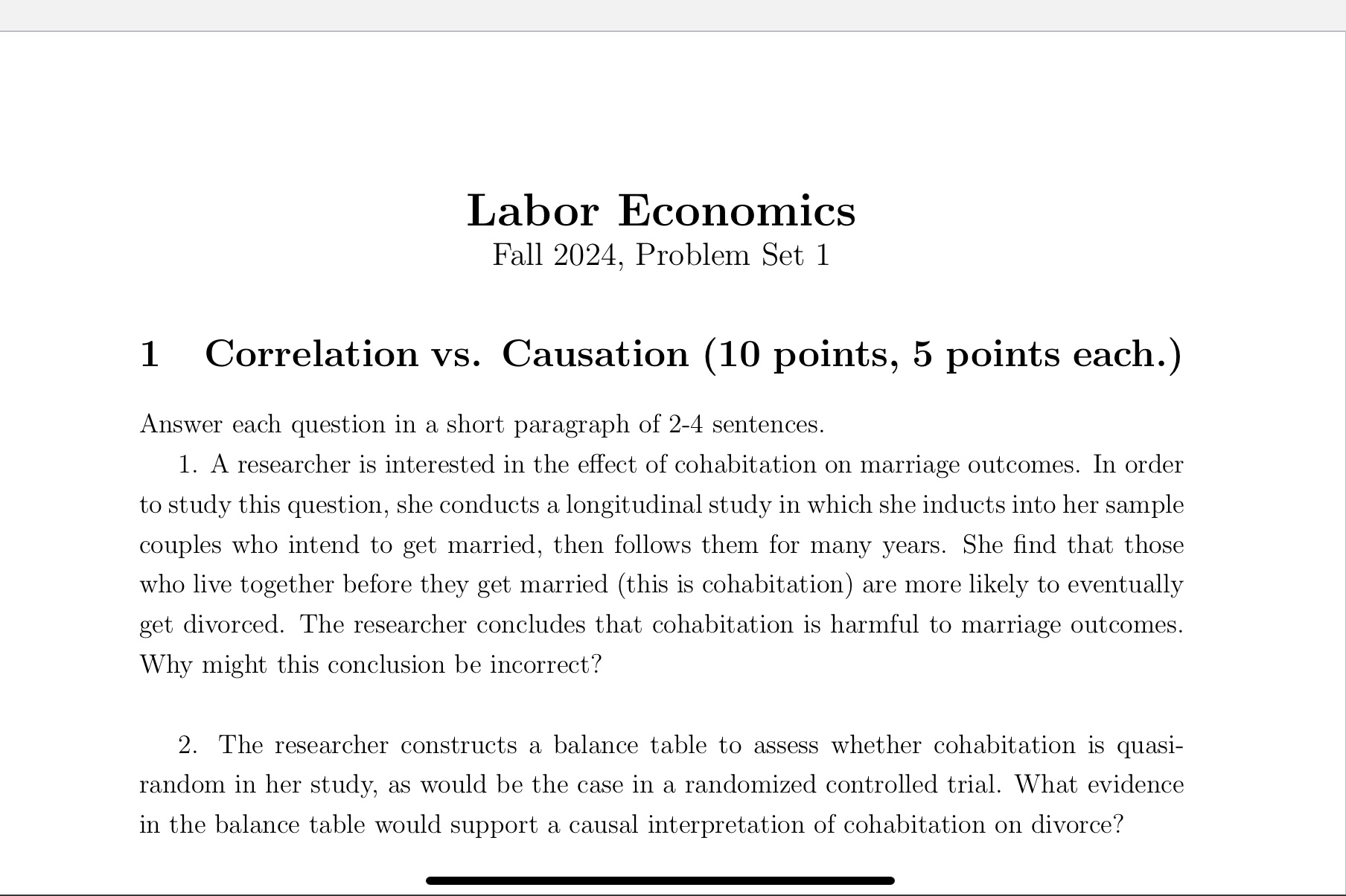
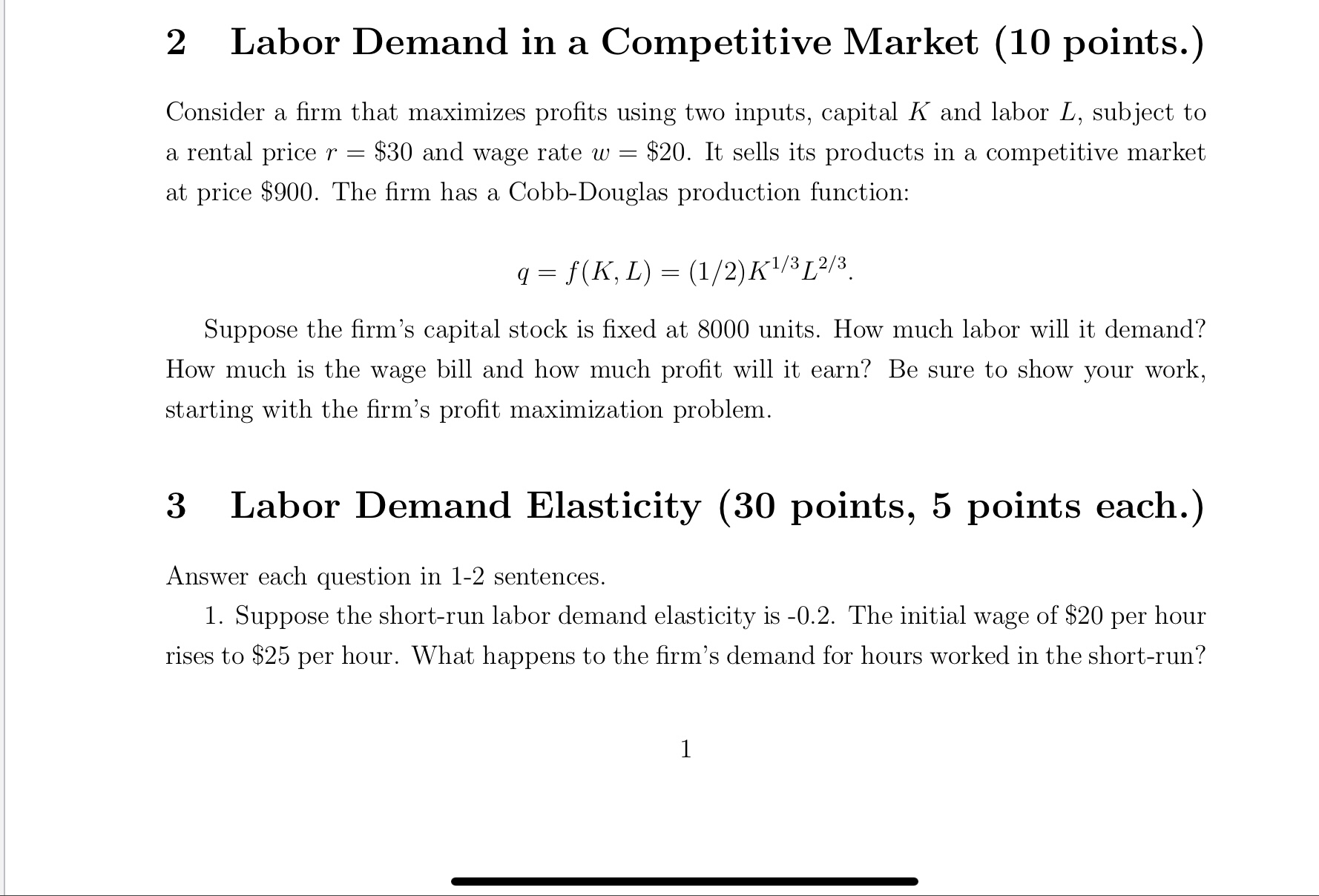
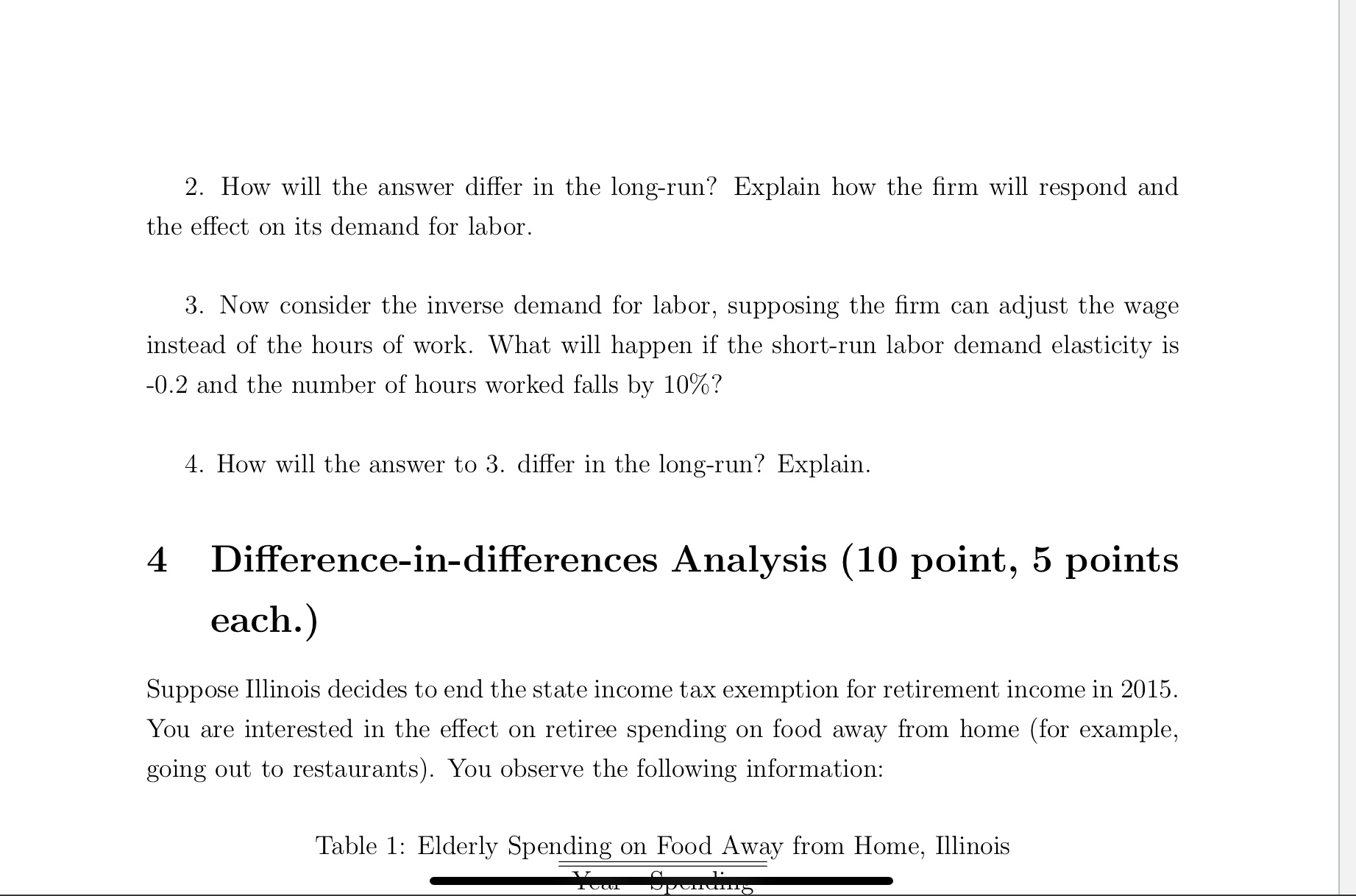
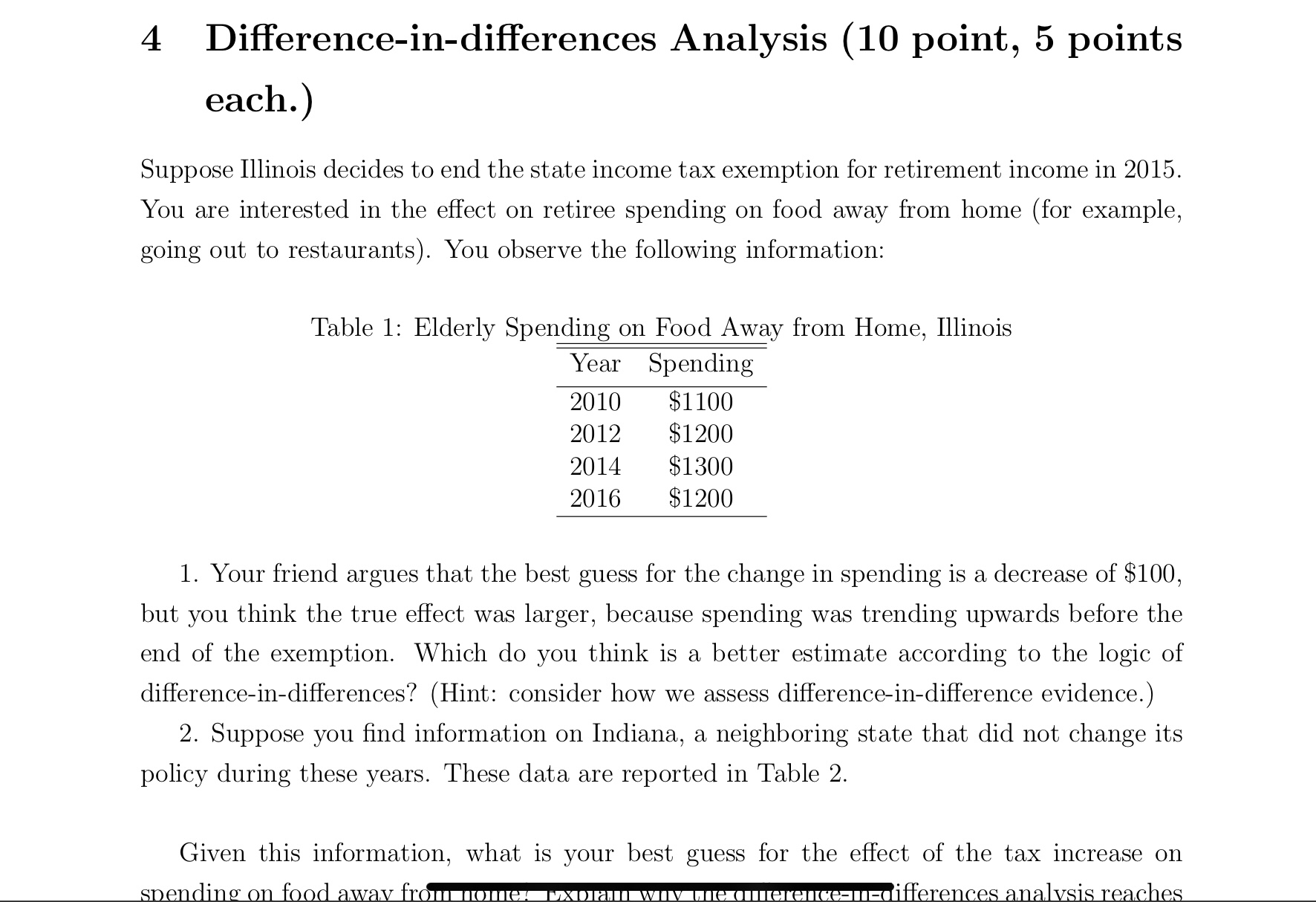
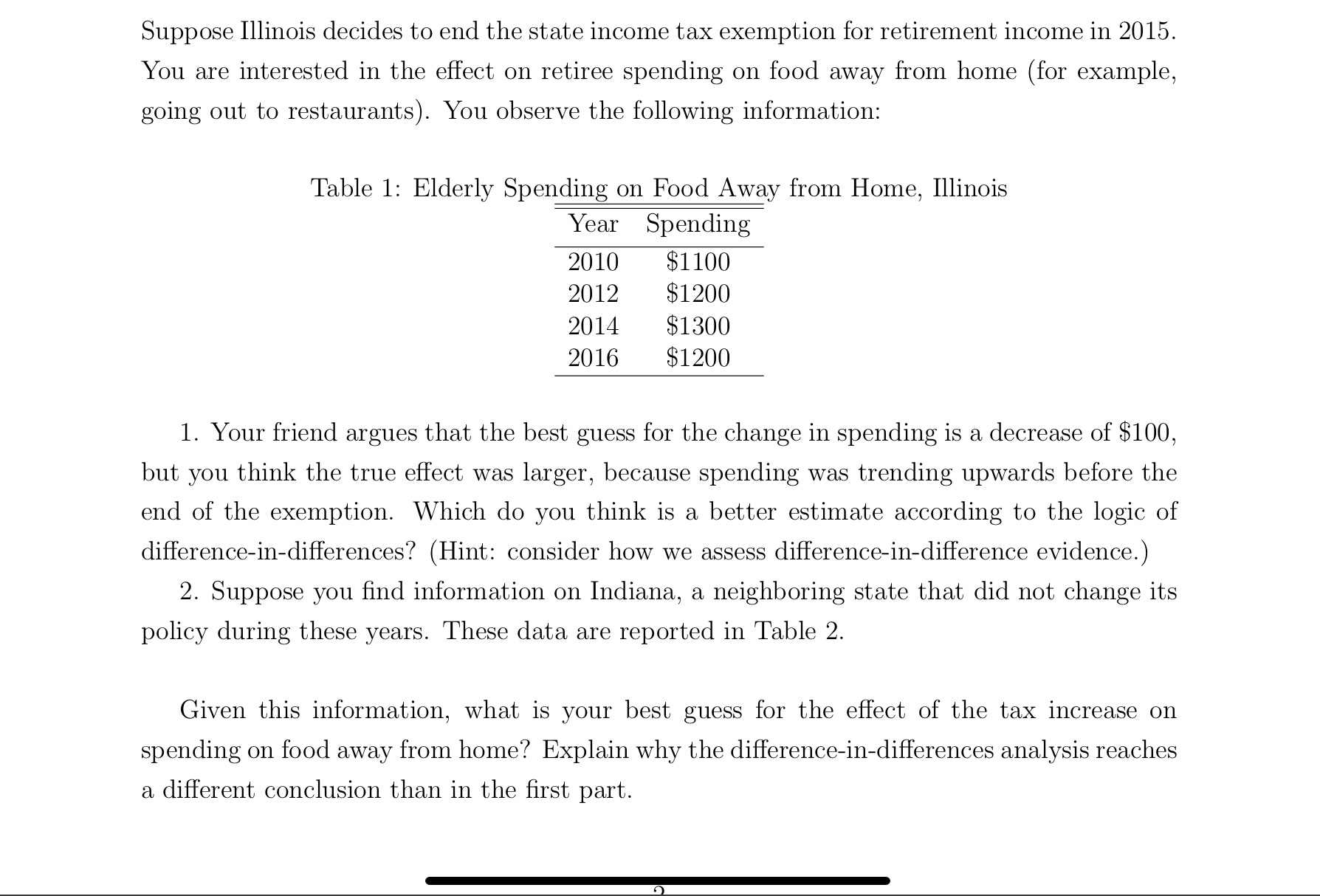
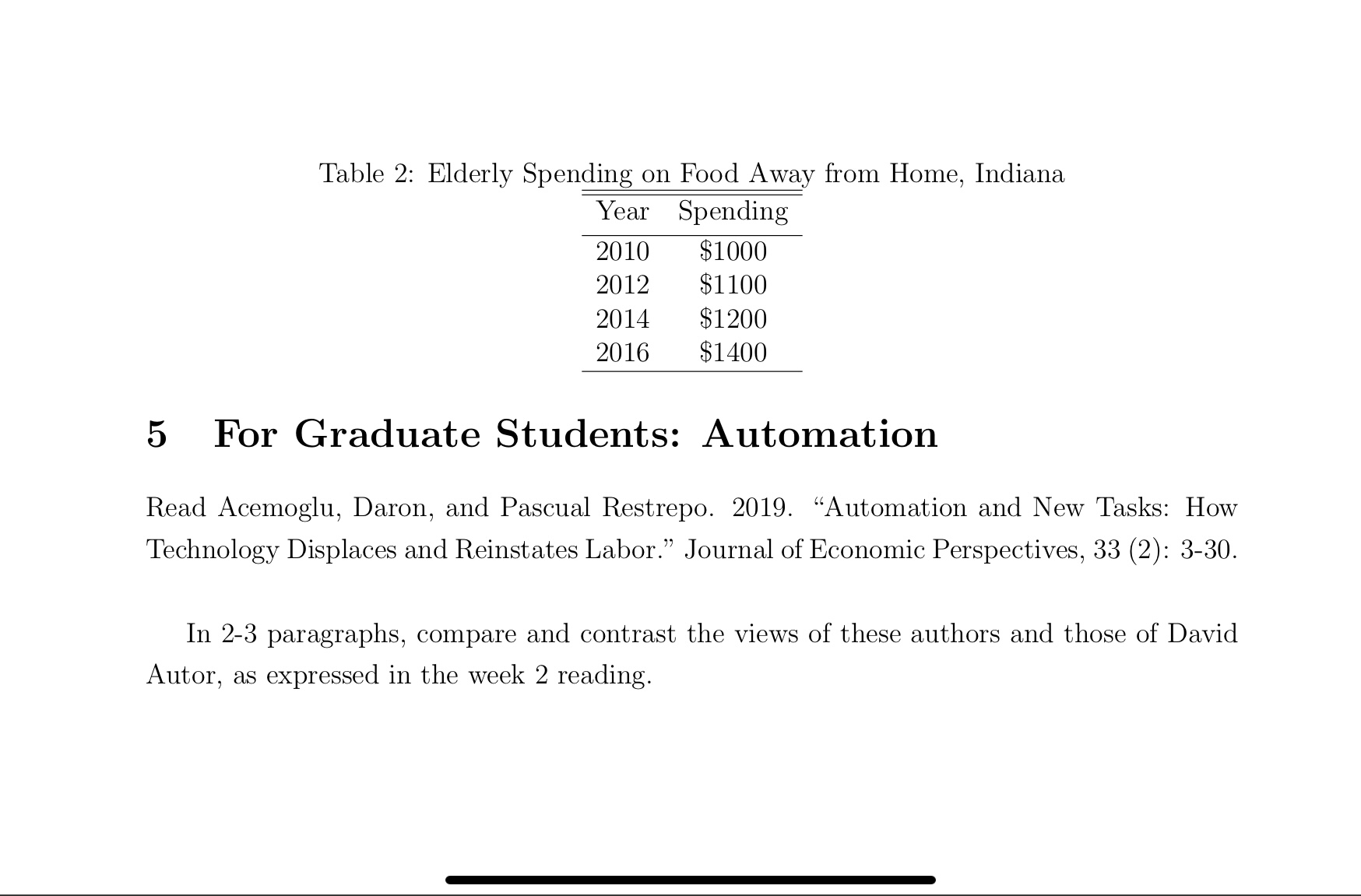
Labor Economics Fall 2024, Problem Set 1 1 Correlation vs. Causation (10 points, 5 points each.) Answer each question in a short paragraph of 2-4 sentences. 1. A researcher is interested in the effect of cohabitation on marriage outcomes. In order to study this question, she conducts a longitudinal study in which she inducts into her sample couples who intend to get married, then follows them for many years. She find that those who live together before they get married (this is cohabitation) are more likely to eventually get divorced. The researcher concludes that cohabitation is harmful to marriage outcomes. Why might this conclusion be incorrect? 2. The researcher constructs a balance table to assess whether cohabitation is quasi- random in her study, as would be the case in a randomized controlled trial. What evidence in the balance table would support a causal interpretation of cohabitation on divorce? 2 Labor Demand in a Competitive Market (10 points.) Consider a firm that maximizes profits using two inputs, capital K and labor L, subject to a rental price r = $30 and wage rate w = = $20. It sells its products in a competitive market at price $900. The firm has a Cobb-Douglas production function: q = f(K, L) = (1/2) K/32/3. Suppose the firm's capital stock is fixed at 8000 units. How much labor will it demand? How much is the wage bill and how much profit will it earn? Be sure to show your work, starting with the firm's profit maximization problem. 3 Labor Demand Elasticity (30 points, 5 points each.) Answer each question in 1-2 sentences. per hour 1. Suppose the short-run labor demand elasticity is -0.2. The initial wage of $20 rises to $25 per hour. What happens to the firm's demand for hours worked in the short-run? 1 2. How will the answer differ in the long-run? Explain how the firm will respond and the effect on its demand for labor. 3. Now consider the inverse demand for labor, supposing the firm can adjust the wage instead of the hours of work. What will happen if the short-run labor demand elasticity is -0.2 and the number of hours worked falls by 10%? 4 4. How will the answer to 3. differ in the long-run? Explain. Difference-in-differences Analysis (10 point, 5 points each.) Suppose Illinois decides to end the state income tax exemption for retirement income in 2015. You are interested in the effect on retiree spending on food away from home (for example, going out to restaurants). You observe the following information: Table 1: Elderly Spending on Food Away from Home, Illinois Your Spending 4 Difference-in-differences Analysis (10 point, 5 points each.) Suppose Illinois decides to end the state income tax exemption for retirement income in 2015. You are interested in the effect on retiree spending on food away from home (for example, going out to restaurants). You observe the following information: Table 1: Elderly Spending on Food Away from Home, Illinois Year Spending 2010 $1100 2012 $1200 2014 2016 $1300 $1200 1. Your friend argues that the best guess for the change in spending is a decrease of $100, but you think the true effect was larger, because spending was trending upwards before the end of the exemption. Which do you think is a better estimate according to the logic of difference-in-differences? (Hint: consider how we assess difference-in-difference evidence.) 2. Suppose you find information on Indiana, a neighboring state that did not change its policy during these years. These data are reported in Table 2. Given this information, what is your best guess for the effect of the tax increase on spending on food away from nome. ExDiamI WI amerence=m=differences analysis reaches Suppose Illinois decides to end the state income tax exemption for retirement income in 2015. You are interested in the effect on retiree spending on food away from home (for example, going out to restaurants). You observe the following information: Table 1: Elderly Spending on Food Away from Home, Illinois Year Spending 2010 $1100 2012 $1200 2014 $1300 2016 $1200 1. Your friend argues that the best guess for the change in spending is a decrease of $100, but you think the true effect was larger, because spending was trending upwards before the end of the exemption. Which do you think is a better estimate according to the logic of difference-in-differences? (Hint: consider how we assess difference-in-difference evidence.) 2. Suppose you find information on Indiana, a neighboring state that did not change its policy during these years. These data are reported in Table 2. Given this information, what is your best guess for the effect of the tax increase on spending on food away from home? Explain why the difference-in-differences analysis reaches a different conclusion than in the first part. Table 2: Elderly Spending on Food Away from Home, Indiana Year Spending 2010 $1000 2012 $1100 2014 $1200 2016 $1400 5 For Graduate Students: Automation Read Acemoglu, Daron, and Pascual Restrepo. 2019. "Automation and New Tasks: How Technology Displaces and Reinstates Labor." Journal of Economic Perspectives, 33 (2): 3-30. In 2-3 paragraphs, compare and contrast the views of these authors and those of David Autor, as expressed in the week 2 reading.
Step by Step Solution
There are 3 Steps involved in it

Get step-by-step solutions from verified subject matter experts
 Study Help