



Question: Learn It: Chapter 05 Organizing and Drafting Business Messages In Section 5-3, we will cover methods for organizing ideas to show relationships. After conducting research
Learn It: Chapter 05 Organizing and Drafting Business Messages
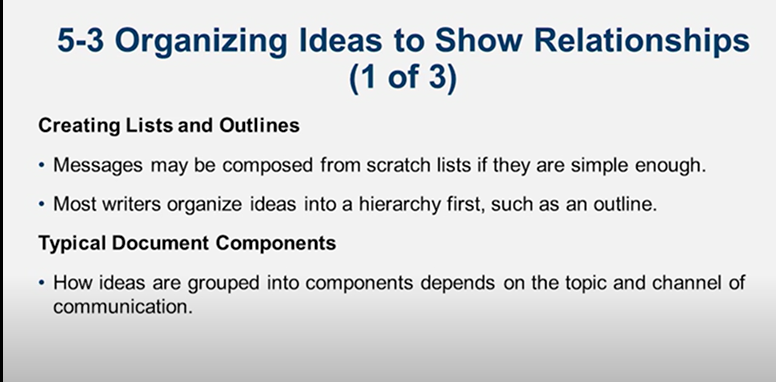
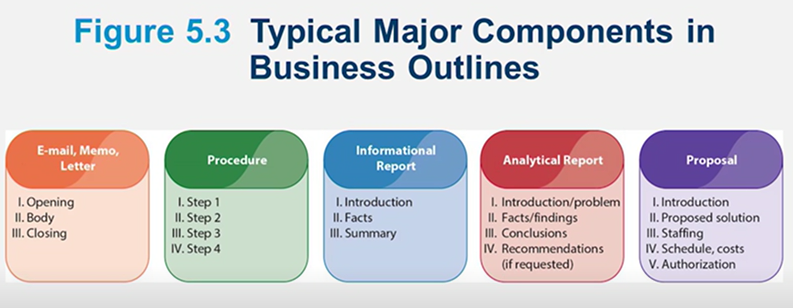
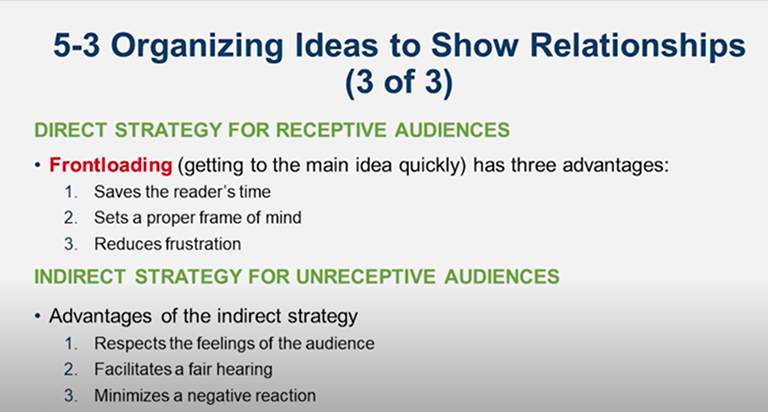
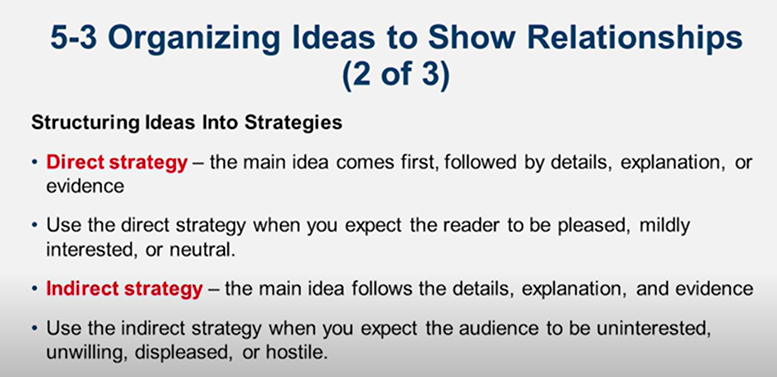
In Section 5-3, we will cover methods for organizing ideas to show relationships. After conducting research and generating ideas, the next step is to organize the information. Many communication experts regard poor organization as the greatest failing of business writers. Skilled writers group similar ideas together and then place them in a strategic sequence that helps the reader understand relationships and accept the writer's views. Two simple techniques can help writers organize data: the scratch list and the outline. How you group your ideas into components will depend on the topic and channel of communication. Business documents contain typical components arranged in traditional strategies, as shown in Figure 5.3: An e-mail, memo, or letter is generally organized with an opening, body, and closing. A procedure would contain a sequence of steps for the receiver to follow. An informational report usually includes an introduction, facts, and a summary. An analytical report includes an introduction or problem statement, followed by facts and findings, conclusions, and recommendations (if requested). Lastly, a proposal includes an introduction, a proposed solution, staffing considerations, a schedule and/or associated costs, and an authorization request. The business documents outlined here will be covered in more depth in future chapters. The way you order information in your outline will depend on the strategy you choose. Typical business messages use either a direct or indirect strategy. The strategy you select is determined by how you expect the audience to react to the message, with the primary difference between the two strategies being the placement of the main idea. With the direct strategy, the main idea comes first, followed by details, explanation, or evidence. Use the direct strategy when you expect the reader to be pleased, mildly interested, or neutral. With the indirect strategy, the main idea follows the details, explanation, and evidence. This strategy is useful when you expect the audience to be uninterested, unwilling, displeased, or hostile. The direct strategy is used for receptive audiences to communicate routine requests and responses, orders and acknowledgments, nonsensitive memos, e-mails, informational reports, and informational oral presentations. Frontloading, which means getting to the main idea quickly, can save the reader's time, set a proper frame of mind, and reduce frustration. The indirect strategy is typically used for unreceptive audiences to deliver bad news, ideas that require persuasion, and sensitive news. Revealing the main idea only after you've offered an explanation and evidence respects the feelings of the audience, facilitates a fair hearing, and can minimize a negative reaction.
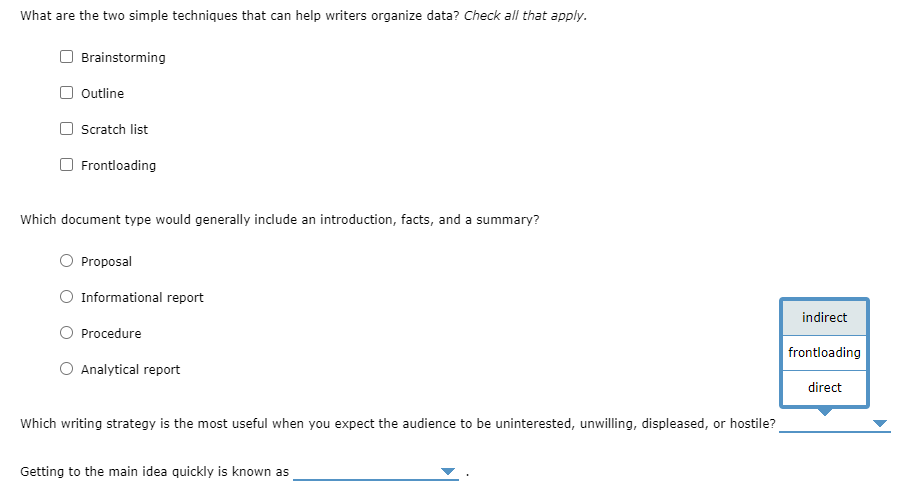
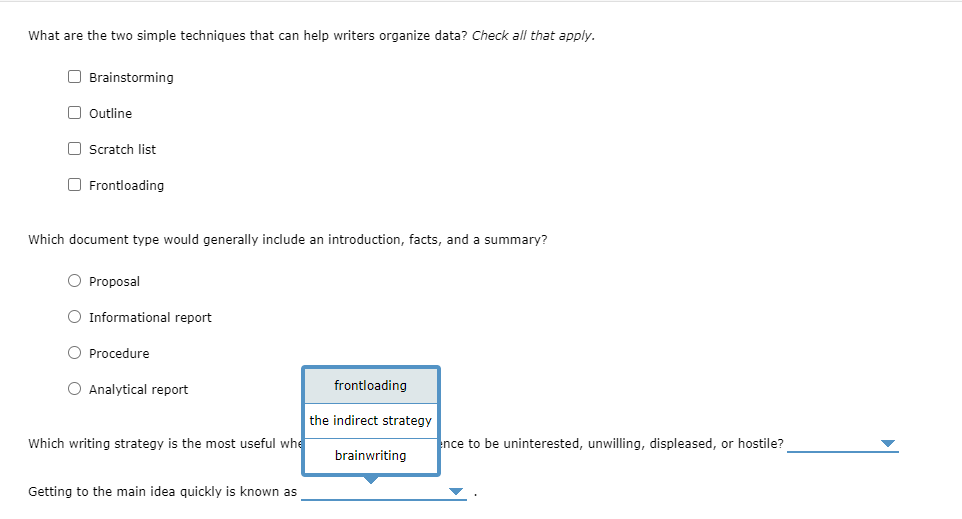
What are the two simple techniques that can help writers organize data? Check all that apply.
Brainstorming
Outline
Scratch list
Frontloading
Which document type would generally include an introduction, facts, and a summary?
Proposal
Informational report
Procedure
Analytical report
Which writing strategy is the most useful when you expect the audience to be uninterested, unwilling, displeased, or hostile?
Getting to the main idea quickly is known as .
Step by Step Solution
There are 3 Steps involved in it
1 Expert Approved Answer
Step: 1 Unlock

Question Has Been Solved by an Expert!
Get step-by-step solutions from verified subject matter experts
Step: 2 Unlock
Step: 3 Unlock