



Question: Learn It: Chapter 05 Organizing and Drafting Business Messages In Section 5-6, we will cover how to create well-organized, coherent paragraphs. A paragraph is a
Learn It: Chapter 05 Organizing and Drafting Business Messages
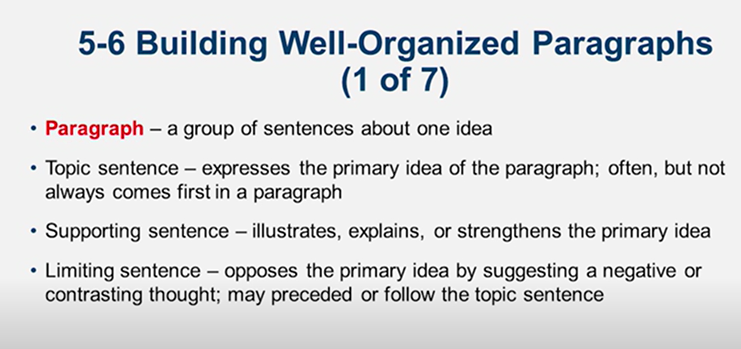
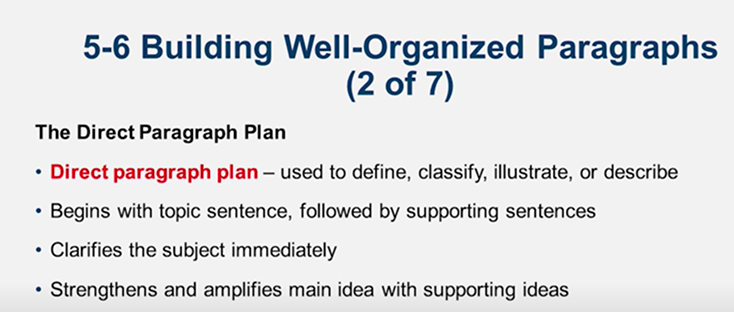
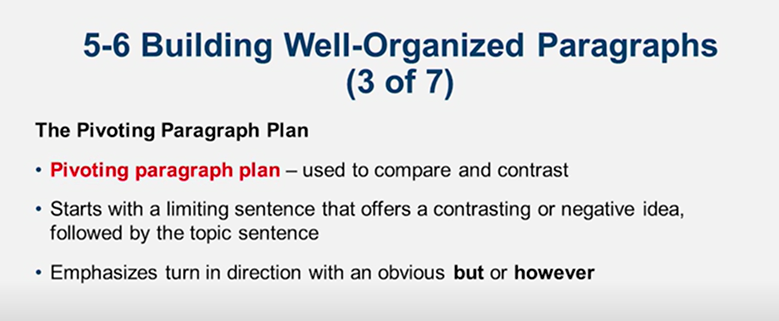
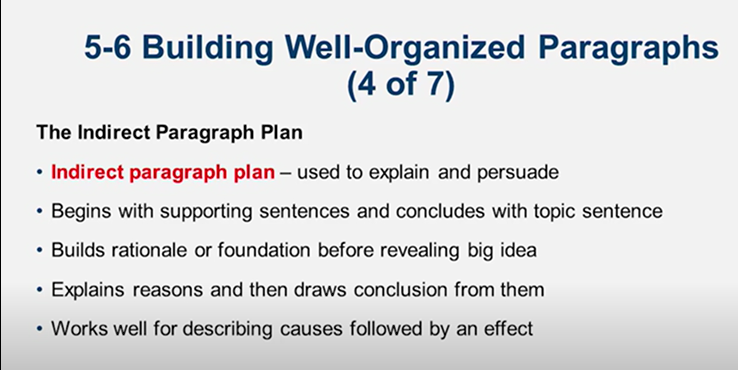
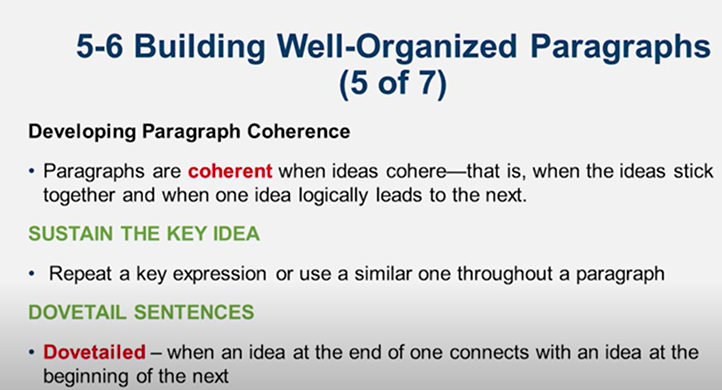
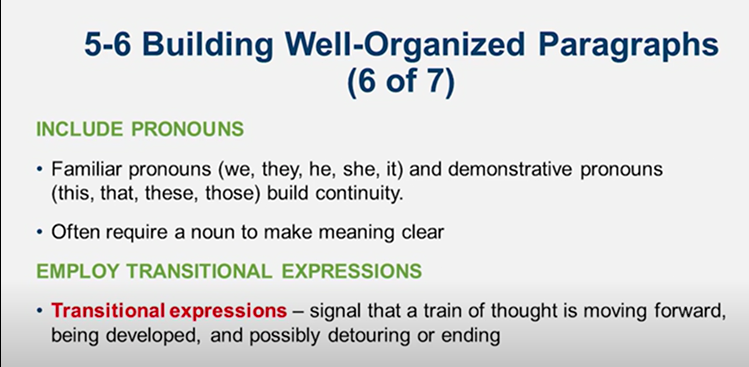
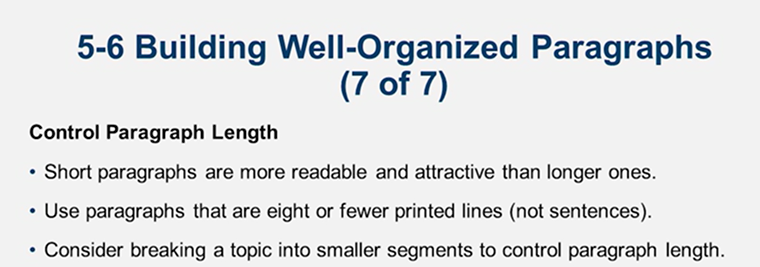
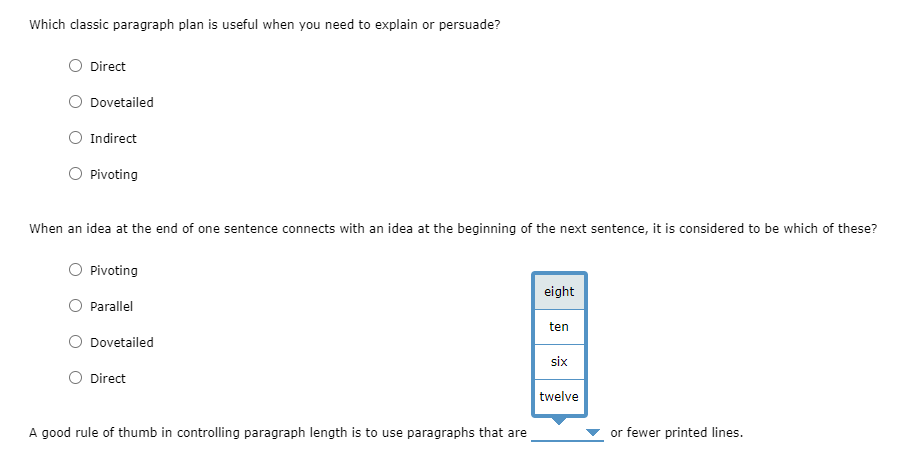
In Section 5-6, we will cover how to create well-organized, coherent paragraphs. A paragraph is a group of sentences about one idea. A well-organized paragraph may consist of a topic sentence which is the primary idea of the paragraph, a supporting sentence which illustrates, explains, or strengthens the primary idea, and a limiting sentence which opposes the primary idea by suggesting a negative or contrasting thought. These sentences can be arranged in one of three classic paragraph plans: direct, pivoting, and indirect. Most business messages use the direct paragraph plan, which defines, classifies, illustrates, or describes. It begins with a topic sentence and is followed by supporting sentences. This method clarifies the subject immediately with supporting ideas to strengthen and amplify the main idea. The pivoting paragraph plan is used to compare and contrast. It starts with a limiting sentence that offers a contrasting or negative idea and is followed by the topic sentence. Communicators should emphasize a turn in direction with an obvious but or however. The indirect paragraph plan is useful when you need to explain or persuade. Begin with supporting sentences and conclude with your topic sentence, building a rationale or foundation before revealing the big idea. This method explains reasons and then draws a conclusion from them, making it ideal for describing causes followed by an effect. Paragraphs are coherent when ideas cohere-that is, when the ideas stick together and when one idea logically leads to the next. Sustain the key idea by repeating a key expression or use a similar one throughout a paragraph. Dovetailed paragraphs (when an idea at the end of one connects with an idea at the beginning of the next) can be useful for dense, difficult topics. Familiar pronouns (we, they, he, she, it) and demonstrative pronouns (this, that, these, those) build continuity, but keep in mind that they often require a noun to make meaning clear. You may also employ transitional expressions to signal that a train of thought is moving forward, being developed, and possibly detouring or ending. These expressions help the reader anticipate what's coming and aid in comprehension. Remember to control paragraph length within your writing. Short paragraphs are more readable and attractive than longer ones. A good rule of thumb is to use paragraphs that are eight or fewer printed lines. You can achieve this by breaking a topic into smaller segments to control paragraph length. Which classic paragraph plan is useful when you need to explain or persuade? Direct Dovetailed Indirect Pivoting When an idea at the end of one sentence connects with an idea at the beginning of the next sentence, it is considered to be which of these? Pivoting Parallel Dovetailed Direct A good rule of thumb in controlling paragraph length is to use paragraphs that are or fewer printed lines.
Step by Step Solution
There are 3 Steps involved in it

Get step-by-step solutions from verified subject matter experts