



Question: Let's try filling in the blanks to write the procedural posture of the case. The procedural posture is the process the case went through to
Let's try filling in the blanks to write the procedural posture of the case.
The procedural posture is the process the case went through to the time it reached the appellate court.This is important because it relates to the "standard of review."You'll see on page 700-701, the court identifies the standard of review on a motion to dismiss as "de novo."A trial court's decision on a motion to review is purely legal, so if a party appeals that decision to an appellate court, the appellate court will perform a new legal review without deference to the trial court's decision.
Here we go:
At the trial court level, defendant filed awhich wasby the trial court judge.Theappealed.
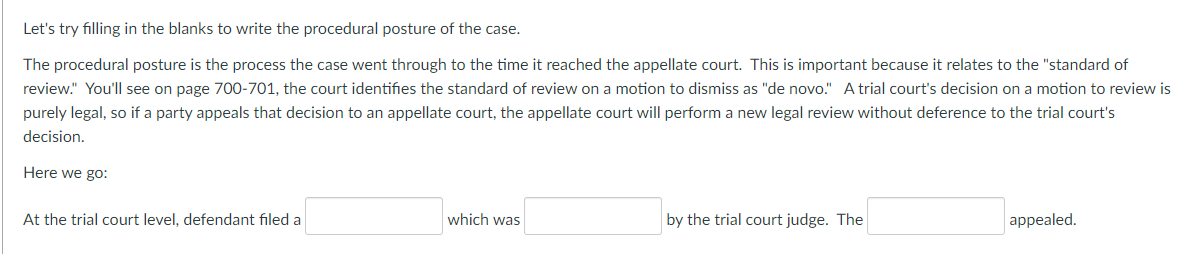
Let's try filling in the blanks to write the procedural posture of the case. The procedural posture is the process the case went through to the time it reached the appellate court. This is important because it relates to the "standard of review." You'll see on page 700-701, the court identifies the standard of review on a motion to dismiss as "de novo." A trial court's decision on a motion to review is purely legal, so if a party appeals that decision to an appellate court, the appellate court will perform a new legal review without deference to the trial court's decision. Here we go: At the trial court level, defendant filed a which was by the trial court judge. The appealed
Step by Step Solution
There are 3 Steps involved in it

Get step-by-step solutions from verified subject matter experts