





Question: Let's use the following formula to define objective risk factor. 1/( square root of number of homes insured) For example 100 homes insured against fire.
Let's use the following formula to defineLet's use the following formula to define

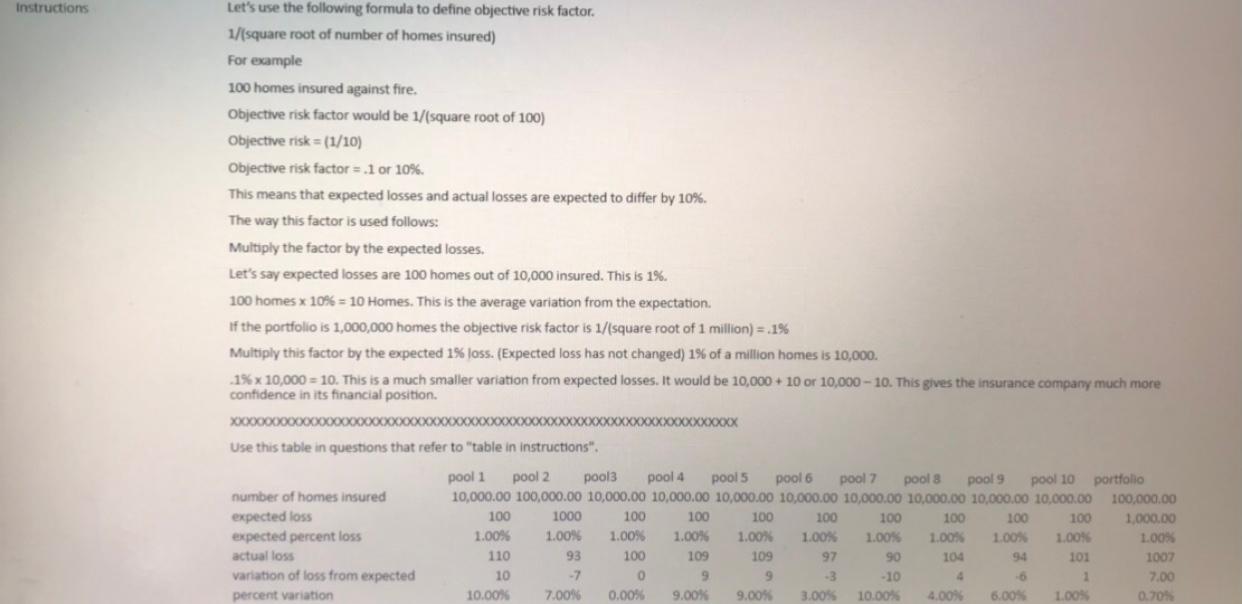
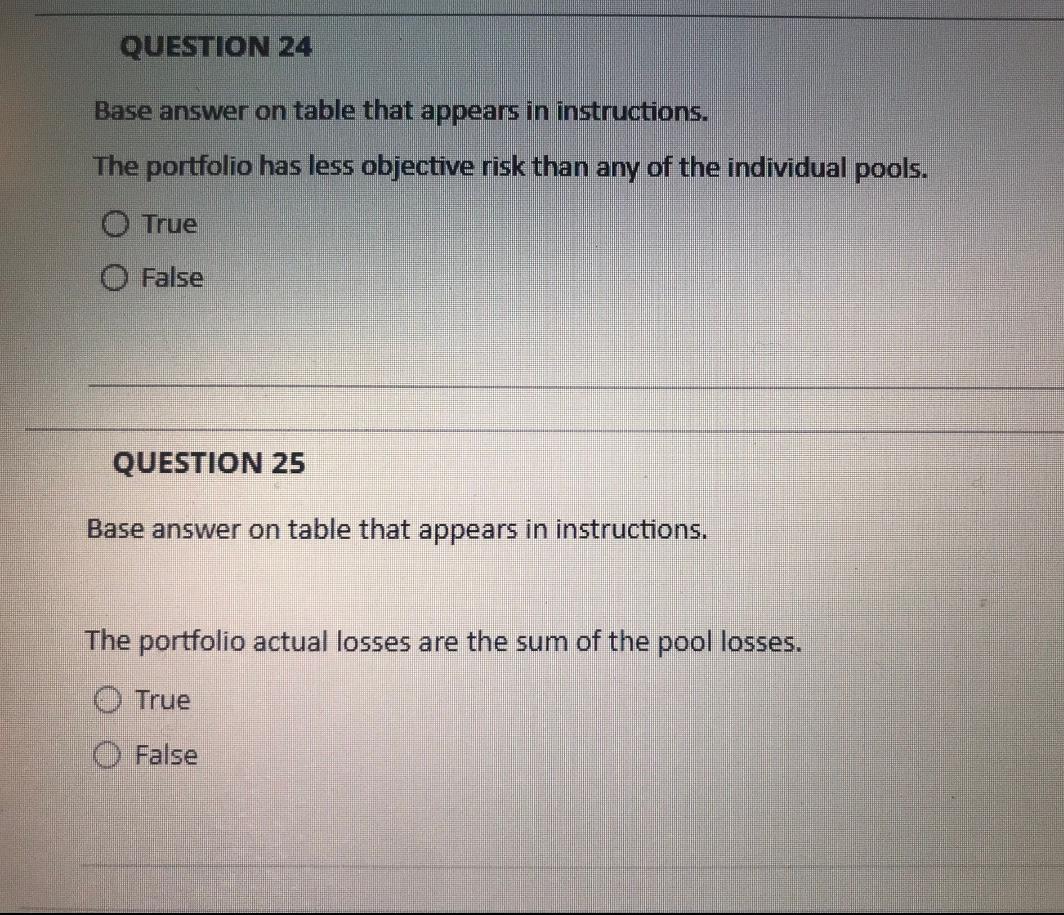
Let's use the following formula to define objective risk factor. 1/( square root of number of homes insured) For example 100 homes insured against fire. Objective risk factor would be 1/ (square root of 100 ) Objective risk =(1/10) Objective risk factor =.1 or 10%. This means that expected losses and actual losses are expected to differ by 10%. The way this factor is used follows: Multiply the factor by the expected losses. Let's say expected losses are 100 homes out of 10,000 insured. This is 1%. 100 homes 10%6=10 Homes. This is the average variation from the expectation. If the portfolio is 1,000,000 homes the objective risk factor is 1/ (square root of 1 million) =.1% Multiply this factor by the expected 1% loss. (Expected loss has not changed) 1% of a million homes is 10,000. .1%10,000=10. This is a much smaller variation from expected losses. It would be 10,000+10 or 10,00010. This gives the insurance company much more confidence in its financial position. 0000000000000000000000000000000000000000000000000000000000000000010000000000000000000 Base answer on table that appears in instructions. The portfolio has less objective risk than any of the individual pools. True False QUESTION 25 Base answer on table that appears in instructions. The portfolio actual losses are the sum of the pool losses. True False

Step by Step Solution

There are 3 Steps involved in it

1 Expert Approved Answer
Step: 1 Unlock blur-text-image

Question Has Been Solved by an Expert!

Get step-by-step solutions from verified subject matter experts

Step: 2 Unlock
Step: 3 Unlock

Students Have Also Explored These Related General Management Questions!