







Question: Link 1 Link 2 Link 3 Link 4 Problem Overview Racial segregation has always been a pernicious social problem in the United States. Although efforts

Link 1
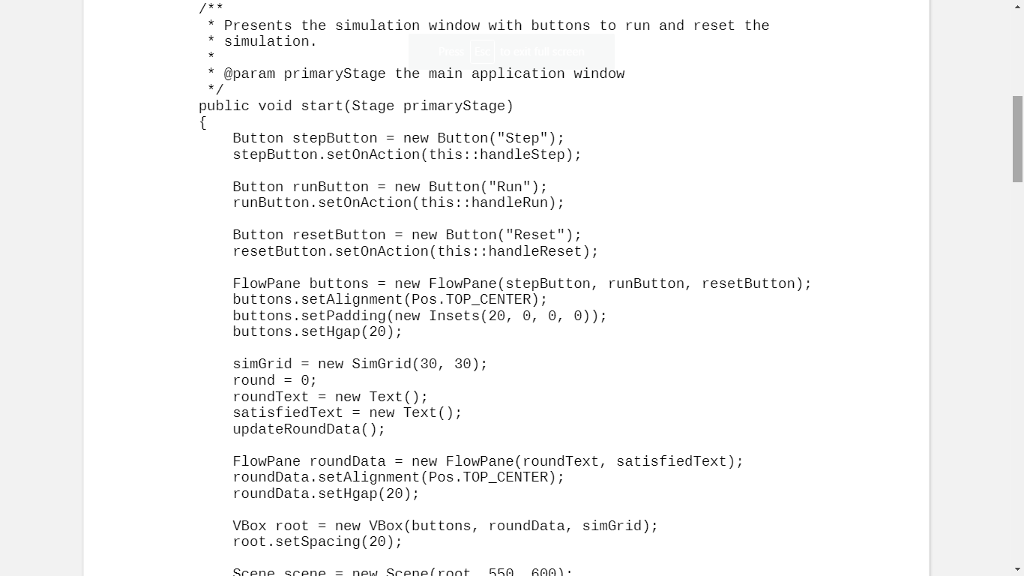
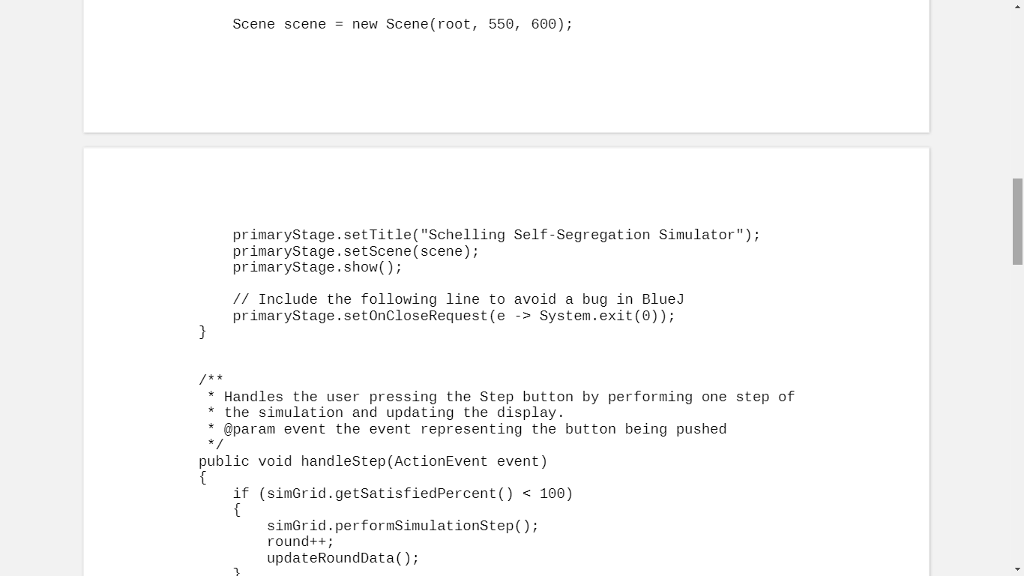
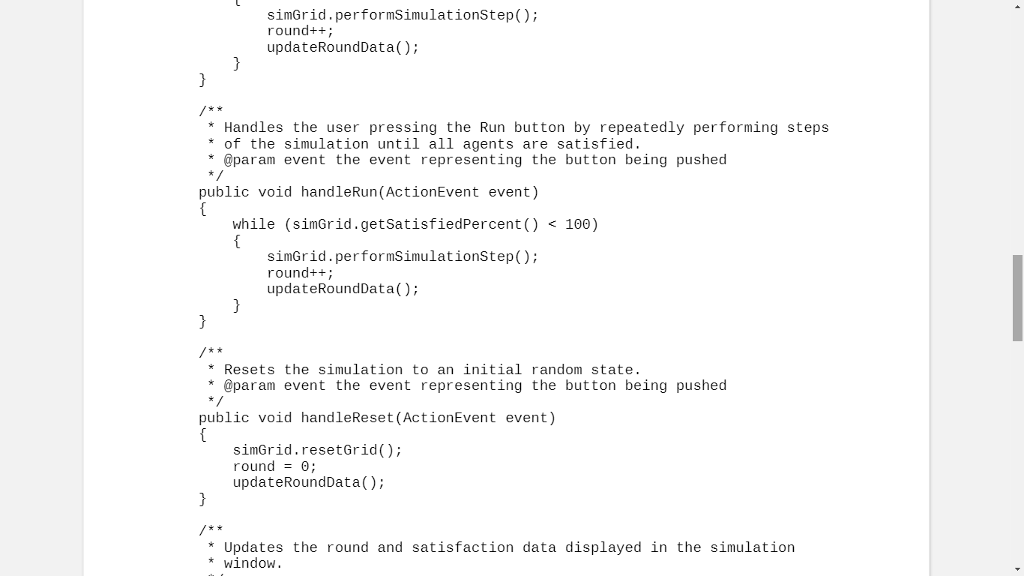
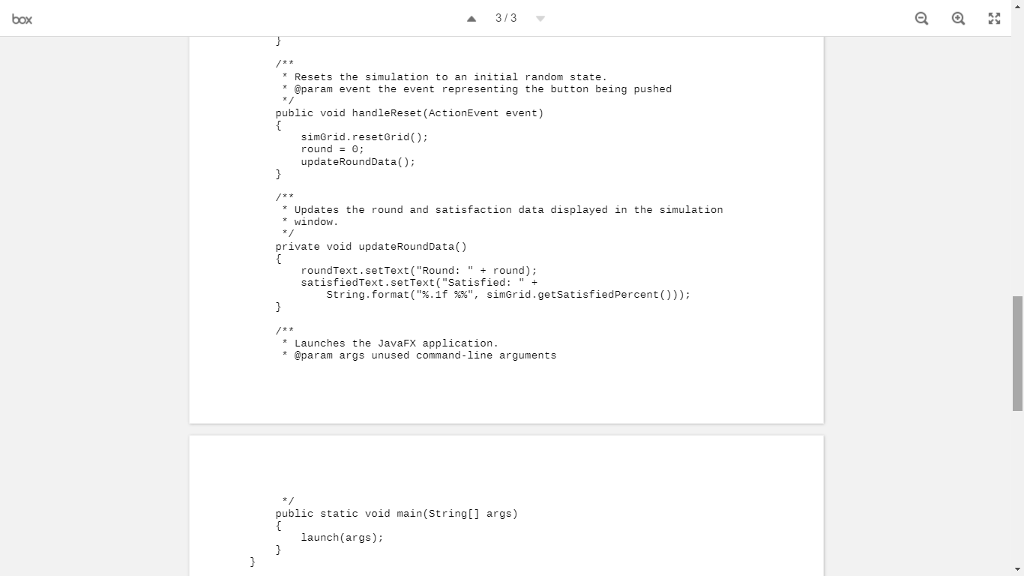
Link 2
Link 3
Link 4
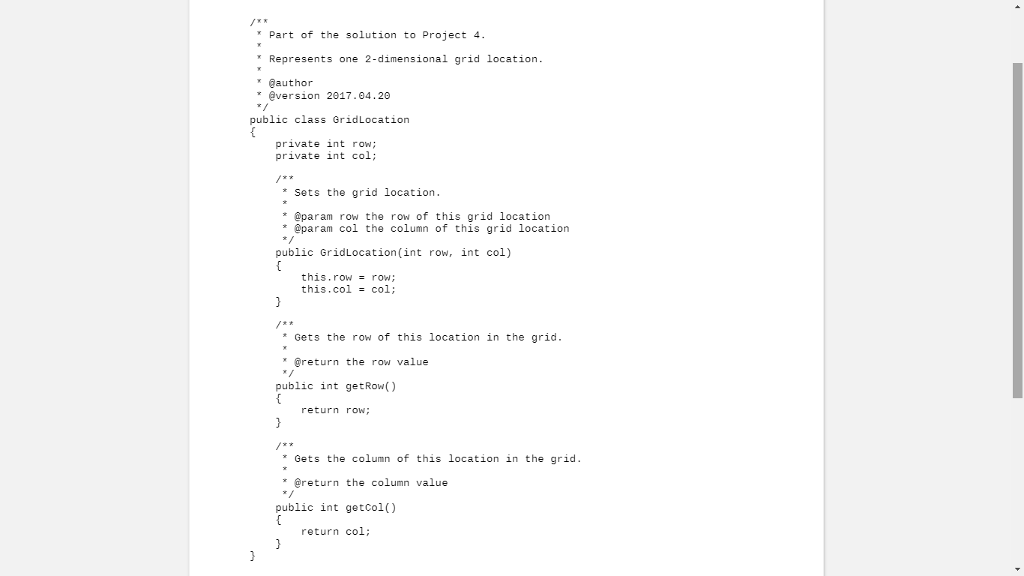
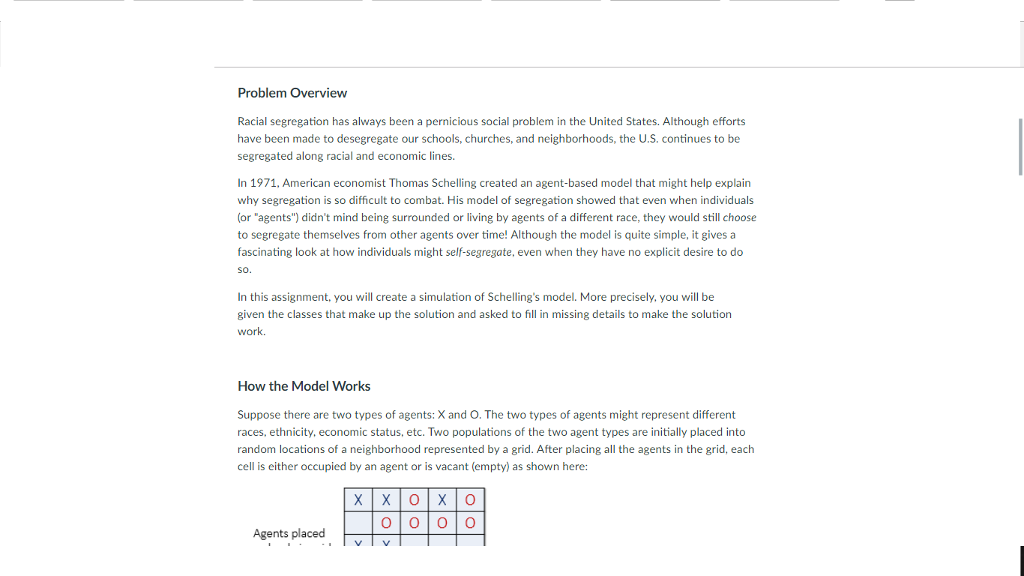
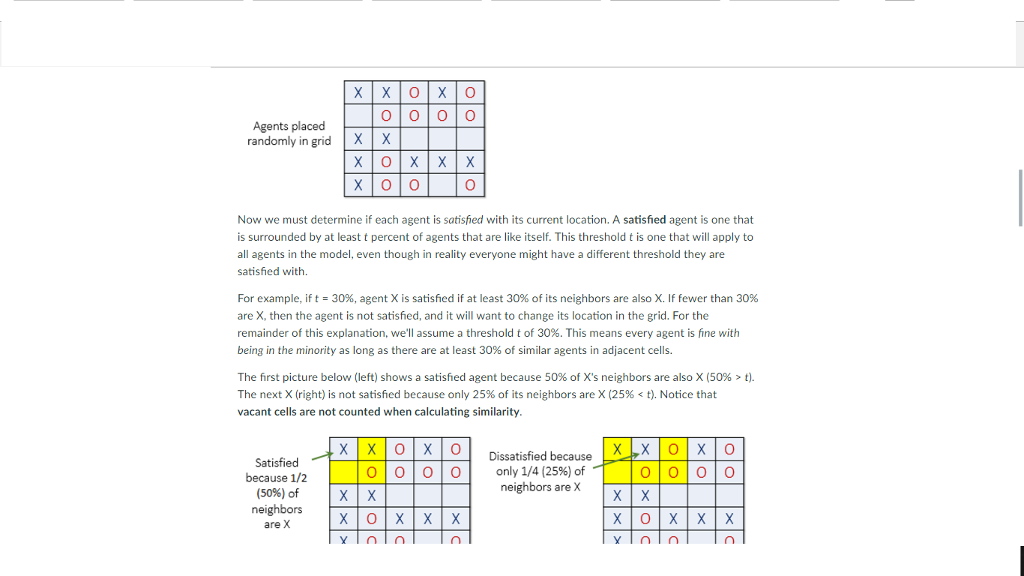
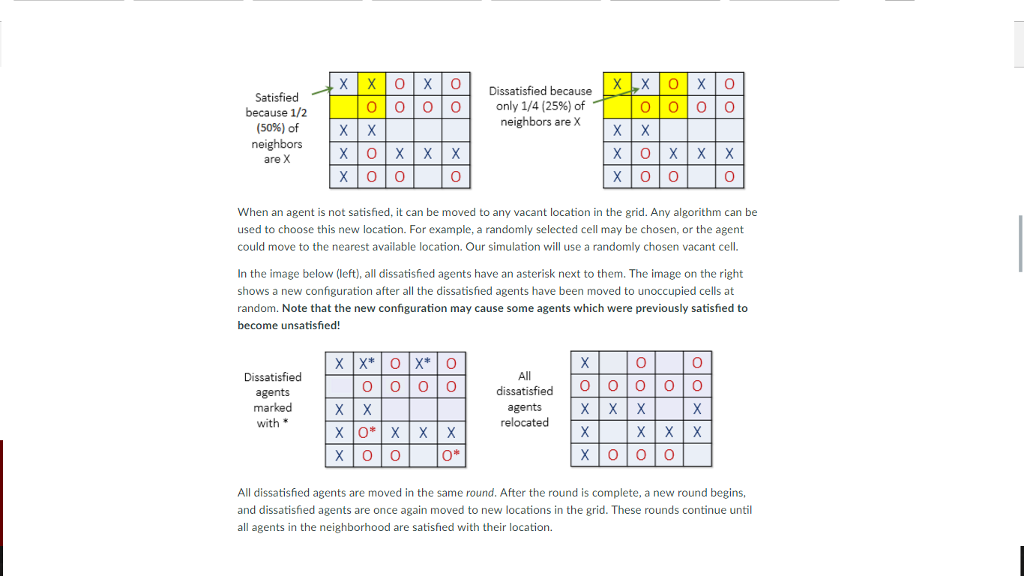
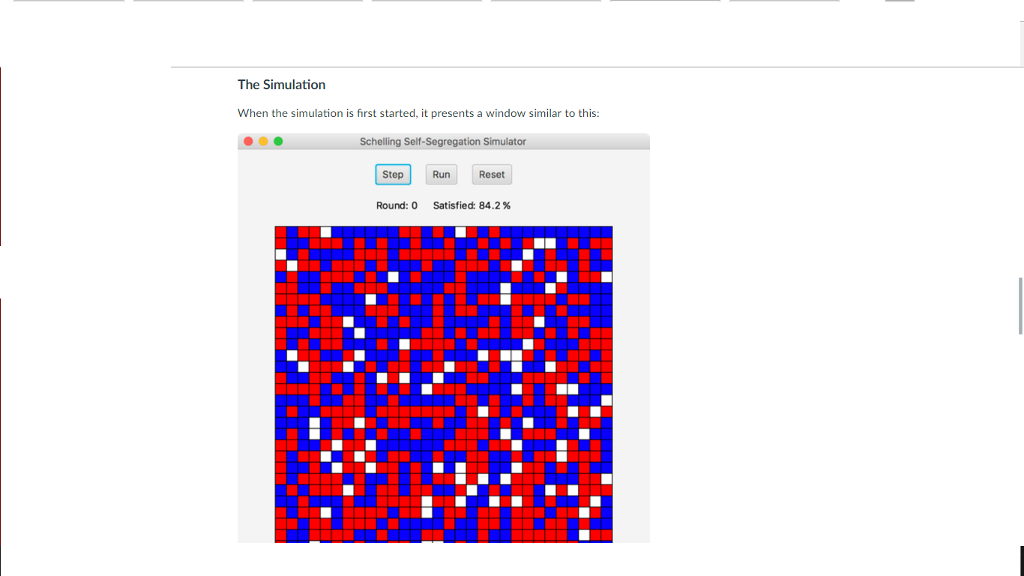
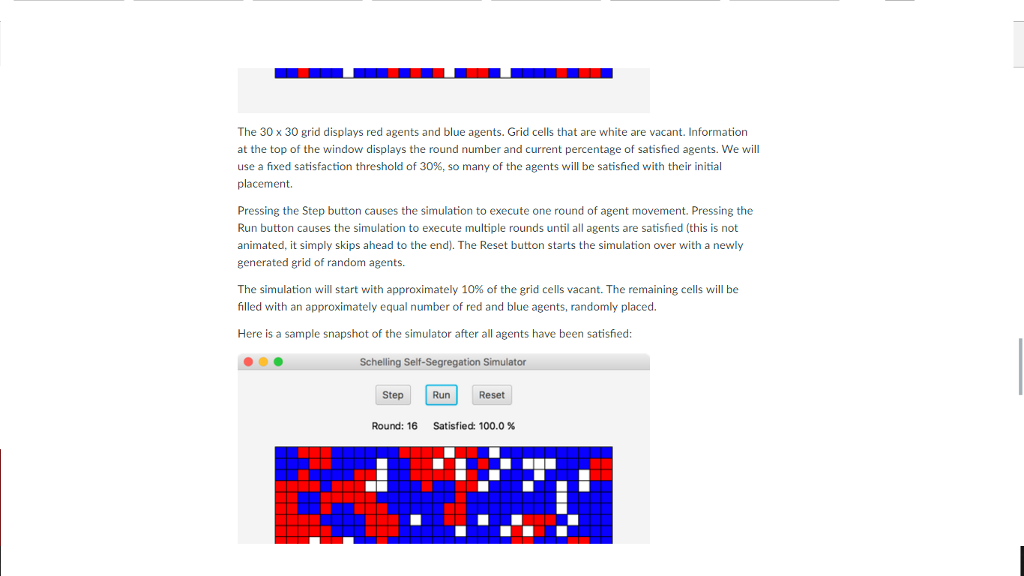
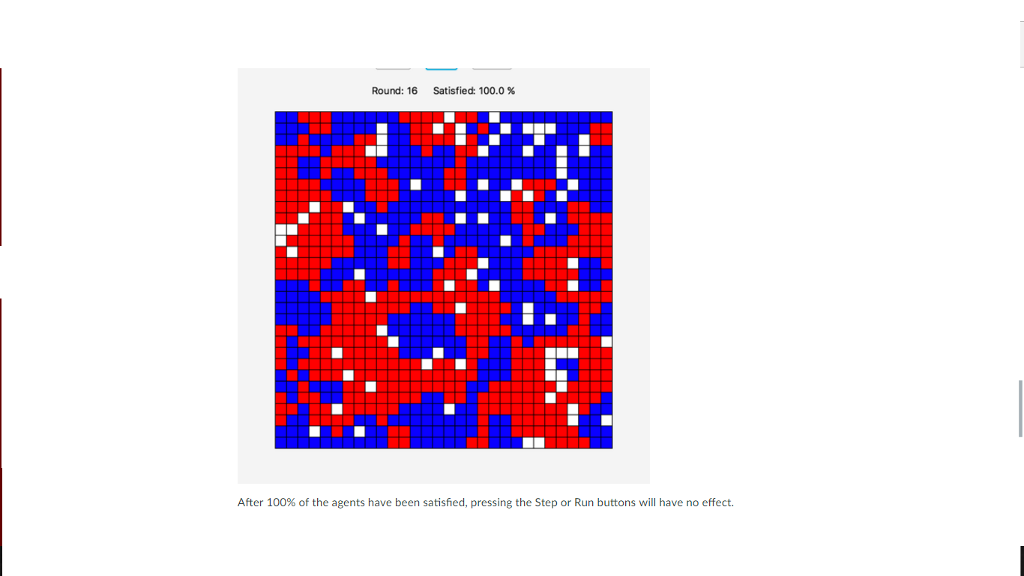
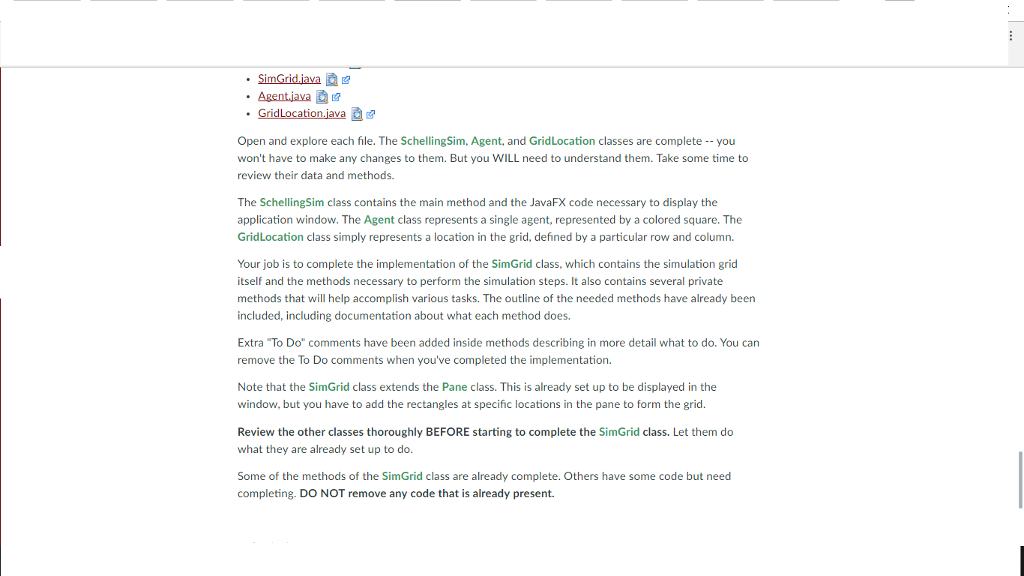
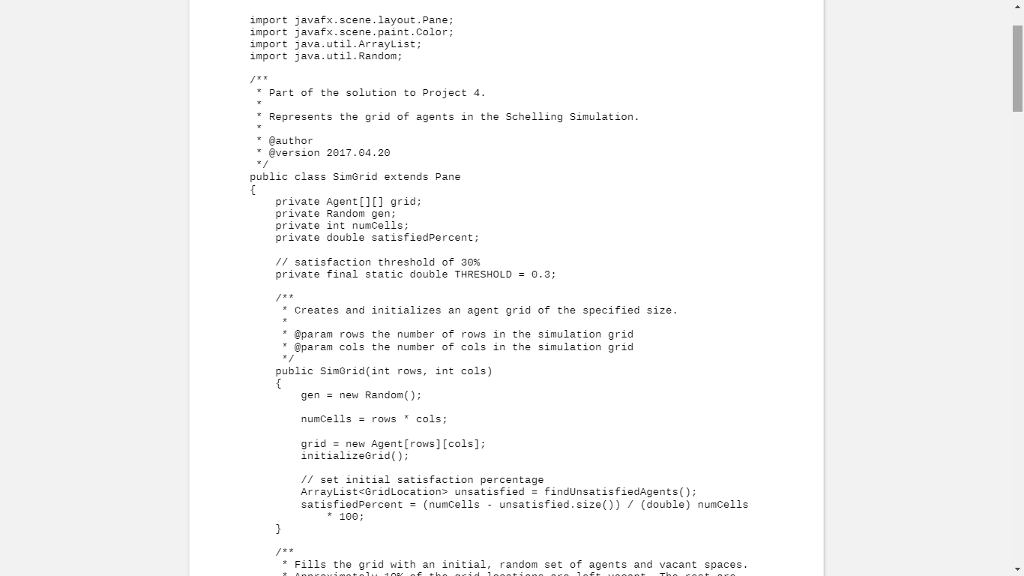
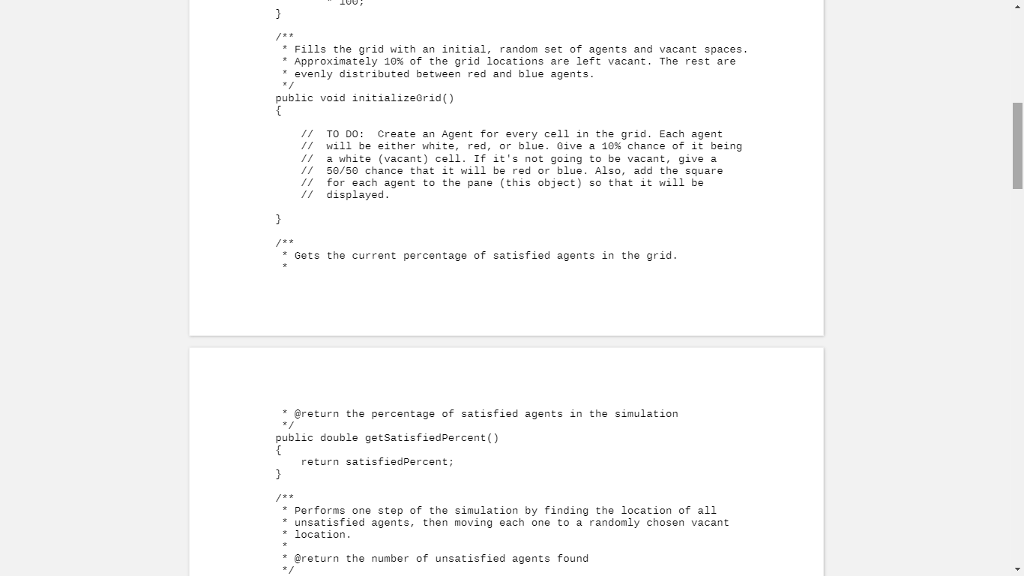
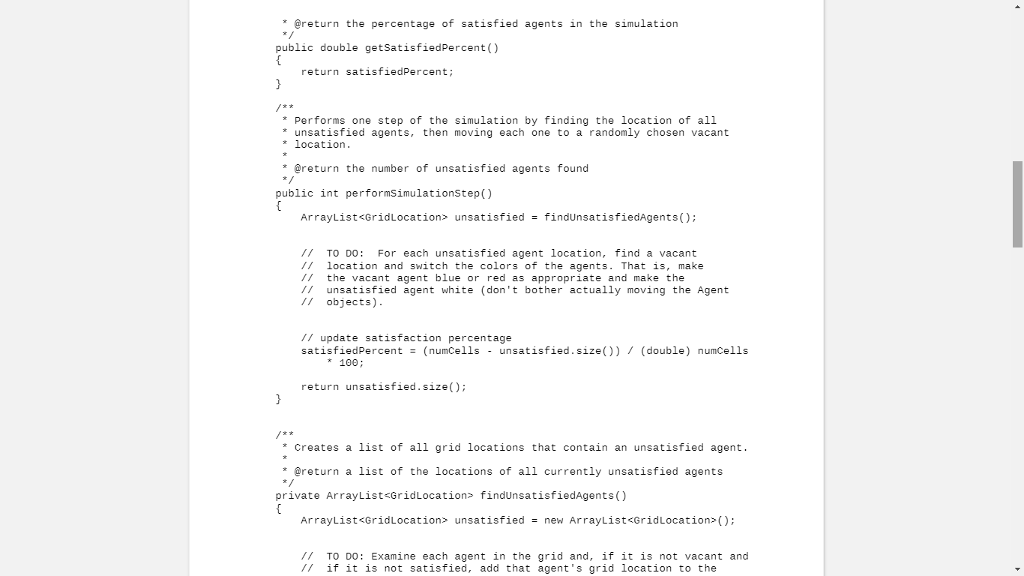
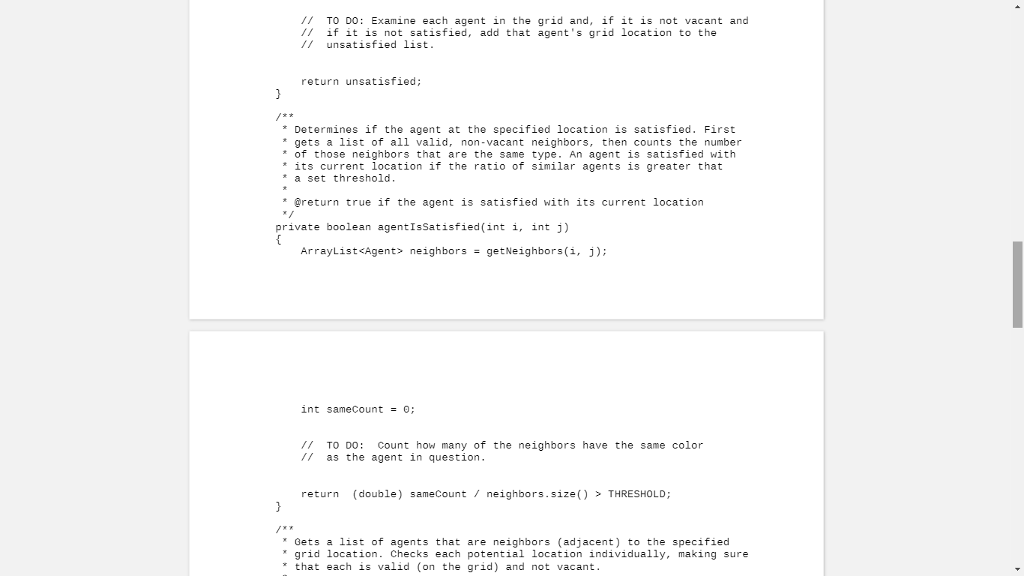
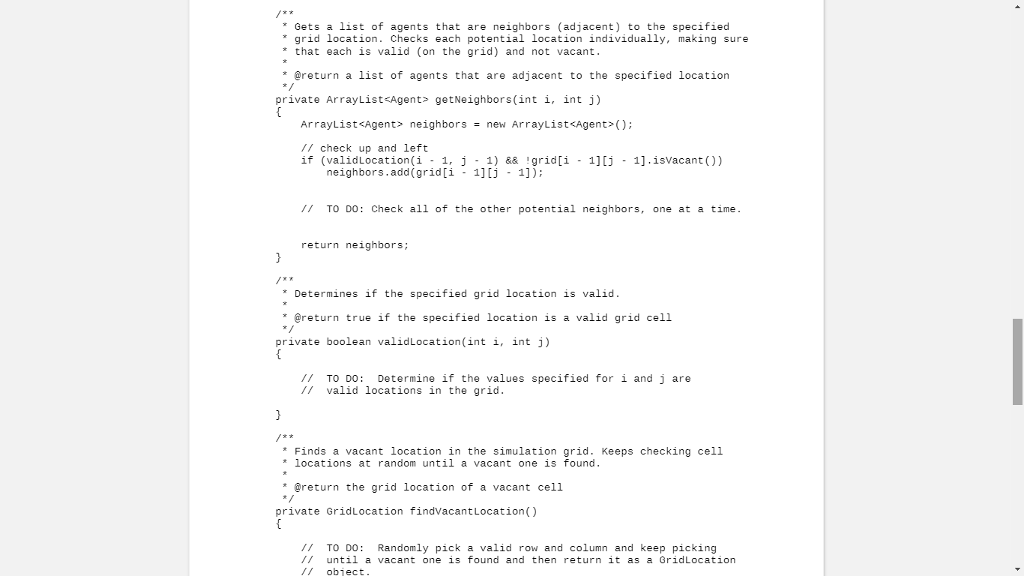
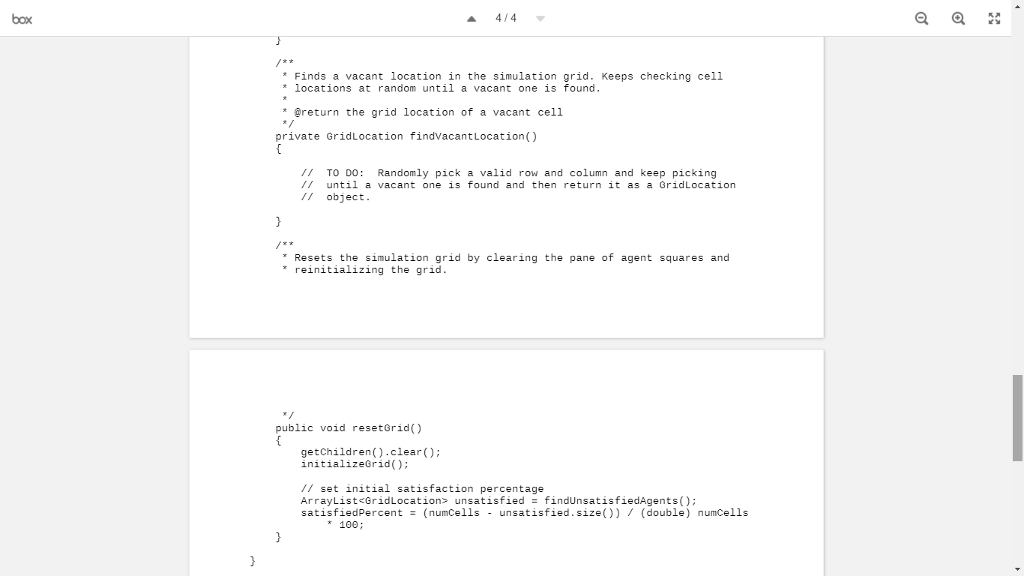
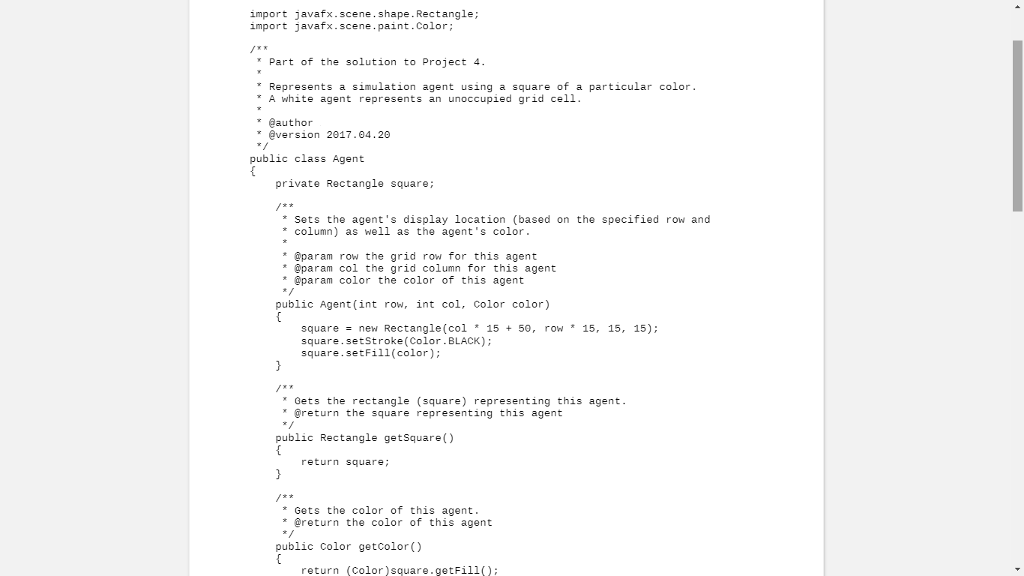
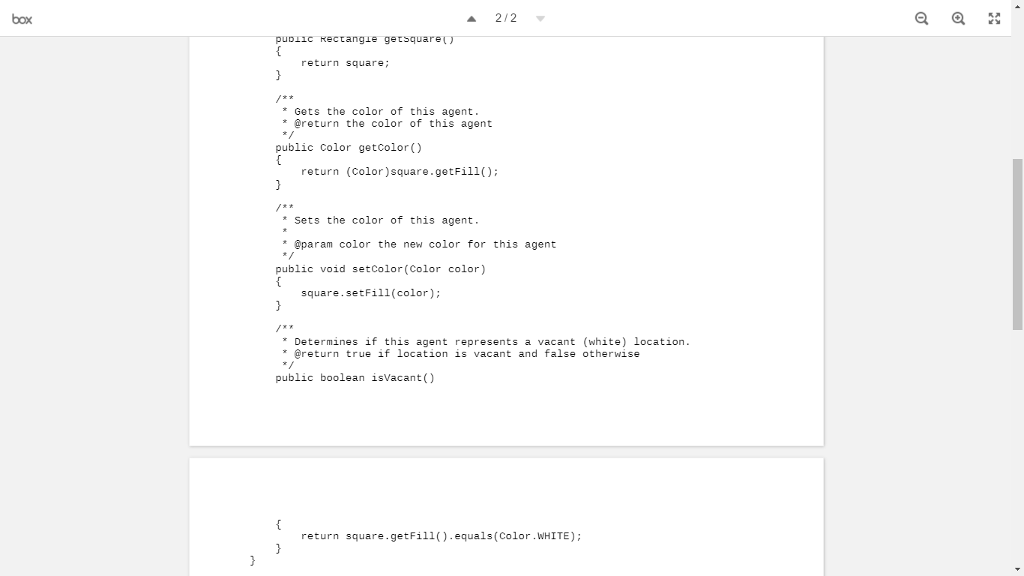
Problem Overview Racial segregation has always been a pernicious social problem in the United States. Although efforts have been made to desegregate our schools, churches, and neighborhoods, the U.S. continues to be segregated along racial and economic lines. n 1971, American economist Thomas Schelling created an agent-based model that might help explain why segregation is so difficult to combat. His model of segregation showed that even when individuals or "agents") didn't mind being surrounded or living by agents of a different race, they would still choose to segregate themselves from other agents over time! Although the model is quite simple, it gives a fascinating look at how individuals might self-segregate, even when they have no explicit desire to do SO In this assignment, you will create a simulation of Schelling's model. More precisely, you will be given the classes that make up the solution and asked to fill in missing details to make the solution work. How the Model Works Suppose there are two types of agents: X and O. The two types of agents might represent different races, ethnicity, economic status, etc. Two populations of the two agent types are initially placed into random locations of a neighborhood represented by a grid. After placing all the agents in the grid, each cell is either occupied by an agent or is vacant (empty) as shown here: X X O X O O O O O Agents placed Problem Overview Racial segregation has always been a pernicious social problem in the United States. Although efforts have been made to desegregate our schools, churches, and neighborhoods, the U.S. continues to be segregated along racial and economic lines. n 1971, American economist Thomas Schelling created an agent-based model that might help explain why segregation is so difficult to combat. His model of segregation showed that even when individuals or "agents") didn't mind being surrounded or living by agents of a different race, they would still choose to segregate themselves from other agents over time! Although the model is quite simple, it gives a fascinating look at how individuals might self-segregate, even when they have no explicit desire to do SO In this assignment, you will create a simulation of Schelling's model. More precisely, you will be given the classes that make up the solution and asked to fill in missing details to make the solution work. How the Model Works Suppose there are two types of agents: X and O. The two types of agents might represent different races, ethnicity, economic status, etc. Two populations of the two agent types are initially placed into random locations of a neighborhood represented by a grid. After placing all the agents in the grid, each cell is either occupied by an agent or is vacant (empty) as shown here: X X O X O O O O O Agents placed
Step by Step Solution
There are 3 Steps involved in it

Get step-by-step solutions from verified subject matter experts
 Study Help