







Question: MGMT 360 Operations Management Spring 2024 Homework Assignment 5 Southeastern Oklahoma State University's business program has the facilities and faculty to handle an enrollment of
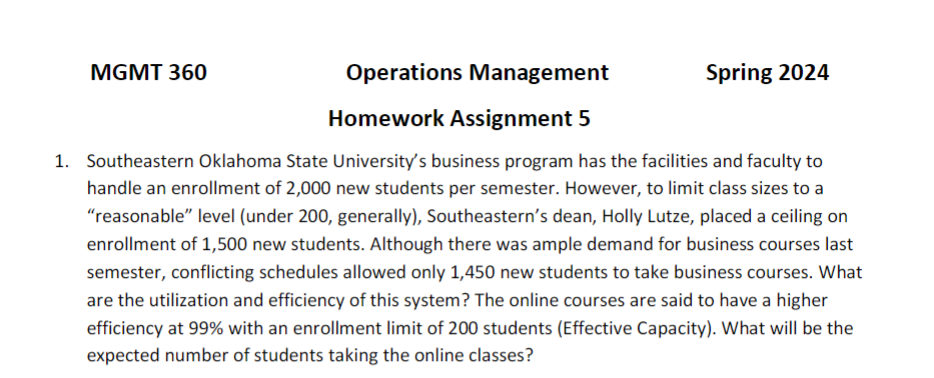
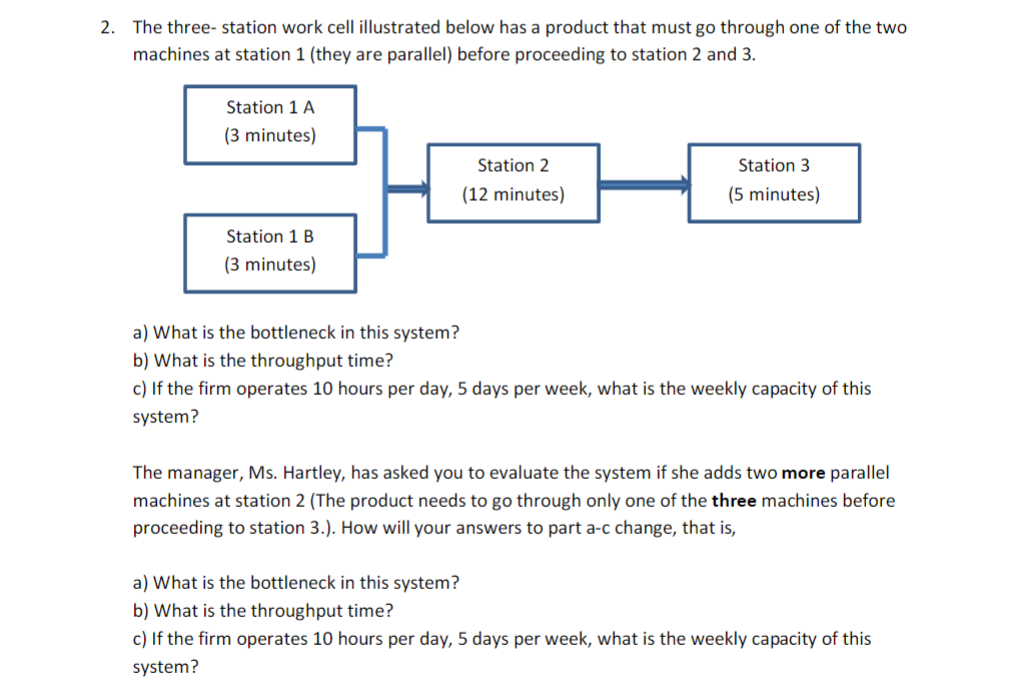
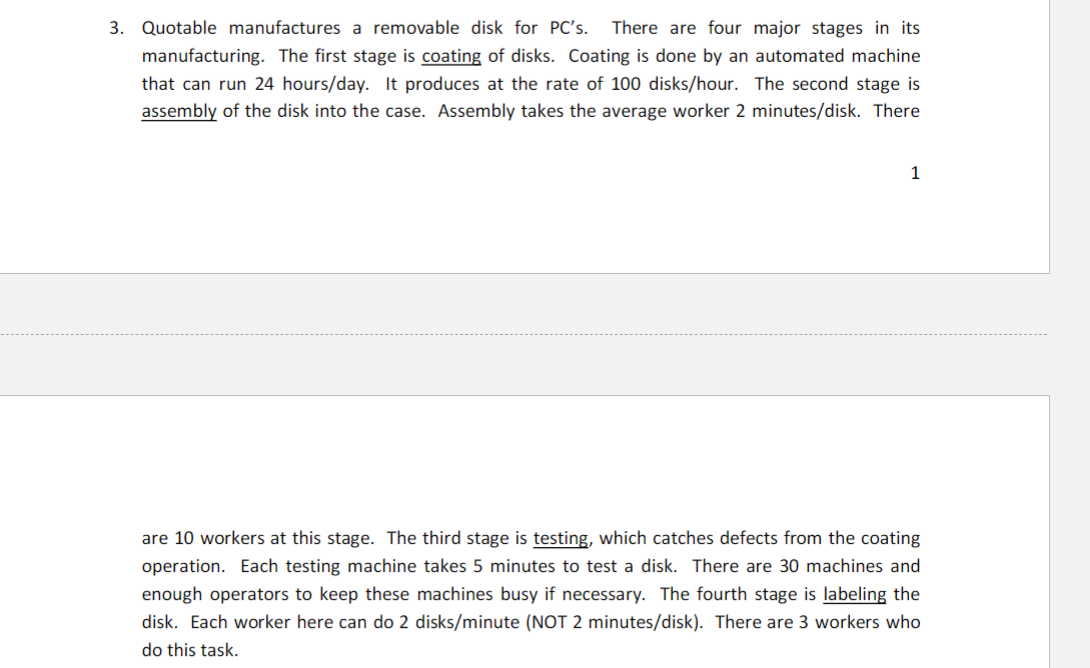
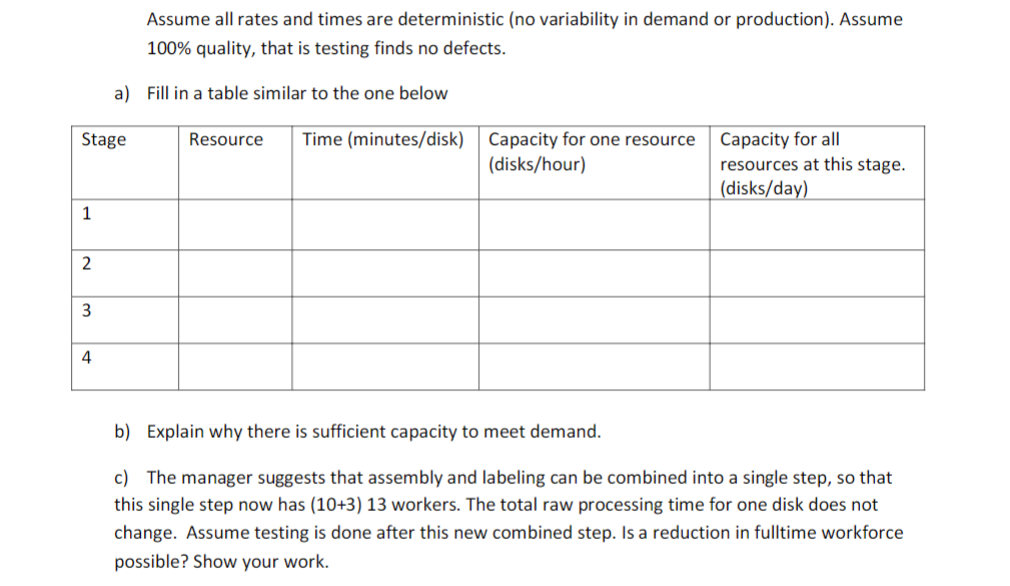
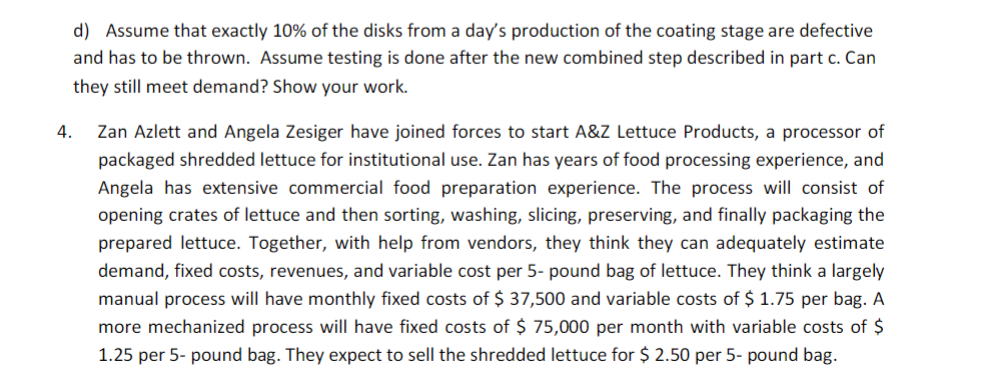
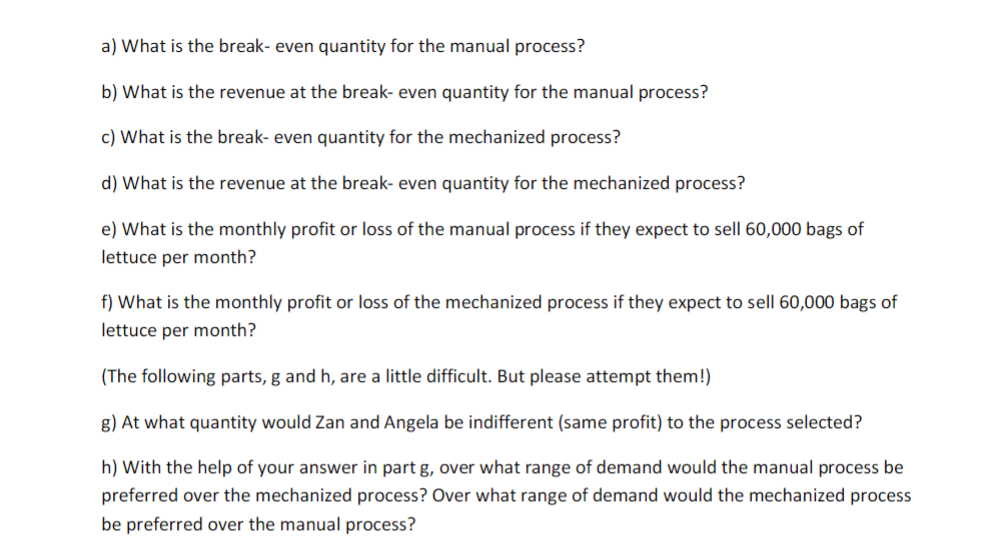
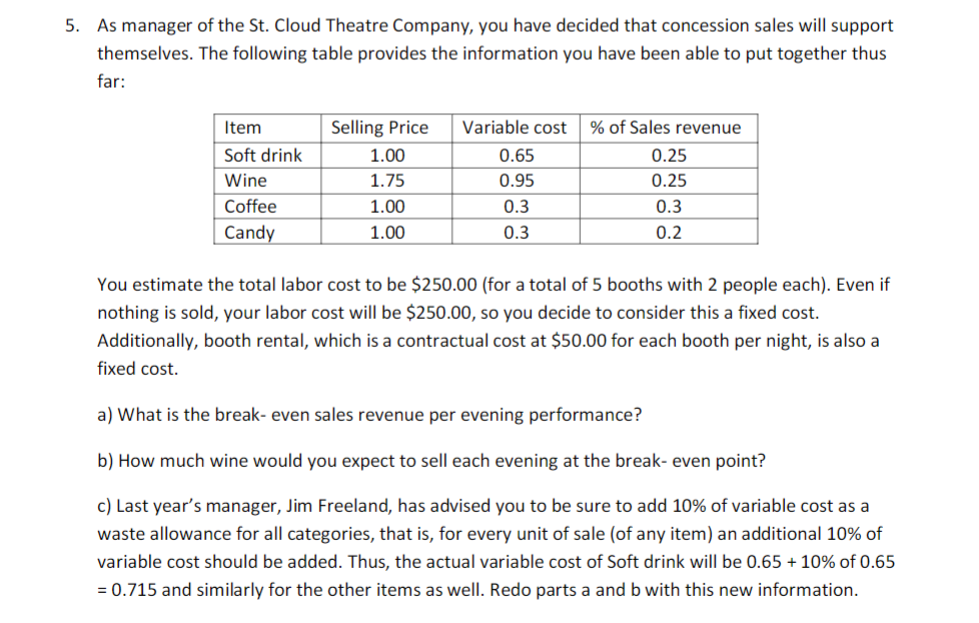
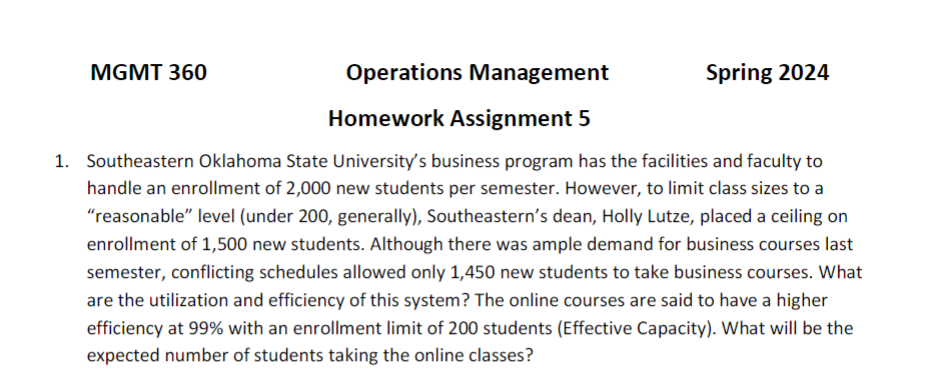
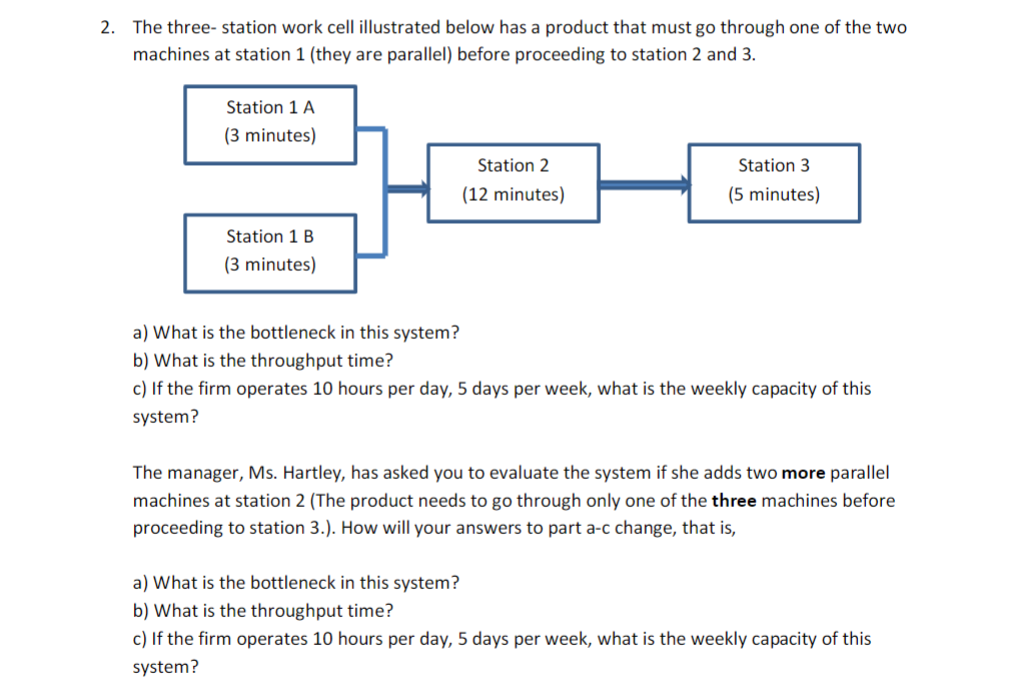
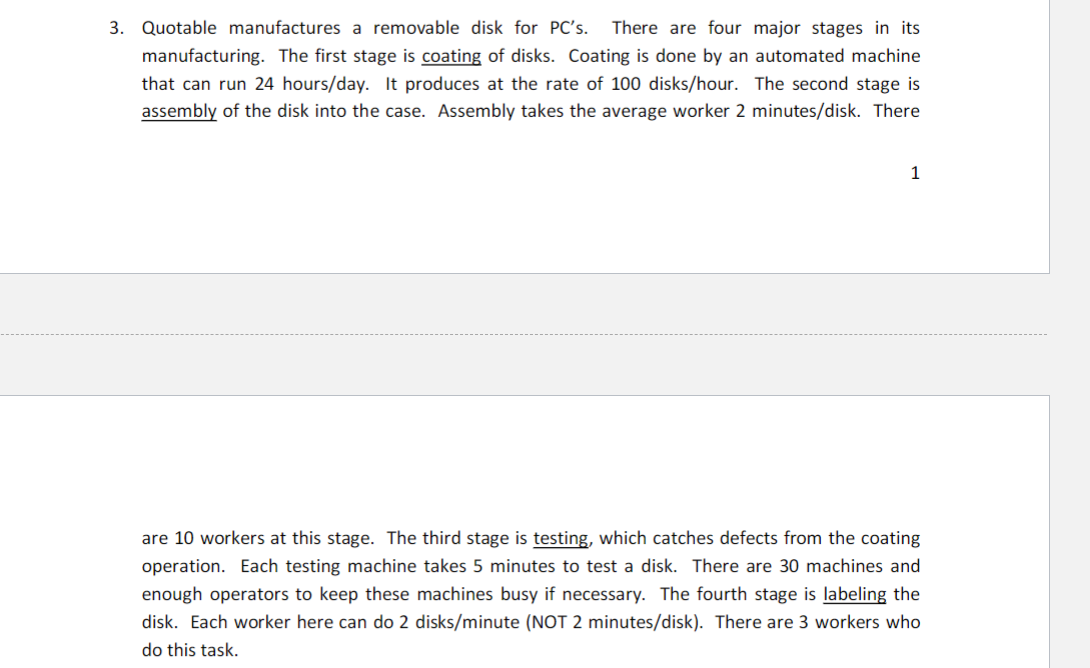
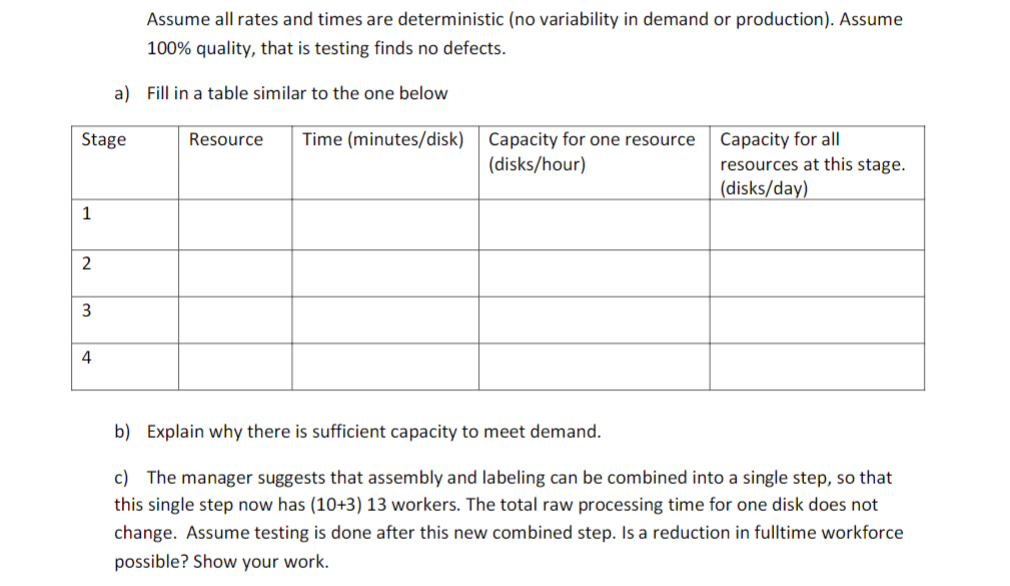
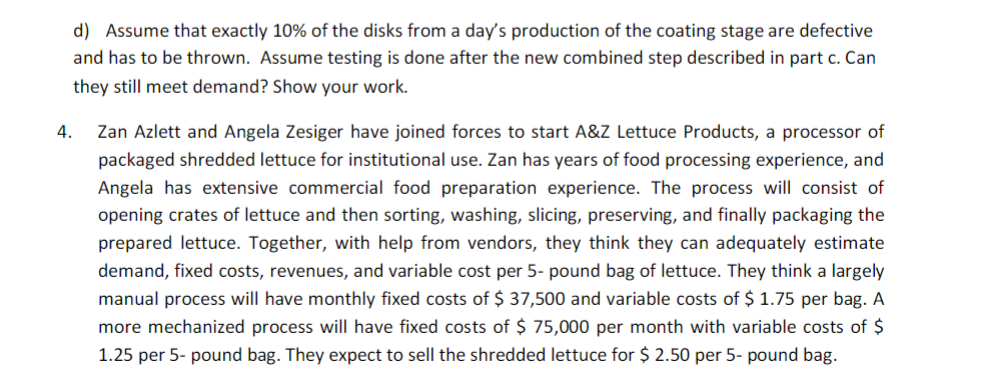
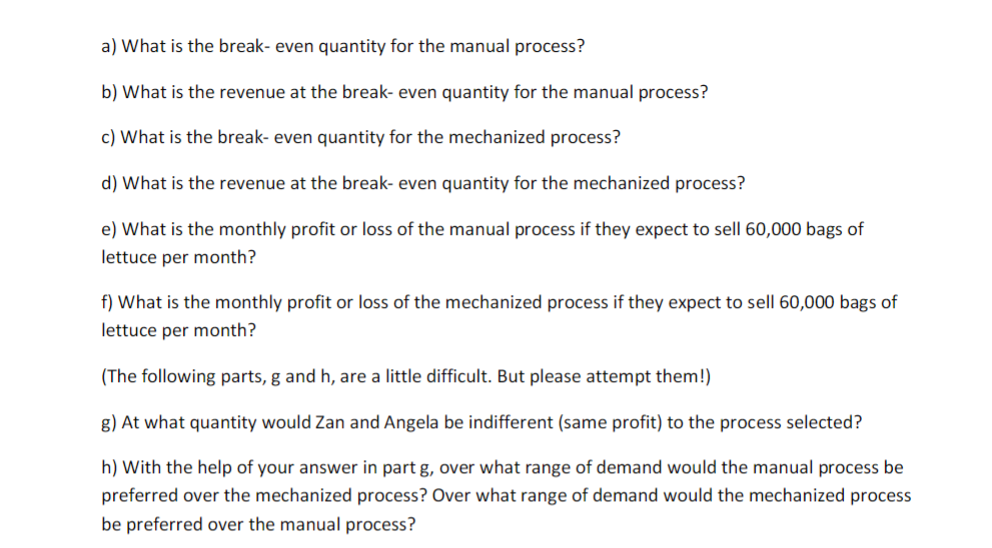
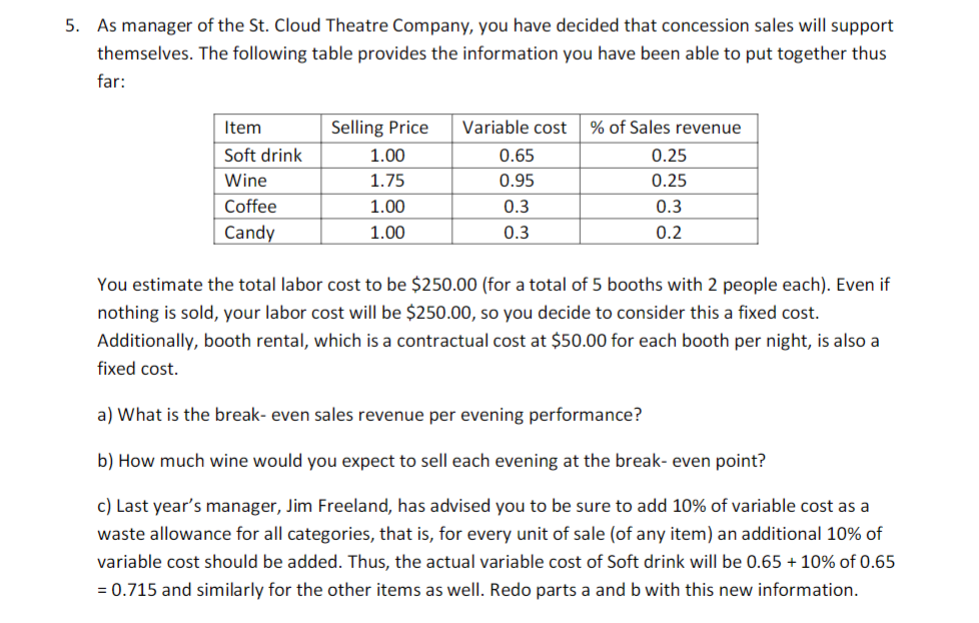
MGMT 360 Operations Management Spring 2024 Homework Assignment 5 Southeastern Oklahoma State University's business program has the facilities and faculty to handle an enrollment of 2,000 new students per semester. However, to limit class sizes to a \"reasonable\" level (under 200, generally), Southeastern's dean, Holly Lutze, placed a ceiling on enrollment of 1,500 new students. Although there was ample demand for business courses last semester, conflicting schedules allowed only 1,450 new students to take business courses. What are the utilization and efficiency of this system? The online courses are said to have a higher efficiency at 99% with an enrollment limit of 200 students (Effective Capacity). What will be the expected number of students taking the online classes? 2. The three- station work cell illustrated below has a product that must go through one of the two machines at station 1 (they are parallel) before proceeding to station 2 and 3. Station 1 A (3 minutes) Station 2 Station 3 (12 minutes) (5 minutes) Station 1 B (3 minutes) a) What is the bottleneck in this system? b) What is the throughput time? c) If the firm operates 10 hours per day, 5 days per week, what is the weekly capacity of this system? The manager, Ms. Hartley, has asked you to evaluate the system if she adds two more parallel machines at station 2 (The product needs to go through only one of the three machines before proceeding to station 3.). How will your answers to part a-c change, that is, a) What is the bottleneck in this system? b) What is the throughput time? c) If the firm operates 10 hours per day, 5 days per week, what is the weekly capacity of this system? 3. Quotable manufactures a removable disk for PC's. There are four major stages in its manufacturing. The first stage is coating of disks. Coating is done by an automated machine that can run 24 hours/day. It produces at the rate of 100 disks/hour. The second stage is assembly of the disk into the case. Assembly takes the average worker 2 minutes/disk. There are 10 workers at this stage. The third stage is testing, which catches defects from the coating operation. Each testing machine takes 5 minutes to test a disk. There are 30 machines and enough operators to keep these machines busy if necessary. The fourth stage is labeling the disk. Each worker here can do 2 disks/minute (NOT 2 minutes/disk). There are 3 workers who do this task. Assume all rates and times are deterministic (no variability in demand or production). Assume 100% quality, that is testing finds no defects. a) Fillin a table similar to the one below Stage Resource Time (minutes/disk) | Capacity for one resource | Capacity for all (disks/hour) resources at this stage. disks/da 1 2 3 4 b) Explain why there is sufficient capacity to meet demand. c) The manager suggests that assembly and labeling can be combined into a single step, so that this single step now has (10+3) 13 workers. The total raw processing time for one disk does not change. Assume testing is done after this new combined step. Is a reduction in fulltime workforce possible? Show your work. d) Assume that exactly 10% of the disks from a day's production of the coating stage are defective and has to be thrown. Assume testing is done after the new combined step described in part c. Can they still meet demand? Show your work. Zan Azlett and Angela Zesiger have joined forces to start A&Z Lettuce Products, a processor of packaged shredded lettuce for institutional use. Zan has years of food processing experience, and Angela has extensive commercial food preparation experience. The process will consist of opening crates of lettuce and then sorting, washing, slicing, preserving, and finally packaging the prepared lettuce. Together, with help from vendors, they think they can adequately estimate demand, fixed costs, revenues, and variable cost per 5- pound bag of lettuce. They think a largely manual process will have monthly fixed costs of $ 37,500 and variable costs of $ 1.75 per bag. A more mechanized process will have fixed costs of $ 75,000 per month with variable costs of S 1.25 per 5- pound bag. They expect to sell the shredded lettuce for $ 2.50 per 5- pound bag. a) What is the break- even quantity for the manual process? b) What is the revenue at the break- even quantity for the manual process? c) What is the break- even quantity for the mechanized process? d) What is the revenue at the break- even quantity for the mechanized process? e) What is the monthly profit or loss of the manual process if they expect to sell 60,000 bags of lettuce per month? f) What is the monthly profit or loss of the mechanized process if they expect to sell 60,000 bags of lettuce per month? (The following parts, g and h, are a little difficult. But please attempt them!) g) At what quantity would Zan and Angela be indifferent (same profit) to the process selected? h) With the help of your answer in part g, over what range of demand would the manual process be preferred over the mechanized process? Over what range of demand would the mechanized process be preferred over the manual process? 5. As manager of the St. Cloud Theatre Company, you have decided that concession sales will support themselves. The following table provides the information you have been able to put together thus far: Selling Price % of Sales revenue Soft drink Coffee 1.00 0.3 Cand 1.00 0.3 You estimate the total labor cost to be $250.00 (for a total of 5 booths with 2 people each). Even if nothing is sold, your labor cost will be $250.00, so you decide to consider this a fixed cost. Additionally, booth rental, which is a contractual cost at $50.00 for each booth per night, is also a fixed cost. a) What is the break- even sales revenue per evening performance? b) How much wine would you expect to sell each evening at the break- even point? c) Last year's manager, Jim Freeland, has advised you to be sure to add 10% of variable cost as a waste allowance for all categories, that is, for every unit of sale (of any item) an additional 10% of variable cost should be added. Thus, the actual variable cost of Soft drink will be 0.65 + 10% of 0.65 = 0.715 and similarly for the other items as well. Redo parts a and b with this new information
Step by Step Solution
There are 3 Steps involved in it

Get step-by-step solutions from verified subject matter experts
 Study Help