Question: MIS 440 Expert Systems Managing Expert Systems Expert systems (ES) are computer programs for solving difficult, fuzzy problems in domains where human expertise is normally
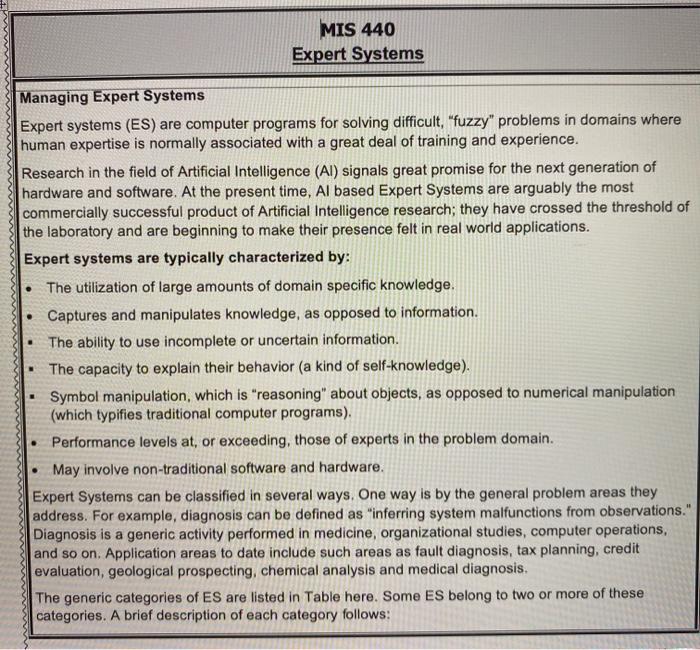
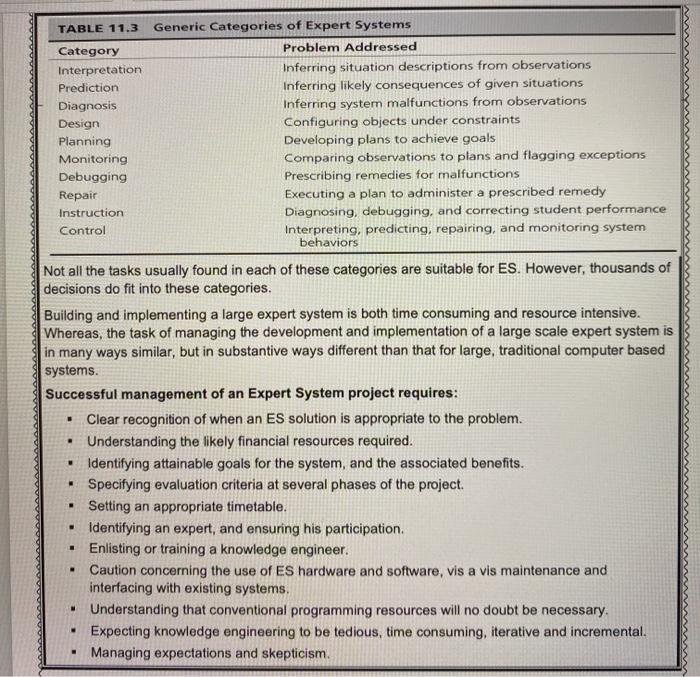
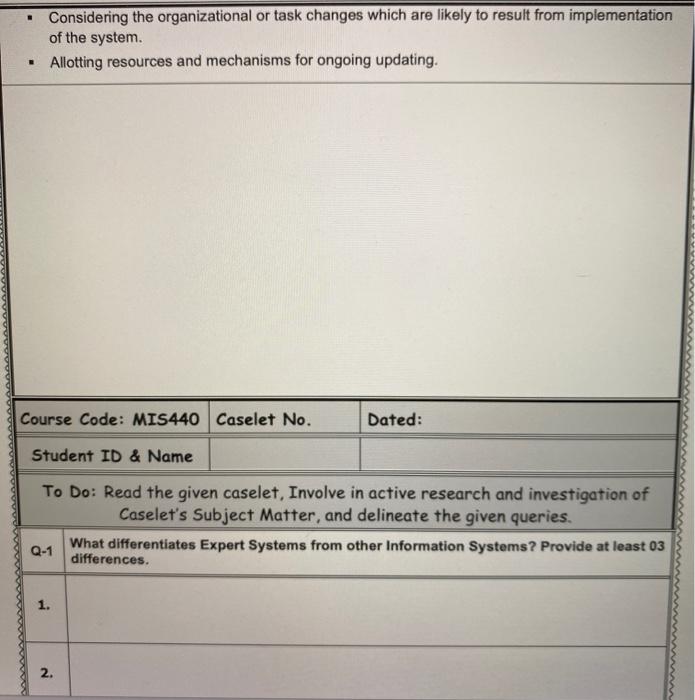
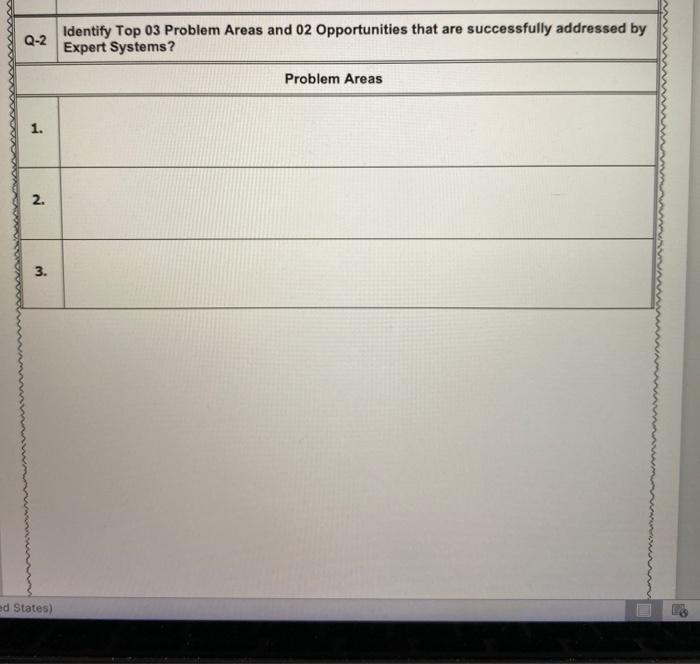
MIS 440 Expert Systems Managing Expert Systems Expert systems (ES) are computer programs for solving difficult, "fuzzy" problems in domains where human expertise is normally associated with a great deal of training and experience. Research in the field of Artificial Intelligence (Al) signals great promise for the next generation of hardware and software. At the present time, Al based Expert Systems are arguably the most commercially successful product of Artificial Intelligence research; they have crossed the threshold of the laboratory and are beginning to make their presence felt in real world applications. Expert systems are typically characterized by: The utilization of large amounts of domain specific knowledge. Captures and manipulates knowledge, as opposed to information. The ability to use incomplete or uncertain information. The capacity to explain their behavior (a kind of self-knowledge). Symbol manipulation, which is "reasoning" about objects, as opposed to numerical manipulation (which typifies traditional computer programs) Performance levels at, or exceeding, those of experts in the problem domain. May involve non-traditional software and hardware. Expert Systems can be classified in several ways. One way is by the general problem areas they address. For example, diagnosis can be defined as "inferring system malfunctions from observations." Diagnosis is a generic activity performed in medicine, organizational studies, computer operations, and so on. Application areas to date include such areas as fault diagnosis, tax planning, credit evaluation, geological prospecting, chemical analysis and medical diagnosis. The generic categories of ES are listed in Table here. Some ES belong to two or more of these categories. A brief description of each category follows: TABLE 11.3 Generic Categories of Expert Systems Category Problem Addressed Interpretation Inferring situation descriptions from observations Prediction Inferring likely consequences of given situations Diagnosis Inferring system malfunctions from observations Design Configuring objects under constraints Planning Developing plans to achieve goals Monitoring Comparing observations to plans and flagging exceptions Debugging Prescribing remedies for malfunctions Repair Executing a plan to administer a prescribed remedy Instruction Diagnosing, debugging, and correcting student performance Control Interpreting, predicting, repairing, and monitoring system behaviors Not all the tasks usually found in each of these categories are suitable for ES. However, thousands of decisions do fit into these categories. Building and implementing a large expert system is both time consuming and resource intensive. Whereas, the task of managing the development and implementation of a large scale expert system is in many ways similar, but in substantive ways different than that for large, traditional computer based systems. Successful management of an Expert System project requires: Clear recognition of when an ES solution is appropriate to the problem. Understanding the likely financial resources required. Identifying attainable goals for the system, and the associated benefits. - Specifying evaluation criteria at several phases of the project. Setting an appropriate timetable. Identifying an expert, and ensuring his participation. Enlisting or training a knowledge engineer. Caution concerning the use of ES hardware and software, vis a vis maintenance and interfacing with existing systems. Understanding that conventional programming resources will no doubt be necessary. Expecting knowledge engineering to be tedious, time consuming, iterative and incremental. Managing expectations and skepticism. . - . Considering the organizational or task changes which are likely to result from implementation of the system. Allotting resources and mechanisms for ongoing updating. Course Code: MIS440 Caselet No. Dated: Student ID & Name To Do: Read the given caselet, Involve in active research and investigation of Caselet's Subject Matter, and delineate the given queries. What differentiates Expert Systems from other Information Systems? Provide at least 03 Q-1 differences 1. 2 . Q-2 Identify Top 03 Problem Areas and 02 Opportunities that are successfully addressed by Expert Systems? Problem Areas 1. 2. 3 . ed States) 5. Q-3 Identify Top 05 requirements for the successful management of an Expert System project. 1. 2. 3. 4. 5









 Study Help