







Question: NAME q , Chapter 7 material - Flexible Budgets and Direct - Cost Variances 1 0 . A primary benefit of a standard costing system
NAME
Chapter material Flexible Budgets and DirectCost Variances
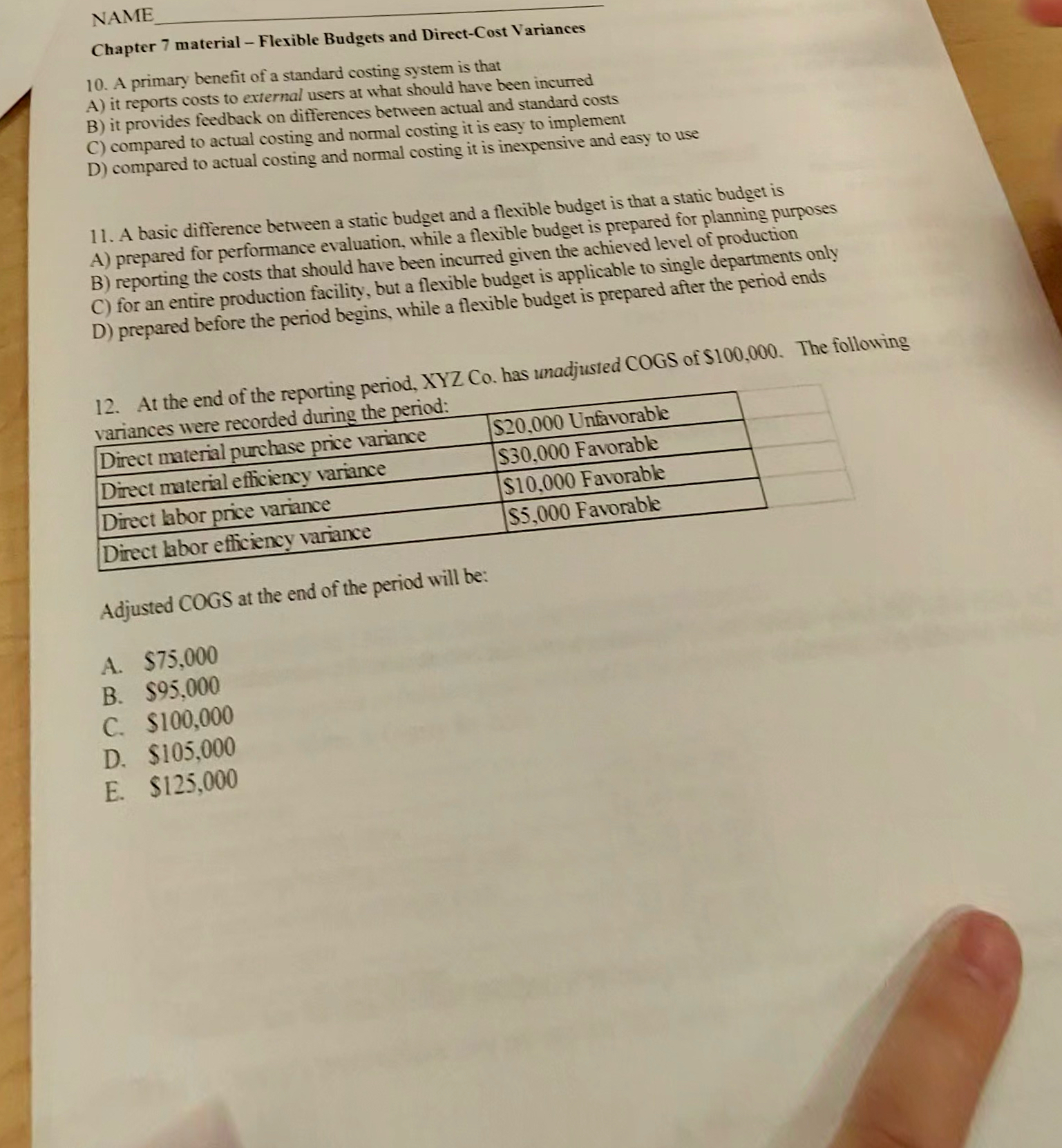
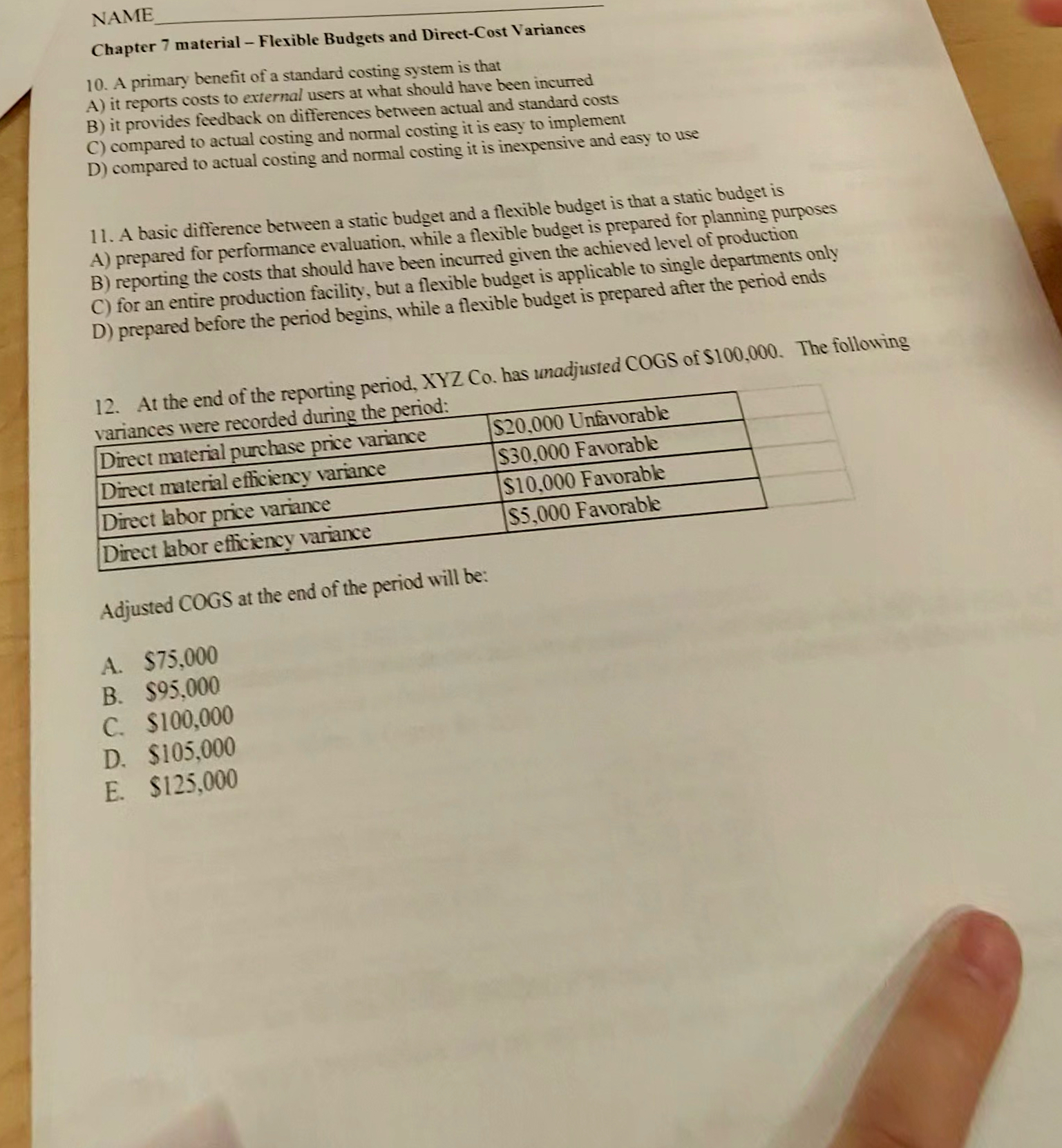
A primary benefit of a standard costing system is that
A it reports costs to external users at what should have been incurred
B it provides feedback on differences between actual and standard costs
C compared to actual costing and normal costing it is easy to implement
D compared to actual costing and nomal costing it is inexpensive and easy to use
A basic difference between a static budget and a flexible budget is that a static budget is
A prepared for performance evaluation, while a flexible budget is prepared for planning purposes
B reporting the costs that should have been incurred given the achieved level of production
C for an entire production facility, but a flexible budget is applicable to single departments only
D prepared before the period begins, while a flexible budget is prepared after the period ends
At the end of the reporting period, XYZ Co has unadjusted COGS of $ The following variances were recorded during the period:
tableDirect material purchase price variance,$ UnfavorableDirect material efficiency variance,$ FavorableDirect labor price variance,$ FavorableDirect labor efficiency variance,$ Favorable
Adjusted COGS at the end of the period will be:
A $
B $
C $
D $
E $
Step by Step Solution
There are 3 Steps involved in it
1 Expert Approved Answer
Step: 1 Unlock

Question Has Been Solved by an Expert!
Get step-by-step solutions from verified subject matter experts
Step: 2 Unlock
Step: 3 Unlock
 Study Help