







Question: need this quickly In addition to general questions, interviewers often ask more complicated ones. Some of these are designed to test youto learn your views,
need this quickly
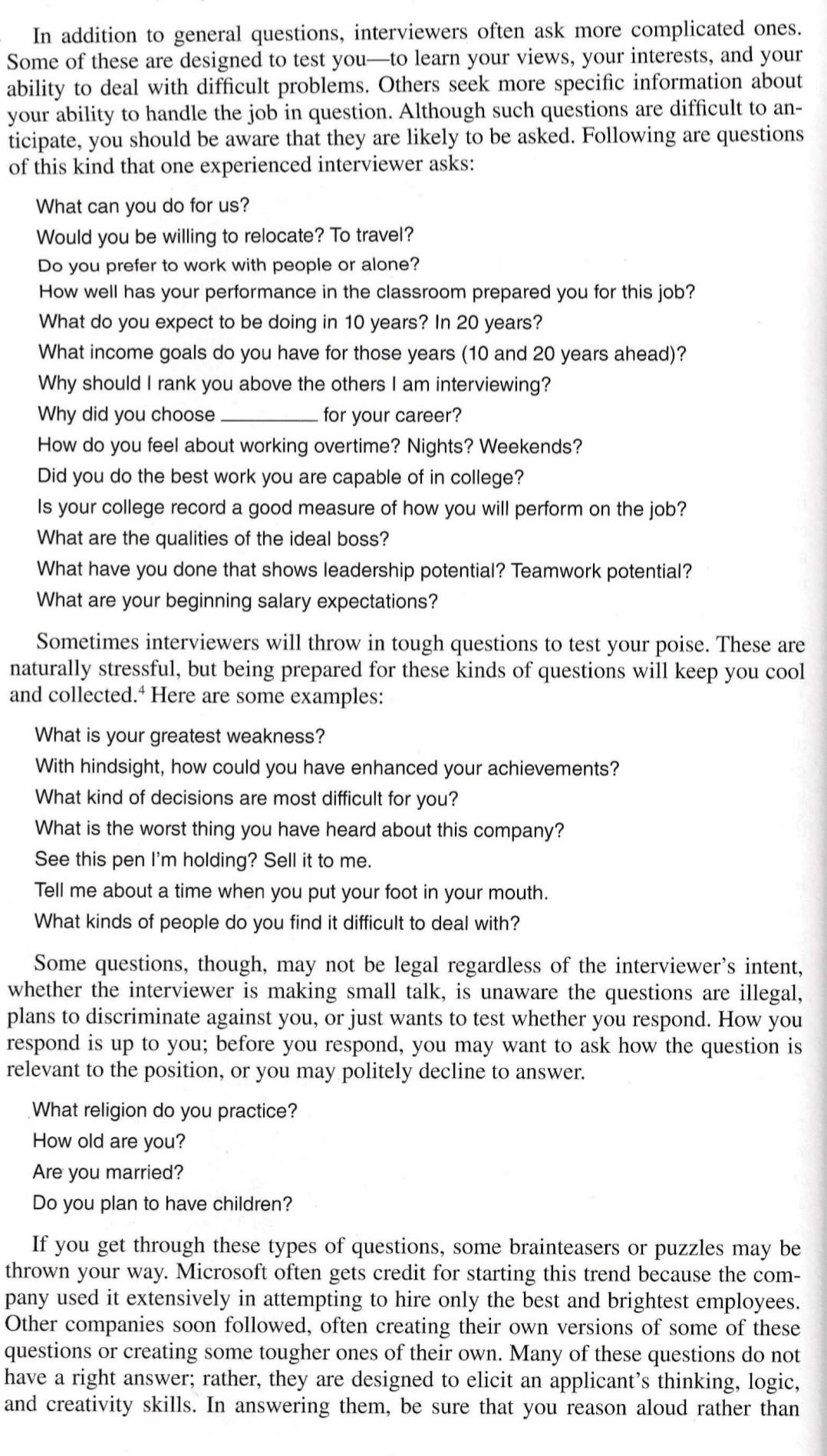
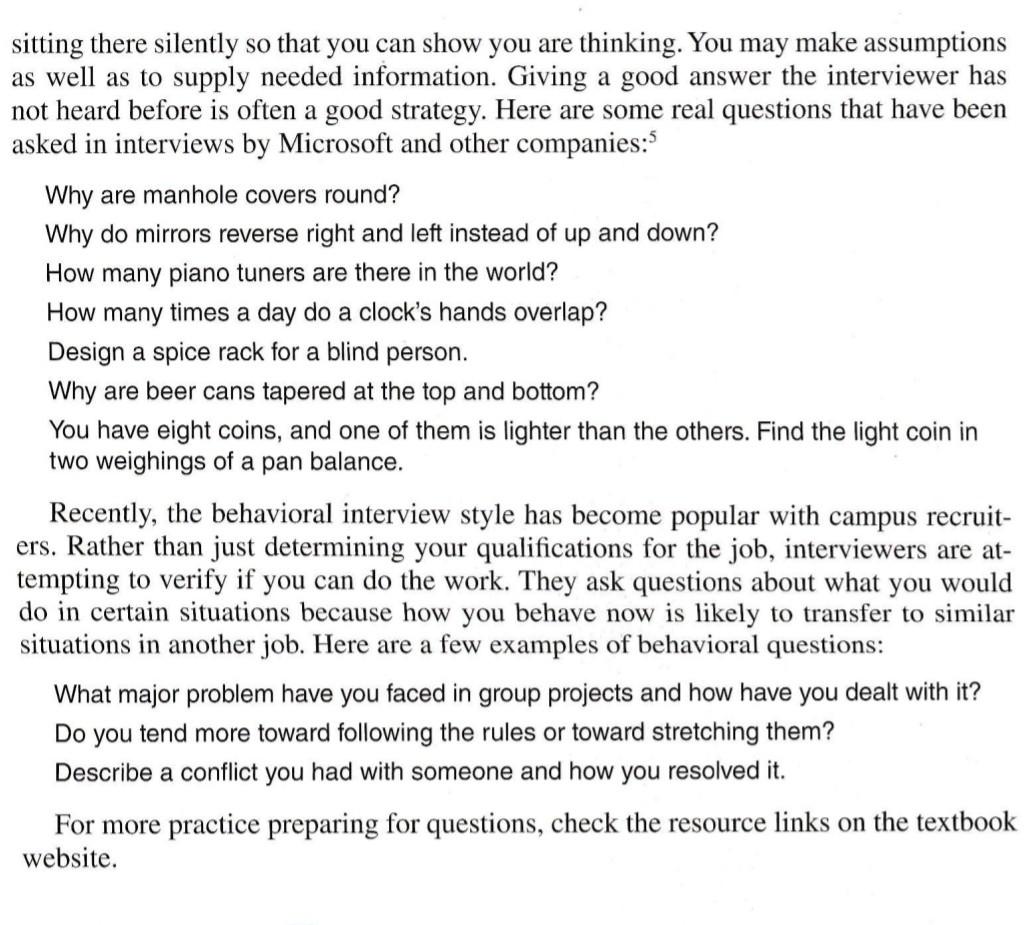
In addition to general questions, interviewers often ask more complicated ones. Some of these are designed to test youto learn your views, your interests, and your ability to deal with difficult problems. Others seek more specific information about your ability to handle the job in question. Although such questions are difficult to an- ticipate, you should be aware that they are likely to be asked. Following are questions of this kind that one experienced interviewer asks: What can you do for us? Would you be willing to relocate? To travel? Do you prefer to work with people or alone? How well has your performance in the classroom prepared you for this job? What do you expect to be doing in 10 years? In 20 years? What income goals do you have for those years and 20 years ahead)? Why should I rank you above the others I am interviewing? Why did you choose for your career? How do you feel about working overtime? Nights? Weekends? Did you do the best work you are capable of in college? Is your college record a good measure of how you will perform on the job? What are the qualities of the ideal boss? What have you done that shows leadership potential? Teamwork potential? What are your beginning salary expectations? Sometimes interviewers will throw in tough questions to test your poise. These are naturally stressful, but being prepared for these kinds of questions will keep you cool and collected. Here are some examples: What is your greatest weakness? With hindsight, how could you have enhanced your achievements? What kind of decisions are most difficult for you? What is the worst thing you have heard about this company? See this pen I'm holding? Sell it to me. Tell me about a time when you put your foot in your mouth. What kinds of people do you find it difficult to deal with? Some questions, though, may not be legal regardless of the interviewer's intent, whether the interviewer is making small talk, is unaware the questions are illegal, plans to discriminate against you, or just wants to test whether you respond. How you respond is up to you; before you respond, you may want to ask how the question is relevant to the position, or you may politely decline to answer. What religion do you practice? How old are you? Are you married? Do you plan to have children? If you get through these types of questions, some brainteasers or puzzles may be thrown your way. Microsoft often gets credit for starting this trend because the com- pany used it extensively in attempting to hire only the best and brightest employees. Other companies soon followed, often creating their own versions of some of these questions or creating some tougher ones of their own. Many of these questions do not have a right answer; rather, they are designed to elicit an applicant's thinking, logic, and creativity skills. In answering them, be sure that you reason aloud rather than sitting there silently so that you can show you are thinking. You may make assumptions as well as to supply needed information. Giving a good answer the interviewer has not heard before is often a good strategy. Here are some real questions that have been asked in interviews by Microsoft and other companies:- Why are manhole covers round? Why do mirrors reverse right and left instead of up and down? How many piano tuners are there in the world? How many times a day do a clock's hands overlap? Design a spice rack for a blind person. Why are beer cans tapered at the top and bottom? You have eight coins, and one of them is lighter than the others. Find the light coin in two weighings of a pan balance. Recently, the behavioral interview style has become popular with campus recruit- ers. Rather than just determining your qualifications for the job, interviewers are at- tempting to verify if you can do the work. They ask questions about what you would do in certain situations because how you behave now is likely to transfer to similar situations in another job. Here are a few examples of behavioral questions: What major problem have you faced in group projects and how have you dealt with it? Do you tend more toward following the rules or toward stretching them? Describe a conflict you had with someone and how you resolved it. For more practice preparing for questions, check the resource links on the textbook websiteStep by Step Solution
There are 3 Steps involved in it
1 Expert Approved Answer
Step: 1 Unlock

Question Has Been Solved by an Expert!
Get step-by-step solutions from verified subject matter experts
Step: 2 Unlock
Step: 3 Unlock
 Study Help