







Question: No. 1 2 Table 1. The 5 IP packets are caught in H. The first 40 bytes in IP packet (hex) 45 00 00 30
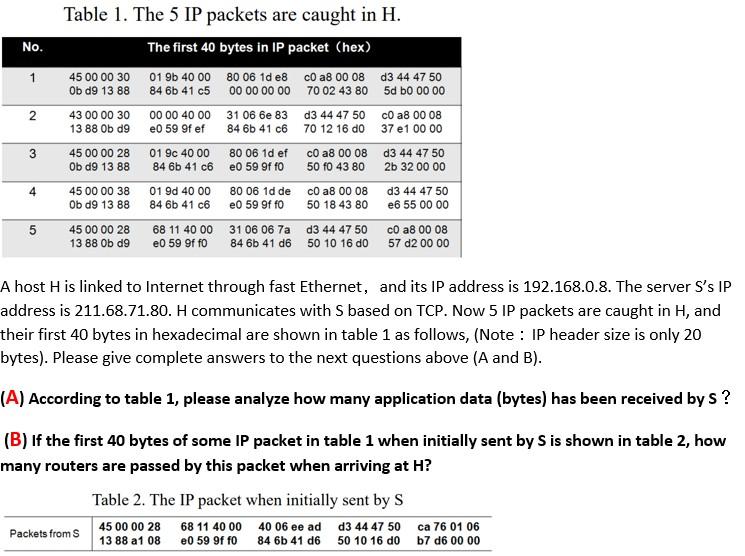
No. 1 2 Table 1. The 5 IP packets are caught in H. The first 40 bytes in IP packet (hex) 45 00 00 30 01 9b 40 00 80 06 1d e8 co a8 00 08 d3 44 47 50 Ob d9 13 88 84 6b 41 c5 00 00 00 00 70 02 43 80 5d bo 00 00 43 00 00 30 00 00 40 00 31 06 6e 83 d3 44 47 50 c0a8 00 08 1388 Ob d9 e0 59 9f ef 84 66 41 c6 70 12 16 do 37 e1 00 00 45 00 00 28 01 9c 40 00 80 06 1d ef O a8 00 08 d3 44 47 50 Ob d9 13 88 84 6b 41 c6e0 59 9f fo 50 fo 43 80 2b 32 00 00 45 00 00 38 01 9d 40 00 80 06 10 de c0a8 00 08 d3 44 47 50 Ob d9 13 88 84 66 41 c6 e0 59 9f fo 50 18 43 80 e6 55 00 00 45 00 00 28 68 11 40 00 31 06 06 7a d3 44 47 50 co a8 00 08 13 88 Ob d9 e0 59 9f fo 84 6b 41 d6 50 10 16 do 57 d2 00 00 3 4 5 A host H is linked to Internet through fast Ethernet, and its IP address is 192.168.0.8. The server S's IP address is 211.68.71.80. H communicates with S based on TCP. Now 5 IP packets are caught in H, and their first 40 bytes in hexadecimal are shown in table 1 as follows, (Note: IP header size is only 20 bytes). Please give complete answers to the next questions above (A and B). (A) According to table 1, please analyze how many application data (bytes) has been received by S? (B) If the first 40 bytes of some IP packet in table 1 when initially sent by S is shown in table 2, how many routers are passed by this packet when arriving at H? Table 2. The IP packet when initially sent by S 45 00 00 28 68 11 40 00 40 06 ee ad d3 44 47 50 Packets from 13 88 a1 08 e0 59 9f fo 84 6b 41 d6 50 10 16 do b7 d6 00 00 ca 76 01 06
Step by Step Solution
There are 3 Steps involved in it

Get step-by-step solutions from verified subject matter experts
 Study Help