







Question: Nurse trainees are testing an application running on a Smartphone that takes physiological test data, such as hearing, heart rate, body temperature, vision, or sensory
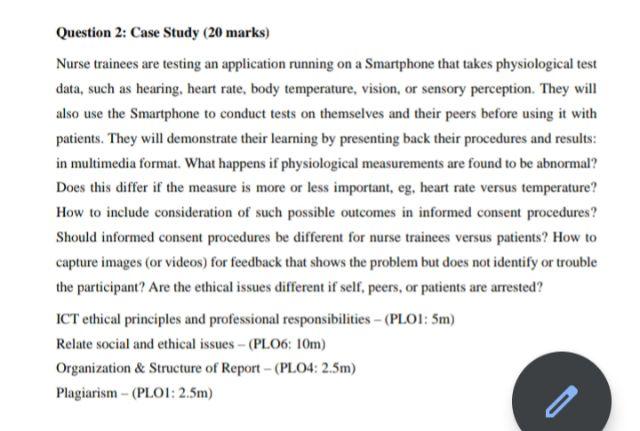
Nurse trainees are testing an application running on a Smartphone that takes physiological test data, such as hearing, heart rate, body temperature, vision, or sensory perception. They will also use the Smartphone to conduct tests on themselves and their peers before using it with patients. They will demonstrate their learning by presenting back their procedures and results: in multimedia format. What happens if physiological measurements are found to be abnormal? Does this differ if the measure is more or less important, eg, heart rate versus temperature? How to include consideration of such possible outcomes in informed consent procedures? Should informed consent procedures be different for nurse trainees versus patients? How to capture images (or videos) for feedback that shows the problem but does not identify or trouble the participant? Are the ethical issues different if self, peers, or patients are arrested? ICT ethical principles and professional responsibilities - (PLO1: 5m ) Relate social and ethical issues - (PLO6: 10m ) Organization \& Structure of Report - (PLO4: 2.5m) Plagiarism - (PLO1: 2.5m)
Step by Step Solution
There are 3 Steps involved in it

Get step-by-step solutions from verified subject matter experts
 Study Help