







Question: OH compound a compound b (racemic) compound d bb OH compound C compound compound o (racemic) a y Z . bb. 104 mCPBA NaOH, HO
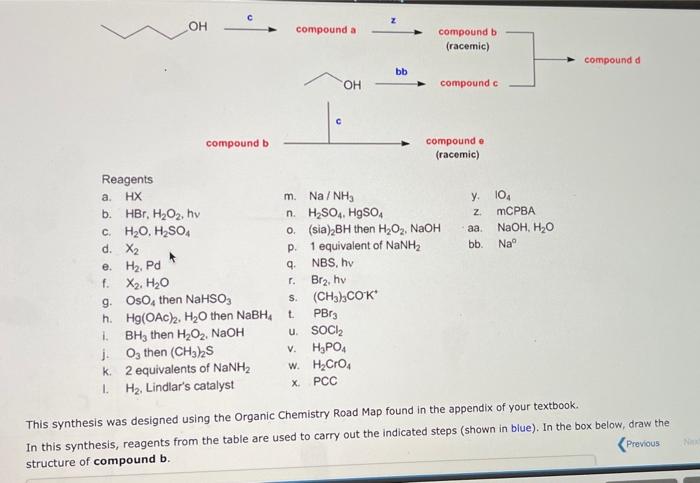
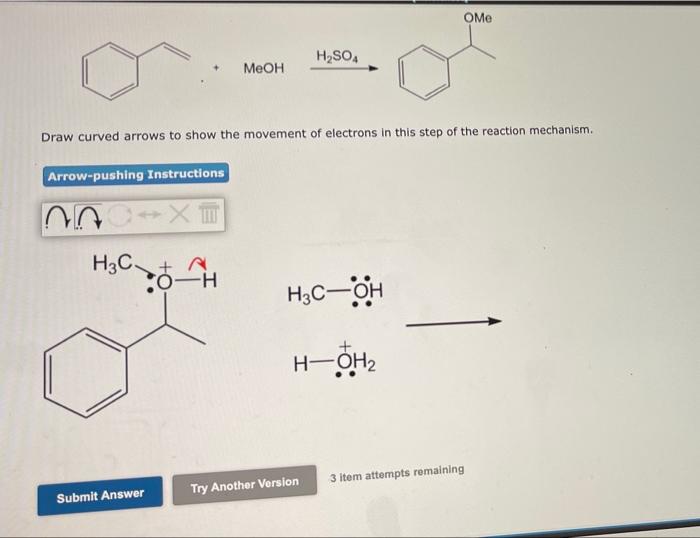
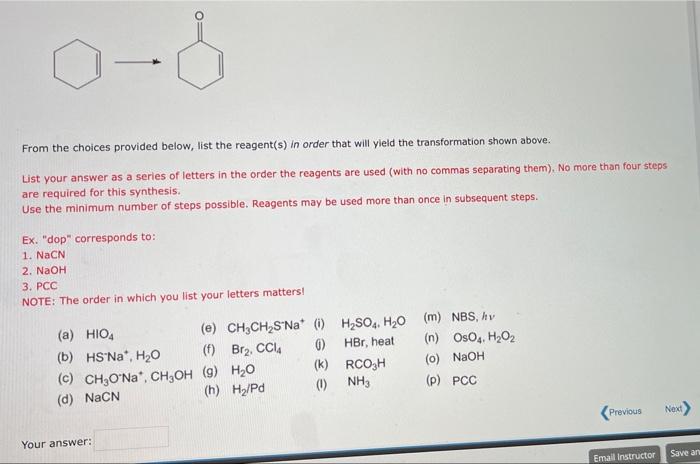
OH compound a compound b (racemic) compound d bb OH compound C compound compound o (racemic) a y Z . bb. 104 mCPBA NaOH, HO Na Reagents HX b. HBr, H2O2, hy c. H2O, H2SO4 d. X2 e. Hz, Pd f. X2. H20 g. Oso, then NaHSO3 h. Hg(OAC), H2O then NaBHA 1. BH, then H2O2. NaOH j. Oz then (CH) k 2 equivalents of NaNH2 1.H2, Lindlar's catalyst m. Na/NH3 n. H2SO4, HgSO4 0. (sia) BH then H2O3, NaOH p. 1 equivalent of NaNH q NBS, hy r. Bre, hv S. (CH3),COK t PBr3 u SOCI V. 4 W. HyCro PCC X This synthesis was designed using the Organic Chemistry Road Map found in the appendix of your textbook. In this synthesis, reagents from the table are used to carry out the indicated steps (shown in blue). In the box below, draw the structure of compound b. Previous OME H2SO4 MeOH Draw curved arrows to show the movement of electrons in this step of the reaction mechanism. Arrow-pushing Instructions na . H500- H3C-OH H-OH2 1- 3 item attempts remaining Try Another Version Submit Answer 0-0 From the choices provided below, list the reagent(s) In order that will yield the transformation shown above. List your answer as a series of letters in the order the reagents are used with no commas separating them). No more than four steps are required for this synthesis. Use the minimum number of steps possible. Reagents may be used more than once in subsequent steps. Ex. "dop" corresponds to: 1. NaCN 2. NaOH 3. PCC NOTE: The order in which you list your letters matters! (a) HIOA (e) CH,CH,S-Na(1) H2SO4 H20 (m) NBS, hv (b) HS'Na, H2O (1) Bra, CCL 6) HBr, heat (n) OsO4 H2O2 (C) CH3O'Na', CH, OH (9) H2O (k) RCO3H (0) NaOH (d) NaCN (h) Hy/Pd ( NH (P) PCC (Previous Ned Your answer: Save an Email Instructor
Step by Step Solution
There are 3 Steps involved in it

Get step-by-step solutions from verified subject matter experts
 Study Help