







Question: Old MathJax webview Could you answer this question with clear and big TYPING please. NO handwriting please by reading the case study above In the
Old MathJax webview
Could you answer this question with clear and big TYPING please. NO handwriting please
by reading the case study above
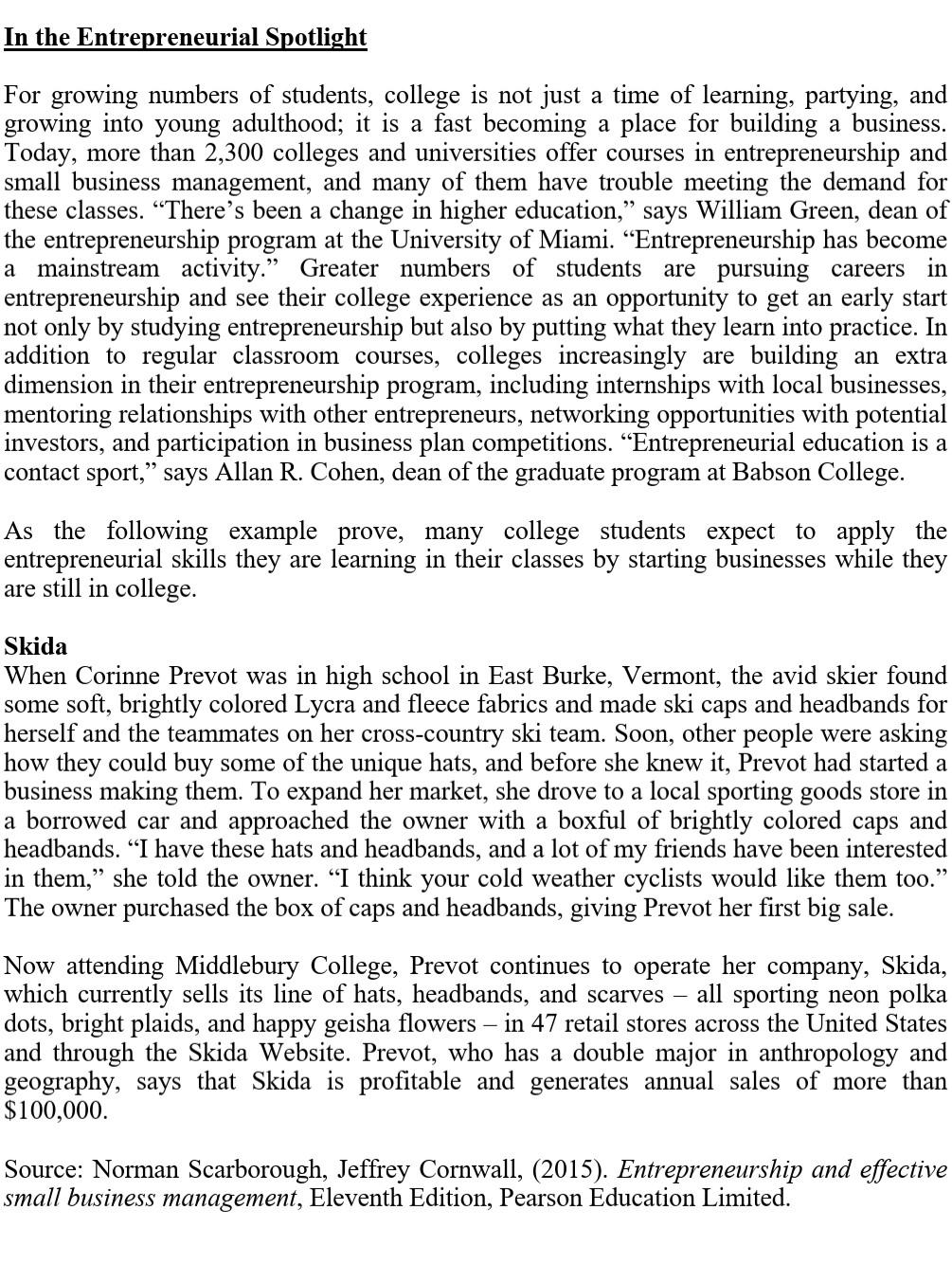
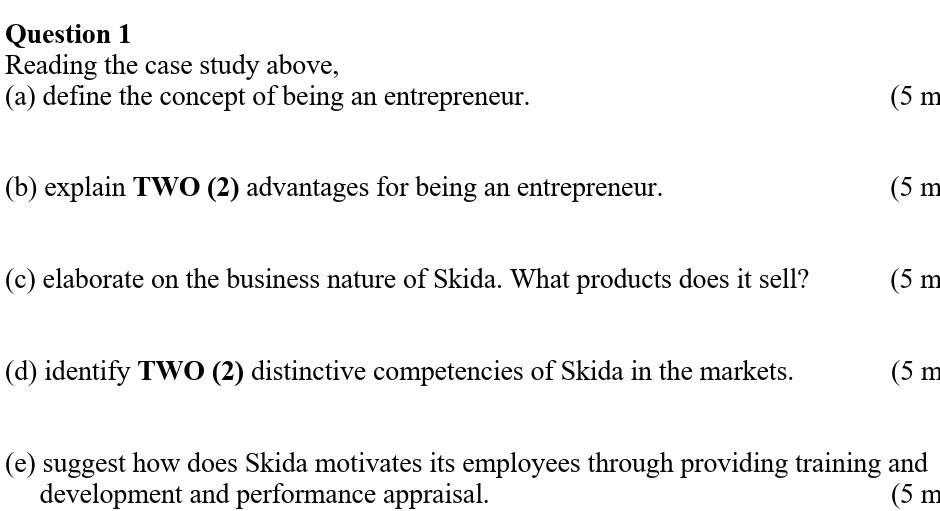
In the Entrepreneurial Spotlight in For growing numbers of students, college is not just a time of learning, partying, and growing into young adulthood; it is a fast becoming a place for building a business. Today, more than 2,300 colleges and universities offer courses in entrepreneurship and small business management, and many of them have trouble meeting the demand for these classes. There's been a change in higher education, says William Green, dean of the entrepreneurship program at the University of Miami. Entrepreneurship has become a mainstream activity. Greater numbers of students are pursuing careers entrepreneurship and see their college experience as an opportunity to get an early start not only by studying entrepreneurship but also by putting what they learn into practice. In addition to regular classroom courses, colleges increasingly are building an extra dimension in their entrepreneurship program, including internships with local businesses, mentoring relationships with other entrepreneurs, networking opportunities with potential investors, and participation in business plan competitions. Entrepreneurial education is a contact sport, says Allan R. Cohen, dean of the graduate program at Babson College. As the following example prove, many college students expect to apply the entrepreneurial skills they are learning in their classes by starting businesses while they are still in college. Skida When Corinne Prevot was in high school in East Burke, Vermont, the avid skier found some soft, brightly colored Lycra and fleece fabrics and made ski caps and headbands for herself and the teammates on her cross-country ski team. Soon, other people were asking how they could buy some of the unique hats, and before she knew it, Prevot had started a business making them. To expand her market, she drove to a local sporting goods store in a borrowed car and approached the owner with a boxful of brightly colored caps and headbands. I have these hats and headbands, and a lot of my friends have been interested in them, she told the owner. I think your cold weather cyclists would like them too." The owner purchased the box of caps and headbands, giving Prevot her first big sale. Now attending Middlebury College, Prevot continues to operate her company, Skida, which currently sells its line of hats, headbands, and scarves - all sporting neon polka dots, bright plaids, and happy geisha flowers in 47 retail stores across the United States and through the Skida Website. Prevot, who has a double major in anthropology and geography, says that Skida is profitable and generates annual sales of more than $100,000. Source: Norman Scarborough, Jeffrey Cornwall, (2015). Entrepreneurship and effective small business management, Eleventh Edition, Pearson Education Limited. Question 1 Reading the case study above, (a) define the concept of being an entrepreneur. (5 m (b) explain TWO (2) advantages for being an entrepreneur. (5 m (c) elaborate on the business nature of Skida. What products does it sell? (5 m (d) identify TWO (2) distinctive competencies of Skida in the markets. (5 m (e) suggest how does Skida motivates its employees through providing training and development and performance appraisal. (5 mStep by Step Solution
There are 3 Steps involved in it
1 Expert Approved Answer
Step: 1 Unlock

Question Has Been Solved by an Expert!
Get step-by-step solutions from verified subject matter experts
Step: 2 Unlock
Step: 3 Unlock
 Study Help