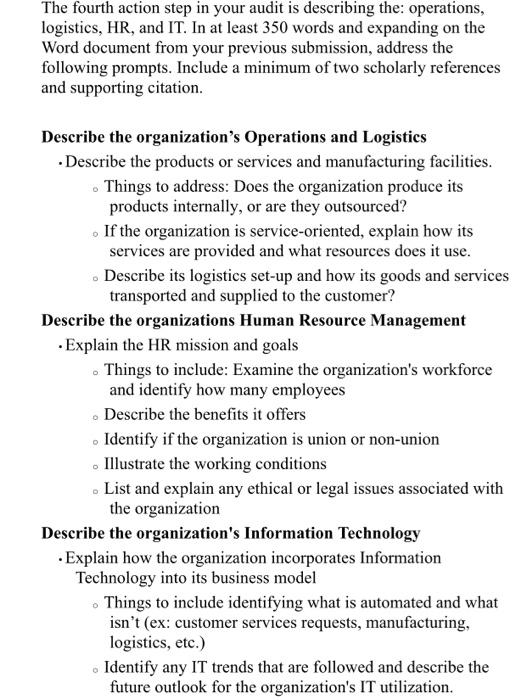
This is what I have
Apple's Logistics Supply Chain Management-
Apple is well-known for its straightforward and precise supply chain planning methods. Here is a list of what they are:
1) R&D- At this point, the corporation is developing new technologies, designing new products, licencing intellectual property, and acquiring third-party enterprises.
2.) Concept validation- Market research, product testing, and quality assurance are all part of this activity.
3.) The pre-launch- During the pre-launch stage, the firm resolves any faults that have been discovered, provides software for the new items, and makes prepayments to suppliers.
4.) Begin- Following the debut, the business forecasts demand for the following 150 days.
5.) Quarterly evaluations- During quarterly reviews, the corporation examines inventory levels, analyses product life cycles, revises demand estimates, and monitors current sales and cost trends.
And this is how Apple's supply chain management methods work:
1.) Sourcing- At this step, Apple collects components and materials from their vendors and transports them to the Chinese assembly factory that is outsourced.
2.) Production- The items are assembled in China at a factory.
3.) Warehousing- Manufactured items are transported straight from China to customers who request them online (drop shipping) using third-party carriers such as FedEx or UPS. They may also be delivered to the central warehouse in California.
4.) Distribution- Products are delivered to retail outlets, wholesalers, and network carriers from a central warehouse site.
5.) Return- At the conclusion of a product's life cycle, users may join in the recycle/reuse programme and return the items to Apple shops or specialised recycling factories near them.
Apple has achieved great success because to its streamlined supply chain management. One of the company's secrets is that its physical items - MacBooks, iPads, and iPhones - are treated as perishable inventory with an expiry date. For example, inventories for specific food goods must be replenished as soon as possible, and the same is true for Apple products. Have you ever heard of, seen, or waited in line at an Apple shop when a new iPhone was released?
If so, you can observe that the firm is indeed capable of such rapid inventory turns. They mix creativity and aesthetic design with ground-breaking supply chain tactics that may serve as a model for a variety of technological firms.
Does the Apple Inc. organization produce its products internally, or are they outsourced-
Apple takes pleasure in producing attractive and intuitive experiences for its consumers via sleek but simple products. Apple announced two new iPhones yesterday, the 5S and the less priced 5C, in an effort to gain market share among price-conscious customers while maintaining existing iPhone users who are ready for an upgrade.
"Designed by Apple in California," the business stamps all of its products, yet in the United States, design is as far as Apple is prepared to go. Hundreds of thousands of manufacturing jobs are outsourced by the internet behemoth to nations such as Mongolia, China, Korea, and Taiwan. However, it seems that Apple does not outsource these tasks to save money. It does so instead to save time.
Apple Inc. is service-oriented-
Apple was planning to place a greater focus on services. Product sales has begun to decline as the technological jumps from one iPhone/iPad/Mac generation to the next become less significant; in response, the business is focused on items like the App Store, iCloud, Apple Pay, Apple Music, and its soon-to-launch gaming and video products.
This transition may already be seen in the company's financials. While product sales fell slightly year on year, from $51.3 billion in the January to March 2018 quarter to $46.6 billion in the same quarter of 2019, revenue from the services division increased from $9.9 billion to $11.5 billion.
Apple's overall revenue in the fiscal Q2 quarter of 2018 was around $61.1 billion; in the comparable quarter of 2019, it was $58 billion. In fiscal Q2 2018, services accounted for 16.1% of Apple's revenue, but over 20% in fiscal Q2 2019. Services now account for "one-third" of Apple's global income, according to CFO Luca Maestri.
Monthly subscriptions are a key component of Apple's services business - items like iCloud, Apple Music, and Apple News that produce money each month from existing gear. According to Tim Cook, Apple currently has 390 million paying memberships across its services. Cook didn't go into detail about how that breaks down each service, but it's up around 30 million members from the previous quarter. The corporation states it anticipates paying customers to exceed 500 million by 2020 (due to the debut of its gaming/video services).
Human Resource Strategies at Apple Inc.
Apple's HR methods always seem to attract a diverse, autonomous, competent employee who does not need guidance. Apple employs non-equalitarian approaches, implying that Apple covers 95% of the responsibilities important to corporate performance by A quality (Vozz, 2017). Recognizing the significance of full-time job execution, Apple has created a comprehensive and targeted benefits package for its corporate representatives, including self-awareness programmes. This demonstrates Apple's desire to be the top technology firm in the world by accepting amazing ideas for the company.
Apple provides training to the majority of its employees once they join the firm. Its no-expense-spared approach motivates employees to outperform the competition. Apple encourages employees to develop self-reliance and abilities on their own, which often results in a significant contribution to the firm. According to assignment assistance specialists, one of the key aspects that contribute to recognising true brilliance is agility. The organisation ensures that employees are not only physically but also psychologically prepared to transition from one large project to another. The whole team is fighting with each other to invent something large and very beneficial that will allow them to be self-sufficient.
Employee Development And Cultural Values
Apple is one of the largest employment creators in the United States, employing 2 million people across 50 states. The whole business is built on app design and development, and the Apple store has supported 1530000 US employment (Apple, 2019). Furthermore, 50,000 iPods enable 200 people to operate productively and without paperwork. There is a space for every kind of professional, with designers, marketers, hardware and software engineers, scientists, and many more being matched at an unprecedented level. Furthermore, there has been a 1500% surge in US workforce growth since 1998.
Human Resource Strategic Activities
1. Recruitment and Selection
Apple prioritises employing the most skilled and qualified candidates. The selection process is centred on verbal communication and recognising individuals who think outside the box and are willing to commit to the organisation.
2. Creating Unusual Thinking
Apple gives several possibilities for its employees to further their careers. The intern who performed well will be employed automatically. To encourage free-thinking, the design team is permitted to attend meetings twice a week.
3.Rewarding And Appreciating Employees-
Apple administers the APPLE FELLOW PROGRAM to reward employees who have made significant contributions to the organisation. Employees that meet certain criteria are rewarded and eventually identified as leaders. This is how the organisation recognises an employee's contribution to becoming a star player.
4. Compensation And Benefits-
To recruit exceptional employees, Apple offers attractive pay packages, flex benefits, and periodic equity awards in exchange for their contributions to the firm. They are also eligible for goods discounts.
Conclusion-
We may deduce from the facts provided above that Apple prefers candidates that are diligent, reliable, and meticulous in their attention to detail. Apple provides training to the majority of its employees upon their arrival to ensure that they adhere to the company's working culture. This firm works in a dynamic environment and employs innovative tactics that have now been honed into selective recruiting, performance rewards, and 360-degree assessment. Every team member is competing with each other to create a highly favourable product that will allow them to be self-sufficient. The company also built a culture to discover the individual who thinks beyond the box and encouraged anybody to innovate and modify the ideas. This motivates Apple to offer performance-based possibilities for their employee whose invention encouraged him to outperform the competition.
Apple Inc. Information Technology-
Apple Inc. is a significant manufacturer of IT goods, including notable products such as the iPhone, iPad, Macintosh, iTunes, and many more successful initiatives. The company's competitive edge is the utilisation of excellent information systems (Hwang & Chen, 2017). iCloud was created in 2011 as a solution to assist with information management and office automation (Hwang & Chen, 2017). This information system is used by Apple Inc. to guarantee the appropriate flow of data throughout the company. It is used by all firm personnel to communicate, store, and gather information. The system develops in terms of capacity as the number of users grows exponentially as a result of the company's offering of this service to consumers of all of its products. The technology enables workers to easily obtain the information they need, making decision-making easier.
Because the corporation was a pioneer in the field of information technology, its use of information systems is efficient. Employees of the firm may access the essential data regardless of their physical location, which is crucial in today's globalised environment. The organisation caters to the demands of today's corporate environment, which is defined by mobility, flexibility, and efficiency. The office automation system may be developed in the future to help with a variety of office-related tasks. It may be improved with decision-making aspects, such as calendars and timetables that can be shared through iCloud, as well as other systems. Users, for example, may get reminders about important dates or specific tasks selected by the sender or another user based on their access level. Co-creation is another aspect that may help to boost creativity. Employees will be able to alter certain files in the original format thanks to the system.
How Apple Makes Use of AI and Big Data
Many firms' faces have altered as a result of technological advancements. It has transformed the way items are marketed and consumers are targeted.
Technology is not static; it is always evolving or, more accurately, developing. Every other day, a new technology is offered to us. Artificial intelligence, machine learning, and big data are just a handful of the technologies that have gained traction in recent decades.
These technology advancements benefit both consumers and companies. It has reduced the disparity between the two extremes of a market.
We couldn't receive answers to our fundamental questions back then since we didn't have chatbots. Today, however, we can just communicate to chatbots and have our problem fixed without the need for human participation. Almost every firm is making use of new technology.
How does Apple make use of artificial intelligence
Artificial intelligence is the "technology of the decade." It has altered so many businesses, and it is difficult to keep the information technology industry at bay. Apple Inc. is a digital behemoth that has integrated AI into its core business and is using it to entice customers. Apple has taken a more subtle and astute approach to AI. Apple hinted at a variety of AI and ML-powered improvements and enhancements in its June 2020 announcements for iOS, iPadOS, and macOS. Certain announcements were not announced onstage, and some AI-powered features were not recognised as such, but some remarks are worth noting.
How Apple Makes Use of AI
1. Homekit Facial Recognition
Apple Homekit, a smart home solution, allowing customers to use their smartphone to manage and interact with connected gadgets. Users may utilise the HomeKit framework to setup accessories and develop actions to control them.
Users may even bundle actions together and use Siri to initiate them. The business has enabled Homekit-connected security cameras to identify persons at the door by using photographs tagged on a user's phone. It would even proclaim the person standing at the door's name.
2. Apple Watch native sleep monitoring
A user may establish bedtime regimens on Apple Watch using the sleep app to accomplish their sleep objectives. Users just need to wear the Apple Watch to bed to have it monitor their sleep. They may learn about their sleep time and even trace their sleep pattern over the previous two weeks when they wake up.
Machine learning is used by the watch to identify motions and determine when you are asleep. A user may set up different bedtime routines, such as one for weekdays and one for weekends.
3. Dishwashing
The Apple Watch has many more capabilities than we can grasp. When you start washing your hands, the Watch will automatically start a 20-second timer to urge you to continue for the full 20 seconds, as recommended by worldwide health organisations.
The Watch detects if you are washing your hands by using motion sensors and a microphone. To determine the action, it also listens for the sound of soap and running water.
Apple Watch will also remind you to wash your hands.
How Apple Makes Use of Big Data
Given that Apple is always on the cutting edge of technological advancement, it's not unexpected that the business makes considerable use of big data.
Having said that, it should be remembered that this was not always the case. Before Apple, companies such as Google were already utilising big data.
Apple's big data applications
The information is used by the firm to determine the optimal approach to customers with its new goods and services.
1. Application design is one area in particular that has benefitted from big data analytics. Using big data, Apple can learn how people use applications in real life and tailor future designs to user preferences. The Apple Watch is an excellent illustration of Apple's big data approach. The Apple Watch has the potential to transform not just wearables in general, but also data collection. Apple may now collect data on what consumers do throughout the day. Recognizing the promise of big data with the Apple Watch, the business collaborated with IBM. The collaboration wants to make the most of digital health data.
2. Apple plans to use big data analytics to monitor people's health and enhance their lives. The information gathered may be used to cure illness, reduce disease transmission, and give greater protection against avoidable illness to its people. This collaboration also intends to develop health-related mobile apps that may be utilised with Apple devices. Overall, Apple has just recently begun to reveal what it is capable of with big data, and wearable devices may be the area that sees the greatest advancement in the coming years.
Apple Inc. manufacturing facilities-
The majority of these suppliers ship their created components to enormous Apple manufacturing plants throughout the globe for further assembly and iPhone assembly. Apple manufactures the components in China, the Czech Republic, Malaysia, Thailand, and South Korea, among other places. Despite their location in several nations, all of these production sites are owned by just two companies: Foxconn and Pegatron. These Taiwanese companies supervise iPhone manufacturing and guarantee that finished phones are delivered on time and meet Apple's quality requirements.
Nothing, however, compares to the huge Foxconn complex in Zhengzhou, China. According to a New York Times report, this plant spans 2.2 square miles and employs around 350,000 people. Apple's factories in Zhengzhou alone can create 500,000 iPhones each day.
Delivery
With a global footprint, iPhone manufacturers also look to a global supply chain. Apple contracts with major carriers including FedEx and UPS to ship iPhones around the world. One Boeing 747 flight can carry 150,000 iPhones.
For phones bound for the U.S., flights depart from Zhengzhou, China, and head to Anchorage, Alaska, where the jets can refuel. They then mostly travel to Louisville, Kentucky, where logistics professionals sort and reroute the iPhones to their final destinations