





Question: Operations Management II Chapter 13 Aggregate Planning 1. For the roofing manufacturer described in Examples 1 to 4 of this chapter, evaluate the cost for
Operations Management II Chapter 13 Aggregate
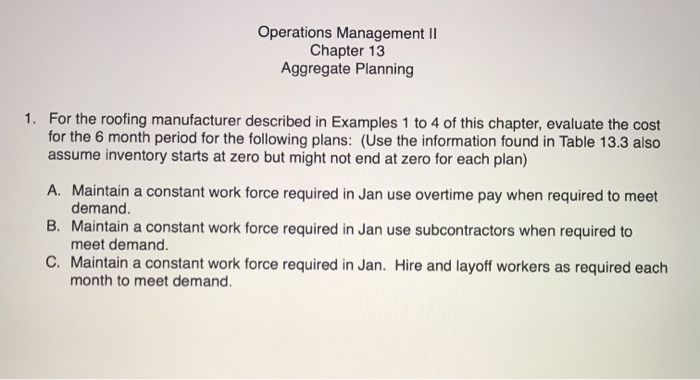
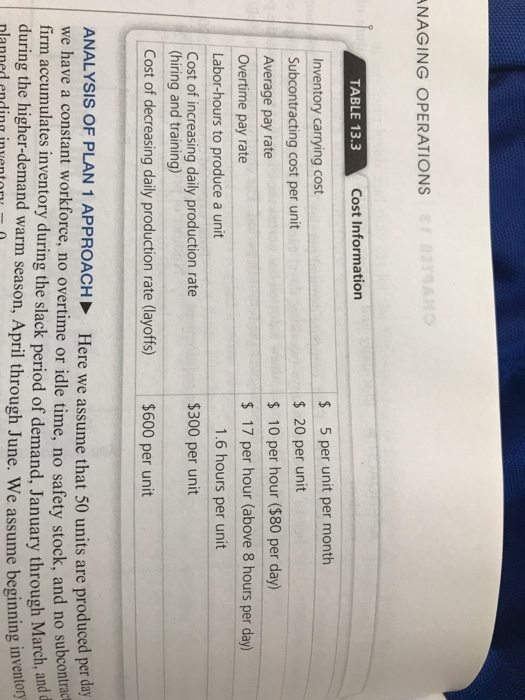
Operations Management II Chapter 13 Aggregate Planning 1. For the roofing manufacturer described in Examples 1 to 4 of this chapter, evaluate the cost for the 6 month period for the following plans: (Use the information found in Table 13.3 also assume inventory starts at zero but might not end at zero for each plan) A. Maintain a constant work force required in Jan use overtime pay when required to meet demand. B. Maintain a constant work force required in Jan use subcontractors when required to meet demand. C. Maintain a constant work force required in Jan. Hire and layoff workers as required each month to meet demand. NAGING OPERATIONS SA TABLE 13.3 Cost Information Inventory carrying cost Subcontracting cost per unit Average pay rate Overtime pay rate Labor-hours to produce a unit Cost of increasing daily production rate (hiring and training) Cost of decreasing daily production rate (layoffs) $ 5 per unit per month $ 20 per unit $ 10 per hour ($80 per day) $ 17 per hour (above 8 hours per day) 1.6 hours per unit $300 per unit $600 per unit ANALYSIS OF PLAN 1 APPROACH Here we assume that 50 units are produced per day we have a constant workforce, no overtime or idle time, no safety stock, and no subcontrac firm accumulates inventory during the slack period of demand, January through March, and i during the higher-demand warm season, April through June. We assume beginning inventory Operations Management II Chapter 13 Aggregate Planning 1. For the roofing manufacturer described in Examples 1 to 4 of this chapter, evaluate the cost for the 6 month period for the following plans: (Use the information found in Table 13.3 also assume inventory starts at zero but might not end at zero for each plan) A. Maintain a constant work force required in Jan use overtime pay when required to meet demand. B. Maintain a constant work force required in Jan use subcontractors when required to meet demand. C. Maintain a constant work force required in Jan. Hire and layoff workers as required each month to meet demand. NAGING OPERATIONS SA TABLE 13.3 Cost Information Inventory carrying cost Subcontracting cost per unit Average pay rate Overtime pay rate Labor-hours to produce a unit Cost of increasing daily production rate (hiring and training) Cost of decreasing daily production rate (layoffs) $ 5 per unit per month $ 20 per unit $ 10 per hour ($80 per day) $ 17 per hour (above 8 hours per day) 1.6 hours per unit $300 per unit $600 per unit ANALYSIS OF PLAN 1 APPROACH Here we assume that 50 units are produced per day we have a constant workforce, no overtime or idle time, no safety stock, and no subcontrac firm accumulates inventory during the slack period of demand, January through March, and i during the higher-demand warm season, April through June. We assume beginning inventory

Step by Step Solution

There are 3 Steps involved in it

1 Expert Approved Answer
Step: 1 Unlock blur-text-image

Question Has Been Solved by an Expert!

Get step-by-step solutions from verified subject matter experts

Step: 2 Unlock
Step: 3 Unlock

Students Have Also Explored These Related General Management Questions!