







Question: Pleade answer case study as per given 3 questions in black background thank you As Manoj Chaudhary, director of Laurs & Bridz Pharmaceuticals Private Limited
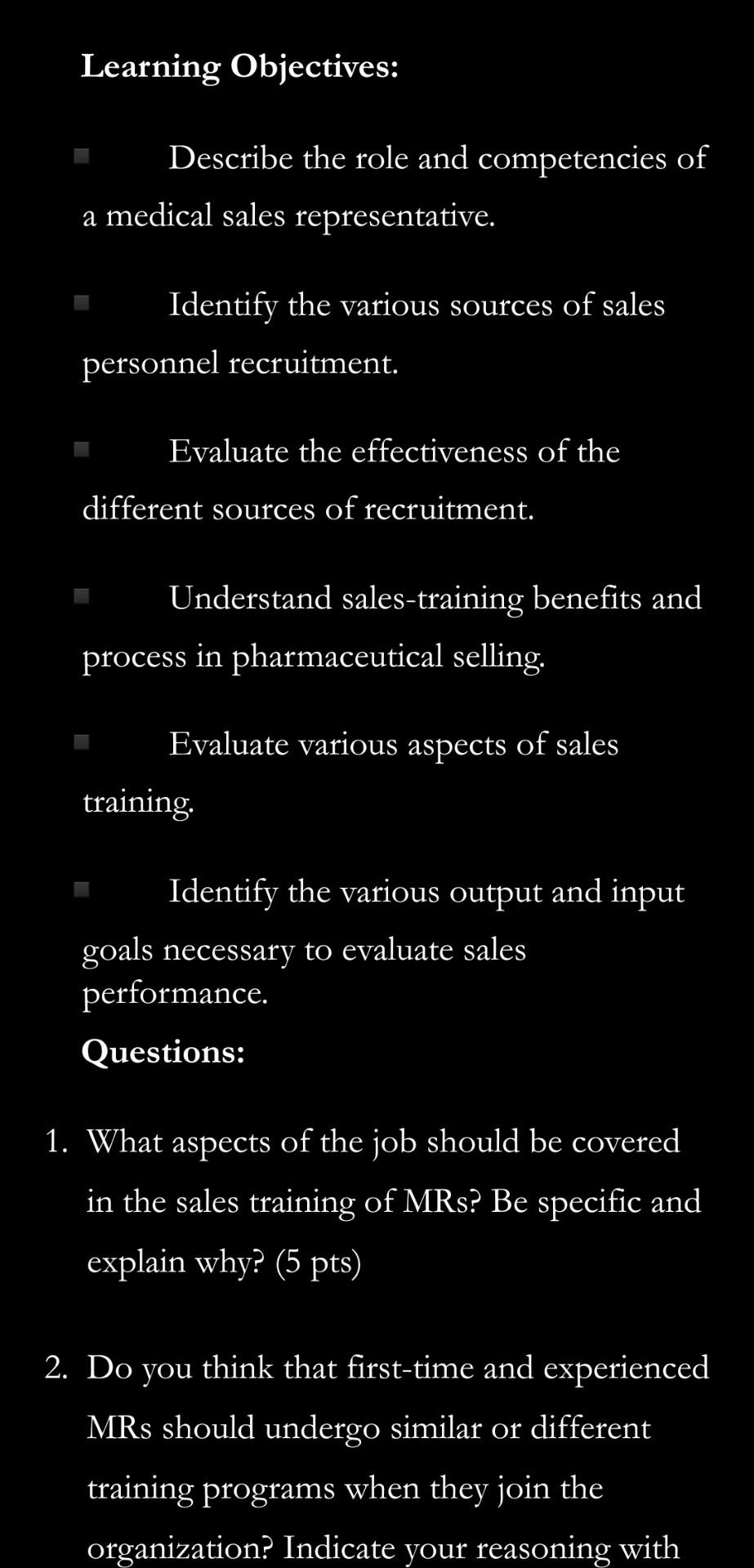
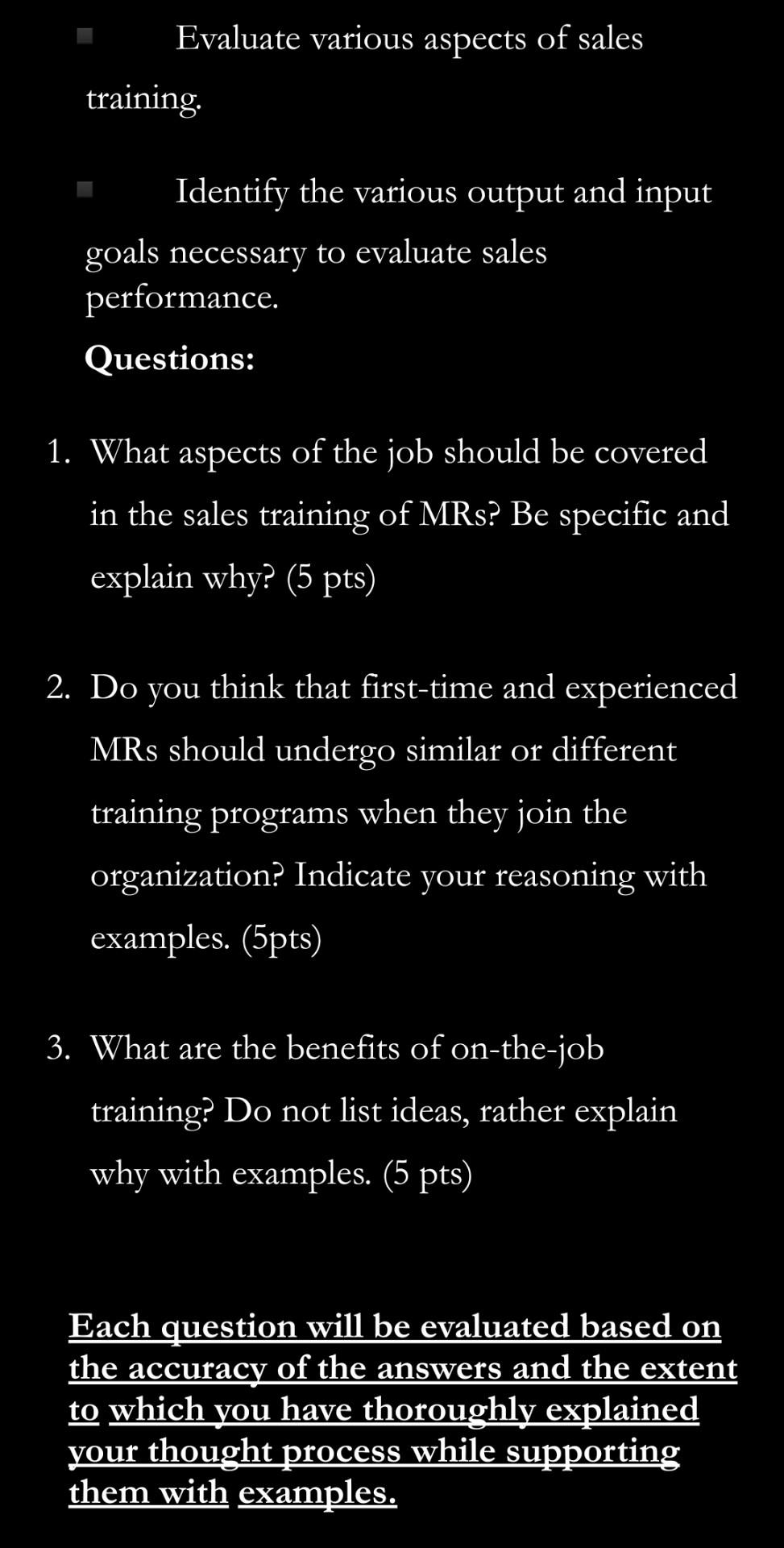
Pleade answer case study as per given 3 questions in black background thank you
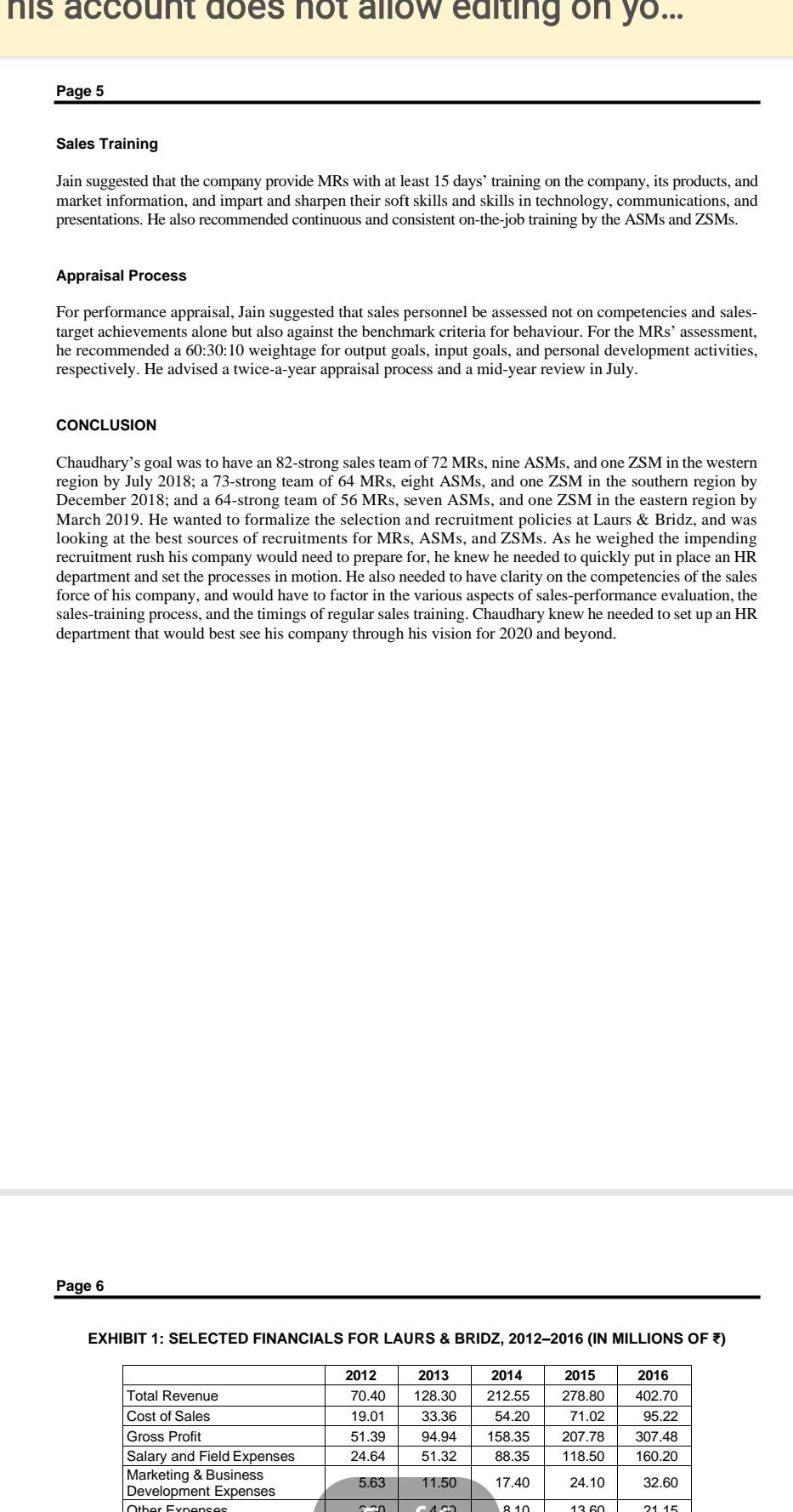
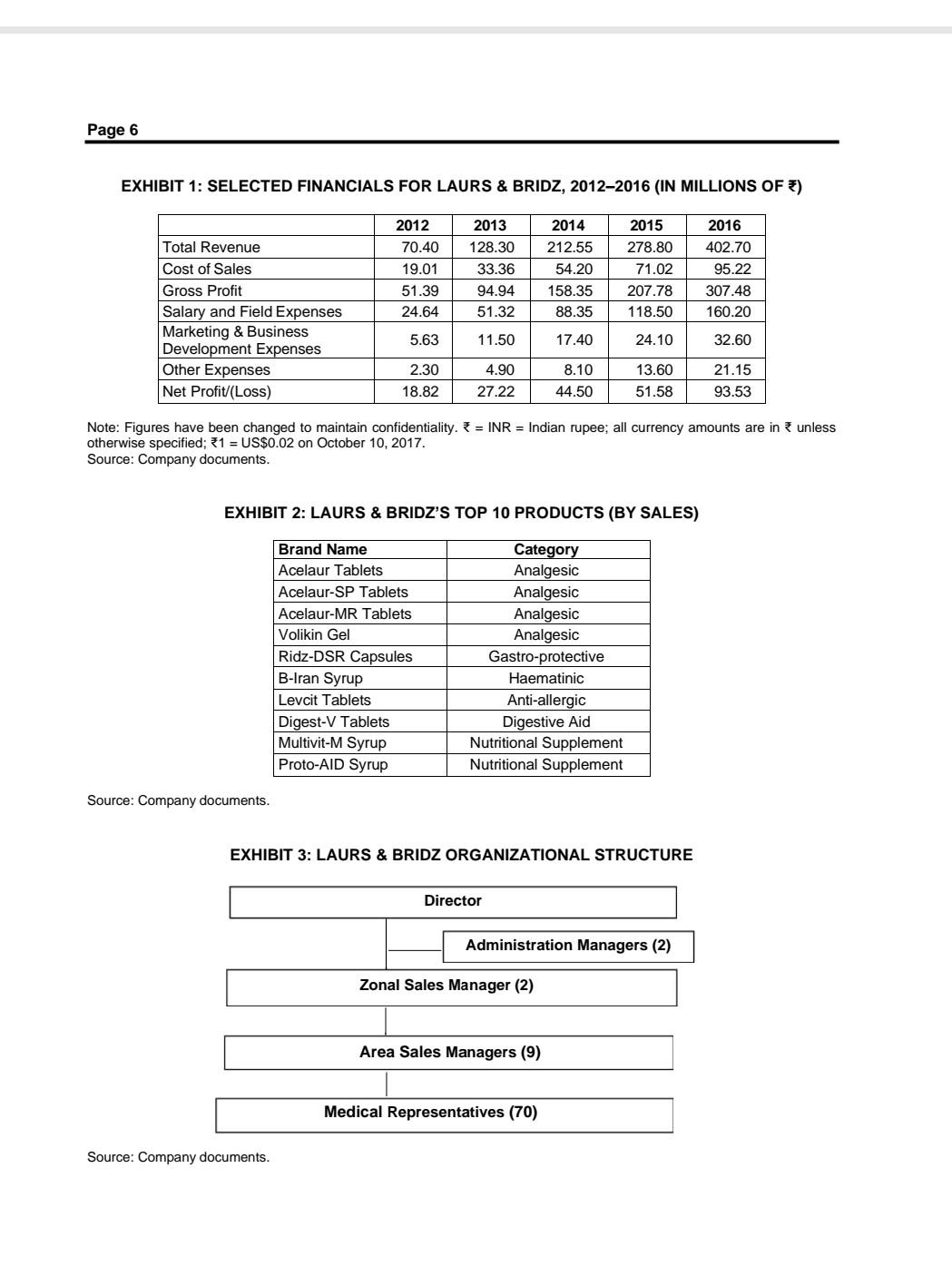
As Manoj Chaudhary, director of Laurs & Bridz Pharmaceuticals Private Limited (Laurs & Bridz), walked into his office one day in the first week of October 2017, a thought struck him: his company did not yet have a formal human resources (HR) department. This lack of an HR department did not sit well in terms of his 2020 vision for his company. He intended to enter the western Indian market by July 2018, the southern Indian market by December 2018, and the eastern Indian market by March 2019, and to achieve sales revenue of 31.51 billion by 2020. Laurs & Bridz, a company with a fair presence in northern India, had a field force of 80 employees who catered to 15,000 physicians, pharmacy retailers, and stockists. But in Chaudhary's pan- Indian vision for 2020, the lack of greater employee numbers and the absence of a dedicated HR department were huge obstacles. He needed to overcome these barriers to make good his vision for 2020. Considering Chaudhary and two of the company's administration managers managed all recruitment, appraisal, promotion decisions, leave-record maintenance, timekeeping, and other routine administrative activities, it became evident that to pull off a sales revenue of 1.5 billion within just three years, Laurs & Bridz would need to invest in creating HR systems and processes to manage the larger workforce that would be working across all four zones of the country. Chaudhary had built strong employee loyalty. He was truly interested in the growth of his personnel, and was able to motivate them to stay with his company despite their paycheques being 20-25 per cent less than in other pharmaceutical (pharma) companies, but he knew this strategy was effective with only a limited number of employees. Now that he was on the brink of expansion to other parts of India, he had begun to recruit more employees. However, with the increase in employees, his company had begun struggling to recruit, nurture, and promote the right people and to effectively manage their performance and growth. Chaudhary knew he needed to build an efficient HR teamquickly. With that in mind, in April 2017, he hired Vishit Jain, an HR consultant, to help create an HR system at Laurs & Bridz, and instructed him to develop hiring, appraisal, and development policies for his company's sales force, which comprised almost 80 per cent of the total workforce. It was already October 2017, and the HR system was still not operational. Chaudhary needed to quickly decide on the selection and recruitment policies at Laurs & Bridz. He wondered what would be the best sources of recruitment for medical representatives (MRs), area sales managers (ASMs), zonal sales managers (ZSMs), and sales personnel. Chaudhary knew he 1* = INR = Indian rupee; all currency amounts are in unless otherwise specified; 1 = US$0.02 on October 10, 2017. Page 2 needed clarity on the competencies of the company's sales force. He would to factor in various aspects of sales-performance evaluation, the sales-training process, and the timings of regular sales trainings. Chaudhary also knew he needed to set up an HR department that would best see his company through to his vision for 2020 and beyond. COMPANY BACKGROUND Laurs & Bridz, a cutting-edge pharma company with expertise in combination drugs, focused on the manufacture, export, and supply of its products worldwide. The company, which started in 2011 with an investment of 10 million and seven personnel, closed its fiscal year 2016 with sales worth 2402.7 million, representing 44.4 per cent growth over the previous year (see Exhibit 1). For 2017, the company intended to achieve net revenue of 550 million, a 36.6 per cent increase over 2016. Laurs & Bridz was a customer- centric pharma company that was dedicated to providing high-quality medicines, both branded and generic, at an affordable cost. The company followed a total quality management system to offer the best-quality products to its customers. It manufactured and supplied a wide spectrum of formulations, including tablets, injections, and new drugs. The company primarily developed medicines that included analgesic, antibiotic, anti-infective, anti-cold, anti-allergic, and haematinic drugs, and produced nutritional supplements and gastroprotective products (see Exhibit 2). Laurs & Bridz's strategy was to competitively price its certified, high-quality products, which conformed to international regulatory standards. The company reaped the strategic benefits of a focused product portfolio and good distribution network of eight carrying-and- forwarding agents and approximately 150 stockists by becoming a significant and successful player in the highly competitive pharma market. In the initial stages, Chaudhary himself worked as an MR to market his company's products. Chaudhary and the AMs recruited new emplovees on the basis of references provided by the stockists The comnany preferred THIS IOL yo... Page 2 needed clarity on the competencies of the company's sales force. He would need to factor in the various aspects of sales-performance evaluation, the sales-training process, and the timings of regular sales trainings. Chaudhary also knew he needed to set up an HR department that would best see his company through to his vision for 2020 and beyond. COMPANY BACKGROUND Laurs & Bridz, a cutting-edge pharma company with expertise in combination drugs, focused on the manufacture, export, and supply of its products worldwide. The company, which started in 2011 with an investment of 10 million and seven personnel, closed its fiscal year 2016 with sales worth 2402.7 million, representing 44.4 per cent growth over the previous year (see Exhibit 1). For 2017, the company intended to achieve net revenue of 3550 million, a 36.6 per cent increase over 2016. Laurs & Bridz was a customer- centric pharma company that was dedicated to providing high-quality medicines, both branded and generic, at an affordable cost. The company followed a total quality management system to offer the best-quality products to its customers. It manufactured and supplied a wide spectrum of formulations, including tablets, injections, and new drugs. The company primarily developed medicines that included analgesic, antibiotic, anti-infective, anti-cold, anti-allergic, and haematinic drugs, and produced nutritional supplements and gastroprotective products (see Exhibit 2). Laurs & Bridz's strategy was to competitively price its certified, high-quality products, which conformed to international regulatory standards. The company reaped the strategic benefits of a focused product portfolio and good distribution network of eight carrying-and- forwarding agents and approximately 150 stockists by becoming a significant and successful player in the highly competitive pharma market. In the initial stages, Chaudhary himself worked as an MR to market his company's products. Chaudhary and the AMs recruited new employees on the basis of references provided by the stockists. The company preferred to hire medical representatives who had sales experience in the pharma industry and strong customer relationships. The products were launched on the basis of the market potential and the manufacturing facility. Chaudhary also took the advice of physicians and pharmacy retailers in launching new products. THE SALES ORGANIZATION Laurs & Bridz's sales force, its key asset, comprised 70 medical representatives who focused on building customer relationships through the right concentration and targeting, enhancing call efficiencies, developing new business areas, and increasing resource accountability. The organizational structure was such that eight geographically grouped MRs reported to an ASM, who in turn reported to a ZSM who reported to Chaudhary. Laurs & Bridz had nine ASMs and two ZSMS (see Exhibit 3). Chaudhary, the ZSMS, and an ASM conducted sales and product trainings. Besides this, Laurs & Bridz also conducted two-day sales meetings every two months these devoted much of the time to training the MRS on new products. Also, for three days a month, the ASMs worked with each MR during field training and performance reviews. Similarly, ZSMs worked with each MR for a couple of days each month. ROLE OF THE MEDICAL REPRESENTATIVES The MRs job was to promote and sell their company's products to physicians and pharmacy retailers. Pharma selling, unlike regular selling, required MRs to have sound product knowledge and excellent selling skills when interacting with physicians. Missionary selling, an indirect sales technique in which the salesperson provided product details to a person who could influence the purchase decision, was the primary selling style Page 3 in the pharma sector. MRs acted as intermediaries between their companies and their customers (i.e., physicians, stockists, and pharmacy retailers). They were also responsible for garnering more prescriptions from more physicians to augment their companies' sales revenue and profits. When not in the field, MRs needed to analyze sales statistics and prepare monthly reports and various other reports for daily calls, stock and sales, expenses, and travel plans. Other responsibilities included keeping continuously up-to-date on product knowledge and selling skills. MRs also needed to monitor competitors' new product launches, sales, prices, and other promotional activities. The job involved extensive travel to various towns in the designated territories. In addition, MRs were responsible for organizing seminars and medical camps for physicians and other health care professionals; completing monthly, quarterly, and yearly sales targets; and attending the company's monthly, quarterly, and annual sales meetings. 2 of 6 THE INDIAN PHARMACEUTICAL INDUSTRY The revenue of the Indian pharma industry had jumped in the past five years from US$20.95 billion in 2011 to US$27.75 billion in 2016, and it was expected to reach US$55 billion by 2020. The industry's primary 11 Page 4 activities. Assessments of the MRS, ASMs, and ZSMs were based entirely on the achievement of sales targets. This pressure to make the numbers led some MRs to adopt an aggressive approach toward customers, which resulted in customers expressing to Chaudhary and the ZSMs dissatisfaction with not only some MRs' behaviour but also their inadequate knowledge of products and the market. HUMAN RESOURCE PRACTICES IN OTHER PHARMACEUTICAL COMPANIES Most pharma companies in India followed sound human resource practices, with many having separate HR and training departments. Most multinational companies had a defined recruitment and selection process that listed specific job descriptions and competency requirements for various positions. These companies recruited salespersons through references, campus visits, newspaper advertisements, online applications, job portals, and recruitment consultants. They selected sales representatives only after a formal interview process of three to four rounds. These companies also conducted psychometric tests to validate the job fit of the applicants. Post-recruitment, leading multinational companies provided the salespersons with extensive training of 30 45 days and apprised them about the company, its products, and market information, and coached them on communication, presentation, selling processes, and technology skills to work efficiently in the field. To introduce new salespersons to practices, products, and customers in the market, and to provide real-time experience, these companies sent first-line managers and second-line managers to accompany the new recruits. These training programs helped the recruits persuade physicians to prescribe their company's products and to develop good customer relationships. Most multinational companies, such as Novartis India Limited, measured both input and output goals for its salespeople to help ensure sales-force effectiveness with better sales revenue and profitability. Salespersons were given good salaries and attractive incentives to achieve their input and output goals. Most companies followed the 70:30 ratio for the fixed salaries and incentives. The leading pharma companies also followed a healthy appraisal process for salespersons' increments and promotions by evaluating them on parameters such as total sales revenue, year-over-year growth, revenue by productsumber of units sold, revenue by distributors/customers, sales expenses, profits, and activities undertaken for personal development. Chaudhary was aware that sales force attrition was lower among multinational companies than among domestic players. PROPOSED HUMAN RESOURCE POLICIES Recruitment and Selection Keeping an eye on the company's pan-India vision for 2020, Jain, the HR consultant, suggested that Chaudhary take inspiration from the HR practices of leading pharma companies, while keeping in mind Laurs & Bridz's goals and budget. Proposing a defined recruitment and selection process, Jain designed job descriptions and drew up a competency list for various positions. He advised that Laurs & Bridz hire salespersons through references, campus visits, online applications, job portals, and recruitment consultancies. He suggested that the hires be recruited from various sources in accordance with the job positions; for example, Laurs & Bridz could hire first-line and second-line managers mainly through references and recruitment consultants, and select salespersons after three to four screening rounds and interviews. Jain also recommended the use of psychometric tests to evaluate competencies and assess job matches. To curtail attrition, the HR consultant suggested a 10 per cent salary hike for employees and new hires, and following the 70:30 ratio for fixed salaries and incentives. Page 5 Sales Training Jain suggested that the company provide MRs with at least 15 days' training on the company, its products, and market information, and impart and sharpen their soft skills and skills in technology, communications, and presentations. He also recommended continuous and consistent on-the-job training by the ASMs and ZSMS. Appraisal Process For performance appraisal, Jain suggested that sales personnel be assessed not on competencies and sales- target achievements alone but also against the benchmark criteria for behaviour. For the MRs' assessment, he recommended a 60:30:10 weightage for output goals, input goals, and personal development activities, respectively. He advised a twice-a-year appraisal process and a mid-year review in July. CONCLUSION Page 3 in the pharma sector. MRs acted as intermediaries between their companies and their customers (i.e., physicians, stockists, and pharmacy retailers). They were also responsible for garnering more prescriptions from more physicians to augment their companies' sales revenue and profits. When not in the field, MRS needed to analyze sales statistics and prepare monthly reports and various other reports for daily calls, stock and sales, expenses, and travel plans. Other responsibilities included keeping continuously up-to-date on product knowledge and selling skills. MRs also needed to monitor competitors' new product launches, sales, prices, and other promotional activities. The job involved extensive travel to various towns in the designated territories. In addition, MRs were responsible for organizing seminars and medical camps for physicians and other health care professionals; completing monthly, quarterly, and yearly sales targets; and attending the company's monthly, quarterly, and annual sales meetings. THE INDIAN PHARMACEUTICAL INDUSTRY The revenue of the Indian pharma industry had jumped in the past five years from US$20.95 billion in 2011 to US$27.75 billion in 2016, and it was expected to reach US$55 billion by 2020. The industry's primary growth drivers with regard to demand were an improved standard of living, easier accessibility to drugs, burgeoning lifestyle-related diseases, a deeper penetration of health insurance, and a thriving export market. With regard to supply, India had a skilled workforce and low-cost manufacturing capabilities. Also, some government initiatives and investment-boosting commitments, such as Pharma Vision 2020 (which aspired to put India ahead of all end-to-end drug manufacturers in the world), reduced both approval time for new facilities and 100 per cent foreign direct investment under the automatic route. Moreover, from within the industry, there was a concerted effort among pharma companies to include, in their portfolios, drugs for chronic ailments such as cancer, diabetes, cardiovascular diseases, and depression. The inclusion of these drugs was expected to generate and fuel growth in the Indian pharma market, in which branded generics had the largest market shareas much as 80 per cent in terms of revenues.3 Competition was rife in the rapidly growing Indian pharma industry, with both multinational and Indian pharma companies fighting a price war, wherein the multinationals wanted to grab market share by selling generic and low-priced versions of their popular medicines, and the Indian companies did so by pushing their low-priced and popular products. EXISTING HUMAN RESOURCE MANAGEMENT PRACTICES AT LAURS & BRIDZ With no definite HR processes in place even in October 2017, Laurs & Bridz contiued to hire its sales force from personal networks and references, a practice it had adopted at its inception. No formal recruitment and selection processes were in place to check for applicant role compatibility, nor was there a formal training department. MRs had to learn the job hands-on in the field after a mere three-day training conducted by Chaudhary, a ZSM, and an ASM. The short training apprised the MRs of the company, its products, and market information, and imparted some sales presentation skills. While Laurs & Bridz had output goals for the field force, it did not record any input goals for selling. The output goals were linked to a salesperson's expected selling results and focused on the number of orders received, total sales revenue generated, year-over-year growth, and profits. The input goals, on the other hand, were linked to a salesperson's selling efforts and focused on the number of sales calls, presentations, proposals, and new clients in order to ensure that the sales representatives performed their core selling 2 Indian Brand Equity Foundation, Pharmaceutical Industry Sectoral Report, January 2017, accessed September 8, 2017, https://www.ibef.org/download/Pharmaceutical-January-2017-D.PDF. 3 Indian Brand Equity Foundation, "Indian Pharmaceutical Industry," March 2017, accessed September 8, 2017, www.ibef.org/industry/pharmaceutical-india.aspx. 4 lbid. Page 4 activities. Assessments of the MRs, ASMs, and ZSMs were based entirely on the achievement of sales targets. This pressure to "make the numbers led some MRs to adopt an aggressive approach toward customers, which resulted in customers expressing to Chaudhary and the ZSMs dissatisfaction with not only some MRs' behaviour but also their inadequate knowledge of products and the market. HUMAN RESOURCE PRACTICES IN OTHER PHARMACEUTICAL COMPANIES Most pharma companies in India followed sound human resource practices, with many having separate HR and training departments. Most multinational companies had a defined recruitment and selection process that listed specific job descriptions and competency requirements for various positions. These companies recruited salespersons through references, campus visits, newspaper advertisements, online applications, job portals, and recruitment consultants. They selected sales representatives only after a formal interview process of three to four rounds. These companies also conducted psychometric tests to validate the job fit of the applicants. Post-recruitment, leading multinational companies provided the salespersons with extensive training of 30 nis account does not allow editing on yo... Page 5 Sales Training Jain suggested that the company provide MRs with at least 15 days' training on the company, its products, and market information, and impart and sharpen their soft skills and skills in technology, communications, and presentations. He also recommended continuous and consistent on-the-job training by the ASMs and ZSMs. Appraisal Process For performance appraisal, Jain suggested that sales personnel be assessed not on competencies and sales- target achievements alone but also against the benchmark criteria for behaviour. For the MRs' assessment, he recommended a 60:30:10 weightage for output goals, input goals, and personal development activities, respectively. He advised a twice-a-year appraisal process and a mid-year review in July. CONCLUSION Chaudhary's goal was to have an 82-strong sales team of 72 MRs, nine ASMs, and one ZSM in the western region by July 2018; a 73-strong team of 64 MRs, eight ASMs, and one ZSM in the southern region by December 2018; and a 64-strong team of 56 MRs, seven ASMs, and one ZSM in the eastern region by March 2019. He wanted to formalize the selection and recruitment policies at Laurs & Bridz, and was looking at the best sources of recruitments for MRs, ASMs, and ZSMs. As he weighed the impending recruitment rush his company would need to prepare for, he knew he needed to quickly put in place an HR department and set the processes in motion. He also needed to have clarity on the competencies of the sales force of his company, and would have to factor in the various aspects of sales-performance evaluation, the sales-training process, and the timings of regular sales training. Chaudhary knew he needed to set up an HR department that would best see his company through his vision for 2020 and beyond. Page 6 EXHIBIT 1: SELECTED FINANCIALS FOR LAURS & BRIDZ, 2012-2016 (IN MILLIONS OF ) 2013 Total Revenue Cost of Sales Gross Profit Salary and Field Expenses Marketing & Business Development Expenses Other Fynenses 2012 70.40 19.01 51.39 24.64 128.30 33.36 94.94 51.32 2014 212.55 54.20 158.35 88.35 2015 278.80 71.02 207.78 118.50 2016 402.70 95.22 307.48 160.20 5.63 11.50 17.40 24.10 32.60 a 4 810 13.60 21 15 Page 6 EXHIBIT 1: SELECTED FINANCIALS FOR LAURS & BRIDZ, 2012-2016 (IN MILLIONS OF 2012 70.40 19.01 51.39 24.64 2013 128.30 33.36 94.94 51.32 2014 212.55 54.20 158.35 88.35 2015 278.80 71.02 207.78 118.50 2016 402.70 95.22 307.48 160.20 Total Revenue Cost of Sales Gross Profit Salary and Field Expenses Marketing & Business Development Expenses Other Expenses Net Profit/(Loss) 5.63 11.50 17.40 24.10 32.60 2.30 18.82 4.90 27.22 8.10 44.50 13.60 51.58 21.15 93.53 Note: Figures have been changed to maintain confidentiality. * = INR - Indian rupee; all currency amounts are in unless otherwise specified; 1 = US$0.02 on October 10, 2017. Source: Company documents. EXHIBIT 2: LAURS & BRIDZ'S TOP 10 PRODUCTS (BY SALES) Brand Name Acelaur Tablets Acelaur-SP Tablets Acelaur-MR Tablets Volikin Gel Ridz-DSR Capsules B-Iran Syrup Levcit Tablets Digest-V Tablets Multivit-M Syrup Proto-AID Syrup Category Analgesic Analgesic Analgesic Analgesic Gastro-protective Haematinic Anti-allergic Digestive Aid Nutritional Supplement Nutritional Supplement Source: Company documents. EXHIBIT 3: LAURS & BRIDZ ORGANIZATIONAL STRUCTURE Director Administration Managers (2) Zonal Sales Manager (2) Area Sales Managers (9) Medical Representatives (70) Source: Company documents. Learning Objectives: Describe the role and competencies of a medical sales representative. Identify the various sources of sales personnel recruitment. Evaluate the effectiveness of the different sources of recruitment. Understand sales-training benefits and process in pharmaceutical selling. Evaluate various aspects of sales training. Identify the various output and input goals necessary to evaluate sales performance. Questions: 1. What aspects of the job should be covered in the sales training of MRs? Be specific and explain why? (5 pts) 2. Do you think that first-time and experienced MRs should undergo similar or different training programs when they join the organization? Indicate your reasoning with Evaluate various aspects of sales training. Identify the various output and input goals necessary to evaluate sales performance. Questions: 1. What aspects of the job should be covered in the sales training of MRs? Be specific and explain why? (5 pts) 2. Do you think that first-time and experienced MRs should undergo similar or different training programs when they join the organization? Indicate your reasoning with examples. (5pts) 3. What are the benefits of on-the-job training? Do not list ideas, rather explain why with examples. (5 pts) Each question will be evaluated based on the accuracy of the answers and the extent to which you have thoroughly explained your thought process while supporting them with examplesStep by Step Solution
There are 3 Steps involved in it
1 Expert Approved Answer
Step: 1 Unlock

Question Has Been Solved by an Expert!
Get step-by-step solutions from verified subject matter experts
Step: 2 Unlock
Step: 3 Unlock
 Study Help