







Question: please answer all for a thumbs up A tightly bound cofactor might be called a(n) : apoenzyme. transition state. holoenzyme. prosthetic group. coenzyme. Enzymes that
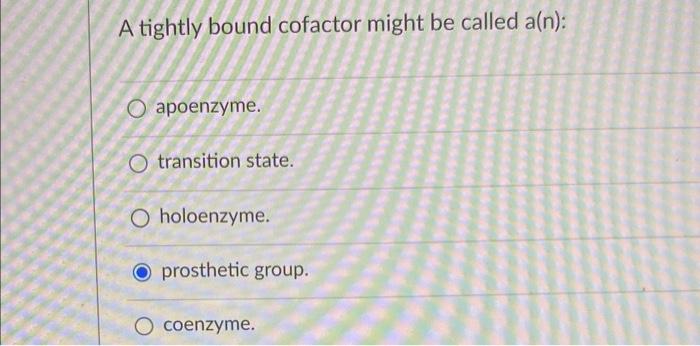
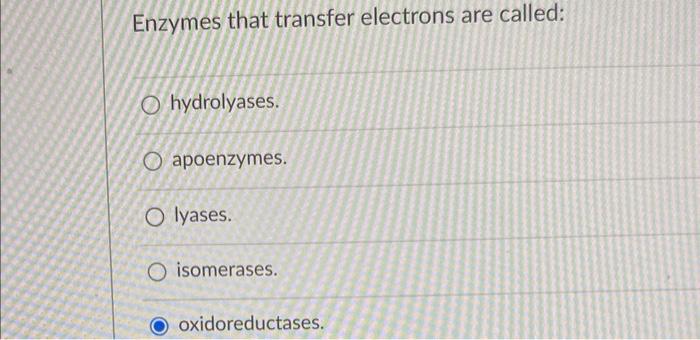
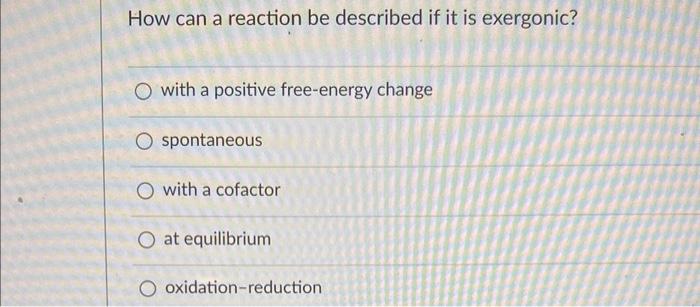
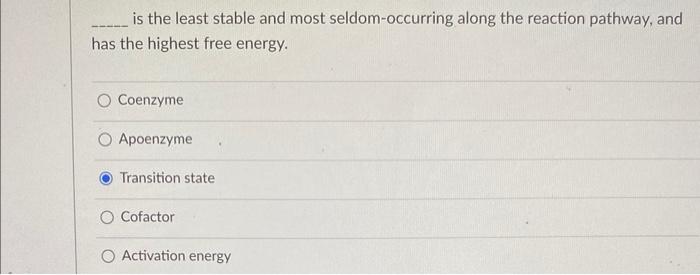
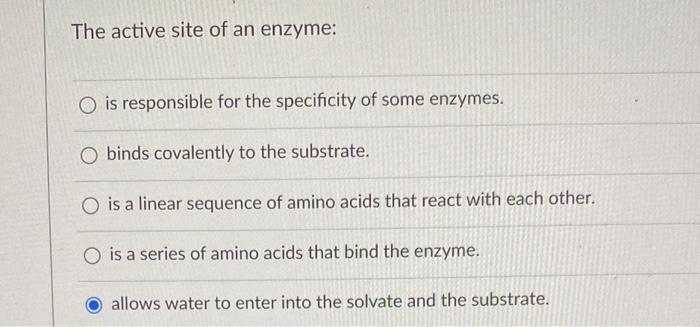
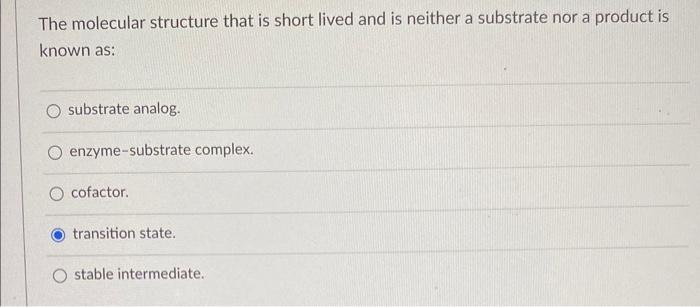
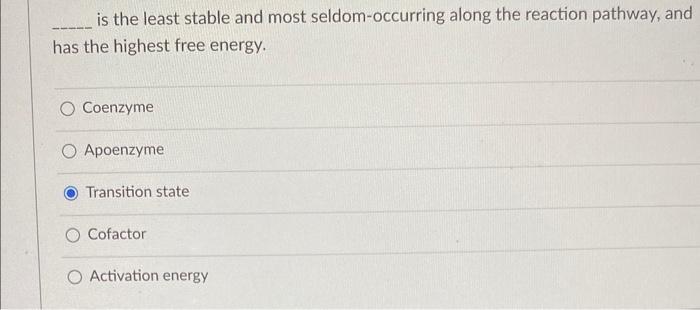
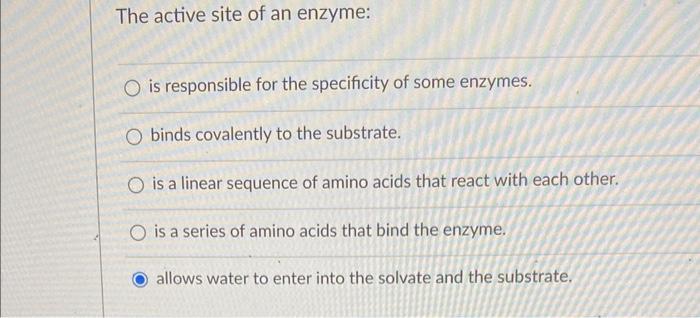
A tightly bound cofactor might be called a(n) : apoenzyme. transition state. holoenzyme. prosthetic group. coenzyme. Enzymes that transfer electrons are called: hydrolyases. apoenzymes. lyases. isomerases. oxidoreductases. How can a reaction be described if it is exergonic? with a positive free-energy change spontaneous with a cofactor at equilibrium oxidation-reduction is the least stable and most seldom-occurring along the reaction pathway, and has the highest free energy. Coenzyme Apoenzyme Transition state Cofactor Activation energy The active site of an enzyme: is responsible for the specificity of some enzymes. binds covalently to the substrate. is a linear sequence of amino acids that react with each other. is a series of amino acids that bind the enzyme. allows water to enter into the solvate and the substrate. The molecular structure that is short lived and is neither a substrate nor a product is known as: substrate analog. enzyme-substrate complex. cofactor. transition state. stable intermediate. is the least stable and most seldom-occurring along the reaction pathway, and has the highest free energy. Coenzyme Apoenzyme Transition state Cofactor Activation energy The active site of an enzyme: is responsible for the specificity of some enzymes. binds covalently to the substrate. is a linear sequence of amino acids that react with each other. is a series of amino acids that bind the enzyme. allows water to enter into the solvate and the substrate
Step by Step Solution
There are 3 Steps involved in it

Get step-by-step solutions from verified subject matter experts
 Study Help