



Question: please answer all questions, for a like and good rating :) THANKS!! V. Dr, Smith is incensed by the review and believes it came from
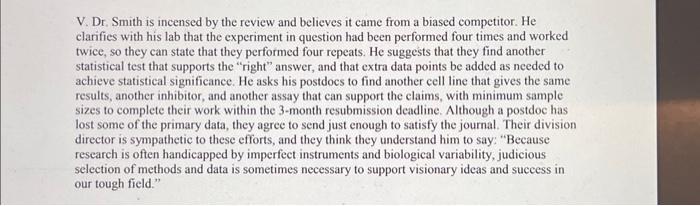
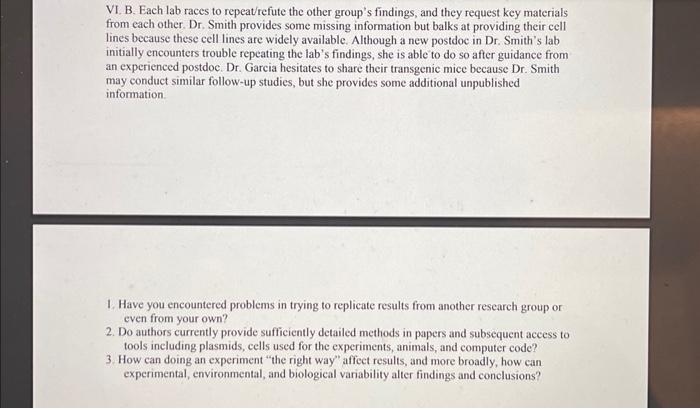
V. Dr, Smith is incensed by the review and believes it came from a biased competitor. He clarifies with his lab that the experiment in question had been performed four times and worked twice, so they can state that they performed four repeats. He suggests that they find another statistical test that supports the "right" answer, and that extra data points be added as needed to achieve statistical significance. He asks his postdocs to find another cell line that gives the same results, another inhibitor, and another assay that can support the claims, with minimum sample sizes to complete their work within the 3 -month resubmission deadline. Although a postdoc has lost some of the primary data, they agree to send just enough to satisfy the journal. Their division director is sympathetic to these efforts, and they think they understand him to say: "Because research is often handicapped by imperfect instruments and biological variability, judicious selection of methods and data is sometimes necessary to support visionary ideas and success in our tough field." VI. B. Each lab races to repeat/refute the other group's findings, and they request key materials from each other. Dr. Smith provides some missing information but balks at providing their cell lines because these cell lines are widely available. Although a new postdoc in Dr. Smith's lab initially encounters trouble repeating the lab's findings, she is able to do so after guidance from an experienced postdoc. Dr. Garcia hesitates to share their transgenic mice because Dr. Smith may conduct similar follow-up studies, but she provides some additional unpublished information. 1. Have you encountered problems in trying to replicate results from another research group or even from your own? 2. Do authors currently provide sufficiently detailed methods in papers and subsequent access to tools including plasmids, cells used for the experiments, animals, and computer code? 3. How can doing an experiment "the right way" affect results, and more broadly, how can experimental, environmental, and biological variability alter findings and conclusions
Step by Step Solution
There are 3 Steps involved in it

Get step-by-step solutions from verified subject matter experts