







Question: Please answer based on the reading provided! 1. Assess the trends in the global and Indian Automobile Industry. 2. VW has been in India for
Please answer based on the reading provided!
1. Assess the trends in the global and Indian Automobile Industry.
2. VW has been in India for 10 years but has failed to become popular and accepted by customers. Was VW justified in continuing to give importance to the Indian market? Address pros and cons of this position.
3. Is there a business case for VW and Tata to look for a partner with which to enter into a strategic alliance in India? Address the pros and cons of VW operating independently, making an acquisition, and in entering into a strategic alliance. Discuss the pros and cons for both VW and Tata.
4. What type of governance structure (contractual alliance, equity alliance, or joint venture) would you propose to VW and Tata if they can resolve their differences?6.What should the companies do call of the alliance or sort out their differences?
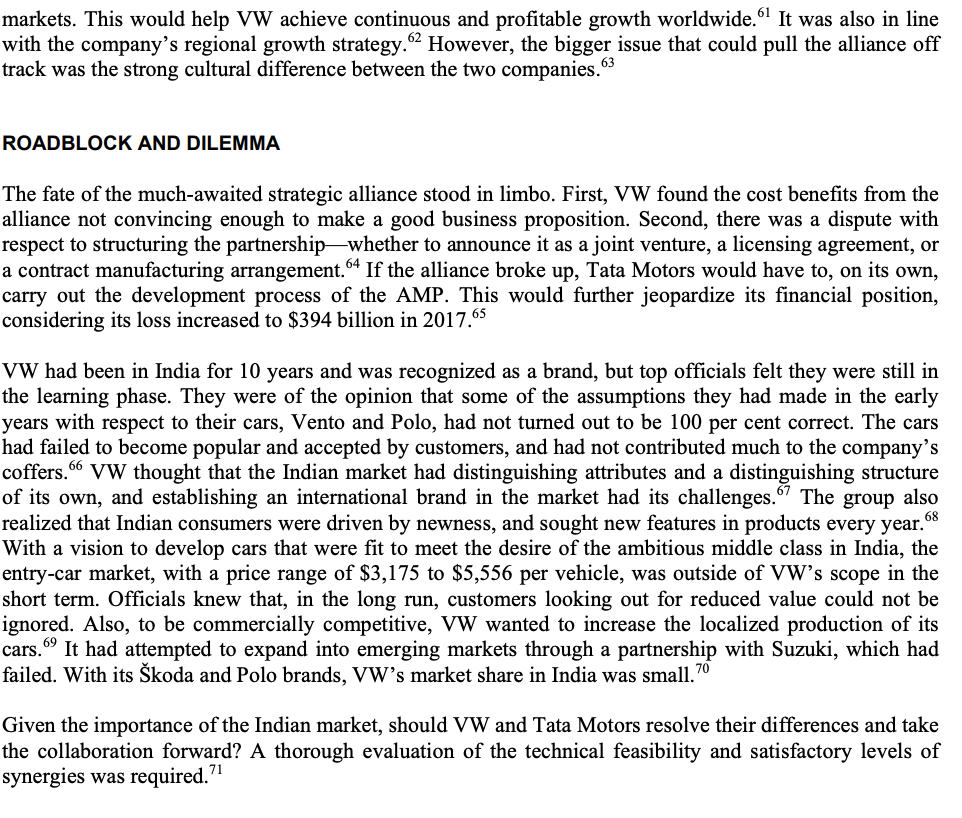
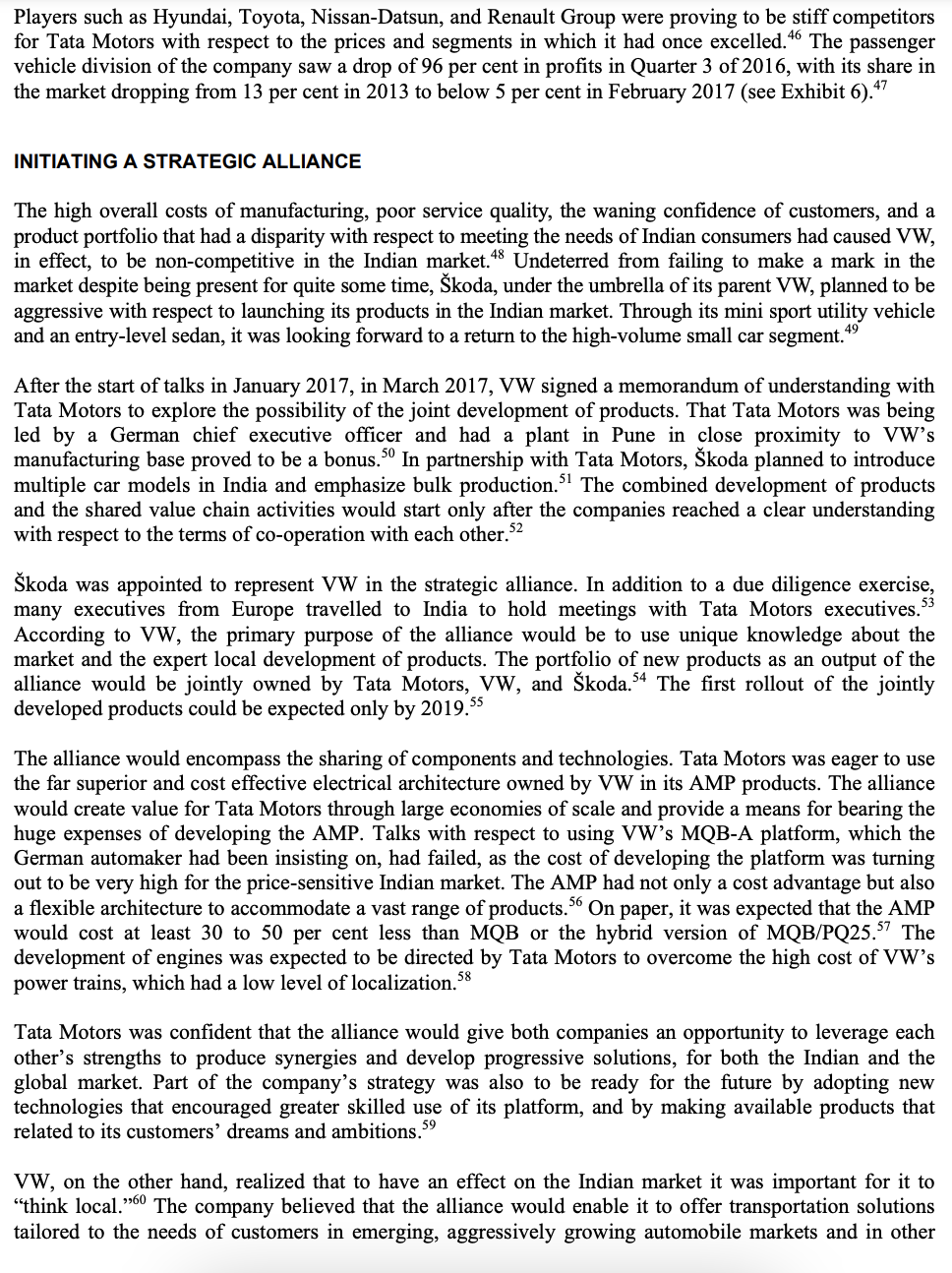
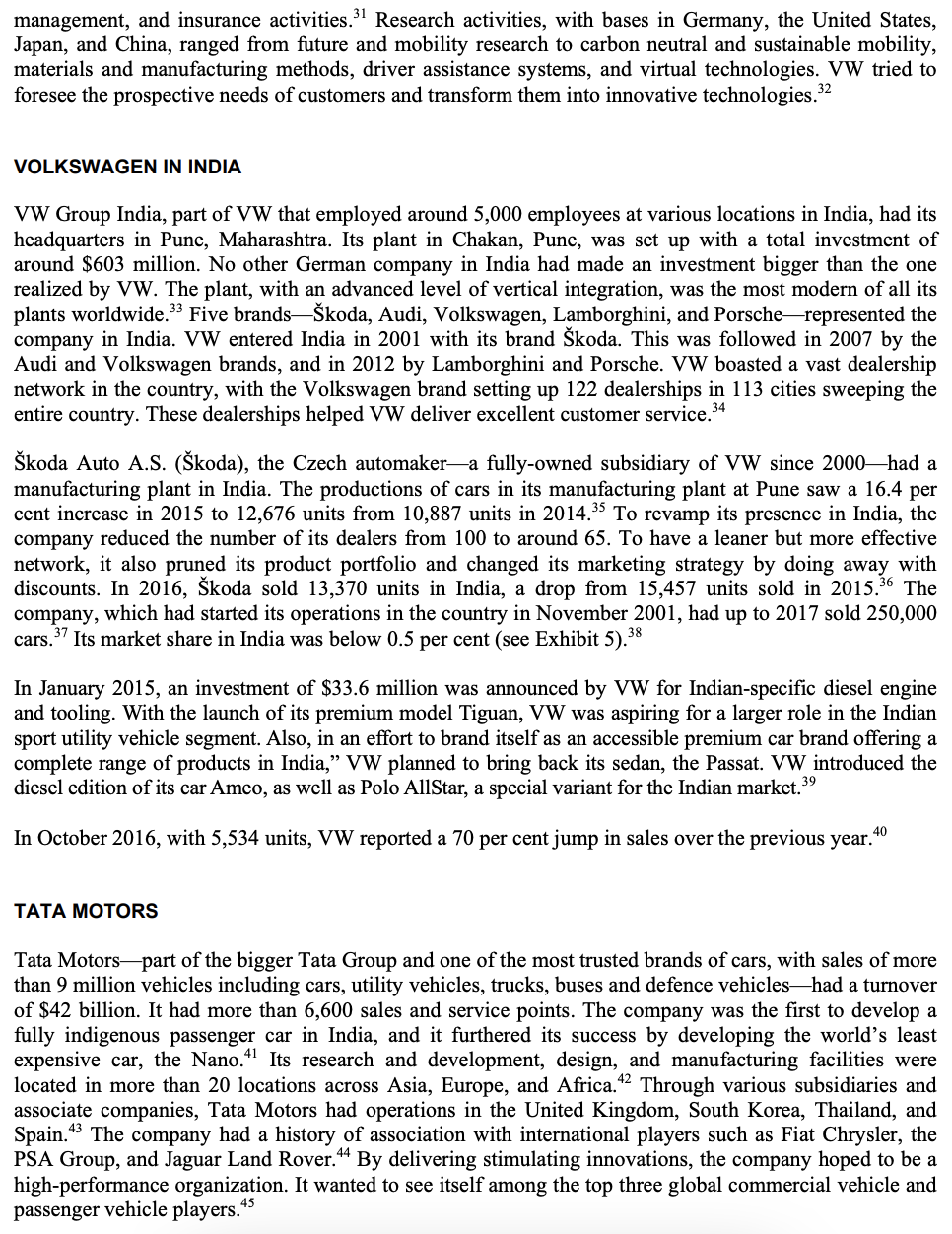
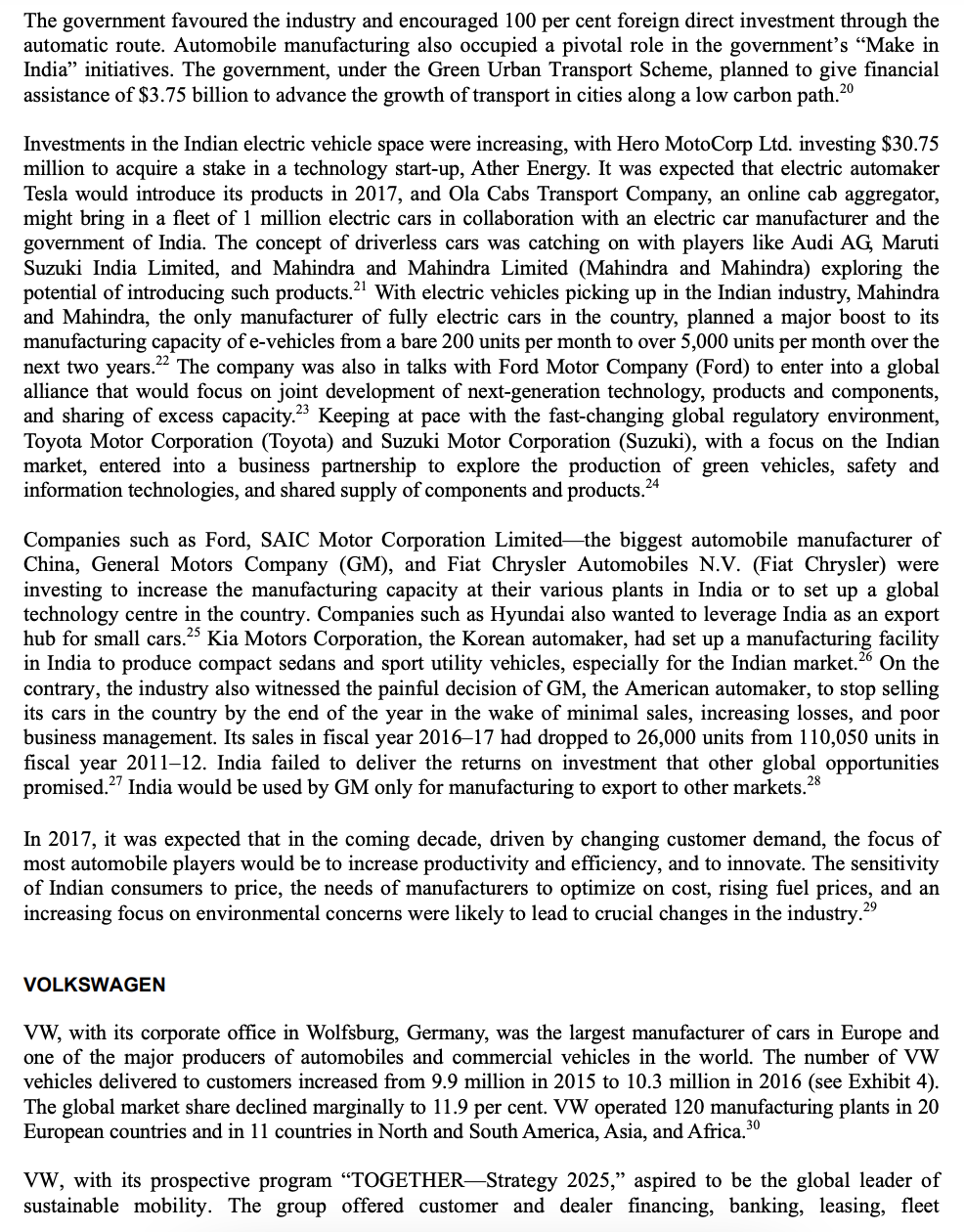
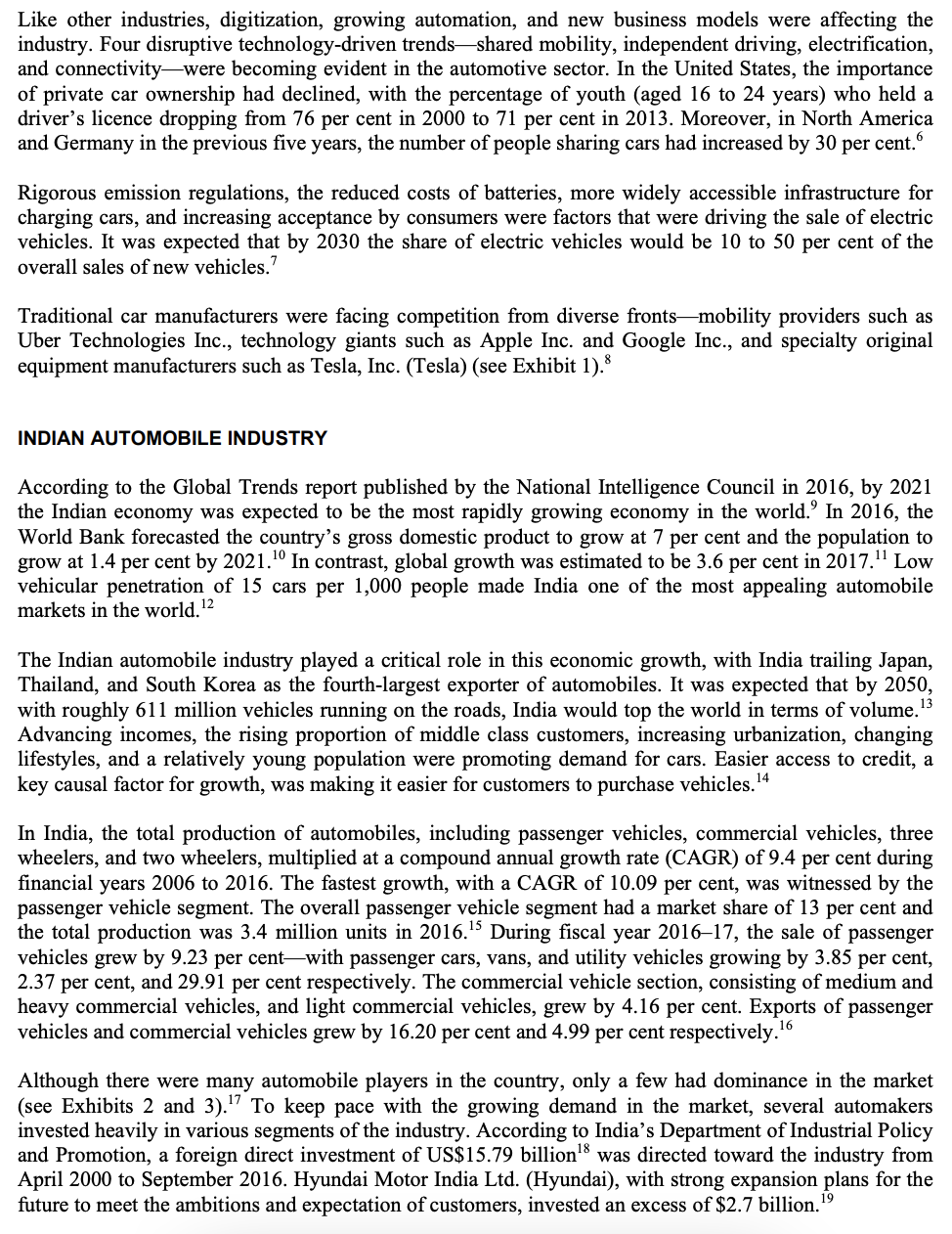
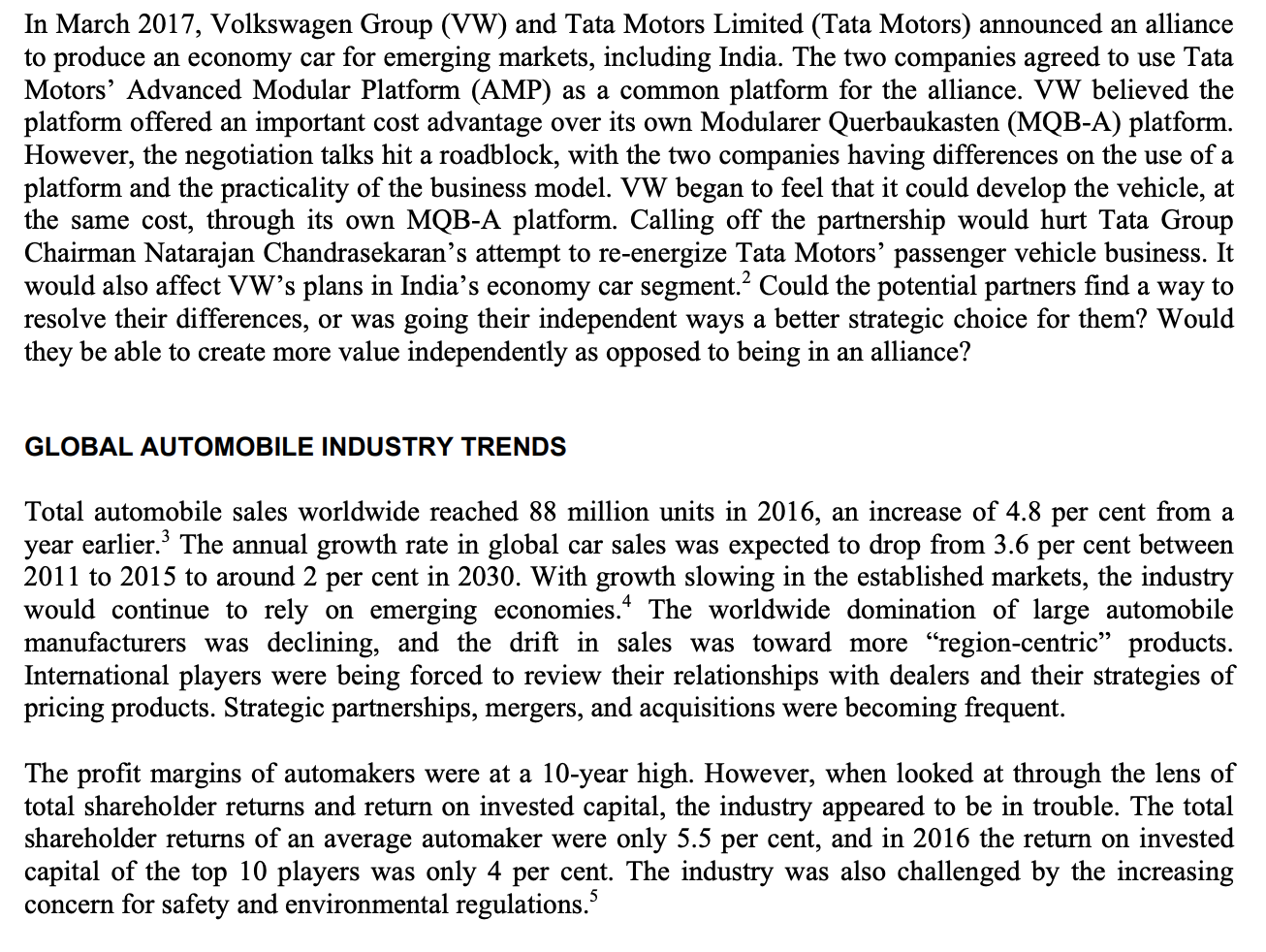
61 markets. This would help VW achieve continuous and profitable growth worldwide. It was also in line with the company's regional growth strategy. However, the bigger issue that could pull the alliance off track was the strong cultural difference between the two companies. 63 ROADBLOCK AND DILEMMA The fate of the much-awaited strategic alliance stood in limbo. First, VW found the cost benefits from the alliance not convincing enough to make a good business proposition. Second, there was a dispute with respect to structuring the partnershipwhether to announce it as a joint venture, a licensing agreement, or a contract manufacturing arrangement. 4 If the alliance broke up, Tata Motors would have to, on its own, 64 carry out the development process of the AMP. This would further jeopardize its financial position, considering its loss increased to $394 billion in 2017.65 68 VW had been in India for 10 years and was recognized as a brand, but top officials felt they were still in the learning phase. They were of the opinion that some of the assumptions they had made in the early years with respect to their cars, Vento and Polo, had not turned out to be 100 per cent correct. The cars had failed to become popular and accepted by customers, and had not contributed much to the company's coffers. VW thought that the Indian market had distinguishing attributes and a distinguishing structure of its own, and establishing an international brand in the market had its challenges. The group also realized that Indian consumers were driven by newness, and sought new features in products every year. With a vision to develop cars that were fit to meet the desire of the ambitious middle class in India, the entry-car market, with a price range of $3,175 to $5,556 per vehicle, was outside of VW's scope in the short term. Officials knew that, in the long run, customers looking out for reduced value could not be ignored. Also, to be commercially competitive, VW wanted to increase the localized production of its cars.69 It had attempted to expand into emerging markets through a partnership with Suzuki, which had failed. With its koda and Polo brands, VW's market share in India was small.70 Given the importance of the Indian market, should VW and Tata Motors resolve their differences and take the collaboration forward? A thorough evaluation of the technical feasibility and satisfactory levels of synergies was required. * Players such as Hyundai, Toyota, Nissan-Datsun, and Renault Group were proving to be stiff competitors for Tata Motors with respect to the prices and segments in which it had once excelled. 46 The passenger vehicle division of the company saw a drop of 96 per cent in profits in Quarter 3 of 2016, with its share in the market dropping from 13 per cent in 2013 to below 5 per cent in February 2017 (see Exhibit 6).47 INITIATING A STRATEGIC ALLIANCE The high overall costs of manufacturing, poor service quality, the waning confidence of customers, and a product portfolio that had a disparity with respect to meeting the needs of Indian consumers had caused VW, in effect, to be non-competitive in the Indian market.48 Undeterred from failing to make a mark in the market despite being present for quite some time, koda, under the umbrella of its parent VW, planned to be aggressive with respect to launching its products in the Indian market. Through its mini sport utility vehicle and an entry-level sedan, it was looking forward to a return to the high-volume small car segment. 49 After the start of talks in January 2017, in March 2017, VW signed a memorandum of understanding with Tata Motors to explore the possibility of the joint development of products. That Tata Motors was being led by a German chief executive officer and had a plant in Pune in close proximity to VW's manufacturing base proved to be a bonus. S In partnership with Tata Motors, koda planned to introduce 50 multiple car models in India and emphasize bulk production. The combined development of products and the shared value chain activities would start only after the companies reached a clear understanding with respect to the terms of co-operation with each other. 52 koda was appointed to represent VW in the strategic alliance. In addition to a due diligence exercise, many executives from Europe travelled to India to hold meetings with Tata Motors executives. 3 According to VW, the primary purpose of the alliance would be to use unique knowledge about the market and the expert local development of products. The portfolio of new products as an output of the alliance would be jointly owned by Tata Motors, Vw, and koda. 54 The first rollout of the jointly developed products could be expected only by 2019.55 The alliance would encompass the sharing of components and technologies. Tata Motors was eager to use the far superior and cost effective electrical architecture owned by VW in its AMP products. The alliance would create value for Tata Motors through large economies of scale and provide a means for bearing the huge expenses of developing the AMP. Talks with respect to using VW's MQB-A platform, which the German automaker had been insisting on, had failed, as the cost of developing the platform was turning out to be very high for the price-sensitive Indian market. The AMP had not only a cost advantage but also a flexible architecture to accommodate a vast range of products." On paper, it was expected that the AMP would cost at least 30 to 50 per cent less than MQB or the hybrid version of MQB/PQ25.57 The development of engines was expected to be directed by Tata Motors to overcome the high cost of VW's power trains, which had a low level of localization. 58 56 Tata Motors was confident that the alliance would give both companies an opportunity to leverage each other's strengths to produce synergies and develop progressive solutions, for both the Indian and the global market. Part of the company's strategy was also to be ready for the future by adopting new technologies that encouraged greater skilled use of its platform, and by making available products that related to its customers' dreams and ambitions." 59 VW, on the other hand, realized that to have an effect on the Indian market it was important for it to "think local.60 The company believed that the alliance would enable it to offer transportation solutions tailored to the needs of customers in emerging, aggressively growing automobile markets and in other management, and insurance activities.31 Research activities, with bases in Germany, the United States, Japan, and China, ranged from future and mobility research to carbon neutral and sustainable mobility, materials and manufacturing methods, driver assistance systems, and virtual technologies. VW tried to foresee the prospective needs of customers and transform them into innovative technologies. 32 VOLKSWAGEN IN INDIA VW Group India, part of VW that employed around 5,000 employees at various locations in India, had its headquarters in Pune, Maharashtra. Its plant in Chakan, Pune, was set up with a total investment of around $603 million. No other German company in India had made an investment bigger than the one realized by VW. The plant, with an advanced level of vertical integration, was the most modern of all its plants worldwide. 33 Five brandskoda, Audi, Volkswagen, Lamborghini, and Porsche represented the company in India. VW entered India in 2001 with its brand koda. This was followed in 2007 by the Audi and Volkswagen brands, and in 2012 by Lamborghini and Porsche. VW boasted a vast dealership network in the country, with the Volkswagen brand setting up 122 dealerships in 113 cities sweeping the entire country. These dealerships helped VW deliver excellent customer service. 34 koda Auto A.S. (koda), the Czech automakera fully-owned subsidiary of VW since 2000had a manufacturing plant in India. The productions of cars in its manufacturing plant at Pune saw a 16.4 per cent increase in 2015 to 12,676 units from 10,887 units in 2014.35 To revamp its presence in India, the company reduced the number of its dealers from 100 to around 65. To have a leaner but more effective network, it also pruned its product portfolio and changed its marketing strategy by doing away with discounts. In 2016, koda sold 13,370 units in India, a drop from 15,457 units sold in 2015.36 The company, which had started its operations in the country in November 2001, had up to 2017 sold 250,000 Its market share in India was below 0.5 per cent (see Exhibit 5).38 37 cars. In January 2015, an investment of $33.6 million was announced by VW for Indian-specific diesel engine and tooling. With the launch of its premium model Tiguan, VW was aspiring for a larger role in the Indian sport utility vehicle segment. Also, in an effort to brand itself as an accessible premium car brand offering a complete range of products in India, VW planned to bring back its sedan, the Passat. VW introduced the " diesel edition of its car Ameo, as well as Polo AllStar, a special variant for the Indian market." 39 40 In October 2016, with 5,534 units, VW reported a 70 per cent jump in sales over the previous year. TATA MOTORS Tata Motorspart of the bigger Tata Group and one of the most trusted brands of cars, with sales of more than 9 million vehicles including cars, utility vehicles, trucks, buses and defence vehicleshad a turnover of $42 billion. It had more than 6,600 sales and service points. The company was the first to develop a fully indigenous passenger car in India, and it furthered its success by developing the world's least expensive car, the Nano.41 Its research and development, design, and manufacturing facilities were located in more than 20 locations across Asia, Europe, and Africa.42 Through various subsidiaries and associate companies, Tata Motors had operations in the United Kingdom, South Korea, Thailand, and Spain.43 The company had a history of association with international players such as Fiat Chrysler, the PSA Group, and Jaguar Land Rover.44 By delivering stimulating innovations, the company hoped to be a high-performance organization. It wanted to see itself among the top three global commercial vehicle and passenger vehicle players. 45 The government favoured the industry and encouraged 100 per cent foreign direct investment through the automatic route. Automobile manufacturing also occupied a pivotal role in the government's Make in India initiatives. The government, under the Green Urban Transport Scheme, planned to give financial assistance of $3.75 billion to advance the growth of transport in cities along a low carbon path.20 Investments in the Indian electric vehicle space were increasing, with Hero MotoCorp Ltd. investing $30.75 million to acquire a stake in a technology start-up, Ather Energy. It was expected that electric automaker Tesla would introduce its products in 2017, and Ola Cabs Transport Company, an online cab aggregator, might bring in a fleet of 1 million electric cars in collaboration with an electric car manufacturer and the government of India. The concept of driverless cars was catching on with players like Audi AG, Maruti Suzuki India Limited, and Mahindra and Mahindra Limited (Mahindra and Mahindra) exploring the potential of introducing such products.21 With electric vehicles picking up in the Indian industry, Mahindra and Mahindra, the only manufacturer of fully electric cars in the country, planned a major boost to its manufacturing capacity of e-vehicles from a bare 200 units per month to over 5,000 units per month over the next two years.22 The company was also in talks with Ford Motor Company (Ford) to enter into a global alliance that would focus on joint development of next-generation technology, products and components, and sharing of excess capacity.23 Keeping at pace with the fast-changing global regulatory environment, Toyota Motor Corporation (Toyota) and Suzuki Motor Corporation (Suzuki), with a focus on the Indian market, entered into a business partnership to explore the production of green vehicles, safety and information technologies, and shared supply of components and products.24 Companies such as Ford, SAIC Motor Corporation Limitedthe biggest automobile manufacturer of China, General Motors Company (GM), and Fiat Chrysler Automobiles N.V. (Fiat Chrysler) were investing to increase the manufacturing capacity at their various plants in India or to set up a global technology centre in the country. Companies such as Hyundai also wanted to leverage India as an export hub for small cars.25 Kia Motors Corporation, the Korean automaker, had set up a manufacturing facility in India to produce compact sedans and sport utility vehicles, especially for the Indian market.26 On the contrary, the industry also witnessed the painful decision of GM, the American automaker, to stop selling its cars in the country by the end of the year in the wake of minimal sales, increasing losses, and poor business management. Its sales in fiscal year 2016-17 had dropped to 26,000 units from 110,050 units in fiscal year 201112. India failed to deliver the returns on investment that other global opportunities promised.27 India would be used by GM only for manufacturing to export to other markets.28 In 2017, it was expected that in the coming decade, driven by changing customer demand, the focus of most automobile players would be to increase productivity and efficiency, and to innovate. The sensitivity of Indian consumers to price, the needs of manufacturers to optimize on cost, rising fuel prices, and an increasing focus on environmental concerns were likely to lead to crucial changes in the industry.29 VOLKSWAGEN VW, with its corporate office in Wolfsburg, Germany, was the largest manufacturer of cars in Europe and one of the major producers of automobiles and commercial vehicles in the world. The number of VW vehicles delivered to customers increased from 9.9 million in 2015 to 10.3 million in 2016 (see Exhibit 4). The global market share declined marginally to 11.9 per cent. VW operated 120 manufacturing plants in 20 European countries and in 11 countries in North and South America, Asia, and Africa.30 VW, with its prospective program TOGETHERStrategy 2025," aspired to be the global leader of sustainable mobility. The group offered customer and dealer financing, banking, leasing, fleet Like other industries, digitization, growing automation, and new business models were affecting the industry. Four disruptive technology-driven trendsshared mobility, independent driving, electrification, and connectivitywere becoming evident in the automotive sector. In the United States, the importance of private car ownership had declined, with the percentage of youth (aged 16 to 24 years) who held a driver's licence dropping from 76 per cent in 2000 to 71 per cent in 2013. Moreover, in North America and Germany in the previous five years, the number of people sharing cars had increased by 30 per cent. 6 Rigorous emission regulations, the reduced costs of batteries, more widely accessible infrastructure for charging cars, and increasing acceptance by consumers were factors that were driving the sale of electric vehicles. It was expected that by 2030 the share of electric vehicles would be 10 to 50 per cent of the overall sales of new vehicles. Traditional car manufacturers were facing competition from diverse frontsmobility providers such as Uber Technologies Inc., technology giants such as Apple Inc. and Google Inc., and specialty original equipment manufacturers such as Tesla, Inc. (Tesla) (see Exhibit 1).8 INDIAN AUTOMOBILE INDUSTRY According to the Global Trends report published by the National Intelligence Council in 2016, by 2021 the Indian economy was expected to be the most rapidly growing economy in the world. In 2016, the World Bank forecasted the country's gross domestic product to grow at 7 per cent and the population to grow at 1.4 per cent by 2021.10 In contrast, global growth was estimated to be 3.6 per cent in 2017.'' Low vehicular penetration of 15 cars per 1,000 people made India one of the most appealing automobile markets in the world. 12 The Indian automobile industry played a critical role in this economic growth, with India trailing Japan, Thailand, and South Korea as the fourth-largest exporter of automobiles. It was expected that by 2050, with roughly 611 million vehicles running on the roads, India would top the world in terms of volume. 13 Advancing incomes, the rising proportion of middle class customers, increasing urbanization, changing lifestyles, and a relatively young population were promoting demand for cars. Easier access to credit, a key causal factor for growth, was making it easier for customers to purchase vehicles. 14 In India, the total production of automobiles, including passenger vehicles, commercial vehicles, three wheelers, and two wheelers, multiplied at a compound annual growth rate (CAGR) of 9.4 per cent during financial years 2006 to 2016. The fastest growth, with a CAGR of 10.09 per cent, was witnessed by the passenger vehicle segment. The overall passenger vehicle segment had a market share of 13 per cent and the total production was 3.4 million units in 2016.15 During fiscal year 201617, the sale of passenger vehicles grew by 9.23 per centwith passenger cars, vans, and utility vehicles growing by 3.85 per cent, 2.37 per cent, and 29.91 per cent respectively. The commercial vehicle section, consisting of medium and heavy commercial vehicles, and light commercial vehicles, grew by 4.16 per cent. Exports of passenger vehicles and commercial vehicles grew by 16.20 per cent and 4.99 per cent respectively.16 Although there were many automobile players in the country, only a few had dominance in the market (see Exhibits 2 and 3)."? To keep pace with the growing demand in the market, several automakers invested heavily in various segments of the industry. According to India's Department of Industrial Policy and Promotion, a foreign direct investment of US$15.79 billion was directed toward the industry from April 2000 to September 2016. Hyundai Motor India Ltd. (Hyundai), with strong expansion plans for the future to meet the ambitions and expectation of customers, invested an excess of $2.7 billion." In March 2017, Volkswagen Group (VW) and Tata Motors Limited (Tata Motors) announced an alliance to produce an economy car for emerging markets, including India. The two companies agreed to use Tata Motors Advanced Modular Platform (AMP) as a common platform for the alliance. VW believed the platform offered an important cost advantage over its own Modularer Querbaukasten (MQB-A) platform. However, the negotiation talks hit a roadblock, with the two companies having differences on the use of a platform and the practicality of the business model. VW began to feel that it could develop the vehicle, at the same cost, through its own MQB-A platform. Calling off the partnership would hurt Tata Group Chairman Natarajan Chandrasekaran's attempt to re-energize Tata Motors' passenger vehicle business. It would also affect VW's plans in India's economy car segment.? Could the potential partners find a way to resolve their differences, or was going their independent ways a better strategic choice for them? Would they be able to create more value independently as opposed to being in an alliance? GLOBAL AUTOMOBILE INDUSTRY TRENDS Total automobile sales worldwide reached 88 million units in 2016, an increase of 4.8 per cent from a year earlier. The annual growth rate in global car sales was expected to drop from 3.6 per cent between 2011 to 2015 to around 2 per cent in 2030. With growth slowing in the established markets, the industry would continue to rely on emerging economies. The worldwide domination of large automobile manufacturers was declining, and the drift in sales was toward more region-centric products. International players were being forced to review their relationships with dealers and their strategies of pricing products. Strategic partnerships, mergers, and acquisitions were becoming frequent. The profit margins of automakers were at a 10-year high. However, when looked at through the lens of total shareholder returns and return on invested capital, the industry appeared to be in trouble. The total shareholder returns of an average automaker were only 5.5 per cent, and in 2016 the return on invested capital of the top 10 players was only 4 per cent. The industry was also challenged by the increasing concern for safety and environmental regulationsStep by Step Solution
There are 3 Steps involved in it

Get step-by-step solutions from verified subject matter experts
 Study Help