Question: Please answer for question 2 Part A 40 marks) Case Study Read the case study given below and answer ALL the questions given at the
 Please answer for question 2
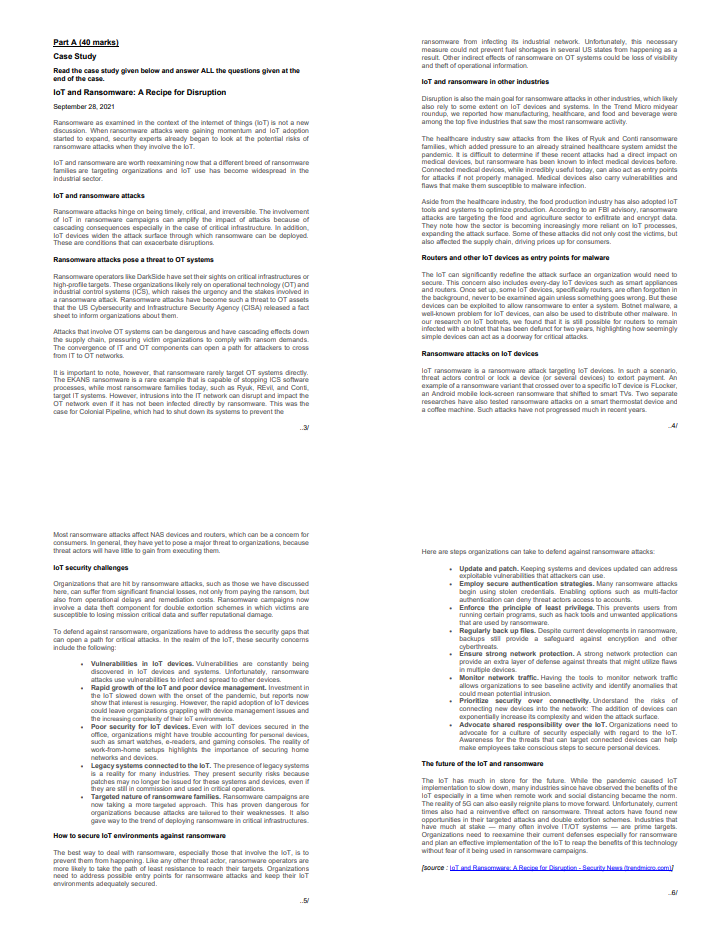
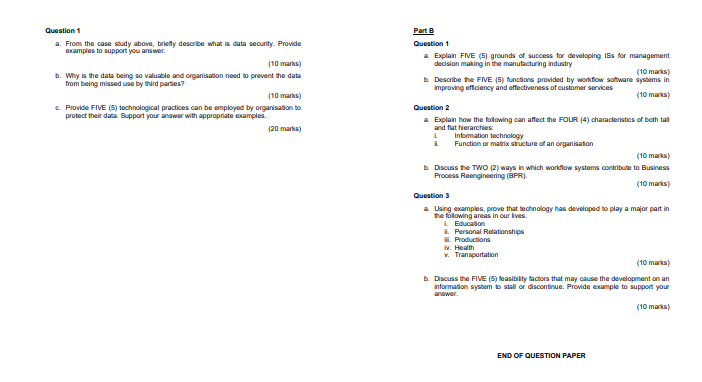
Part A 40 marks) Case Study Read the case study given below and answer ALL the questions given at the end of the case loT and Ransomware: A Recipe for Disruption September 28, 2021 Ransomware as examined in the context of the internet of Things (OT) is not a new discussion. When ransomware attacks were gaining momentum and lot adoption started to expand security caperts already began to look at the potential risks of ransomware attacks when they involve the lot loT and ransomware are worth reexamining now that a different breed of ransomware families are targeting organizations and for use has become widespread in the industrial sector loT and ransomware attacks Ransomware attacks hinge on being timely, critical and reversible. The involvement of lot in ransomware campaigns can amplly the impact of attacks because of cascading consequences especially in the case of critical infrastructure. In addition IoT devices widen the attack surface through which ransomware can be deployed These are conditions that can exacerbate diruptions Ransomware attacks pose a threat to OT systems Ransomware operators like DarkSide have set their sights on critical infrastructures or high-profile targets. These organizations likely rely on operational technology (OT) and industrial control systems (ICS), which raises the urgency and the stakes involved in a ransomware attack Ransomware attacks have become such a threat to OT assets that the US Cybersecurity and Infrastructure Security Agency (CISA) released a fact sheet to inform organizations about them. Attacks that involve OT systems can be dangerous and have cascading effects down the supply chain, pressuring victim organizations to comply with ransom demands. The convergence of IT and OT components can open a path for attackers to cross from IT to OT networks. It is important to note, however, that ransomware rarely target OT systems directly The EKANS ransomware is a rare example that is capable of stopping ICs software processes, while mostransomware families today, such as Ryuk, REVI, and Conti, target IT systems. However, intrusions into the IT network can disrupt and impact the OT network even if it has not been infected directly by ransomware. This was the case for Colonial Pipeline, which had to shut down its systems to prevent the ransomware from infecting is industrial network. Unfortunately, this necessary measure could not prevent fuel shortages in several US states from happening as a result Other indirect effects of ransomware on OT systems could be loss of visibility and theft of operational information loT and ransomware in other industries Disruption is also the main goal for ransomware attacks in other industries, which lively also rely to some extent on loT devices and systems. In the Trend Micro midyear roundup, we reported how manufacturing, healthcare, and food and beverage were among the top five industries that saw the most ransomware activity The healthcare industry saw attacks from the likes of Ryuk and Conti ransomware families, which added pressure to an already strained healthcare system amidst the pandemic. It is difficult to determine these recent attacks had a direct impact on medical devices, but ransomware has been known to infect medical devices before Connected medical devices, while incredibly useful today, can also act as entry points for attacks not property managed. Medical devices also carry vulnerabilities and flaws that make them susceptible to malware infection. Aside from the healthcare industry, the food production industry has also adopted lot tools and systems to optimize production. According to an Fladvisory, ransomware attacks are targeting the food and agriculture sector to exfitrate and encrypt data. They note how the sector is becoming increasingly more reliant on lo processes expanding the attack surface. Some of these attacks did not only cost the victims, but also affected the supply chain, driving prices up for consumers. Routers and other loT devices as entry points for malware The lot can significantly redefine the attack surface an organization would need to secure. This concern also includes every day loT devices such as smart appliances and routers. Once set up some lot devices, specifically routers, are often forgotten i nin the background, never to be examined again unless something goes wrong. But these devices can be exploited to allow ransomware to enter system. Botnet malware, a well-known problem for IoT devices can also be used to distribute other malware. In our research on lot botnets, we found that is stil possible for routers to remain infected with a botnet that has been defunct for two years, highlighting how seemingly simple devices can act as a doorway for critical attacks. Ransomware attacks on loT devices IoT ransomware is a ransomware attack targeting for devices. In such a scenario threat actors control or lock a device for several devices) to adort payment. An example of a ransomware variant that crossed over to a specific loT device is FLocker, an Android mobile lock screen ransomware that shifted to smart TVs. Two separate researches have also tested ransomware attacks on a smart thermostat device and a coffee machine. Such attacks have not progressed much in recent years. 41 ..31 Most ransomware attacks affect NAS devices and routers, which can be a concem for consumers. In general, they have yet to pose a major threat to organizations, because threat actors will have little to gain from executing them lot security challenges Organizations that are hit by ransomware attacks, such as those we have discussed here can suffer from significant financial losses, not only from paying the ransom, but also from operational delays and remediation costs. Ransomware campaigns now involve a data theft component for double stortion schemes in which victims are susceptible to losing mission critical data and sutter reputational damage. To defend against ransomware, organizations have to address the security gaps that can open a path for critical attacks. In the realm of the loT, these security concerns include the following: Vulnerabilities in IoT devices. Vulnerabilities are constantly being discovered in loT devices and systems. Unfortunately, ransomware attacks use vulnerabilities to infect and spread to other devices. Rapid growth of the loT and poor device management. Investment in the lo slowed down with the onset of the pandemic, but reports now show that interest in resing. However, the rapid adoption of loT devices could leave organizations grappling with device management issues and The reseaing complenty diet het environmenta. Poor security for loT devices. Even with lot devices secured in the office organizations might have trouble accounting for personal devices such as smartwatches e-readers, and gaming consoles. The reality of work-from-home setups highlights the importance of securing home networks and devices Legacy systems connected to the lot. The presence a e of legacy systems is a really for many industries. They present security risks because patches may no longer be issued for these systems and devices, even if they are sta in commission and used in critical operations. . Targeted nature of ransomware families. Ransomware campaigns are now taking a more ed approach. This has proven dangerous for organizations because attacks are tailored to their weaknesses. It also gave way to the trend of deploying ransomware in orical infrastructures How to secure loT environments against ransomware The best way to deal with ransomware, especially those that involve the lot, is to prevent them from happening. Like any other threat actor ransomware operators are more likely to take the path of least resistance to reach their targets. Organizations need to address possible entry points for ransomware attacks and keep their lot environments adequately secured Here are steps organizations can take to defend against ransomware attacks Update and patch. Keeping systems and devices updated can address exploitable vulnerabilities that attackers can use. Employ secure authentication strategies. Many ransomware attacks begin using stolen credentials Enabling options such as multi-factor authentication can deny threat actors access to accounts. Enforce the principle of least privilege. This prevents users from running certain programs, such as hack tools and unwanted applications that are used by ransomware Regularly back up files. Despite current developments in ransomware sill provide a safeguard against encryption and other Ensure strong network protection. A strong network protection can provide an extra layer of defense against threats that might utilize flaws in multiple devices . Monitor network traffic. Having the tools to monitor network traffic allows organizations to see baseline activity and identity anomalies that could mean potential intrusion Prioritize security over connectivity. Understand the risks of connecting new devices into the network The addition of devices can exponentialy increases complety and widen the attack surface Advocate shared responsibility over the lot. Organizations need to Awareness for the threats that can target connected devices can help advocate for a culture of security especially with regard to the lot make employees take conscious steps to secure personal devices. The future of the loT and ransomware The lot has much in store for the future. While the pandemic caused lot implementation to slow down, many industries since have observed the benefits of the lot especially in a time when remote work and social distancing became the nom. The reality of Scan also easily reignite plans to move forward. Unfortunately, current times also had a reinventive elect on ransomware. Threat actors have found new opportunities in their targeted attacks and double extortion schemes. Industries that have much at stake many often involve ITIOT systems - are prime targets Organizations need to reexamine their current defenses especially for ransomware and plan an effective implementation of the lot to reap the benefits of this technology without fear of it being used in ransomware campaigns. (source : LoT and Rama. A Recies for Disruction - Security Newsbrandmore.com 61 ..5 Question 1 a. From the case study above, briefly describe what is data security. Provide examples to support you answer (10 marks) b. Why is the data being so valuable and organisation need to prevent the data from being missed use by third parties? (10 marks) c. Provide FIVE (5) technological practices can be employed by organisation to protect their data Support your answer with appropriate examples (20 marks) Parte Question 1 - Explain FIVE (5) grounds of success for developing Iss for management decision making in the manufacturing industry (10 marks) D. Describe the FIVE (5) functions provided by workflow software systems in improving efficiency and effectiveness of customer services (10 marks) Question 2 Explain how the following can affect the FOUR (4) characteristics of both tail and flat hierarchies 1 Information technology i. Function or matrix structure of an organisation (10 marks) Discuss the TWO (2) ways in which workflow systems contribute to Business Process Reengineering (EPR). (10 marks) Question 3 Using examples, prove that technology has developed to play a major part in the following areas in our lives. Education . Personal Relationships il Productions . Transportation (10 marks) D. Discuss the FIVE (5) feasibility factors that may cause the development on an information system to stall or discontinue. Provide example to support your answer (10 marks) Health END OF QUESTION PAPER Part A 40 marks) Case Study Read the case study given below and answer ALL the questions given at the end of the case loT and Ransomware: A Recipe for Disruption September 28, 2021 Ransomware as examined in the context of the internet of Things (OT) is not a new discussion. When ransomware attacks were gaining momentum and lot adoption started to expand security caperts already began to look at the potential risks of ransomware attacks when they involve the lot loT and ransomware are worth reexamining now that a different breed of ransomware families are targeting organizations and for use has become widespread in the industrial sector loT and ransomware attacks Ransomware attacks hinge on being timely, critical and reversible. The involvement of lot in ransomware campaigns can amplly the impact of attacks because of cascading consequences especially in the case of critical infrastructure. In addition IoT devices widen the attack surface through which ransomware can be deployed These are conditions that can exacerbate diruptions Ransomware attacks pose a threat to OT systems Ransomware operators like DarkSide have set their sights on critical infrastructures or high-profile targets. These organizations likely rely on operational technology (OT) and industrial control systems (ICS), which raises the urgency and the stakes involved in a ransomware attack Ransomware attacks have become such a threat to OT assets that the US Cybersecurity and Infrastructure Security Agency (CISA) released a fact sheet to inform organizations about them. Attacks that involve OT systems can be dangerous and have cascading effects down the supply chain, pressuring victim organizations to comply with ransom demands. The convergence of IT and OT components can open a path for attackers to cross from IT to OT networks. It is important to note, however, that ransomware rarely target OT systems directly The EKANS ransomware is a rare example that is capable of stopping ICs software processes, while mostransomware families today, such as Ryuk, REVI, and Conti, target IT systems. However, intrusions into the IT network can disrupt and impact the OT network even if it has not been infected directly by ransomware. This was the case for Colonial Pipeline, which had to shut down its systems to prevent the ransomware from infecting is industrial network. Unfortunately, this necessary measure could not prevent fuel shortages in several US states from happening as a result Other indirect effects of ransomware on OT systems could be loss of visibility and theft of operational information loT and ransomware in other industries Disruption is also the main goal for ransomware attacks in other industries, which lively also rely to some extent on loT devices and systems. In the Trend Micro midyear roundup, we reported how manufacturing, healthcare, and food and beverage were among the top five industries that saw the most ransomware activity The healthcare industry saw attacks from the likes of Ryuk and Conti ransomware families, which added pressure to an already strained healthcare system amidst the pandemic. It is difficult to determine these recent attacks had a direct impact on medical devices, but ransomware has been known to infect medical devices before Connected medical devices, while incredibly useful today, can also act as entry points for attacks not property managed. Medical devices also carry vulnerabilities and flaws that make them susceptible to malware infection. Aside from the healthcare industry, the food production industry has also adopted lot tools and systems to optimize production. According to an Fladvisory, ransomware attacks are targeting the food and agriculture sector to exfitrate and encrypt data. They note how the sector is becoming increasingly more reliant on lo processes expanding the attack surface. Some of these attacks did not only cost the victims, but also affected the supply chain, driving prices up for consumers. Routers and other loT devices as entry points for malware The lot can significantly redefine the attack surface an organization would need to secure. This concern also includes every day loT devices such as smart appliances and routers. Once set up some lot devices, specifically routers, are often forgotten i nin the background, never to be examined again unless something goes wrong. But these devices can be exploited to allow ransomware to enter system. Botnet malware, a well-known problem for IoT devices can also be used to distribute other malware. In our research on lot botnets, we found that is stil possible for routers to remain infected with a botnet that has been defunct for two years, highlighting how seemingly simple devices can act as a doorway for critical attacks. Ransomware attacks on loT devices IoT ransomware is a ransomware attack targeting for devices. In such a scenario threat actors control or lock a device for several devices) to adort payment. An example of a ransomware variant that crossed over to a specific loT device is FLocker, an Android mobile lock screen ransomware that shifted to smart TVs. Two separate researches have also tested ransomware attacks on a smart thermostat device and a coffee machine. Such attacks have not progressed much in recent years. 41 ..31 Most ransomware attacks affect NAS devices and routers, which can be a concem for consumers. In general, they have yet to pose a major threat to organizations, because threat actors will have little to gain from executing them lot security challenges Organizations that are hit by ransomware attacks, such as those we have discussed here can suffer from significant financial losses, not only from paying the ransom, but also from operational delays and remediation costs. Ransomware campaigns now involve a data theft component for double stortion schemes in which victims are susceptible to losing mission critical data and sutter reputational damage. To defend against ransomware, organizations have to address the security gaps that can open a path for critical attacks. In the realm of the loT, these security concerns include the following: Vulnerabilities in IoT devices. Vulnerabilities are constantly being discovered in loT devices and systems. Unfortunately, ransomware attacks use vulnerabilities to infect and spread to other devices. Rapid growth of the loT and poor device management. Investment in the lo slowed down with the onset of the pandemic, but reports now show that interest in resing. However, the rapid adoption of loT devices could leave organizations grappling with device management issues and The reseaing complenty diet het environmenta. Poor security for loT devices. Even with lot devices secured in the office organizations might have trouble accounting for personal devices such as smartwatches e-readers, and gaming consoles. The reality of work-from-home setups highlights the importance of securing home networks and devices Legacy systems connected to the lot. The presence a e of legacy systems is a really for many industries. They present security risks because patches may no longer be issued for these systems and devices, even if they are sta in commission and used in critical operations. . Targeted nature of ransomware families. Ransomware campaigns are now taking a more ed approach. This has proven dangerous for organizations because attacks are tailored to their weaknesses. It also gave way to the trend of deploying ransomware in orical infrastructures How to secure loT environments against ransomware The best way to deal with ransomware, especially those that involve the lot, is to prevent them from happening. Like any other threat actor ransomware operators are more likely to take the path of least resistance to reach their targets. Organizations need to address possible entry points for ransomware attacks and keep their lot environments adequately secured Here are steps organizations can take to defend against ransomware attacks Update and patch. Keeping systems and devices updated can address exploitable vulnerabilities that attackers can use. Employ secure authentication strategies. Many ransomware attacks begin using stolen credentials Enabling options such as multi-factor authentication can deny threat actors access to accounts. Enforce the principle of least privilege. This prevents users from running certain programs, such as hack tools and unwanted applications that are used by ransomware Regularly back up files. Despite current developments in ransomware sill provide a safeguard against encryption and other Ensure strong network protection. A strong network protection can provide an extra layer of defense against threats that might utilize flaws in multiple devices . Monitor network traffic. Having the tools to monitor network traffic allows organizations to see baseline activity and identity anomalies that could mean potential intrusion Prioritize security over connectivity. Understand the risks of connecting new devices into the network The addition of devices can exponentialy increases complety and widen the attack surface Advocate shared responsibility over the lot. Organizations need to Awareness for the threats that can target connected devices can help advocate for a culture of security especially with regard to the lot make employees take conscious steps to secure personal devices. The future of the loT and ransomware The lot has much in store for the future. While the pandemic caused lot implementation to slow down, many industries since have observed the benefits of the lot especially in a time when remote work and social distancing became the nom. The reality of Scan also easily reignite plans to move forward. Unfortunately, current times also had a reinventive elect on ransomware. Threat actors have found new opportunities in their targeted attacks and double extortion schemes. Industries that have much at stake many often involve ITIOT systems - are prime targets Organizations need to reexamine their current defenses especially for ransomware and plan an effective implementation of the lot to reap the benefits of this technology without fear of it being used in ransomware campaigns. (source : LoT and Rama. A Recies for Disruction - Security Newsbrandmore.com 61 ..5 Question 1 a. From the case study above, briefly describe what is data security. Provide examples to support you answer (10 marks) b. Why is the data being so valuable and organisation need to prevent the data from being missed use by third parties? (10 marks) c. Provide FIVE (5) technological practices can be employed by organisation to protect their data Support your answer with appropriate examples (20 marks) Parte Question 1 - Explain FIVE (5) grounds of success for developing Iss for management decision making in the manufacturing industry (10 marks) D. Describe the FIVE (5) functions provided by workflow software systems in improving efficiency and effectiveness of customer services (10 marks) Question 2 Explain how the following can affect the FOUR (4) characteristics of both tail and flat hierarchies 1 Information technology i. Function or matrix structure of an organisation (10 marks) Discuss the TWO (2) ways in which workflow systems contribute to Business Process Reengineering (EPR). (10 marks) Question 3 Using examples, prove that technology has developed to play a major part in the following areas in our lives. Education . Personal Relationships il Productions . Transportation (10 marks) D. Discuss the FIVE (5) feasibility factors that may cause the development on an information system to stall or discontinue. Provide example to support your answer (10 marks) Health END OF QUESTION PAPER









 Study Help