







Question: PLEASE , answer the question of the first image with the information of the other images . I need the essential underlying elements(defining elements) that
PLEASE, answer the question of the first image with the information of the other images. I need the essential underlying elements(defining elements) that are necessary to define it as a law and the the three objectives with an example for each. Thanks in advance for your response! :)
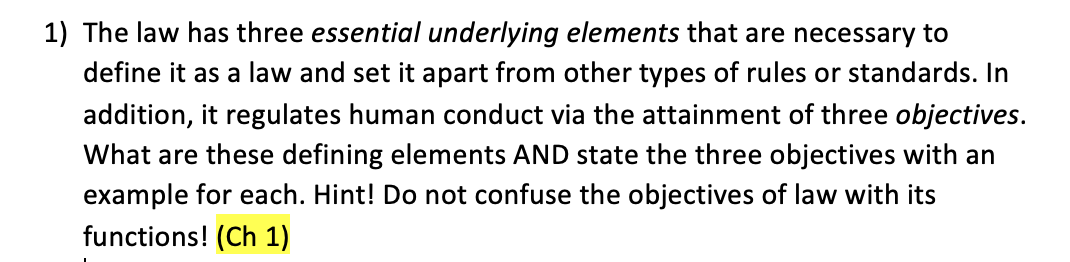


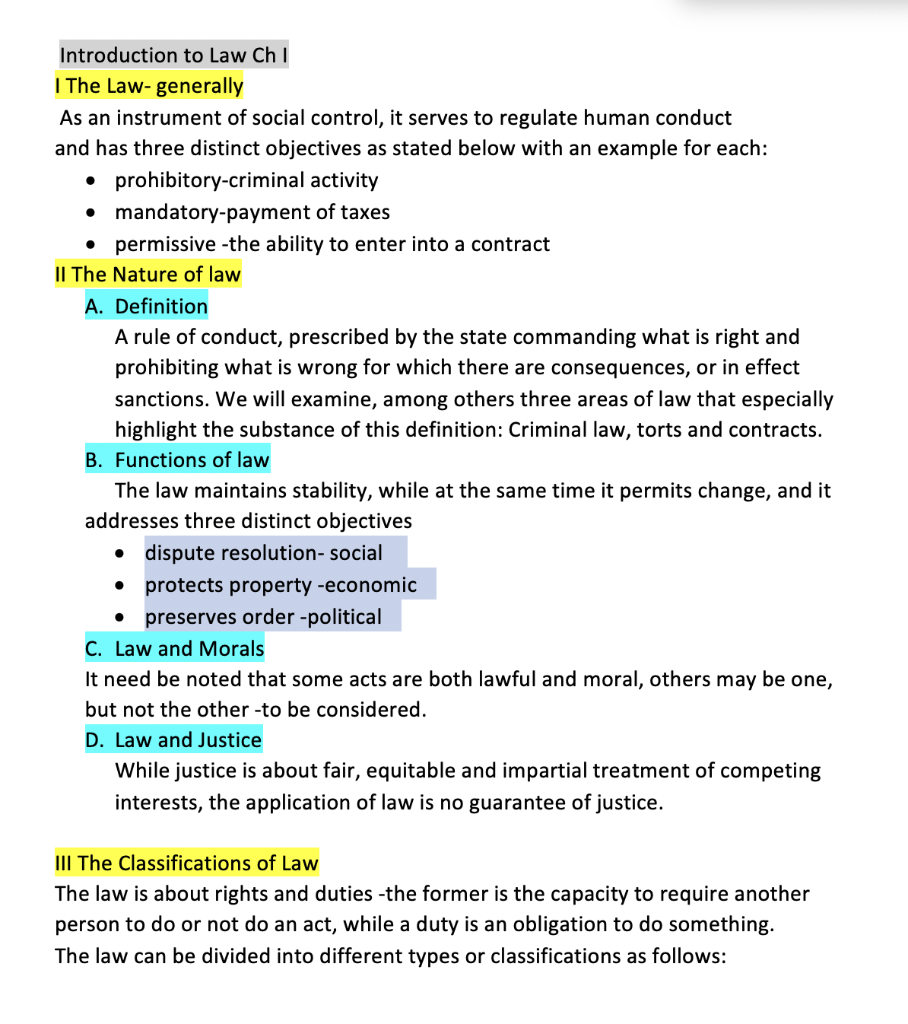
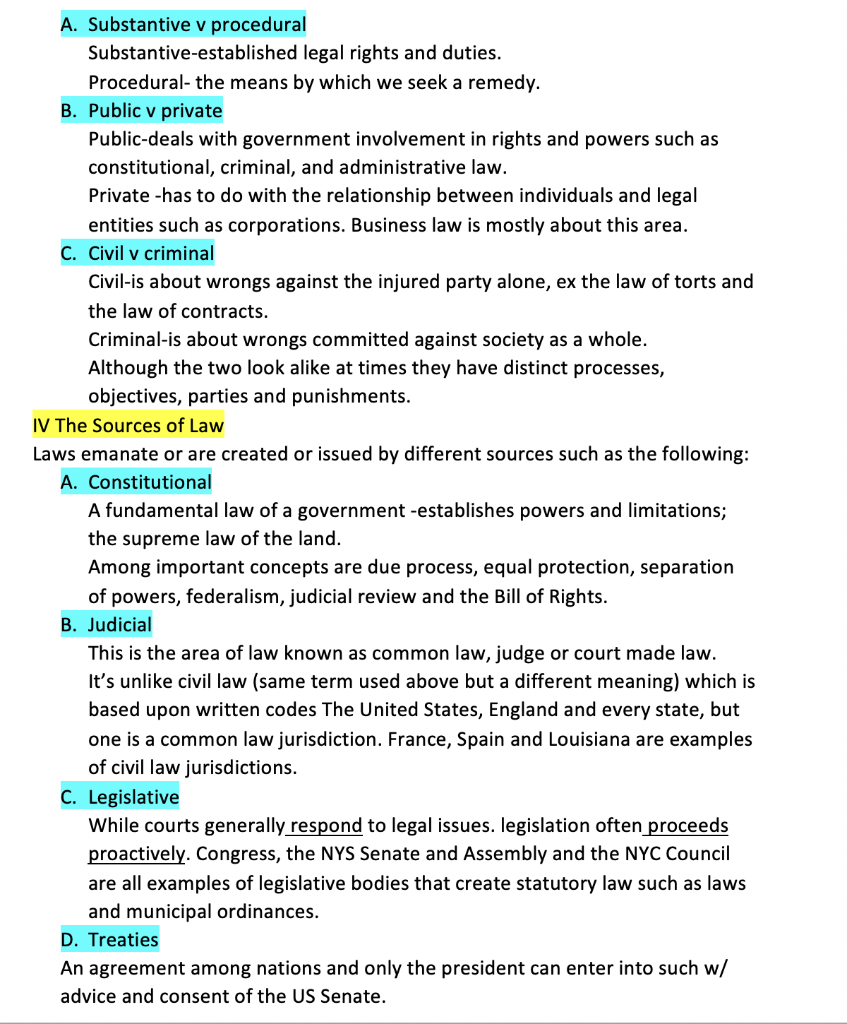
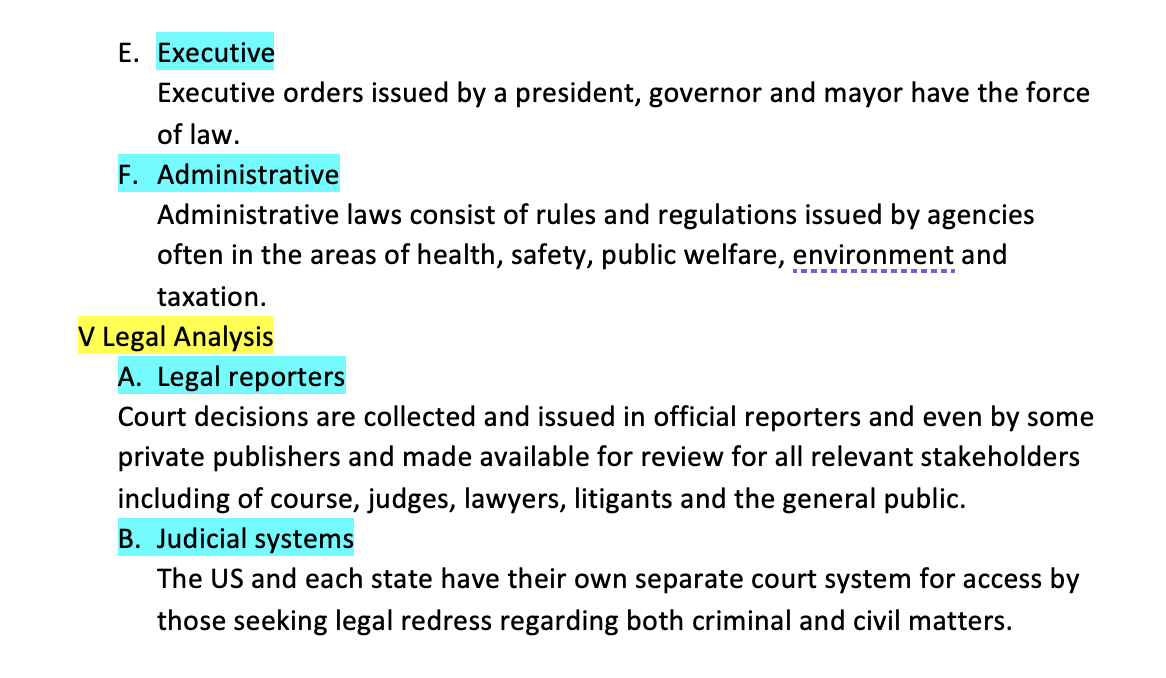
1) The law has three essential underlying elements that are necessary to define it as a law and set it apart from other types of rules or standards. In addition, it regulates human conduct via the attainment of three objectives. What are these defining elements AND state the three objectives with an example for each. Hint! Do not confuse the objectives of law with its functions! (Ch 1) Introduction to Law Ch I I The Law-generally As an instrument of social control, it serves to regulate human conduct and has three distinct objectives as stated below with an example for each: prohibitory-criminal activity mandatory-payment of taxes permissive -the ability to enter into a contract II The Nature of law A. Definition A rule of conduct, prescribed by the state commanding what is right and prohibiting what is wrong for which there are consequences, or in effect sanctions. We will examine, among others three areas of law that especially highlight the substance of this definition: Criminal law, torts and contracts. B. Functions of law The law maintains stability, while at the same time it permits change, and it addresses three distinct objectives dispute resolution- social protects property -economic preserves order -political C. Law and Morals It need be noted that some acts are both lawful and moral, others may be one, but not the other to be considered. D. Law and Justice While justice is about fair, equitable and impartial treatment of competing interests, the application of law is no guarantee of justice. III The Classifications of Law The law is about rights and duties -the former is the capacity to require another person to do or not do an act, while a duty is an obligation to do something. The law can be divided into different types or classifications as follows: A. Substantive v procedural Substantive-established legal rights and duties. Procedural- the means by which we seek a remedy. B. Public v private Public-deals with government involvement in rights and powers such as constitutional, criminal, and administrative law. Private -has to do with the relationship between individuals and legal entities such as corporations. Business law is mostly about this area. C. Civil v criminal Civil-is about wrongs against the injured party alone, ex the law of torts and the law of contracts. Criminal-is about wrongs committed against society as a whole. Although the two look alike at times they have distinct processes, objectives, parties and punishments. IV The Sources of Law Laws emanate or are created or issued by different sources such as the following: A. Constitutional A fundamental law of a government -establishes powers and limitations; the supreme law of the land. Among important concepts are due process, equal protection, separation of powers, federalism, judicial review and the Bill of Rights. B. Judicial This is the area of law known as common law, judge or court made law. It's unlike civil law (same term used above but a different meaning) which is based upon written codes The United States, England and every state, but one is a common law jurisdiction. France, Spain and Louisiana are examples of civil law jurisdictions. C. Legislative While courts generally respond to legal issues. legislation often proceeds proactively. Congress, the NYS Senate and Assembly and the NYC Council are all examples of legislative bodies that create statutory law such as laws and municipal ordinances. D. Treaties An agreement among nations and only the president can enter into such w/ advice and consent of the US Senate. E. Executive Executive orders issued by a president, governor and mayor have the force of law. F. Administrative Administrative laws consist of rules and regulations issued by agencies often in the areas of health, safety, public welfare, environment and taxation. V Legal Analysis A. Legal reporters Court decisions are collected and issued in official reporters and even by some private publishers and made available for review for all relevant stakeholders including of course, judges, lawyers, litigants and the general public. B. Judicial systems The US and each state have their own separate court system for access by those seeking legal redress regarding both criminal and civil matters
Step by Step Solution
There are 3 Steps involved in it

Get step-by-step solutions from verified subject matter experts
 Study Help