







Question: PLEASE DO ALL QUESTIONS BECAUSE IT'S NOT MUTILPLE QUESTIONS IT'S JUST 1. top picture: Picture of actual problem bottom picture: solution to similar problem please
PLEASE DO ALL QUESTIONS BECAUSE IT'S NOT MUTILPLE QUESTIONS IT'S JUST 1.
top picture: Picture of actual problem
bottom picture: solution to similar problem please follow formula
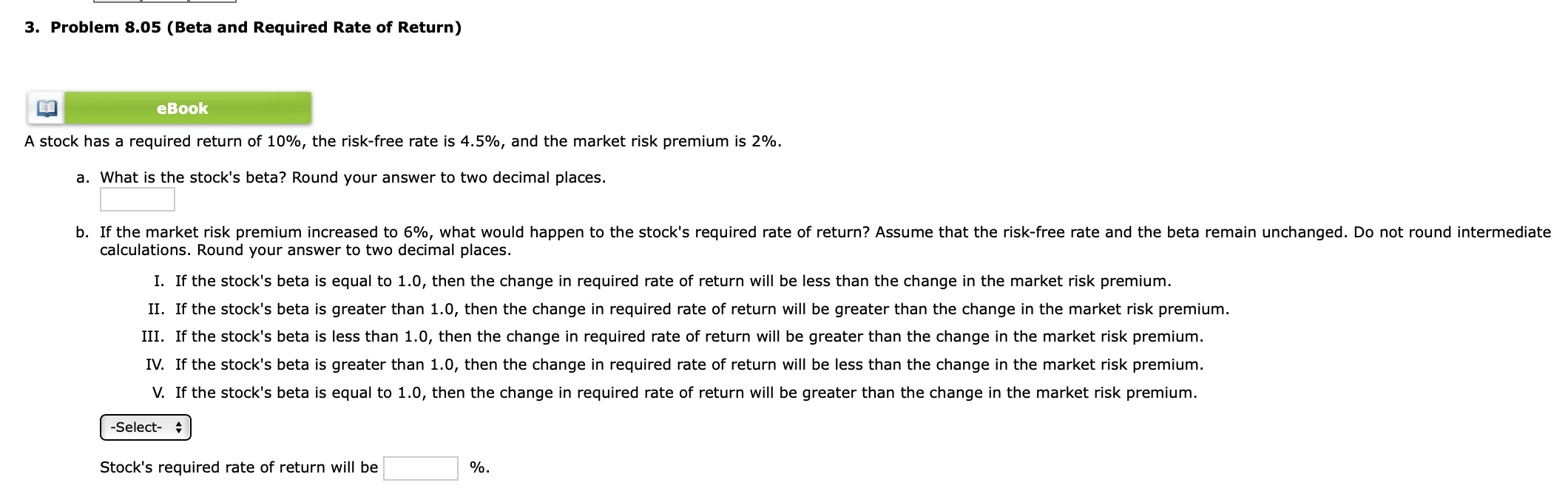
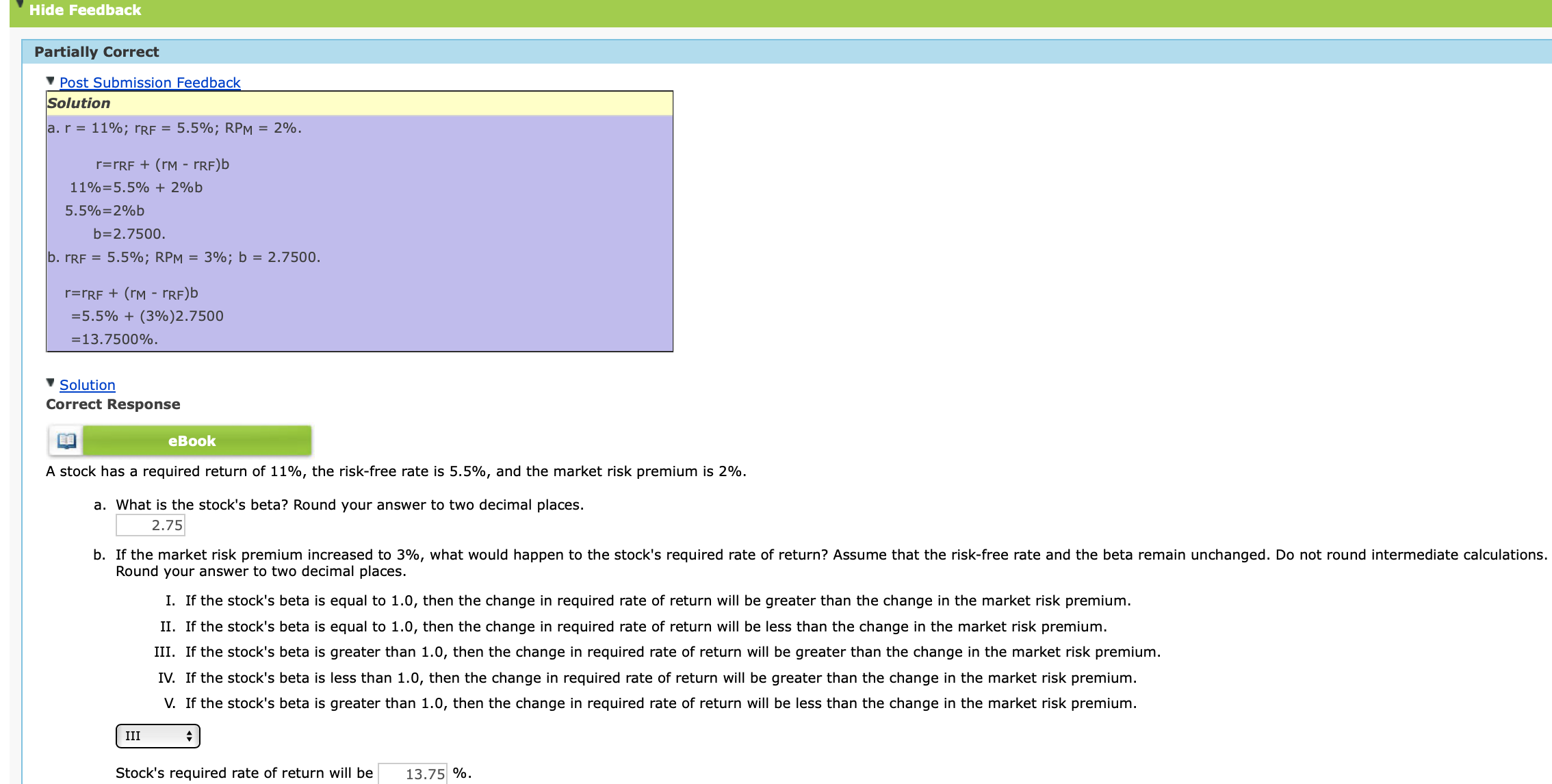
3. Problem 8.05 (Beta and Required Rate of Return) A stock has a required return of 10%, the risk-free rate is 4.5%, and the market risk premium is 2%. a. What is the stock's beta? Round your answer to two decimal places. calculations. Round your answer to two decimal places. I. If the stock's beta is equal to 1.0 , then the change in required rate of return will be less than the change in the market risk II. If the stock's beta is greater than 1.0, then the change in required rate of return will be greater than the change in the market risk premium. III. If the stock's beta is less than 1.0, then the change in required rate of return will be greater than the change in the market risk premium. IV. If the stock's beta is greater than 1.0, then the change in required rate of return will be less than the change in the market risk premium. V. If the stock's beta is equal to 1.0 , then the change in required rate of return will be greater than the change in the market risk premium. Stock's required rate of return will be %. Solution a. r=11%;rRF=5.5%;RPM=2%. r11%5.5%b=rRF+(rMrRF)b=5.5%+2%b=2%b=2.7500. b. rRF=5.5%;RPM=3%;b=2.7500 r=rRF+(rMrRF)b=5.5%+(3%)2.7500=13.7500%. V Solution Correct Response A stock has a required return of 11%, the risk-free rate is 5.5%, and the market risk premium is 2%. a. What is the stock's beta? Round your answer to two decimal places. Round your answer to two decimal places. I. If the stock's beta is equal to 1.0 , then the change in required rate of return will be greater than the change in the market risk premium. II. If the stock's beta is equal to 1.0 , then the change in required rate of return will be less than the change in the market risk premium. III. If the stock's beta is greater than 1.0, then the change in required rate of return will be greater than the change in the market risk premium. IV. If the stock's beta is less than 1.0, then the change in required rate of return will be greater than the change in the market risk premium. V. If the stock's beta is greater than 1.0, then the change in required rate of return will be less than the change in the market risk premium. Stock's required rate of return will be %. 3. Problem 8.05 (Beta and Required Rate of Return) A stock has a required return of 10%, the risk-free rate is 4.5%, and the market risk premium is 2%. a. What is the stock's beta? Round your answer to two decimal places. calculations. Round your answer to two decimal places. I. If the stock's beta is equal to 1.0 , then the change in required rate of return will be less than the change in the market risk II. If the stock's beta is greater than 1.0, then the change in required rate of return will be greater than the change in the market risk premium. III. If the stock's beta is less than 1.0, then the change in required rate of return will be greater than the change in the market risk premium. IV. If the stock's beta is greater than 1.0, then the change in required rate of return will be less than the change in the market risk premium. V. If the stock's beta is equal to 1.0 , then the change in required rate of return will be greater than the change in the market risk premium. Stock's required rate of return will be %. Solution a. r=11%;rRF=5.5%;RPM=2%. r11%5.5%b=rRF+(rMrRF)b=5.5%+2%b=2%b=2.7500. b. rRF=5.5%;RPM=3%;b=2.7500 r=rRF+(rMrRF)b=5.5%+(3%)2.7500=13.7500%. V Solution Correct Response A stock has a required return of 11%, the risk-free rate is 5.5%, and the market risk premium is 2%. a. What is the stock's beta? Round your answer to two decimal places. Round your answer to two decimal places. I. If the stock's beta is equal to 1.0 , then the change in required rate of return will be greater than the change in the market risk premium. II. If the stock's beta is equal to 1.0 , then the change in required rate of return will be less than the change in the market risk premium. III. If the stock's beta is greater than 1.0, then the change in required rate of return will be greater than the change in the market risk premium. IV. If the stock's beta is less than 1.0, then the change in required rate of return will be greater than the change in the market risk premium. V. If the stock's beta is greater than 1.0, then the change in required rate of return will be less than the change in the market risk premium. Stock's required rate of return will be %
Step by Step Solution
There are 3 Steps involved in it

Get step-by-step solutions from verified subject matter experts
 Study Help