







Question: PLEASE help me solve ALL!!! AND SHOW YOUR WORK SO I CAN LEARN!!!!! 1. 2. 3. 4. 5. 6. Firms require capital to invest in
PLEASE help me solve ALL!!! AND SHOW YOUR WORK SO I CAN LEARN!!!!!
1.
 2.
2. 
 3.
3. 
 4.
4. 5.
5.  6.
6. 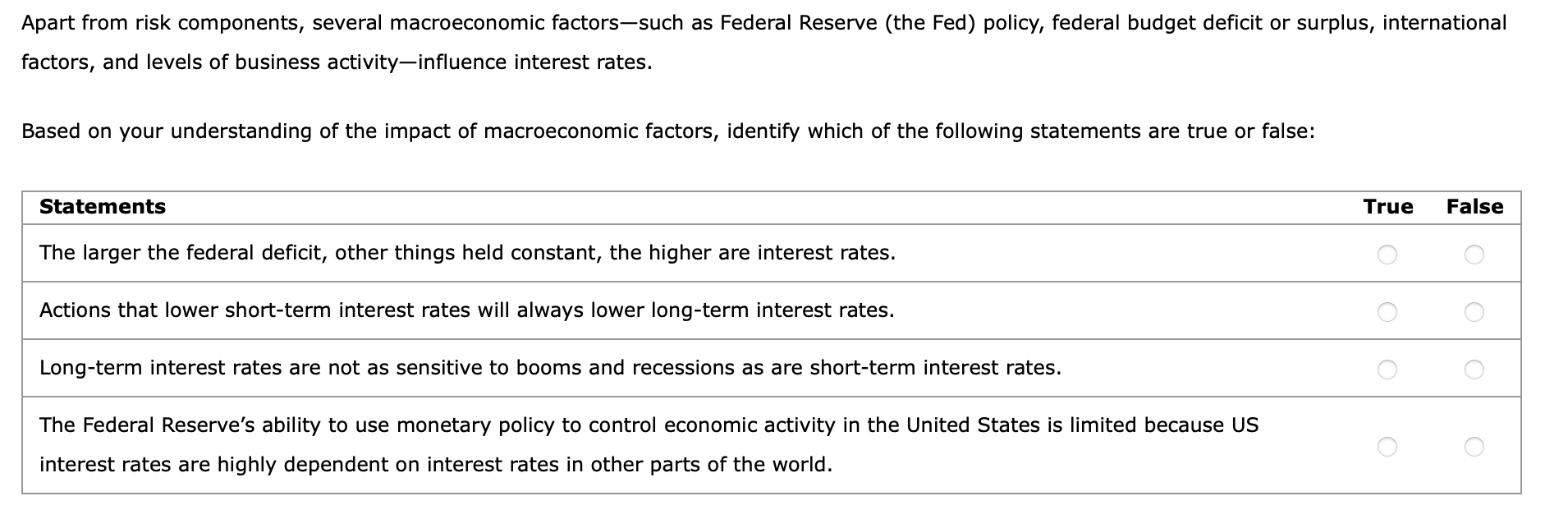
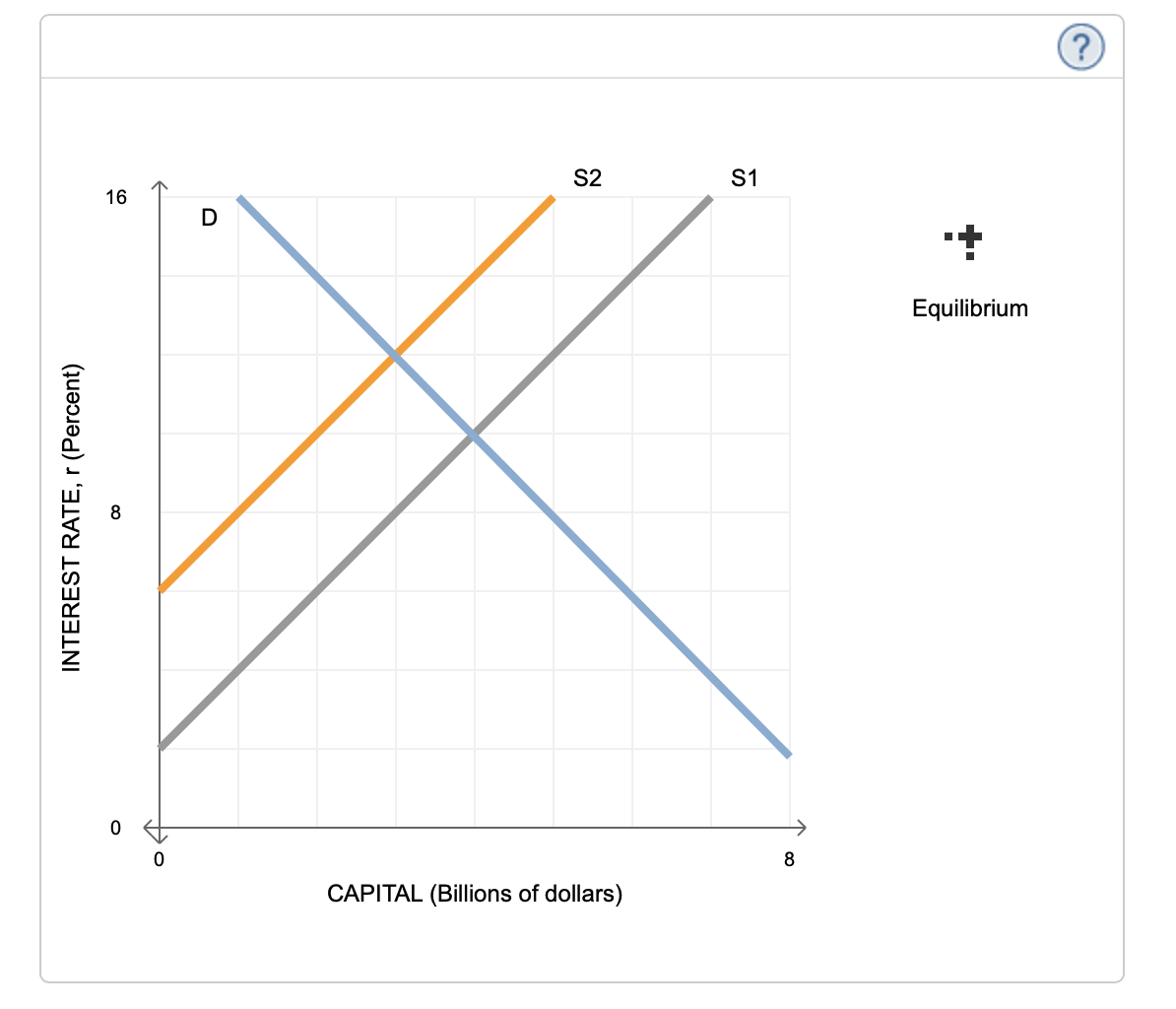
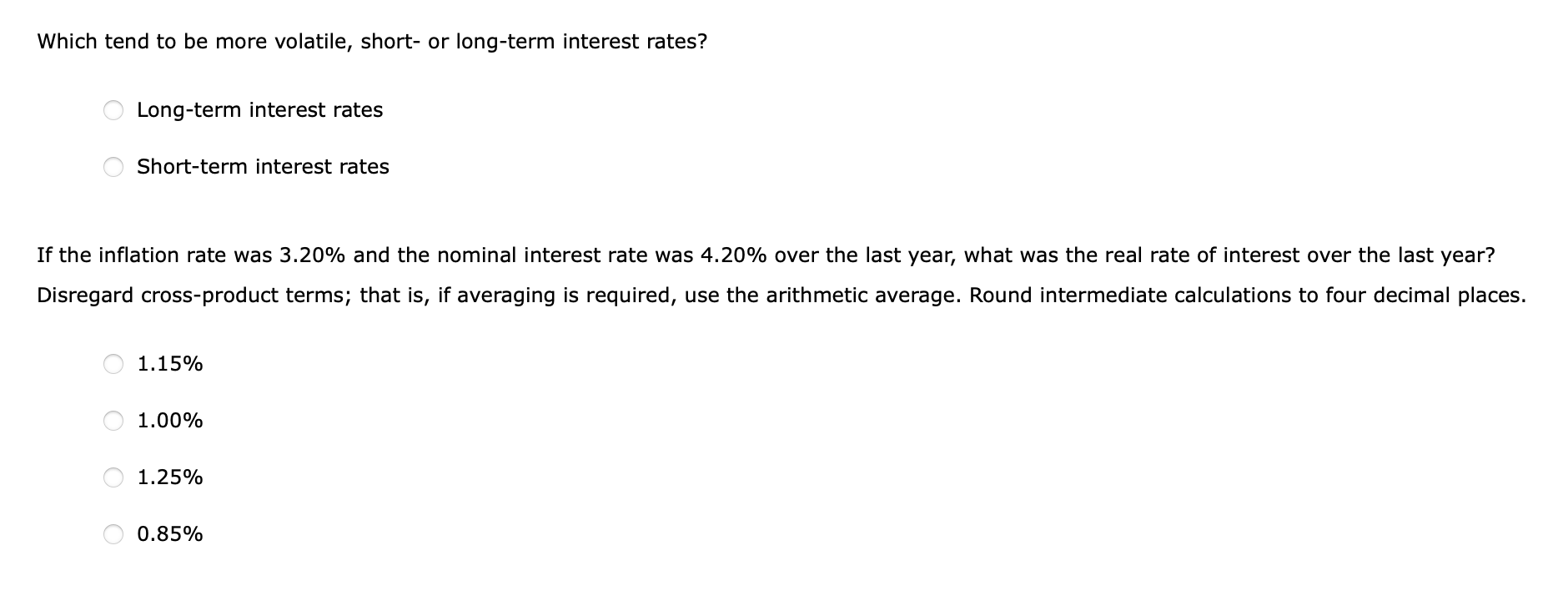
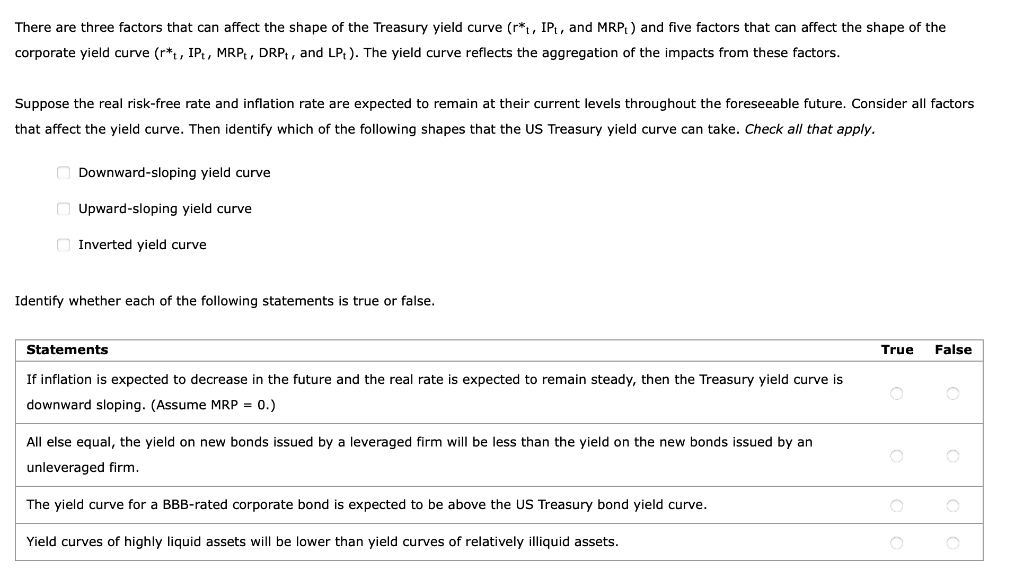
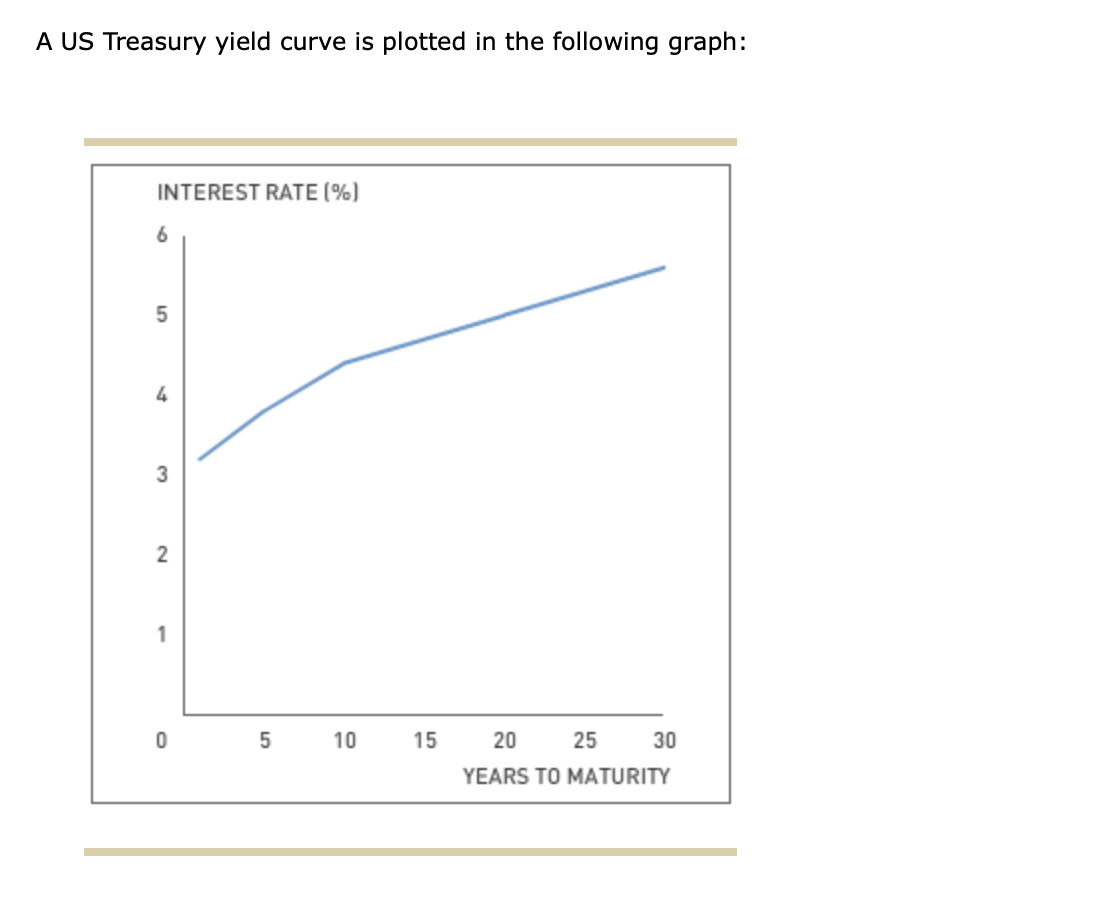
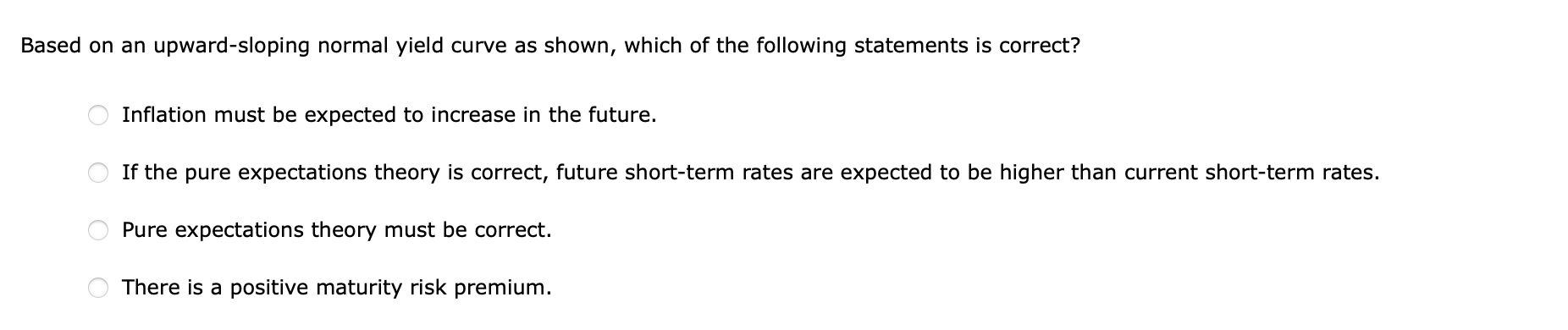
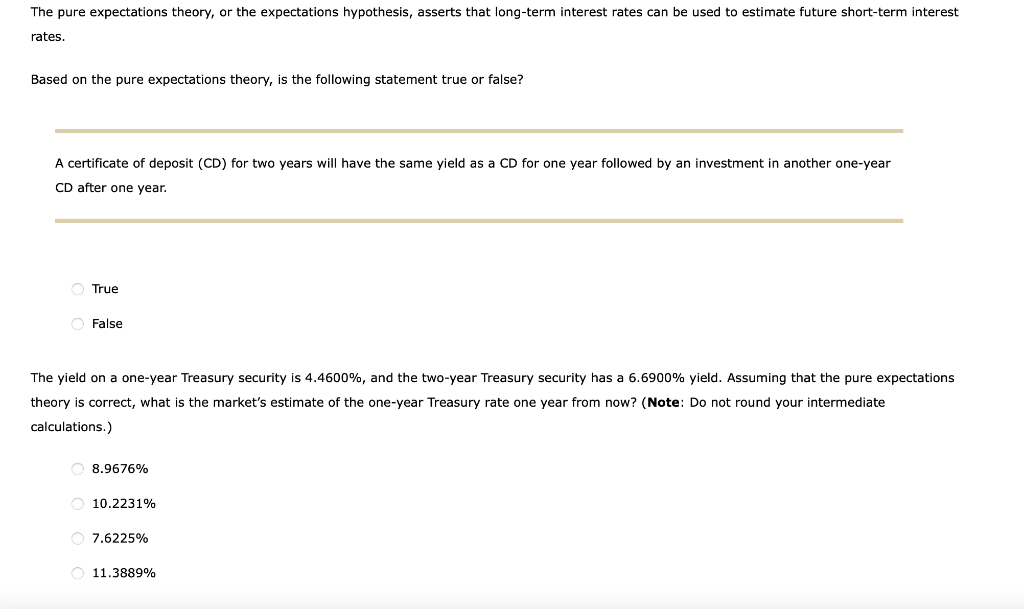
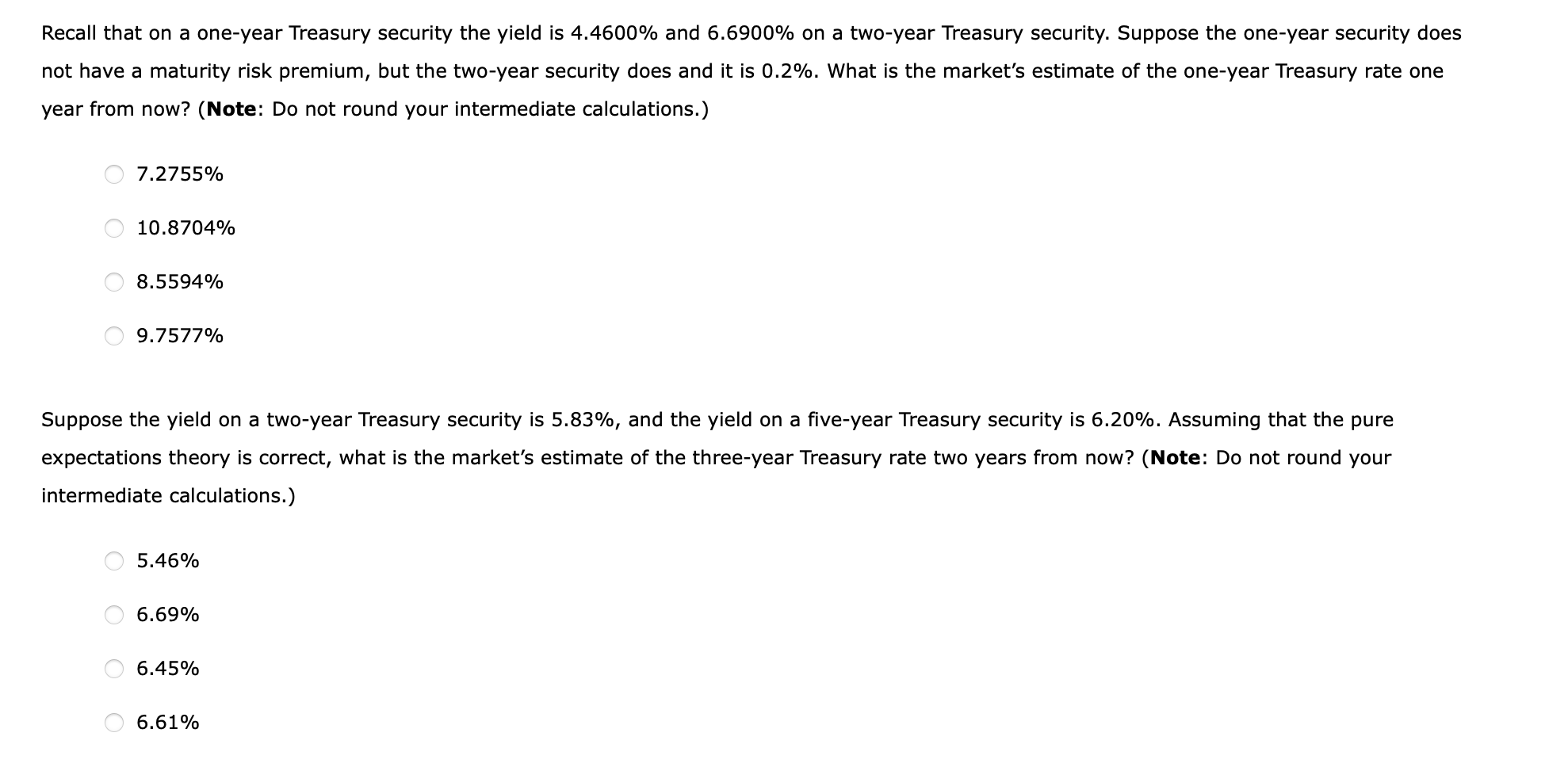
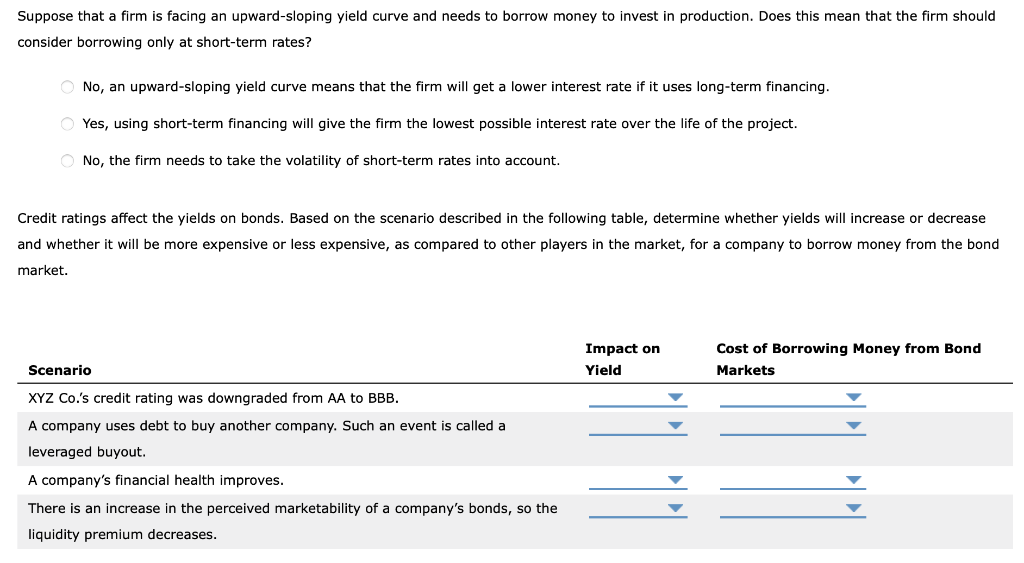
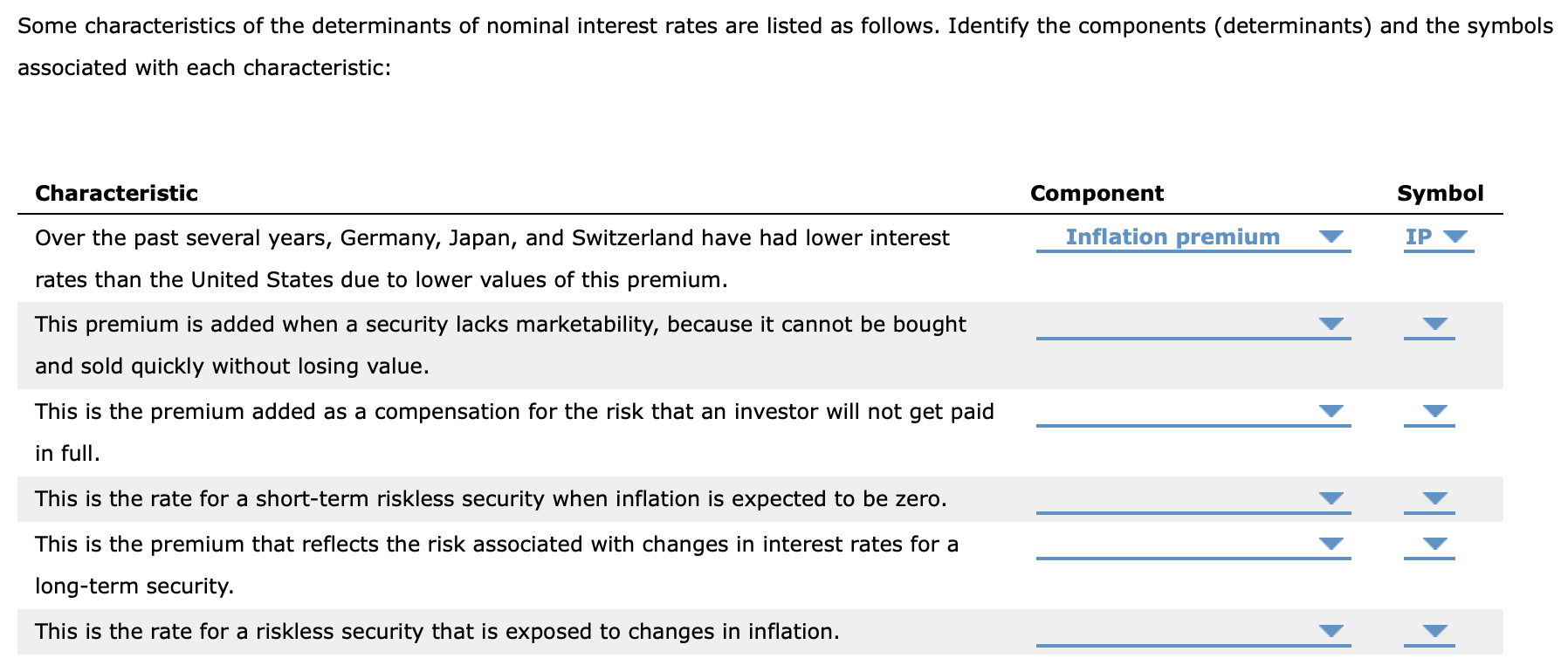
Firms require capital to invest in productive opportunities. The best firms with the most profitable opportunities can attract capital away from inefficient firms with less profitable opportunities. Investors supply firms with capital at a cost called the interest rate. The interest rate that investors require is determined by several factors, including the availability of production opportunities, the time preference for current consumption, risk, and inflation. Suppose the Federal Reserve (the Fed) decides to tighten credit by contracting the money supply. Use the following graph by moving the black X to show what happens to the equilibrium level of borrowing and the new equilibrium interest rate. ? S2 S1 16 D . Equilibrium INTEREST RATE, r (Percent) 8 0 8 CAPITAL (Billions of dollars) Which tend to be more volatile, short- or long-term interest rates? Long-term interest rates Short-term interest rates If the inflation rate was 3.20% and the nominal interest rate was 4.20% over the last year, what was the real rate of interest over the last year? Disregard cross-product terms; that is, if averaging is required, use the arithmetic average. Round intermediate calculations to four decimal places. 1.15% O 1.00% 1.25% O 0.85% There are three factors that can affect the shape of the Treasury yield curve (r*t, IP, and MRP) and five factors that can affect the shape of the corporate yield curve (r*t, IP, MRP, DRP, and LPt). The yield curve reflects the aggregation of the impacts from these factors. Suppose the real risk-free rate and inflation rate are expected to remain at their current levels throughout the foreseeable future. Consider all factors that affect the yield curve. Then identify which of the following shapes that the US Treasury yield curve can take. Check all that apply. Downward-sloping yield curve Upward-sloping yield curve Inverted yield curve Identify whether each of the following statements is true or false. Statements True False If inflation is expected to decrease in the future and the real rate is expected to remain steady, then the Treasury yield curve is downward sloping. (Assume MRP = 0.) All else equal, the yield on new bonds issued by a leveraged firm will be less than the yield on the new bonds issued by an unleveraged firm. The yield curve for a BBB-rated corporate bond is expected to be above the US Treasury bond yield curve. Yield curves of highly liquid assets will be lower than yield curves of relatively illiquid assets. A US Treasury yield curve is plotted in the following graph: INTEREST RATE (%) 6 5 4 3 N 1 05 10 15 20 25 30 YEARS TO MATURITY Based on an upward-sloping normal yield curve as shown, which of the following statements is correct? Inflation must be expected to increase in the future. If the pure expectations theory is correct, future short-term rates are expected to be higher than current short-term rates. Pure expectations theory must be correct. There is a positive maturity risk premium. The pure expectations theory, or the expectations hypothesis, asserts that long-term interest rates can be used to estimate future short-term interest rates. Based on the pure expectations theory, is the following statement true or false? A certificate of deposit (CD) for two years will have the same yield as a CD for one year followed by an investment in another one-year CD after one year. True False The yield on a one-year Treasury security is 4.4600%, and the two-year Treasury security has a 6.6900% yield. Assuming that the pure expectations theory is correct, what is the market's estimate of the one-year Treasury rate one year from now? (Note: Do not round your intermediate calculations.) 8.9676% 10.2231% 7.6225% 11.3889% Recall that on a one-year Treasury security the yield is 4.4600% and 6.6900% on a two-year Treasury security. Suppose the one-year security does not have a maturity risk premium, but the two-year security does and it is 0.2%. What is the market's estimate of the one-year Treasury rate one year from now? (Note: Do not round your intermediate calculations.) 7.2755% 10.8704% 8.5594% 9.7577% Suppose the yield on a two-year Treasury security is 5.83%, and the yield on a five-year Treasury security is 6.20%. Assuming that the pure expectations theory is correct, what is the market's estimate of the three-year Treasury rate two years from now? (Note: Do not round your intermediate calculations.) 5.46% 6.69% 6.45% 6.61% Suppose that a firm is facing an upward-sloping yield curve and needs to borrow money to invest in production. Does this mean that the firm should consider borrowing only at short-term rates? O No, an upward-sloping yield curve means that the firm will get a lower interest rate if it uses long-term financing. Yes, using short-term financing will give the firm the lowest possible interest rate over the life of the project. No, the firm needs to take the volatility of short-term rates into account. Credit ratings affect the yields on bonds. Based on the scenario described in the following table, determine whether yields will increase or decrease and whether it will be more expensive or less expensive, as compared to other players in the market, for a company to borrow money from the bond market. Impact on Yield Cost of Borrowing Money from Bond Markets Scenario XYZ Co.'s credit rating was downgraded from AA to BBB. A company uses debt to buy another company. Such an event is called a leveraged buyout. A company's financial health improves. There is an increase in the perceived marketability of a company's bonds, so the liquidity premium decreases. Some characteristics of the determinants of nominal interest rates are listed as follows. Identify the components (determinants) and the symbols associated with each characteristic: Characteristic Symbol Component Inflation premium IP Over the past several years, Germany, Japan, and Switzerland have had lower interest rates than the United States due to lower values of this premium. This premium is added when a security lacks marketability, because it cannot be bought and sold quickly without losing value. This is the premium added as a compensation for the risk that an investor will not get paid in full. This is the rate for a short-term riskless security when inflation is expected to be zero. This is the premium that reflects the risk associated with changes in interest rates for a long-term security. This is the rate for a riskless security that is exposed to changes in inflation. Apart from risk components, several macroeconomic factors such as Federal Reserve (the Fed) policy, federal budget deficit or surplus, international factors, and levels of business activity-influence interest rates. Based on your understanding of the impact of macroeconomic factors, identify which of the following statements are true or false: Statements True False The larger the federal deficit, other things held constant, the higher are interest rates. Lolo Actions that lower short-term interest rates will always lower long-term interest rates. O O Long-term interest rates are not as sensitive to booms and recessions as are short-term interest rates. O The Federal Reserve's ability to use monetary policy to control economic activity in the United States is limited because US interest rates are highly dependent on interest rates in other parts of the world. O
Step by Step Solution
There are 3 Steps involved in it

Get step-by-step solutions from verified subject matter experts
 Study Help