Question: please help me with this question please I really need it : studysync One criticism that could be leveled against quality cable TV is that
please help me with this question please I really need it
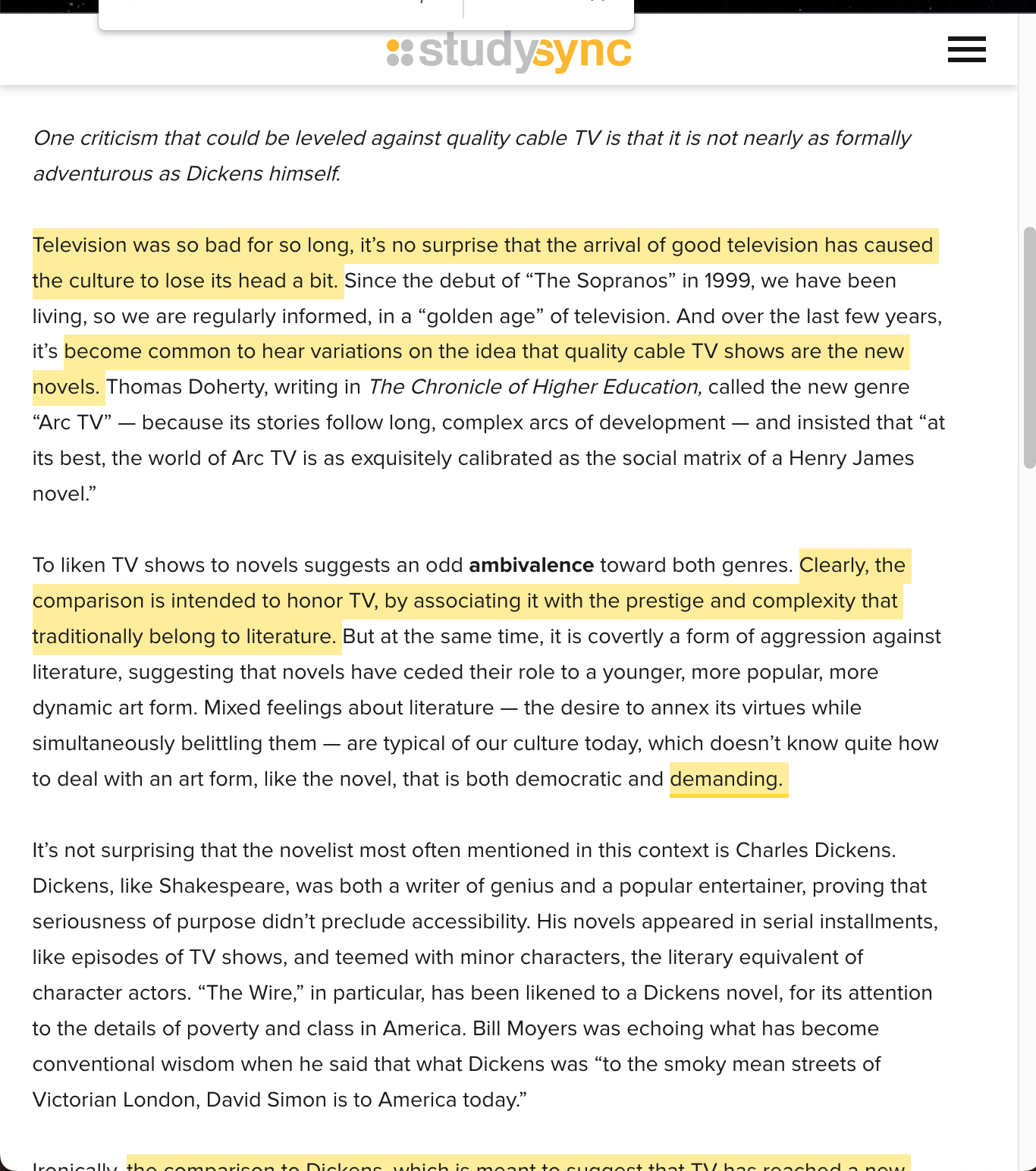
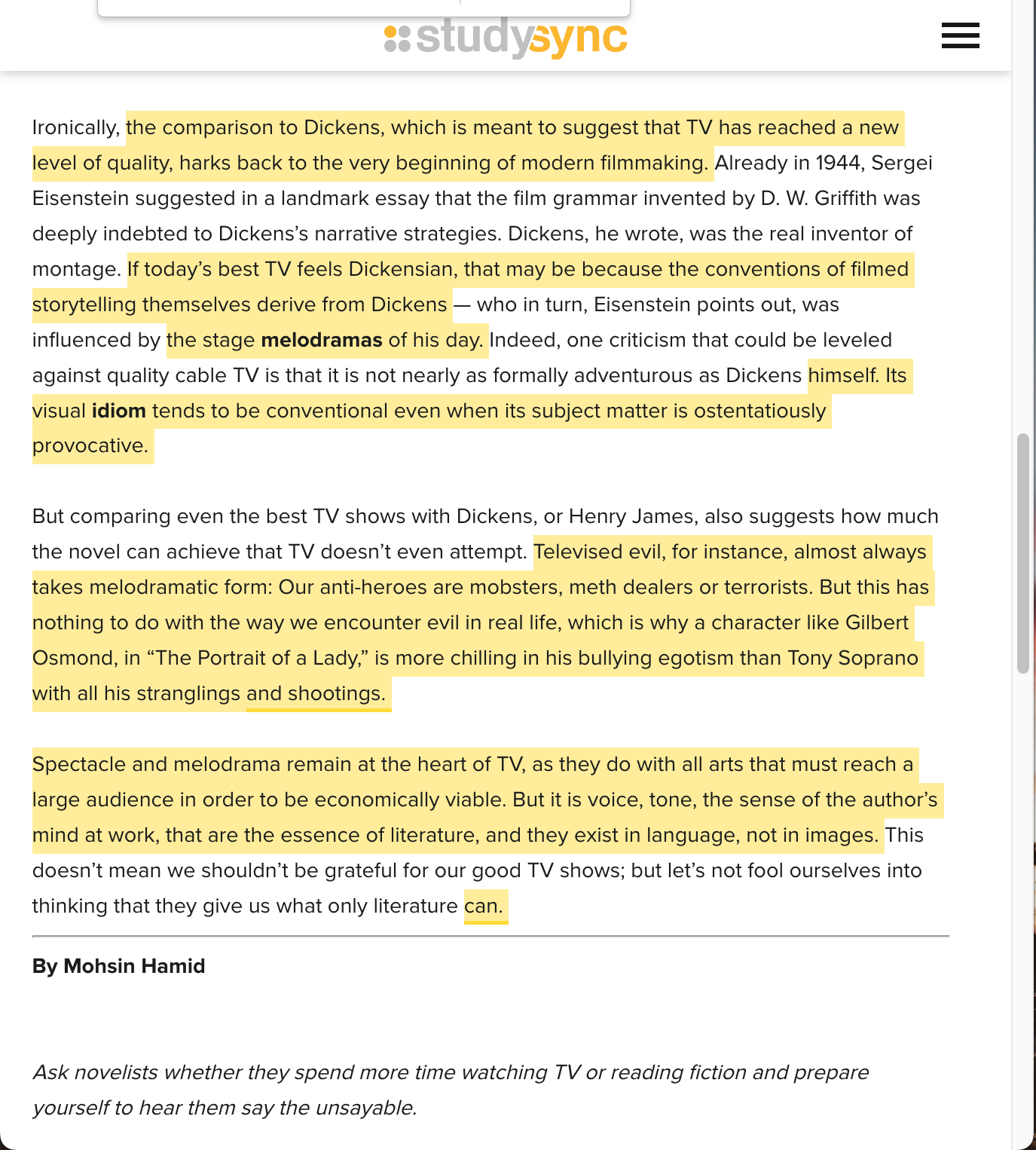
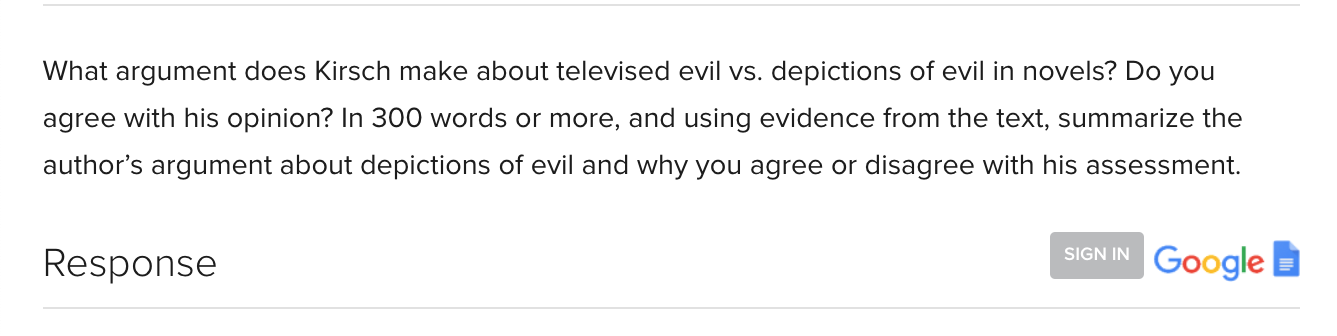
: studysync One criticism that could be leveled against quality cable TV is that it is not nearly as formally adventurous as Dickens himself. Television was so bad for so long, it's no surprise that the arrival of good television has caused the culture to lose its head a bit. Since the debut of "The Sopranos" in 1999, we have been living, so we are regularly informed, in a "golden age" of television. And over the last few years, it's become common to hear variations on the idea that quality cable TV shows are the new novels. Thomas Doherty, writing in The Chronicle of Higher Education, called the new genre "Arc TV" - because its stories follow long, complex arcs of development - and insisted that "at its best, the world of Arc TV is as exquisitely calibrated as the social matrix of a Henry James novel." To liken TV shows to novels suggests an odd ambivalence toward both genres. Clearly, the comparison is intended to honor TV, by associating it with the prestige and complexity that traditionally belong to literature. But at the same time, it is covertly a form of aggression against literature, suggesting that novels have ceded their role to a younger, more popular, more dynamic art form. Mixed feelings about literature - the desire to annex its virtues while simultaneously belittling them - are typical of our culture today, which doesn't know quite how to deal with an art form, like the novel, that is both democratic and demanding. It's not surprising that the novelist most often mentioned in this context is Charles Dickens. Dickens, like Shakespeare, was both a writer of genius and a popular entertainer, proving that seriousness of purpose didn't preclude accessibility. His novels appeared in serial installments, like episodes of TV shows, and teemed with minor characters, the literary equivalent of character actors. "The Wire," in particular, has been likened to a Dickens novel, for its attention to the details of poverty and class in America. Bill Moyers was echoing what has become conventional wisdom when he said that what Dickens was "to the smoky mean streets of Victorian London, David Simon is to America today."Ironically, the comparison to Dickens, which is meant to suggest that TV has reached a new level of quality, harks back to the very beginning of modern filmmaking. Already in 1944, Sergei Eisenstein suggested in a landmark essay that the film grammar invented by D. W. Griffith was deeply indebted to Dickens's narrative strategies. Dickens, he wrote, was the real inventor of montage. If today's best TV feels Dickensian, that may be because the conventions of filmed storytelling themselves derive from Dickens who in turn, Eisenstein points out, was influenced by the stage melodramas of his day. Indeed, one criticism that could be leveled against quality cable TV is that it is not nearly as formally adventurous as Dickens himself. Its visual idiom tends to be conventional even when its subject matter is ostentatiously provocative. But comparing even the best TV shows with Dickens, or Henry James, also suggests how much the novel can achieve that TV doesn't even attempt. Televised evil, for instance, almost always takes melodramatic form: Our anti-heroes are mobsters, meth dealers or terrorists. But this has nothing to do with the way we encounter evil in real life, which is why a character like Gilbert Osmond, in \"The Portrait of a Lady,\" is more chilling in his bullying egotism than Tony Soprano with all his stranglings and shootings. Spectacle and melodrama remain at the heart of TV, as they do with all arts that must reach a large audience in order to be economically viable. But it is voice, tone, the sense of the author's mind at work, that are the essence of literature, and they exist in language, not in images. This doesn't mean we shouldn't be grateful for our good TV shows; but let's not fool ourselves into thinking that they give us what only literature can. By Mohsin Hamid Ask novelists Whether they spend more time watching TV or reading ction and prepare yourself to hear them say the unsayabfe. What argument does Kirsch make about televised evil vs. depictions of evil in novels? Do you agree with his opinion? In 300 words or more, and using evidence from the text, summarize the author's argument about depictions of evil and why you agree or disagree with his assessment. Response Go gle
Step by Step Solution
There are 3 Steps involved in it
1 Expert Approved Answer
Step: 1 Unlock
Question Has Been Solved by an Expert!
Get step-by-step solutions from verified subject matter experts
Step: 2 Unlock
Step: 3 Unlock
Students Have Also Explored These Related Mathematics Questions!









 Study Help