Question: Please help with this assingment. Due: 11:59 pm (EST), Sunday, end of Unit 7 How effective a collaborator are you? Direction: Collaboration is a critical
Please help with this assingment.
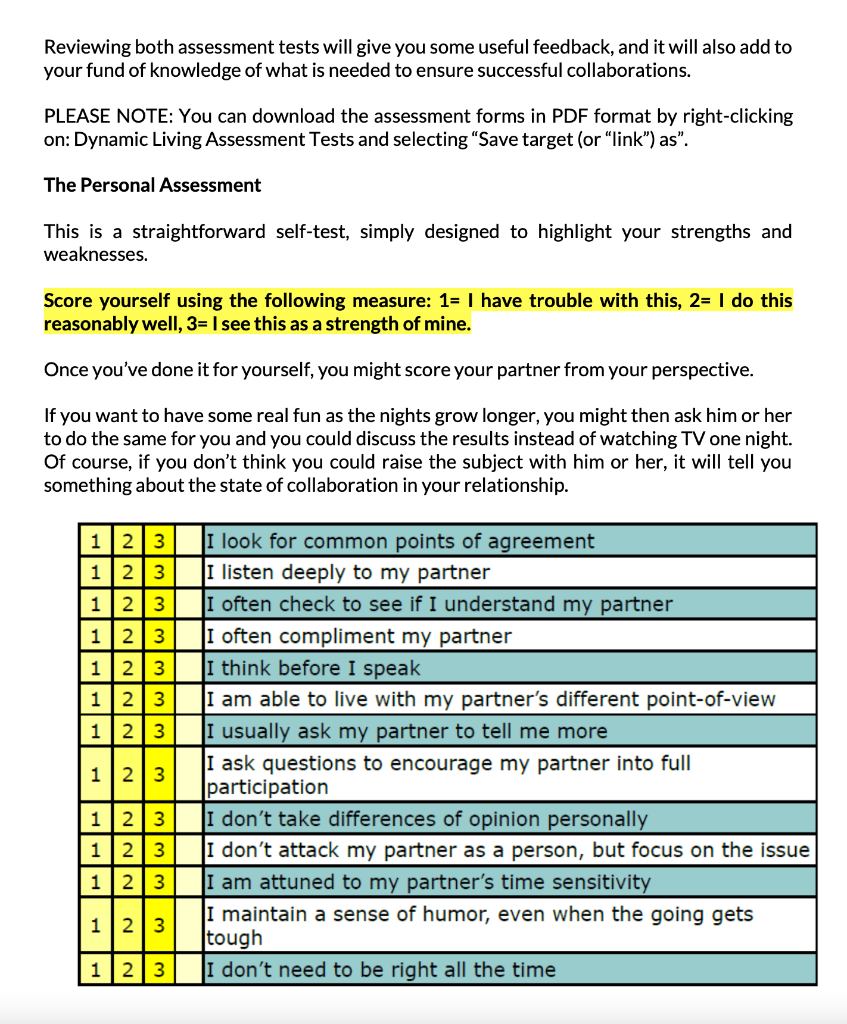
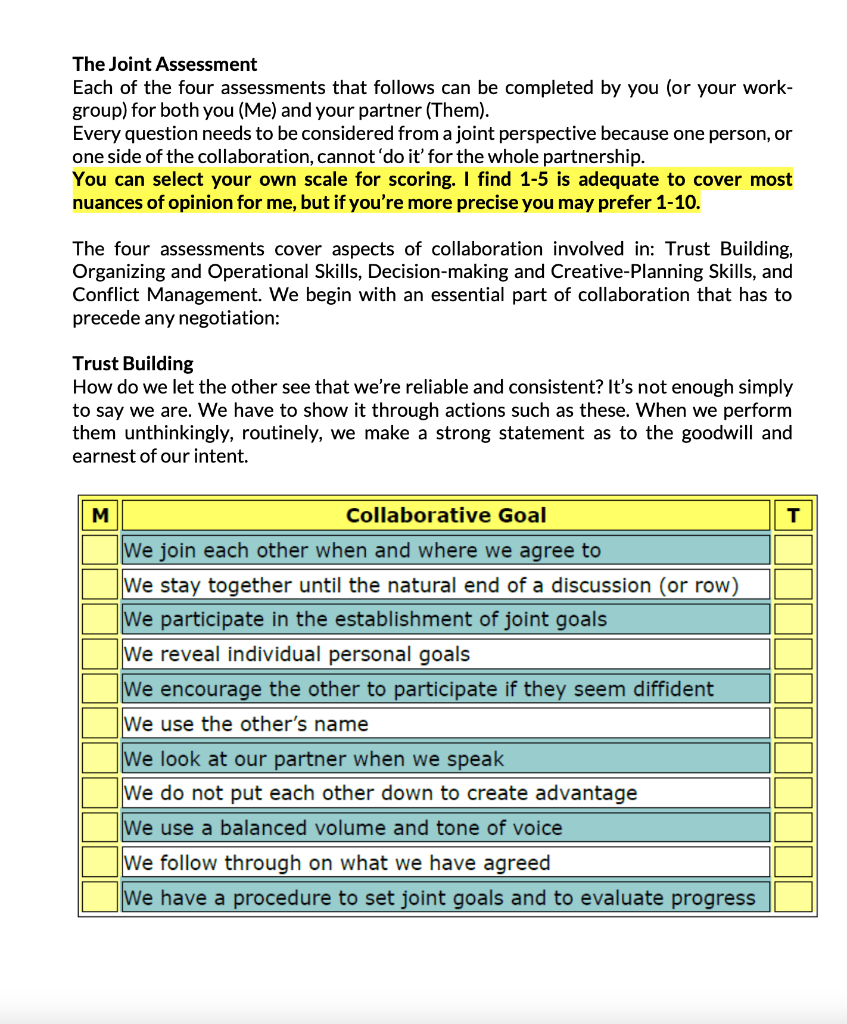
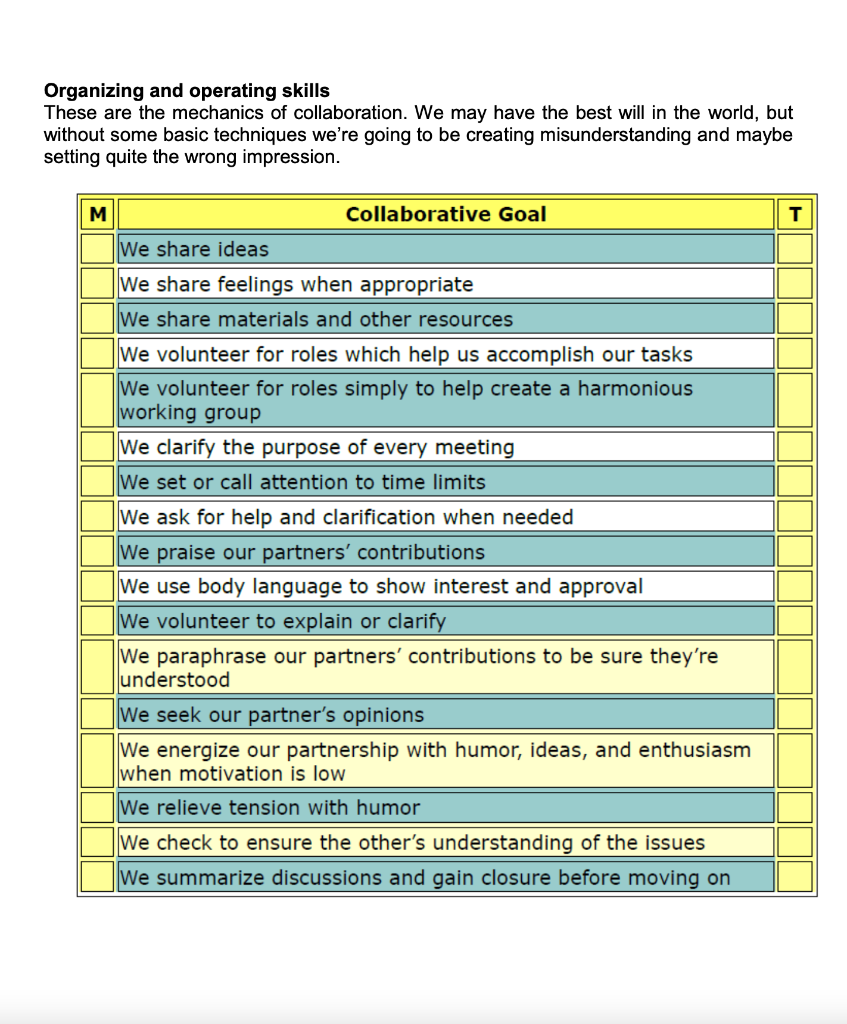
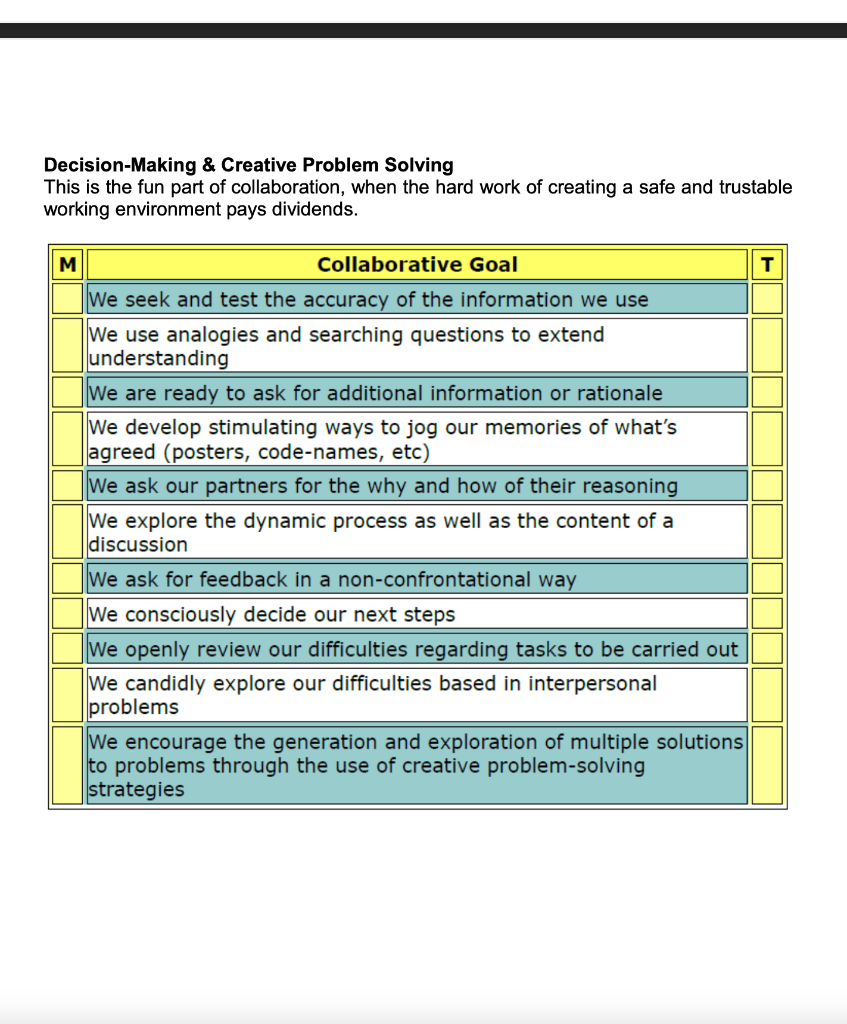
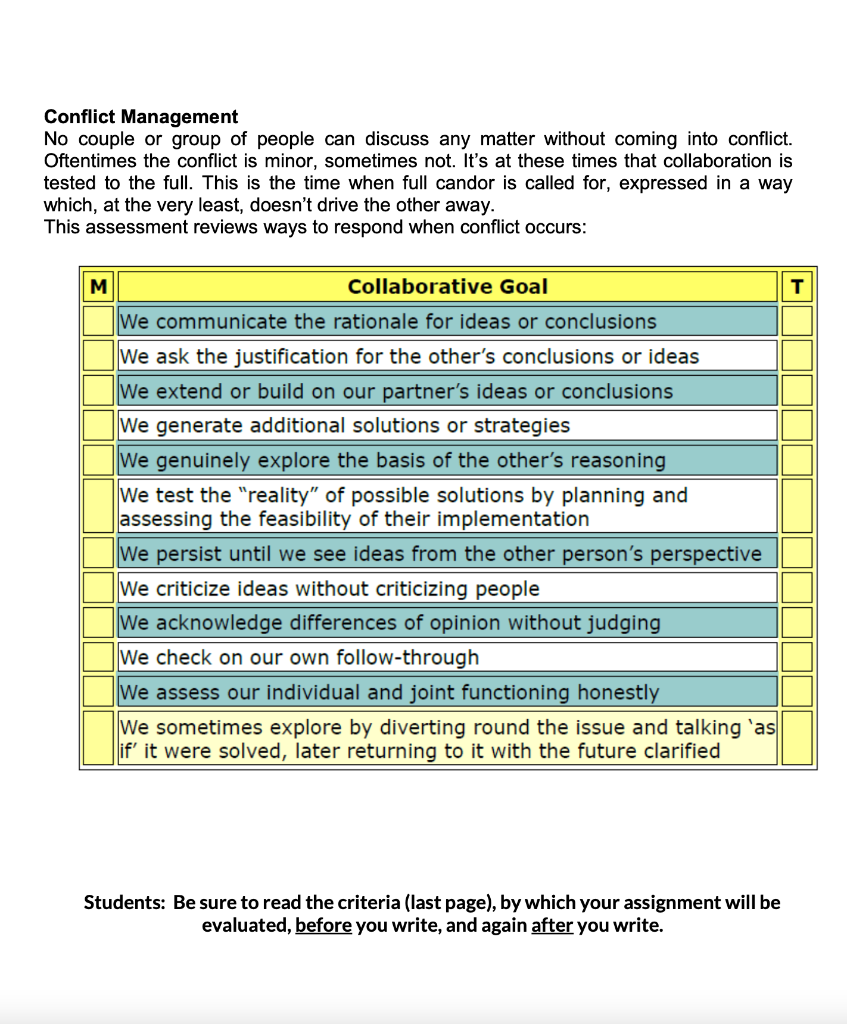
Due: 11:59 pm (EST), Sunday, end of Unit 7 How effective a collaborator are you? Direction: Collaboration is a critical part of business today, to the point where we even covered the topic to an extent in this week's DB. Let's continue the effort, but this time with a greater self-focus. For this exercise, the second part will require you to work with a friend, co-worker, perhaps another student, anyone whom you have some type of relationship with, and preferably someone from an organization you're involved with. Read on! Complete the tests below, and then reflect on what your scores have shown you. How collaborative an individual are you, and where might there be room to improve? What has this exercise taught you? Length and format: The four (4) work sheets from below must be included with this assignment, and a paper no less than 400 words in length. This week, you have a test. No! Not like that! These tests provide a Collaboration metric for yourself, your partner(s) as noted above, and potentially your organization. They form a natural corollary to the exploration of collaboration published elsewhere on this blog as: How to maintain your autonomy in a collaborative partnership." Implicit in these tests is both a way of seeing collaboration and also a structure within which collaboration can take place. It will be quickly obvious that collaboration is not easy and that collaborations of high importance to each individual also call for the highest levels of candor and understanding. These tests will help you answer the questions: How well do you collaborate? and: Are you able to bring out the best from yourself and draw it out from your partner(s)? Of the two tests that follow, the first - The Personal Assessment - is predominantly for yourself, so you can appraise your personal skills at effective collaboration. The second test - The Joint Assessment - is in four parts and enables you to score both yourself and your collaborator. It applies equally to groups as to individuals. Reviewing both assessment tests will give you some useful feedback, and it will also add to your fund of knowledge of what is needed to ensure successful collaborations. PLEASE NOTE: You can download the assessment forms in PDF format by right-clicking on: Dynamic Living Assessment Tests and selecting Save target (or "link") as". The Personal Assessment This is a straightforward self-test, simply designed to highlight your strengths and weaknesses. Score yourself using the following measure: 1= I have trouble with this, 2= | do this reasonably well, 3= I see this as a strength of mine. Once you've done it for yourself, you might score your partner from your perspective. If you want to have some real fun as the nights grow longer, you might then ask him or her to do the same for you and you could discuss the results instead of watching TV one night. Of course, if you don't think you could raise the sub with him or her, it will tell you something about the state of collaboration in your relationship. 1|2|3 123 1|2|3 1|2|3 123 12 3 123 I look for common points of agreement I listen deeply to my partner I often check to see if I understand my partner I often compliment my partner I think before I speak I am able to live with my partner's different point-of-view I usually ask my partner to tell me more I ask questions to encourage my partner into full participation I don't take differences of opinion personally I don't attack my partner as a person, but focus on the issue I am attuned to my partner's time sensitivity I maintain a sense of humor, even when the going gets tough I don't need to be right all the time 1 23 123 1|2|3 1 23 1 2 3 1|2|3 The Joint Assessment Each of the four assessments that follows can be completed by you (or your work- group) for both you (Me) and your partner (Them). Every question needs to be considered from a joint perspective because one person, or one side of the collaboration, cannot do it for the whole partnership. You can select your own scale for scoring. I find 1-5 is adequate to cover most nuances of opinion for me, but if you're more precise you may prefer 1-10. The four assessments cover aspects of collaboration involved in: Trust Building, Organizing and Operational Skills, Decision-making and Creative-Planning Skills, and Conflict Management. We begin with an essential part of collaboration that has to precede any negotiation: Trust Building How do we let the other see that we're reliable and consistent? It's not enough simply to say we are. We have to show it through actions such as these. When we perform them unthinkingly, routinely, we make a strong statement as to the goodwill and earnest of our intent. M Collaborative Goal T We join each other when and where we agree to We stay together until the natural end of a discussion (or row) We participate in the establishment of joint goals We reveal individual personal goals We encourage the other to participate if they seem diffident We use the other's name We look at our partner when we speak We do not put each other down to create advantage We use a balanced volume and tone of voice We follow through on what we have agreed We have a procedure to set joint goals and to evaluate progress Organizing and operating skills These are the mechanics of collaboration. We may have the best will in the world, but without some basic techniques we're going to be creating misunderstanding and maybe setting quite the wrong impression. M Collaborative Goal T We share ideas We share feelings when appropriate We share materials and other resources We volunteer for roles which help us accomplish our tasks We volunteer for roles simply to help create a harmonious working group | We clarify the purpose of every meeting We set or call attention to time limits We ask for help and clarification when needed We praise our partners' contributions We use body language to show interest and approval We volunteer to explain or clarify We paraphrase our partners' contributions to be sure they're understood We seek our partner's opinions We energize our partnership with humor, ideas, and enthusiasm when motivation is low We relieve tension with humor We check to ensure the other's understanding of the issues We summarize discussions and gain closure before moving on Decision-Making & Creative Problem Solving This is the fun part of collaboration, when the hard work of creating a safe and trustable working environment pays dividends. M Collaborative Goal T We seek and test the accuracy of the information we use We use analogies and searching questions to extend understanding We are ready to ask for additional information or rationale We develop stimulating ways to jog our memories of what's agreed (posters, code-names, etc) We ask our partners for the why and how of their reasoning We explore the dynamic process as well as the content of a discussion We ask for feedback in a non-confrontational way We consciously decide our next steps We openly review our difficulties regarding tasks to be carried out We candidly explore our difficulties based in interpersonal problems We encourage the generation and exploration of multiple solutions to problems through the use of creative problem-solving strategies Conflict Management No couple or group of people can discuss any matter without coming into conflict. Oftentimes the conflict is minor, sometimes not. It's at these times that collaboration is tested to the full. This is the time when full candor is called for, expressed in a way which, at the very least, doesn't drive the other away. This assessment reviews ways to respond when conflict occurs: M Collaborative Goal T NNNN We communicate the rationale for ideas or conclusions We ask the justification for the other's conclusions or ideas We extend or build on our partner's ideas or conclusions We generate additional solutions or strategies We genuinely explore the basis of the other's reasoning We test the "reality of possible solutions by planning and assessing the feasibility of their implementation We persist until we see ideas from the other person's perspective We criticize ideas without criticizing people We acknowledge differences of opinion without judging We check on our own follow-through We assess our individual and joint functioning honestly We sometimes explore by diverting round the issue and talking 'as lif it were solved, later returning to it with the future clarified Students: Be sure to read the criteria (last page), by which your assignment will be evaluated, before you write, and again after you write




