







Question: PLEASE I NEED HELP SOLVING THIS PROBLEM STEP BY STEP. I NEED AN EXPLANATION Project #4: Traditional Costing vs. ABC (50 Points) LG Electronics manufactures
PLEASE I NEED HELP SOLVING THIS PROBLEM STEP BY STEP.
I NEED AN EXPLANATION 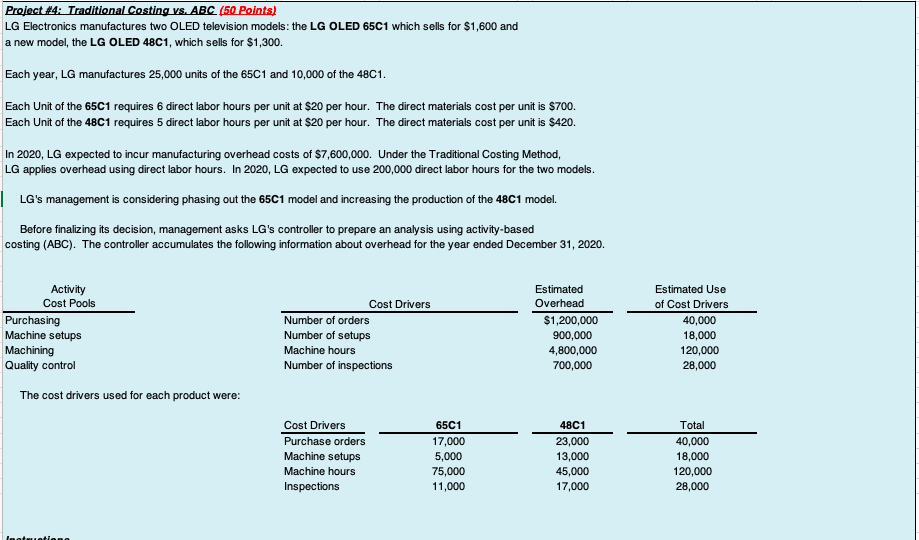
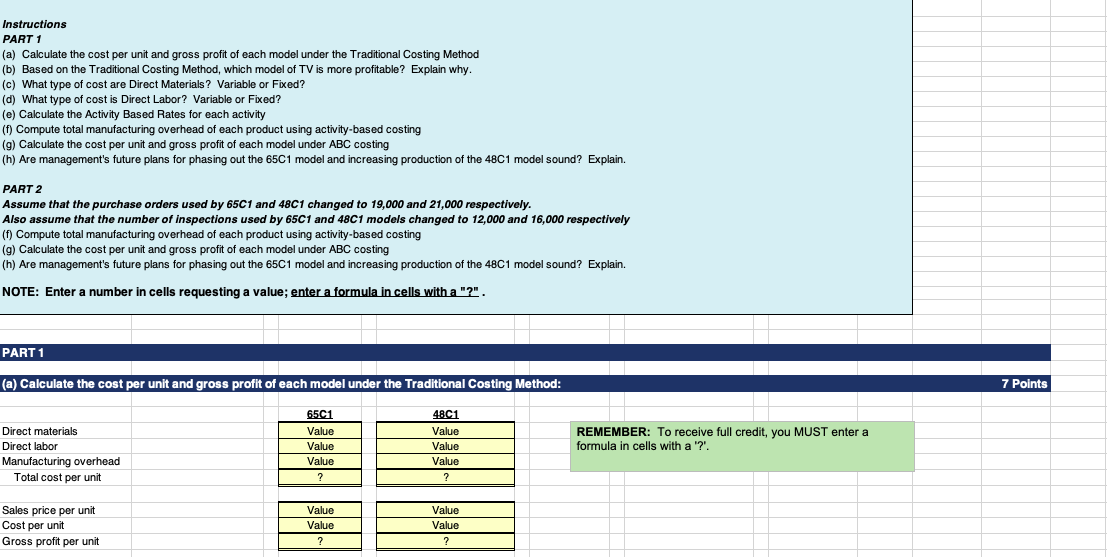
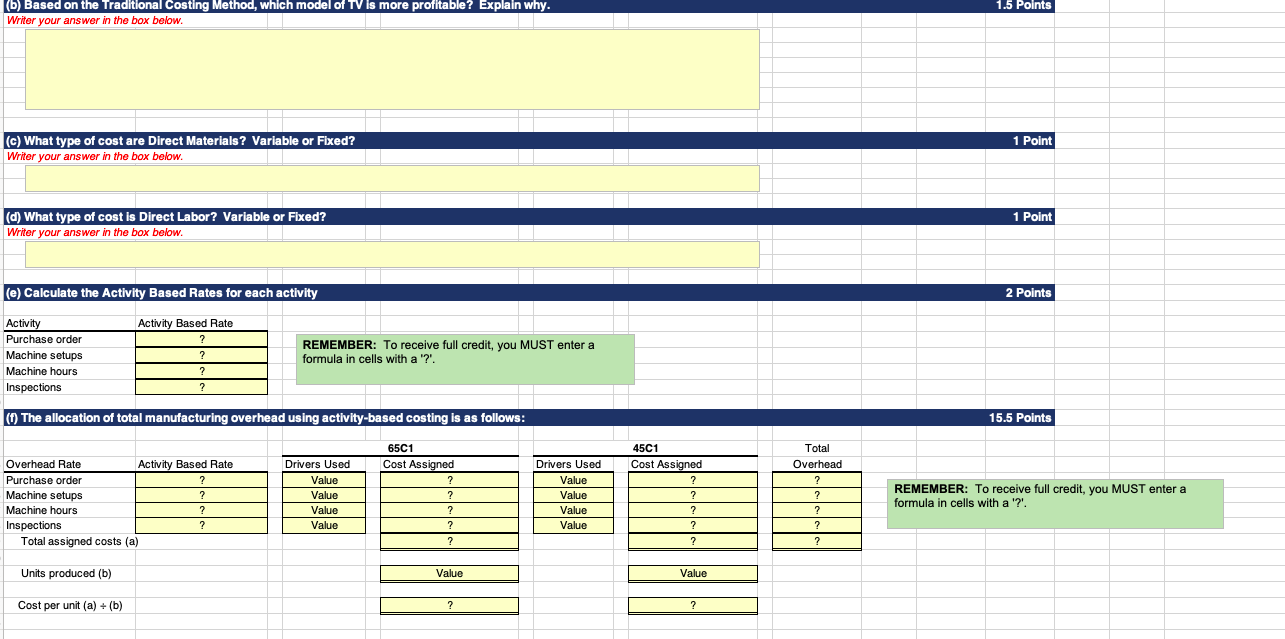
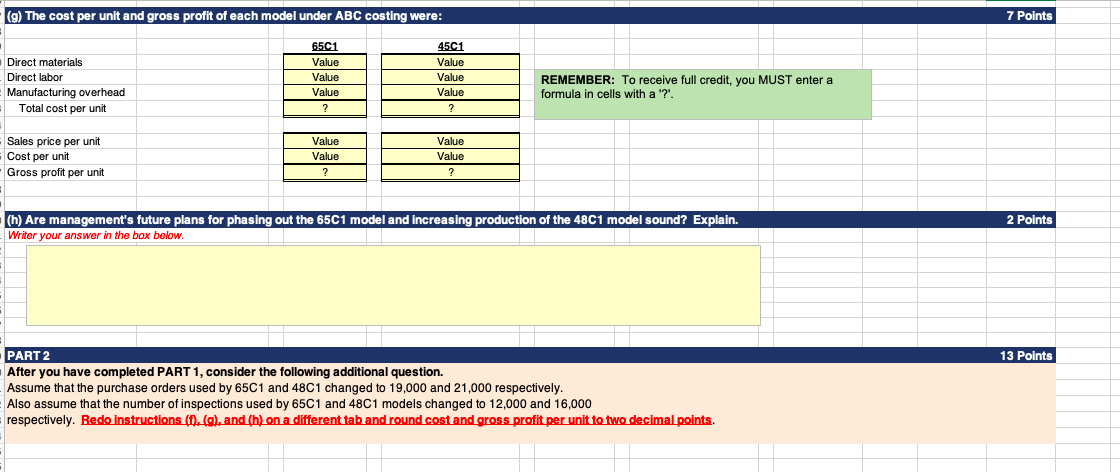
Project #4: Traditional Costing vs. ABC (50 Points) LG Electronics manufactures two OLED television models: the LG OLED 65C1 which sells for $1,600 and a new model, the LG OLED 48C1, which sells for $1,300. Each year, LG manufactures 25,000 units of the 65C1 and 10,000 of the 48C1. Each Unit of the 65C1 requires 6 direct labor hours per unit at $20 per hour. The direct materials cost per unit is $700. Each Unit of the 48C1 requires 5 direct labor hours per unit at $20 per hour. The direct materials cost per unit is $420. In 2020, LG expected to incur manufacturing overhead costs of $7,600,000. Under the Traditional Costing Method, LG applies overhead using direct labor hours. In 2020, LG expected to use 200,000 direct labor hours for the two models. | LG's management is considering phasing out the 65C1 model and increasing the production of the 48C1 model. Before finalizing its decision, management asks LG's controller to prepare an analysis using activity-based costing (ABC). The controller accumulates the following information about overhead for the year ended December 31, 2020. Activity Cost Pools Purchasing Machine setups Machining Quality control The cost drivers used for each product were: Cost Drivers Number of orders Number of setups Machine hours Number of inspections Estimated Overhead $1,200,000 900,000 4,800,000 700,000 Estimated Use of Cost Drivers 40,000 18,000 120,000 28,000 Cost Drivers Purchase orders Machine setups Machine hours Inspections 65C1 17,000 5,000 75,000 11,000 48C1 23,000 13,000 45,000 17,000 Total 40,000 18,000 120,000 28,000 Instructions PART 1 (a) Calculate the cost per unit and gross profit of each model under the Traditional Costing Method (b) Based on the Traditional Costing Method, which model of TV is more profitable? Explain why. (c) What type of cost are Direct Materials? Variable or Fixed? (d) What type of cost is Direct Labor? Variable or Fixed? (e) Calculate the Activity Based Rates for each activity (1) Compute total manufacturing overhead of each product using activity-based costing (g) Calculate the cost per unit and gross profit of each model under ABC costing Are management's future plans for phasing out the 65C1 model and increasing production of the 48C1 model sound? Explain. PART 2 Assume that the purchase orders used by 65C1 and 48C1 changed to 19,000 and 21,000 respectively. Also assume that the number of inspections used by 65C1 and 48C1 models changed to 12,000 and 16,000 respectively (f) Compute total manufacturing overhead of each product using activity-based costing (g) Calculate the cost per unit and gross profit of each model under ABC costing (h) Are management's future plans for phasing out the 65C1 model and increasing production of the 48C1 model sound? Explain. NOTE: Enter a number in cells requesting a value, enter a formula in cells with a "?". PART 1 (a) Calculate the cost per unit and gross profit of each model under the Traditional Costing Method: 7 Points 65C1 Value Value Value 2 Direct materials Direct labor Manufacturing overhead Total cost per unit 48C1 Value Value Value ? REMEMBER: To receive full credit, you MUST enter a formula in cells with a '?'. Sales price per unit Cost per unit Gross profit per unit Value Value Value Value ? 1.5 Points (6) Based on the Traditional Costing Method, which model of TV is more profitable? Explain why. Writer your answer in the box below. 1 Point (c) What type of cost are Direct Materials? Variable or Fixed? Writer your answer in the box below. 1 Point (d) What type of cost is Direct Labor? Variable or Fixed? Writer your answer in the box below. (e) Calculate the Activity Based Rates for each activity 2 Points Activity Purchase order Machine setups Machine hours Inspections Activity Based Rate ? ? ? ? REMEMBER: To receive full credit, you MUST enter a formula in cells with a '?'. () The allocation of total manufacturing overhead using activity-based costing is as follows: 15.5 Points Overhead Rate Activity Based Rate Purchase order ? Machine setups ? Machine hours ? Inspections ? Total assigned costs (a) Drivers Used Value Value Value 65C1 Cost Assigned ? ? ? ? Drivers Used Value Value Value Value 45C1 Cost Assigned ? ? ? ? 7 Total Overhead ? ? ? ? ? REMEMBER: To receive full credit, you MUST enter a formula in cells with a '?'. Value ? Units produced (b) Value Value Cost per unit (a) (b) ? ? (9) The cost per unit and gross profit of each model under ABC costing were: 7 Points Direct materials Direct labor Manufacturing overhead Total cost per unit 6501 Value Value Value 7 45C1 Value Value Value ? REMEMBER: To receive full credit, you MUST enter a formula cells with a '?'. Sales price per unit Cost per unit Gross profit per unit Value Value ? Value Value ? 2 Points (1) Are management's future plans for phasing out the 65C1 model and increasing production of the 48C1 model sound? Explain. Writer your answer in the box below. 13 Points PART 2 After you have completed PART 1, consider the following additional question. Assume that the purchase orders used by 65C1 and 48C1 changed to 19,000 and 21,000 respectively. Also assume that the number of inspections used by 65C1 and 48C1 models changed to 12,000 and 16,000 respectively. Redo instructions (f), (g), and (h) on a different tab and round cost and gross profit per unit to two decimal points
Step by Step Solution
There are 3 Steps involved in it

Get step-by-step solutions from verified subject matter experts
 Study Help