Question: please ignore the first case simply.. the second one only First case, ethics.pdf Simply Divine Do you know where chocolate comes from? It comes from
please ignore the first case simply.. the second one only
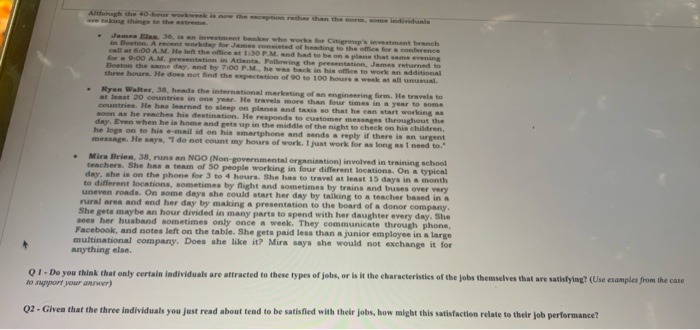
First case, ethics.pdf Simply Divine Do you know where chocolate comes from? It comes from cocoa, which is produced by roasting and grinding the almond-sized beans that grow on cacao trees. More than 70 percent of the world's supply of cacao beans comes from small farms scat tered throughout the West African nations, including Ivory Coast and Ghana. In the past decade, there has been increased awareness of a particularly disturbing business practice--the use of child slave labor in the cocoa industry How did enslaving children become "business as usual" in the cocoa industry? In countries such as Ivory Coast, one-half of the coun- try's exports are cocoa Cocoa farmers often earn less than the poverty level, even with the use of child and slave labor. Unfortunately, Cocoa is an extremely unstable commodity-global prices fluctuate signifi- cantly. Because of this instability, profitability depends on prices over which farmers have no control. This problem is compounded by un- predictable natural conditions, such as drought, over which they also have no control. To improve their chances of making a profit, cocoa farmers look for ways to cut costs, and the use of slave and child labor is the most effective money-saving measure This is where the idea of "fair trade" comes in Fair trade refers to programs designed to ensure that export-dependent farmers in devel- oping countries receive fair prices for their crops. Organizations such as TransFair USA certify that farmers supplying cocoa products are paid fair prices, while paying their employees reasonable wages and providing a safe and environmentally friendly workplace. While many fair trade products are also organic, this is not a requirement for cer- tification by TransFair. However, the organization bans the use of genetically modified organisms (GMOs) and encourages farmers to limit their use of pesticides and fertilizers.? A 3.5-ounce candy bar labeled fair trade may sell for $3.49, compared to about $1.50 for one that's not Why so much? Because the fair trade candy bar, says TransFair USA spokesperson Nicole Chettero, still occupies a niche market. She predicts, how ever, that was the demand and volume of Fair Trade-certified products increase, the market will work itself out... [Retailers will naturally start to drop prices to remain competitive." Ultimately, she concludes, there is no reason why fair-trade [products) should cost astronomically more than traditional products." Some crities of fair trade practices and prices agree in principle but contend that consumers don't need to be paying such excessive prices, even under current market Although the 40-hour work is now the caption rather than the norm, come individuale James Elan 36, is an investment and he works for Citigroup's Investment branch in Boston. A recent workday for James consisted of heading to the office for a conference call at 6:00 AM Het the office at 11:30 PM and had to be on plans that meaning for a 9:00 AM presentation in Atlanta. Following the presentation, James returned to Boston the same day, and by 7:00 PM., he was back in his office to work an additional three hours. He does not find the expectation of 90 to 100 hours a week at all Ryan Walter, 38. heads the international marketing of an engineering firm. He travels to at least 20 countries in one year. He travels more than four times in a year to some countries. He has learned to sleep on planes and taxis so that he can start working as soon as he reaches his destination. He responds to customer message throughout the day. Even when he is home and gets up in the middle of the night to check on his children, he log on to his e-mail id on his smartphone and sends a reply if there is an urgent message. He says, "I do not count my hours of work. I just work for as long as I need to." Mira Bries, 38, runs an NGO (Non-governmental organization) involved in training school teachers. She has a team of 50 people working in four different locations. On a typical day, she is on the phone for 3 to 4 hours. She has to travel at least 15 days in a month to different locations, sometimes by flight and sometimes by trains and buses over very uneven roads. On some days she could start her day by talking to a teacher based in a rural area and and her day by making a presentation to the board of a donor company. She gets maybe an hour divided in many parts to spend with her daughter every day. She sees her husband sometimes only once a week. They communicate through phone, Facebook, and notes left on the table. She gets paid less than a junior employee in a large multinational company. Does she like it? Mira says she would not exchange it for anything else. 01. Do you think that only certain individuals are attracted to these types of jobs, or is it the characteristics of the jobs themselves that are satisfying? (Use examples from the case to support your answer) 02 - Given that the three individuals you just read about tend to be satisfied with their jobs, how might this satisfaction relate to their job performance









 Study Help