







Question: PLEASE ONLY ANSWER PART B, I HAVE PROVIDED PART A FOR REFERENCE ONLY. - a) A firm that has employed no debt in its capital
PLEASE ONLY ANSWER PART B, I HAVE PROVIDED PART A FOR REFERENCE ONLY.
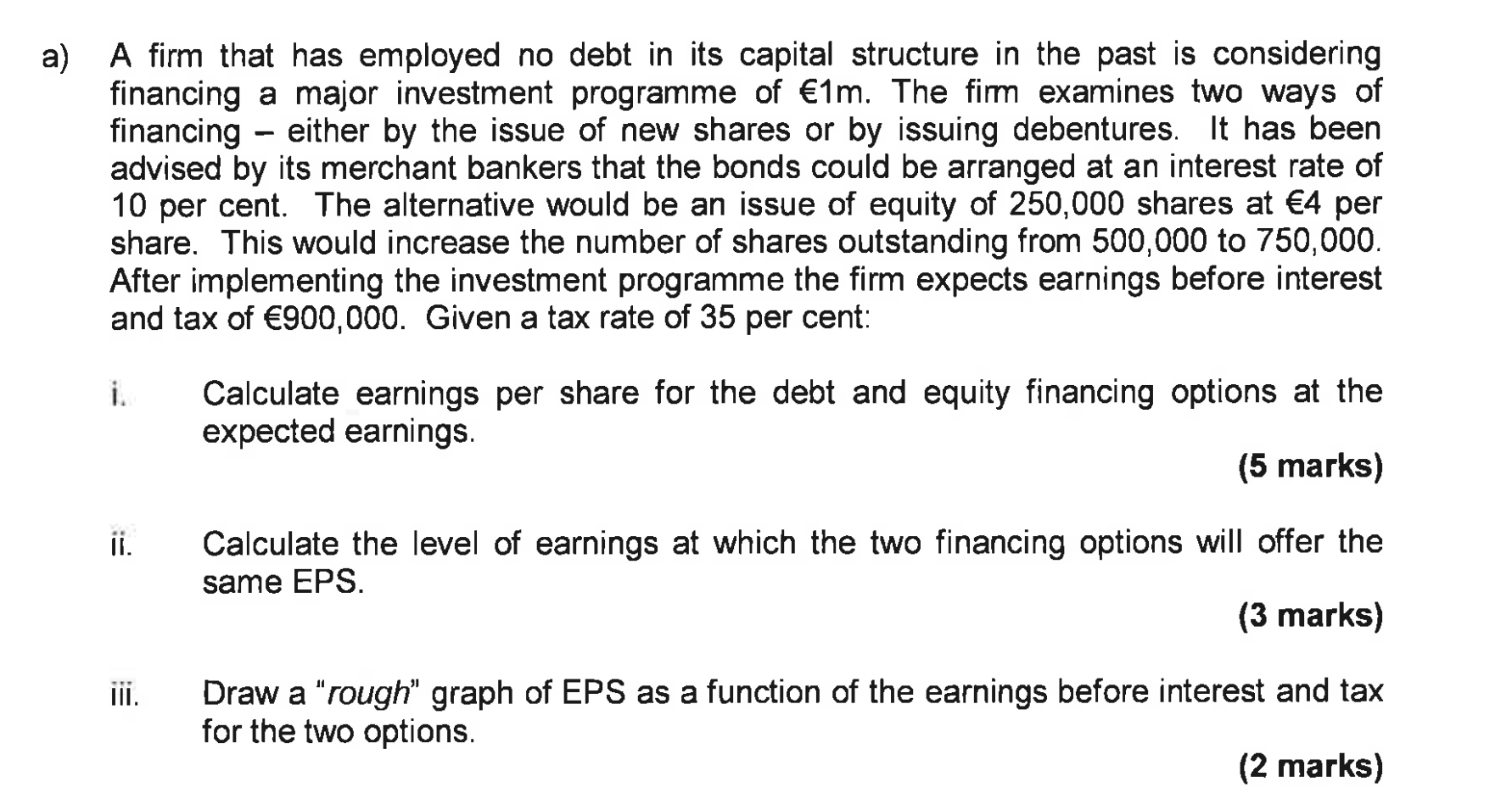
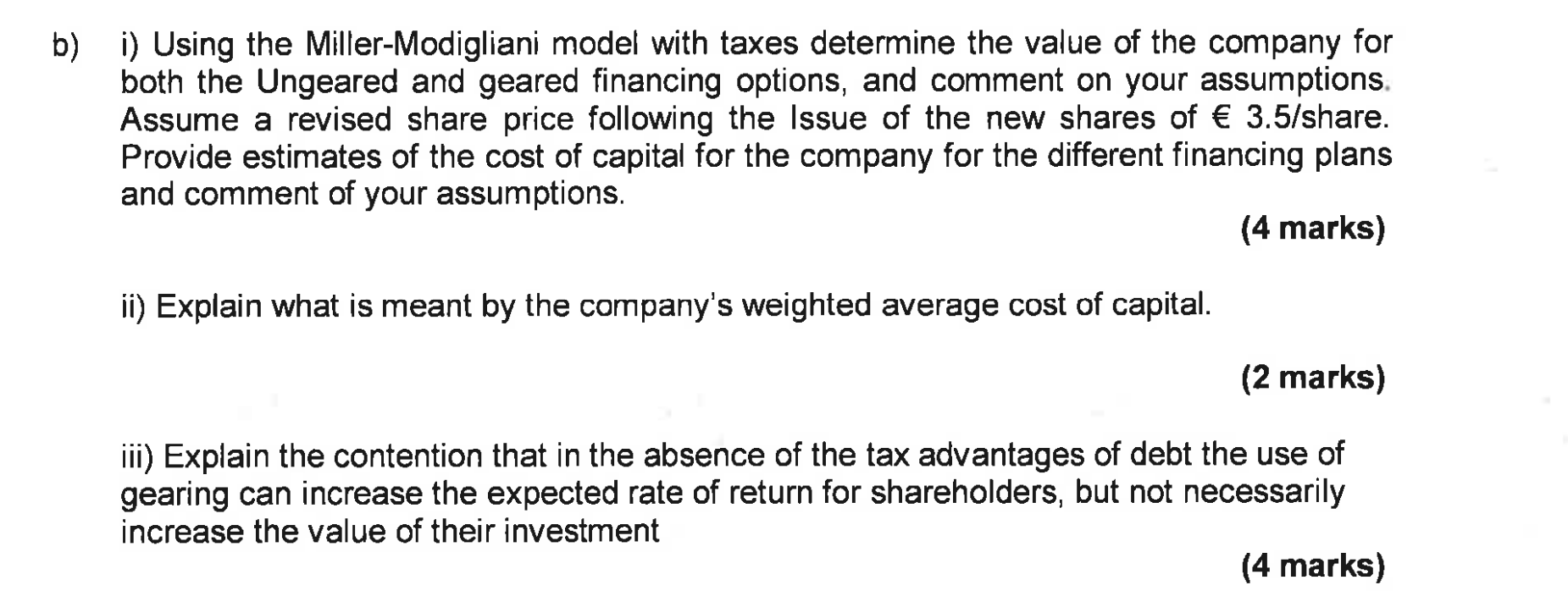
- a) A firm that has employed no debt in its capital structure in the past is considering financing a major investment programme of 1m. The firm examines two ways of financing - either by the issue of new shares or by issuing debentures. It has been advised by its merchant bankers that the bonds could be arranged at an interest rate of 10 per cent. The alternative would be an issue of equity of 250,000 shares at 4 per share. This would increase the number of shares outstanding from 500,000 to 750,000. After implementing the investment programme the firm expects earnings before interest and tax of 900,000. Given a tax rate of 35 per cent: i. Calculate earnings per share for the debt and equity financing options at the expected earnings. (5 marks) ii. Calculate the level of earnings at which the two financing options will offer the same EPS. (3 marks) iii. Draw a "rough" graph of EPS as a function of the earnings before interest and tax for the two options. (2 marks) b) i) Using the Miller-Modigliani model with taxes determine the value of the company for both the Ungeared and geared financing options, and comment on your assumptions. Assume a revised share price following the issue of the new shares of 3.5/share. Provide estimates of the cost of capital for the company for the different financing plans and comment of your assumptions. (4 marks) ii) Explain what is meant by the company's weighted average cost of capital. (2 marks) iii) Explain the contention that in the absence of the tax advantages of debt the use of gearing can increase the expected rate of return for shareholders, but not necessarily increase the value of their investment (4 marks) - a) A firm that has employed no debt in its capital structure in the past is considering financing a major investment programme of 1m. The firm examines two ways of financing - either by the issue of new shares or by issuing debentures. It has been advised by its merchant bankers that the bonds could be arranged at an interest rate of 10 per cent. The alternative would be an issue of equity of 250,000 shares at 4 per share. This would increase the number of shares outstanding from 500,000 to 750,000. After implementing the investment programme the firm expects earnings before interest and tax of 900,000. Given a tax rate of 35 per cent: i. Calculate earnings per share for the debt and equity financing options at the expected earnings. (5 marks) ii. Calculate the level of earnings at which the two financing options will offer the same EPS. (3 marks) iii. Draw a "rough" graph of EPS as a function of the earnings before interest and tax for the two options. (2 marks) b) i) Using the Miller-Modigliani model with taxes determine the value of the company for both the Ungeared and geared financing options, and comment on your assumptions. Assume a revised share price following the issue of the new shares of 3.5/share. Provide estimates of the cost of capital for the company for the different financing plans and comment of your assumptions. (4 marks) ii) Explain what is meant by the company's weighted average cost of capital. (2 marks) iii) Explain the contention that in the absence of the tax advantages of debt the use of gearing can increase the expected rate of return for shareholders, but not necessarily increase the value of their investment (4 marks)
Step by Step Solution
There are 3 Steps involved in it

Get step-by-step solutions from verified subject matter experts
 Study Help