







Question: Please only answer block B question 1. Thank you. CASE 3 WOLFGANG'S BALANCING ACT: REWARDING HEALTHCARE EXECUTIVES IN A DISPERSED YET INTEGRATED FIRM' By Marion
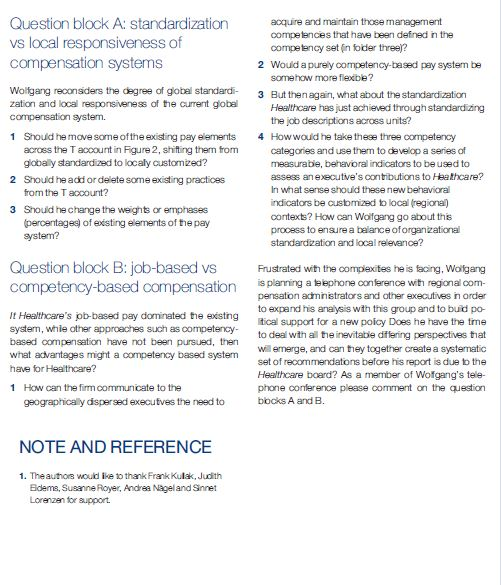
Please only answer block B question 1. Thank you.
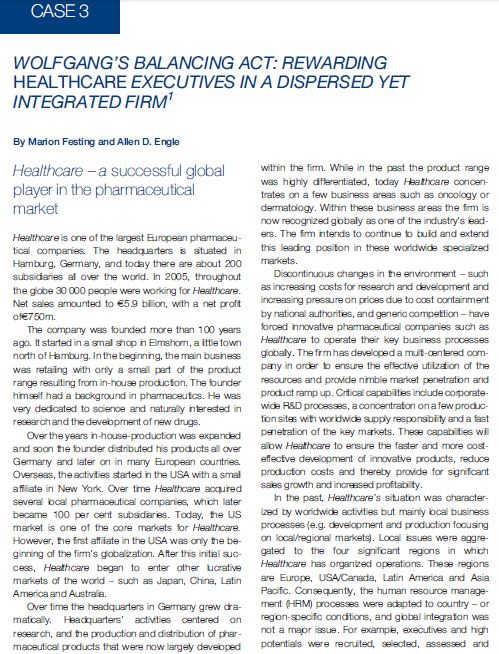
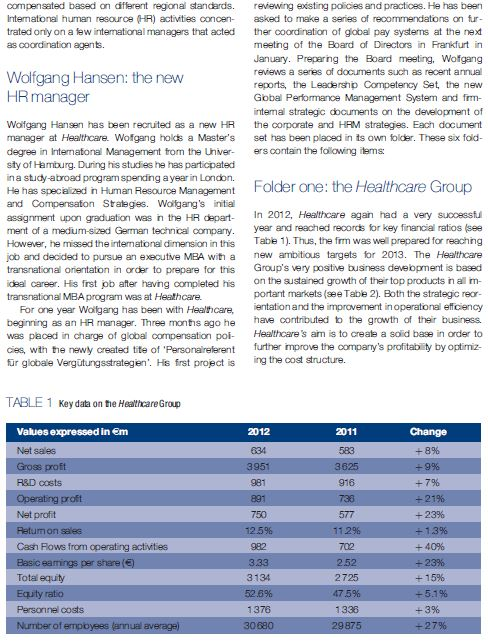
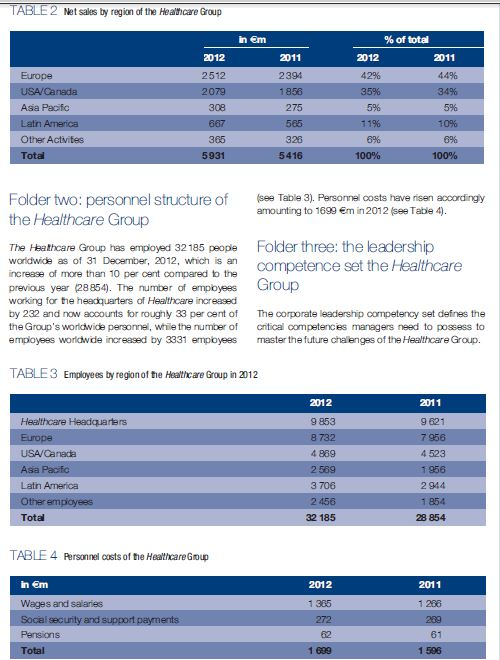
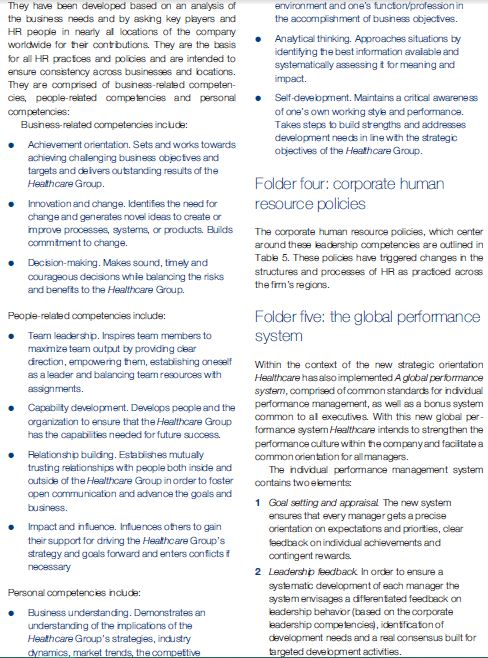
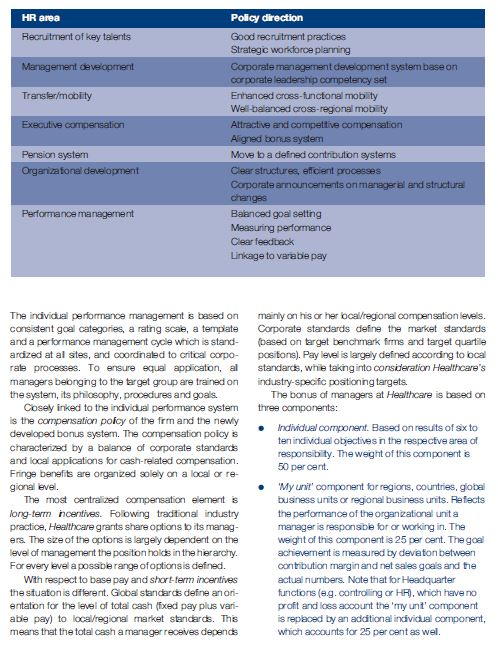
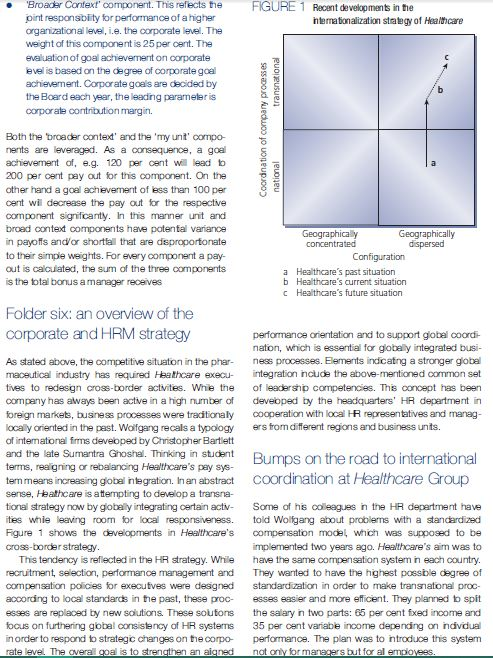
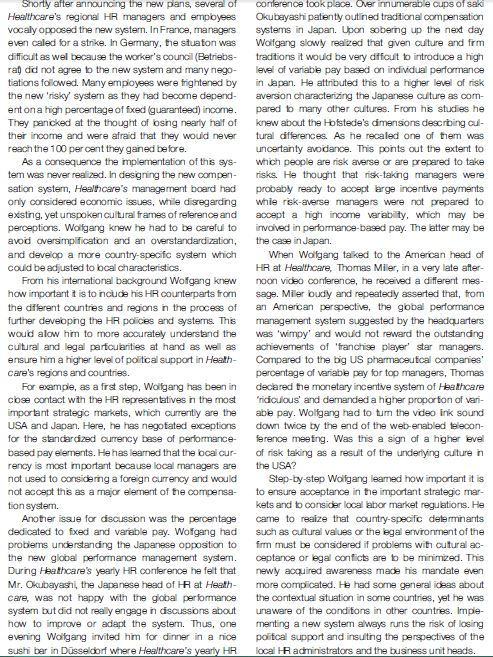
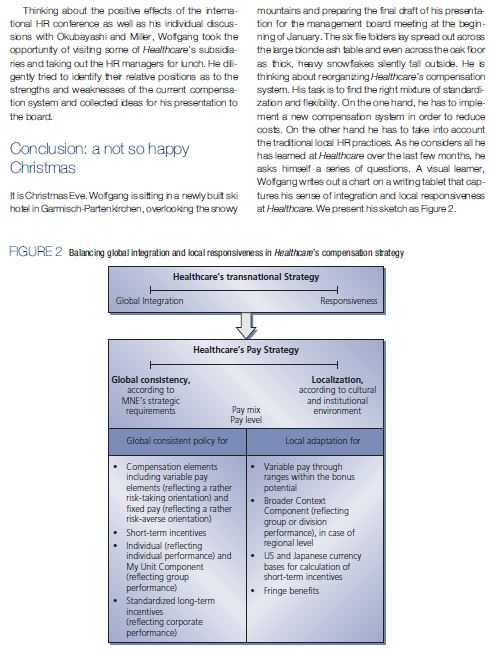
CASE 3 WOLFGANG'S BALANCING ACT: REWARDING HEALTHCARE EXECUTIVES IN A DISPERSED YET INTEGRATED FIRM' By Marion Festing and Allen D. Engle Healthcare -a successful global player in the pharmaceutical market Healthcare is one of the largest European pharmaceu- tical companies. The headquarters s stuated in Hamburg, Germany, and today there are about 200 subsidiaries al over the world. In 2005, throughout the globe 30 000 people were working for Healthcare Net sales amounted to 5.9 bilion, with a net proft of750m. The company was founded more than 100 years ago. It started in a smal shop in Elmshom, a ittle town north of Hamburg. In the beginning, the main business was retailing with only a small part of the product range resulting from in-house producton. The founder himself had a background in pharmaceutics. He was very dedicated to science and naturally interested in research and the development of new drugs. Over the years in-house-production was expanded and soon the founder distributed his products al over Germany and later on in many European countries Overseas, the activities started in the USA with a small aflate in New York. Over time Healthcare acquired several local pharmaceutical companies which later became 100 per cent subsidiaries. Today, the US market is one of the core markets for Healthcare However, the frst affiliate in the USA was only the be- ginning of the firm's gobalization. After this initial suc- cess, Heathcare began to enter other ucrative markets of the world - such as Japan, China, Latin America and Australia, Over time the headquarters in Germany grew dra- matically. Headquarters' activities centered on research, and the production and distribution of phar- maceutical products that were now largely developed within the firm. While in the past the product range was highly differentiated, today Heathcare concen trates on a few business areas such as oncology or dermatology. Within these business areas the firm is now recognized globally as one of the industry's lead- ers. The firm intends to continue to build and extend this leading position in these worldwide specialized markets Discontinuous changes in the environment - such as increasing costs for research and development and increasing pressure on prices due to cost containment by national authorities, and generic compettion-have forced innovative pharmaceutical companies such as Healthcare to operate their key business processes globaly. The frm has developed a mult-centered com- pany in order to ensure the effective utilization of the resources and provide nimble market penetration and product ramp up. Crtical capabilities include coporate- wice R&D processes, a concentraton on a few produc- tonsites with worldwide supply responsibility and a fast penetration of the key markets. These capabilities wil alow Heathcare to ensure the faster and more cost- effective development of innovative products, reduce production costs and thereby provide for significant production costs and sales growth and increased proftabity. In the past Healthcare's situation was character ized by worldwide activities but mainly local business processes (e.g. development and production focusing on local/regional markets. Local issues were aggre- gated to the four significant regions in which Healthcare has organized operations. These regions are Europe, USA/Canada, Latin America and Asia Pacifc. Consequenty, the human resource manage- ment (HRM) processes were adapted to country-or region-specific conditions, and gobal integraton was not a major issue. For example, executives and high potentials were recruited, selected, assessed and compensated based on different regional standards. International human resource (HR) activities concen trated only on a few international managers that acted as coordination agents. Wolfgang Hansen: the new HR manager reviewing existing policies and practions. He has been asked to make a series of recommendations on ur the coordination of gobal pay systerns at the next meeting of the Board of Directors in Frankfurt in January. Preparing the Board meeting. Wofgang reviews a series of documents such as recent annual reports, the Leadership Competency Set the new Global Performance Management Systern and frm- intemal strategic documents on the development of the corporate and HRM strategies. Each document set has been placed in ts own bolder. These six fold- ers contain the following items Folder one: the Healthcare Group Wolfgang Hansen has been recruited as a new HR manager at Healthcare. Wofgang holds a Master's degree in Internatonal Management from the Univer- sity of Hamburg, During his studies he has participated ina study abroad program spending a year in London. He has specialized in Human Resource Management and Compensation Strategies. Wolfgang's initial assignment upon graduation was in the HR depart ment of a medium-sized German technical company. However, he missed the international dimension in this job and decided to pursue an executive MBA with a transnational orientation in order to prepare for this Ideal career. His first job after having completed his transnational MBA program was at Heathcare. For one year Wolfgang has been with Healthcare, beginning as an HR manager, Three months ago he was placed in charge of global compensation pol- cies, with the newly created tite of 'Personalreferent fur globale Vergtungsstrategien'. His frst project is in 2012, Healthcare again had a very success year and reached records for key financial ratios (see Table 1). Thus, the firm was well prepared for reaching new ambitious targets for 2013. The Healthcare Group's very positive business development is based on the sustained growth of their top products in all m- on the sustained growth a portant markets (see Table 2). Both the strategic reor ientation and the improvement in operational efficiency have contributed to the growth of their business Healthcare's am is to create a solid base in order to further improve the company's profitably by optimiz- ing the cost structure. TABLE 1 Key data on the Healthcare Group 2011 Values expressed in m Net sales Gross proft RSD costs Operating proft Net profit Return on sales Cash Flows from operating activities Basic eamings per share (e) Total equity Equty ratio Personnel costs Number of employees anual average) 2012 634 3951 981 891 750 12.5% 982 333 3134 52.6% 1376 30680 583 3625 916 738 577 11296 702 252 2725 475% 1336 29875 Change +8% +9% +7% + 2196 + 23% +13% + 40% + 23% + 15% +5.1% +3% +27% TABLE 2 Net sales by region of the Healthcare Group in Em % of total 2011 2012 42% 35% 34% Europe USA/Canada Asia Pacific Latin America Other Activities Total 2012 2512 2079 308 667 365 5931 2011 2394 1856 275 565 326 416 11% 6% 100% 10% 6% 100% 5 Folder two: personnel structure of the Healthcare Group see Table 3), Personnel costs have risen accordingy amounting to 1699 m in 2012 (see Table 4). Folder three: the leadership competence set the Healthcare Group The Heathcare Group has employed 32 185 people worldwide as of 31 December, 2012, which is an increase of more than 10 per cent compared to the previous year 28 854). The number of employees working for the headquarters of Healthcare increased by 232 and now accounts for roughly 33 per cent of the Group's worldwide personnel, while the number of employees worldwide increased by 3331 employees the corporate leadership competency set defines the critical competences managers need to possess to master the future challenges of the Healthcare Group TABLE 3 Employees by region of the Healthcare Group in 2012 2012 2011 Healthcare Headquarters Europe USA/Canada Asia Pacific Latin America Other employees Total 9 853 8732 4869 2 569 3706 2 456 32 185 9 621 7956 4523 1 956 2 944 1 854 28 854 TABLE4 Personnel costs of the Healthcare Group 2011 2012 1385 1.288 in em Wages and salaries Social security and support payments Pensions Total 272 61 1 505 1 699 They have been developed based on an analysis of the business needs and by asking key players and HR people in nearly al locations of the company worldwide for their contributions. They are the basis for all HR pracfoss and policies and are intended to ensure consistency across businesses and locations. They are comprised of business-related competen- cies, people-related competencies and personal competencies: Business-related competencies include: environment and one's funcfor profession in the accomplishment of business objectives. Anaytical thinking. Approaches situations by identifying the best information avaiable and systematically assessing t for meaning and impact. Self-development. Maintains a critical awareness of one's own working style and performance. Takes steps to build strengths and addresses development needs in line with the strategic objectives of the Heathcare Group. Achievement orientation. Sets and works towards achieving chalenging business objectes and targets and deivers outstanding results of the Healthcare Group. Folder four: corporate human resource policies Innovation and change. Identifies the need for change and generates novel ideas to create or improve processes, systems, or products. Builds commitment to change. Decision-making. Makes sound, timey and courageous decisions while balancing the risks and benefits to the Healthcare Group. The corporate human resource policies, which center around these badership competencies are outlined in Table 5. These policies have triggered changes in the structures and processes of HR as practiced across the firm's regions. Folder five: the global performance system People-related competencies include: Team leadership. Inspires team members to maximize team output by providing clear direction, empowerng them, establishing oneself as a leader and balancing team resources with assignments. Capability development. Develops people and the organization to ensure that the Healthcare Group has the capabilities needed for future success. Relationship building. Establishes mutualy trusting relationships with people both inside and outside of the Healthcare Group in order to foster open communication and advance the goals and business. Within the context of the new strategic orientation Healthcare has also implemented Aglobal performance system, comprised ofcommon standards for individual performance management, as well as a bonus system common to al executives. With this new global per formance systern Healthcare intends to strengthen the performance culture within the company and facilitate a common orientation for all managers. The individual performance management system contains twoelements: Impact and infuence. Infuences others to gain their support for driving the Heathcare Group's strategy and goals forward and enters conficts f necessary 1 Goal setting and appraisal The new system ensures that every manager gets a precise orientation on expectations and priorties, clear feedback on individual achievements and contingent rewards. 2 Leadership feedback In order to ensure a systematic development of each manager the system envisages a differentated feedback on Badership behavior (based on the corporate Badership competencies). identicaton of development needs and a real consensus built for targeted development activities. Personal competencies include: Business understanding. Demonstrates an understanding of the mplicatons of the Heathcare Group's strategies, industry dynamics, market trends, the compettive HR area Recruitment of key talents Management development Transfer mobility Policy direction Good recruitment practices Strategic wondorce planning Corporate management development system base on corporate leadership competency set Enhanced cross-functonal mobility Wes-balanced cross-regional mobility Attractive and competitive compensation Algned bonus system Move ba defined contribution systems Clear structures, efficient processes Corporate announcements on managerial and structural Executive compensation Pension system Organizatonal development Performance management Balanced goal setting Measuring performance Clear feedback Linkage to varable pay The individual performance management is based on consistent goal categories, a rating scale, a template and a performance management cycle which is stand- ardized at al sites, and coordinated to critical corpo- rate processes. To ensure equal application, al managers belonging to the target group are trained on the system, its philosophy, procedures and goals. Cosey Inked to the individual performance system is the compensation polcy of the frm and the newly developed bonus system. The compensation poicy is characterized by a balance of corporate standards and local applications for cash-related compensation. Fringe benefits are organized solely on a local or re- gional level. The most centralized compensation elements long-term incentives. Folowing traditional industry practice, Healthcare grants share options bits manag- ers. The size of the options is largely dependent on the level of management the positon holds in the hierarchy For every level a possible range ofoptions is defined. With respect to base pay and short-term incentives thestuaton is different. Giobal standards define anon- entation for the level of total cash fixed pay plus ver- able pay) to local/regional market standards. This means that the total cash amanager receives depends mainly on his or her boal/regional compensation levels Corporate standards define the market standards based on target benchmark firms and target quartie positons). Pay level is largely defined according to local standards, while taking into consideration Healthcare's industry-specific positioning targets. The bonus of managers at Healthcare is based on three components: Individual component. Based on results of six to ten individual objectives in the respective area of responsibity. The weight of this components 50 percent. 'My unit' component for regions, countries, gobel business units or regional business units. Pefects the performance of the organizational unita manager is responsible for or working in The weight of this component is 25 per cent. The goal achievement is measured by devafon between contribution margin and net sales goals and the actual numbers. Note that for Headquarter functions (eg.controling or HR, which have no proft and loss account the 'my unt' component is replaced by an additional individual component, which accounts for 25 per cent as wel FIGURE 1 Recent developments in the intemafionalization strategy of Healthcare 'Broader Context component. This reflects the pint responsibility for performance of a higher organizational level, ie, the corporate level. The weight of this component is 25 per cent. The evaluation of goal achievement on corporate evel is based on the degree of corporate goal achievement. Corporate goals are decided by the Board each year, the leadng parameters corporate contribution margin transnational Coordination of company processes national Both the broader contest' and the 'my unt' compo nents are leveraged. As a consequence, a goal achievement of, e.g. 120 per cent will lead b 200 per cent pay out for this component. On the other hand a goal achievement of less than 100 per cent wil decrease the pay out for the respective component significanty. In this manner unit and broad context components have patental variance in payoffs and/or shortial that are dsproportonate to their simple weights. For every component a pay- out is calculated, the sum of the three components is the total bonus a manager receives Geographically Geographically concentrated dispersed Configuration a Healthcare's past situation b Healthcare's current situation C Healthcare's future situation Folder six: an overview of the corporate and HRM strategy performance orientation and to support global coordi- nation, which is essential for globally integrated busi- ness processes. Elements indicatng a stronger gobal integration include the above-mentioned common set of leadership competencies. This concept has been developed by the headquarters' HR department in cooperation with local representatives and manag- ers from different regions and business units. Bumps on the road to international coordination at Healthcare Group As stated above, the competitive situation in the phar- maceutical industry has required Heathcare execu- tives to redesign cross-border activities. While the company has aways been active in a high number of foreign markets, business processes were traditional locally oriented in the past. Wolfgang recals a typology of interational firms developed by Christopher Bartlett and the late Sumantra Ghoshal Thinking in student terms, realigning or rebalancing Healthcare's pay sys- tem means increasing gobal integration. In an abstract sense, Healthcare is attempting to develop a transna- tional strategy now by gobally integrating certain activ- ities whle leaving room for local responsiveness. Figure 1 shows the developments in Healthcare's Cross-border strategy. This tendency is reflected in the HR Strategy. While recruitment selection, performance management and compensation policies for executives were designed according to local standards in the past, these proc- esses are replaced by new solutions. These soufons focus on furthering gobal consistency of HR systerns in order to respond b strategic changes on the corpo at level. The overall goal is to strengthen an algned Some of his colleagues in the HR department have told Wolfgang about problems with a standardized compensation model which was supposed to be implemented two years ago. Healthcare's aim was to have the same compensation system in each country. They wanted to have the highest possible degree of standardization in order to make transnational proc- SSBs sasier and more efficent. They planned b spit the salary in two parts: 65 per cent fxed income and 35 per cent variable income depending on ndivdual performance. The plan was to introduce this system not only for managers but for alemios Shorty after announcing the new plans, several of Healthcare's regional HR managers and employees vocally opposed the new system. In France, managers even called for a strike in Germany, the stuafon was difficult as wel because the worker's council (Betriebs- rah did not agree b the new system and many nego tiations followed. Many employees were frightened by the new frisky system as they had become depend- ent on a high percentage of fixed guaranteed, income. They panicked at the thought of losing neerly half of ther income and were afraid that they would never reach the 100 percent they gained before. As a consequence the implementation of this sys- tem was never realized. In designing the new compen- sation system, Healthcare's management board had only considered economic issues, while disregarding exsting, yet unspoken cultural frames of reference and perceptions. Wolfgang knew he had to be careful to avoid oversimplification and an overstandardization, and develop a more country-specific system which could be adjusted to local characteristics. From his international background Wolfgang knew how important t is to include his HR counterparts from the different countries and regions in the process of further developing the HR policies and systems. This would alow him to more accurately understand the cultural and legal partoularities at hand as well as ensure him a higher level of political support in Heath- care's regions and countries. For example, as a frst step, Wolfgang has been in close contact with the HR representatives in the most important strategic markets, which currently are the USA and Japan. Here, he has negotiated exceptions for the standardized currency base of performance- based pay elements. He has learned that the cal cur- rency is most important because local managers are not used to considering a foreign currency and would not accept this as a major element of the compensa tion system Another issue for discussion was the percentage dedicated to fxed and variable pay. Wofgang had problems understanding the Japanese opposition to the new global performance management system. During Heathcare's yearly HR conference he felt that Mr. Okubayashl, the Japanese head off at Heath care, was not happy with the global performance syster but did not really engage in discussions about how to improve or adapt the system. Thus, one evening Wolfgang invited him for dinner in a nice sushi bar in Dsseldorf Where Healthcare's yearly HR conference took place. Over Innumerable cups olsak Okubayashi patienty outined traditional compensation systems in Japan. Upon soberng up the need day Woifgang slowy realized that given culture and frm traditions it would be very diffout b introduce a high level of variable pay based on individual performance in Japan. He attributed this to a higher level of risk version charactering the Japanese culture as com- pared b many other cultures. From his studies he knew about the Hofstede's dimensions descrbing out tural differences As he recaled one of them was uncertainty avoidance. This ponts out the extent to which people are risk averse or are prepared to take risks. He thought that risk taking managers were probably ready to accept large incentive payments whie risk-averse managers were not prepared to accept a high income variability, which may be involved in performance-based pay. The latter may be the case in Japan. When Wolfgang talked to the American head of HR at Healthcare, Thomas Miler, in a very late after- noon video conference, he received a different mes sage. Miler oudy and repeatedy asserted that, from an American perspective, the gobal performance management system suggested by the headquarters was 'Wimpy' and would not reward the outstanding achievements of 'franchise player star managers. Compared to the big US pharmaceutical companies percentage of variable pay for top managers, Thomas declared the monetary incentive system of Heathcare ridiculous' and demanded a higher proportion of vari- able pay. Wolfgang had to turn the video ink sound down twice by the end of the web-enabled telecon ference meeing. Was this a sign of a higher level of risk taking as a result of the underlying culture in the USA? Step-by-step Wolfgang learned how important it is t o ensure acceptance in the important strategic mar- kets and consider local abor market regulations. He came to realize that country-specifc determinants such as cultural values of the legal evronment of the firm must be considered if problems with cutural ac- ceptance or legal conficts are b be minimized. This newy acquired awareness made his mandate even more complicated. He had some general ideas about the contextual situation in some countries, yet he was unaware of the conditions in other countries. Imple menting a new system always runs the risk of losing po fical support and insulting the perspectives of the local administrators and the business unit heads. Thinking about the positive effects of the intere- tional HR conference as well as his individual discus- sons with Okubayashi and Me, Wofgang took the opportunity of visiting some of Healthcare's subsidia- ries and taking out the HR managers for unch. He di- ganty tried to identify their relative positions as to the strengths and weaknesses of the current compensa tion system and collected deas for his presentation to the board mountains and preparing the final craft of his presenta tion for the management board meeting at the begin- ning of January. The sx fle folders ay spread out across the large blonde ashtable and even across the oak foor as thick, heavy snowfakes siently fal outside. He is thinking about reorganizing Healthcare's compensation system. His task is to find the right modure of standard zation and facility. On the one hand, he has to imple ment a new compensation system in order to reduce costs. On the other hand he has to take into account the traditional local HR practices. As he considers all he has leamed at Healthcare over the last few months, he asks himself a series of questions. A Visual learner, Wofgang writes out a chart on a writing tablet that cap- tures his sense of integration and local responsveness at Healthcare. We present his sketch as Figure 2. Conclusion: a not so happy Christmas It is Christmas Eve. Wolfgang is sitting in a newly buit ski hotel in Garmisch-Partenkirchen, overlooking the snowy FIGURE 2 Balancing global integration and local responsiveness in Healthcare's compensation strategy Healthcare's transnational Strategy Global Integration Responsiveness Healthcare's Pay Strategy Global consistency. according to MNE's strategic requirements Localization, according to cultural and institutional environment Pay mix Pay level Global consistent policy for Local adaptation for Compensation elements induding variable pay elements reflecting a rather risk-taking onentation) and fixed pay reflecting a rather Tisk-averse orientation) Short-term incentives Individual reflecting individual performance) and My Unit Component (reflecting group performance Standardized long-term incentives (reflecting corporate performance Variable pay through ranges within the bonus potential Broader Context Component reflecting group or division performance), in case of regional level US and lapanese currency bases for calculation of short-term incentives Fringe benefits 1. 1 - Question block A: standardization vs local responsiveness of compensation systems Wolfgang reconsiders the degree of global standard - zation and local responsiveness of the current global compensation system. 1 Should he move some of the existing pay elements across the T account in Figure 2, shifting them from globally standardized to localy customized? 2 Should he adrior delete some existing practices from the T account? 3 Should he change the weight or emphases (percentages of existing elements of the pay system? acquire and maintain those management competences that have been defned in the competency set in folder three)? 2 Would a purely competency-based pay system be somehow more flexble? 3 But then again, what about the standardization Healthcare has just achieved through standardizing the job descriptions across units? 4 How would he take these three competency categories and use them to develop a series of measurable, behavioral indicators to be used to assess an executive's contributions to Heathcare? In what sense should these new behavioral indicators be customized to local regional) contexts? How can Wolfgang go about this process to ensure a balance oforganizational standardization and local relevance? Question block B: job-based vs competency-based compensation If Healthcare's job-based pay dominated the existing system, wnie other approaches such as competency- based compensation have not been pursued, then what advantages might a competency based system have for Healthcare? 1 How can the firm communicate to the geographically dispersed execuves the need to Frustrated with the complexites he is facing, Wolfgang is planning a telephone conference with regional com- pensation administrators and other executives in order to expand his analysis with this group and to buid po- tical support for a new poicy Does he have the time to deal with al the inevitable differing perspectives that will emerge, and can they together create a systematic set of recommendations before his report is due to the Healthcare board? As a member of Wolfgang's tele- phone conference please comment on the question blocks A and B. NOTE AND REFERENCE 1. The authors would ike to thank Frank Kulak, Judith Bidems, Susanne Royer, Andrea Nageland Sinnet Lorenzen for supportStep by Step Solution
There are 3 Steps involved in it
1 Expert Approved Answer
Step: 1 Unlock

Question Has Been Solved by an Expert!
Get step-by-step solutions from verified subject matter experts
Step: 2 Unlock
Step: 3 Unlock
 Study Help