Question: please quickly This is my Lo1 LO2 Guidelines LO2 Apply the concept of continuous improvement in an operational context M2 DI P2 Prepare a continuous
please quickly
This is my Lo1
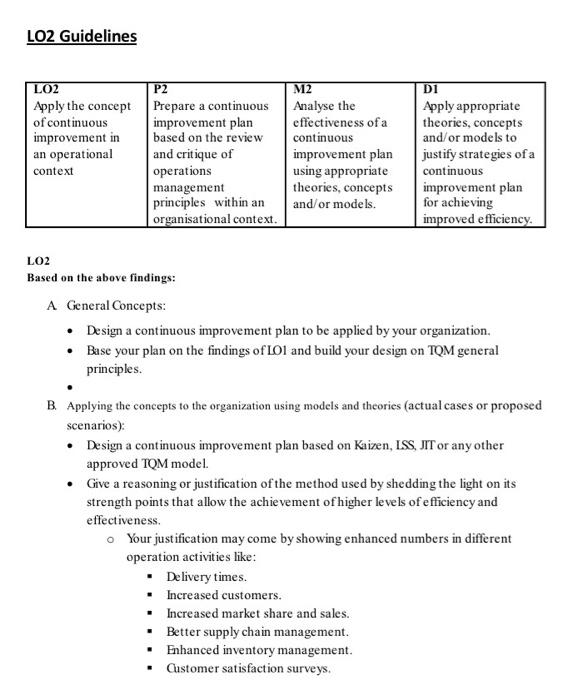
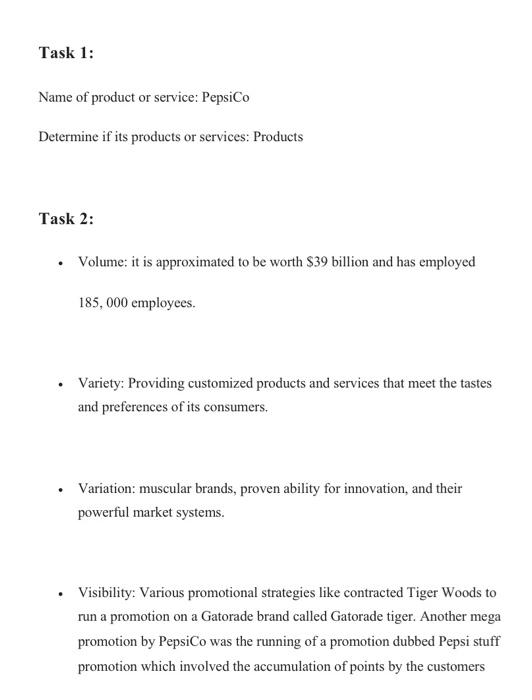
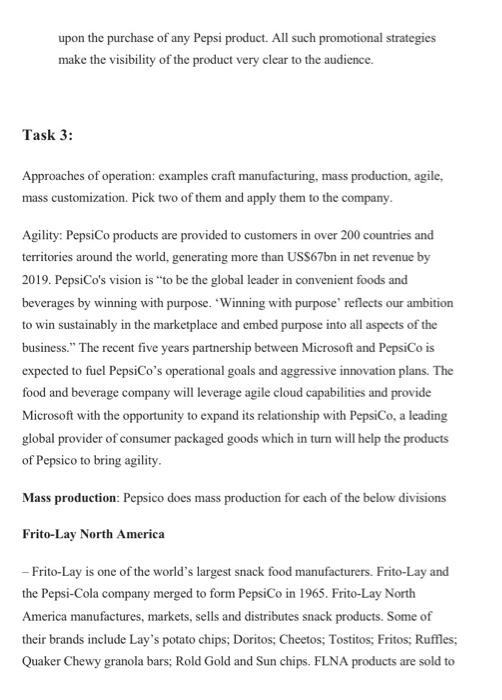
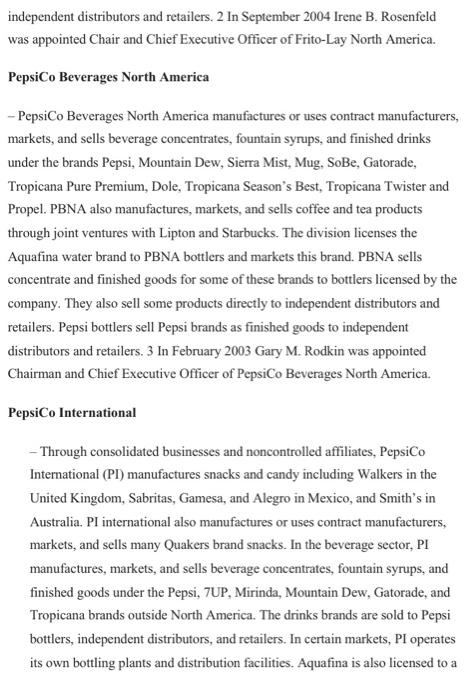
LO2 Guidelines LO2 Apply the concept of continuous improvement in an operational context M2 DI P2 Prepare a continuous improvement plan based on the review and critique of operations Analyse the effectiveness of a continuous improvement plan using appropriate theories, concepts and/or models. Apply appropriate theories, concepts and/or models to justify strategies of a continuous improvement plan for achieving improved efficiency. management principles within an organisational context. LO2 Based on the above findings: A General Concepts: Design a continuous improvement plan to be applied by your organization. Base your plan on the findings of LOI and build your design on TQM general principles. B. Applying the concepts to the organization using models and theories (actual cases or proposed scenarios): Design a continuous improvement plan based on Kaizen, LSS, JIT or any other approved TQM model. Give a reasoning or justification of the method used by shedding the light on its strength points that allow the achievement of higher levels of efficiency and effectiveness. o Your justification may come by showing enhanced numbers in different operation activities like: Delivery times. . Increased customers. Increased market share and sales. . Better supply chain management. Enhanced inventory management. Customer satisfaction surveys. Task 1: Name of product or service: PepsiCo Determine if its products or services: Products Task 2: Volume: it is approximated to be worth $39 billion and has employed 185,000 employees. Variety: Providing customized products and services that meet the tastes and preferences of its consumers. Variation: muscular brands, proven ability for innovation, and their powerful market systems. Visibility: Various promotional strategies like contracted Tiger Woods to run a promotion on a Gatorade brand called Gatorade tiger. Another mega promotion by PepsiCo was the running of a promotion dubbed Pepsi stuff promotion which involved the accumulation of points by the customers upon the purchase of any Pepsi product. All such promotional strategies make the visibility of the product very clear to the audience. Task 3: Approaches of operation: examples craft manufacturing, mass production, agile, mass customization. Pick two of them and apply them to the company. Agility: PepsiCo products are provided to customers in over 200 countries and territories around the world, generating more than US$67bn in net revenue by 2019. PepsiCo's vision is "to be the global leader in convenient foods and beverages by winning with purpose. Winning with purpose' reflects our ambition to win sustainably in the marketplace and embed purpose into all aspects of the business." The recent five years partnership between Microsoft and PepsiCo is expected to fuel PepsiCo's operational goals and aggressive innovation plans. The food and beverage company will leverage agile cloud capabilities and provide Microsoft with the opportunity to expand its relationship with PepsiCo, a leading global provider of consumer packaged goods which in turn will help the products of Pepsico to bring agility. Mass production: Pepsico does mass production for each of the below divisions Frito-Lay North America - Frito-Lay is one of the world's largest snack food manufacturers. Frito-Lay and the Pepsi-Cola company merged to form PepsiCo in 1965. Frito-Lay North America manufactures, markets, sells and distributes snack products. Some of their brands include Lay's potato chips; Doritos; Cheetos; Tostitos; Fritos; Ruffles; Quaker Chewy granola bars; Rold Gold and Sun chips. FLNA products are sold to independent distributors and retailers. 2 In September 2004 Irene B. Rosenfeld was appointed Chair and Chief Executive Officer of Frito-Lay North America. PepsiCo Beverages North America - PepsiCo Beverages North America manufactures or uses contract manufacturers, markets, and sells beverage concentrates, fountain syrups, and finished drinks under the brands Pepsi, Mountain Dew, Sierra Mist, Mug. SoBe, Gatorade, Tropicana Pure Premium, Dole, Tropicana Season's Best, Tropicana Twister and Propel. PBNA also manufactures, markets, and sells coffee and tea products through joint ventures with Lipton and Starbucks. The division licenses the Aquafina water brand to PBNA bottlers and markets this brand. PBNA sells concentrate and finished goods for some of these brands to bottlers licensed by the company. They also sell some products directly to independent distributors and retailers. Pepsi bottlers sell Pepsi brands as finished goods to independent distributors and retailers. 3 In February 2003 Gary M. Rodkin was appointed Chairman and Chief Executive Officer of PepsiCo Beverages North America. PepsiCo International -Through consolidated businesses and noncontrolled affiliates, PepsiCo International (PI) manufactures snacks and candy including Walkers in the United Kingdom, Sabritas, Gamesa, and Alegro in Mexico, and Smith's in Australia. PI international also manufactures or uses contract manufacturers, markets, and sells many Quakers brand snacks. In the beverage sector, PI manufactures, markets, and sells beverage concentrates, fountain syrups, and finished goods under the Pepsi, 7UP, Mirinda, Mountain Dew, Gatorade, and Tropicana brands outside North America. The drinks brands are sold to Pepsi bottlers, independent distributors, and retailers. In certain markets, PI operates its own bottling plants and distribution facilities. Aquafina is also licensed to a few Pepsi bottlers. 4 In February 2003 Michael D. White was appointed Chairman and Chief Executive Officer of PepsiCo International. Quaker Foods North America - PepsiCo merged with Quaker, including Gatorade, in 2001. Quaker Foods North America manufactures or uses contract manufacturers, markets, and sells cereals, rice, pasta, and other products. Some of QFNA's brands include Quaker Oatmeal, Cap'n Crunch and Life, Rice-A-Roni, Pasta Roni and Near East side dishes, Aunt Jemima mixes and syrups, and Quaker grits. QFNA's products are sold to independent distributors and retailers. Task 4: LSS of Pepsico: . Classroom Training: programs taught by Master Black Belts with real- world experience . Onsite Training: tailored to meet the specific needs of the organization . Online Training: includes White, Yellow, Green, and Black Belt training and certification, providing an option for those who prefer a self-paced program Webinar Training: provides an interactive experience taught by an experienced Master Black Belt Blended Programs: a hybrid online and classroom training approach LSS simulates a PepsiCo plant where trainees practice problem-solving and complete productivity challenges. They do so while building pallets using virtual bricks. The result provided the company a way to deal with "Zoom fatigue," which has quickly become an issue since the pandemic started. Robert Half recently released a survey showing that about 38% of workers already are experiencing Zoom fatigue. Trainees first go through a short training exercise and then enter the simulated factory floor that mimics a distribution company with pallets of different products. The goal is to ship the products to a warehouse and get them distributed to customers in the most efficient way possible. Groups of eight to 12 players work in teams to solve the challenges, which involved a variety of products and escalating difficulties (broken machines, missing parts, etc.) After 45 minutes in the game, the group meets to discuss what happened and how they did or did not overcome the game's challenges. Since making the change, satisfaction scores for the training have increased and more people are passing the final test









 Study Help