Question: Please Read!!! Please DO NOT copy and past from internet or another student or somewhere else, there is a safe assign program will find any
Please Read!!!
Please DO NOT copy and past from internet or another student or somewhere else, there is a safe assign program will find any plagiarism...please read the book and write an assignment with at least 500 words .its very easy for marketing management...Thank you there is same question published but as I said we can not take it from some where else.!!! so please if you CAN NOT WRITE let someone else do it...thank you
After reading the companion article (Can Old Media Enhance New Media?); provide a recommendation to a group of executives regarding how a firm can benefit from the balance of traditional advertising and the SEM and SEO generated content
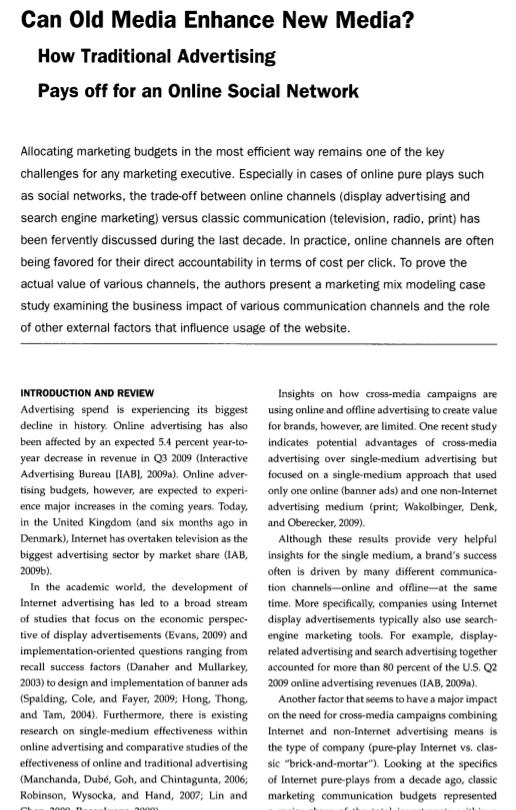
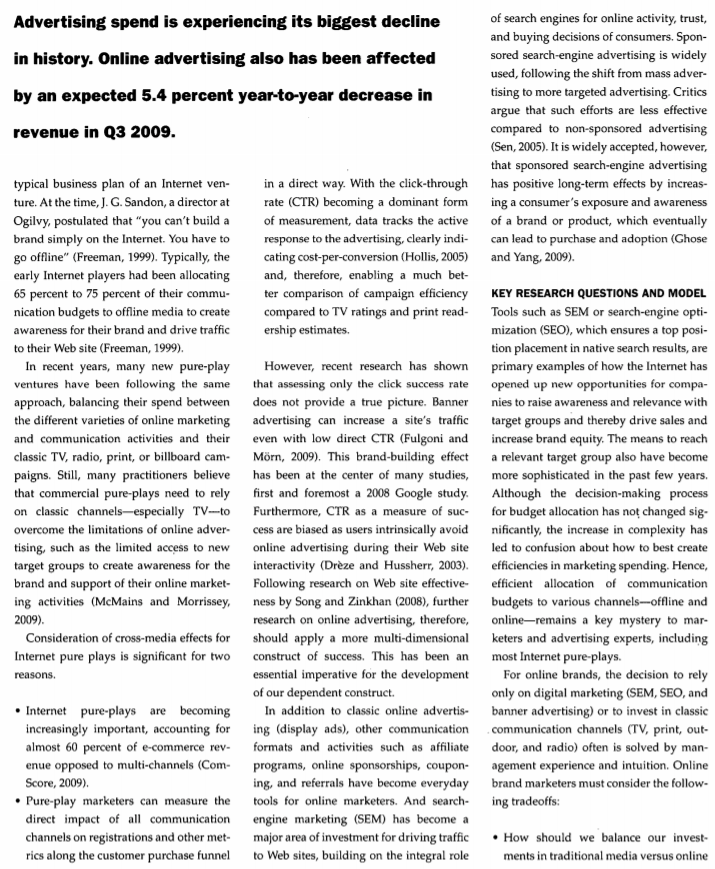
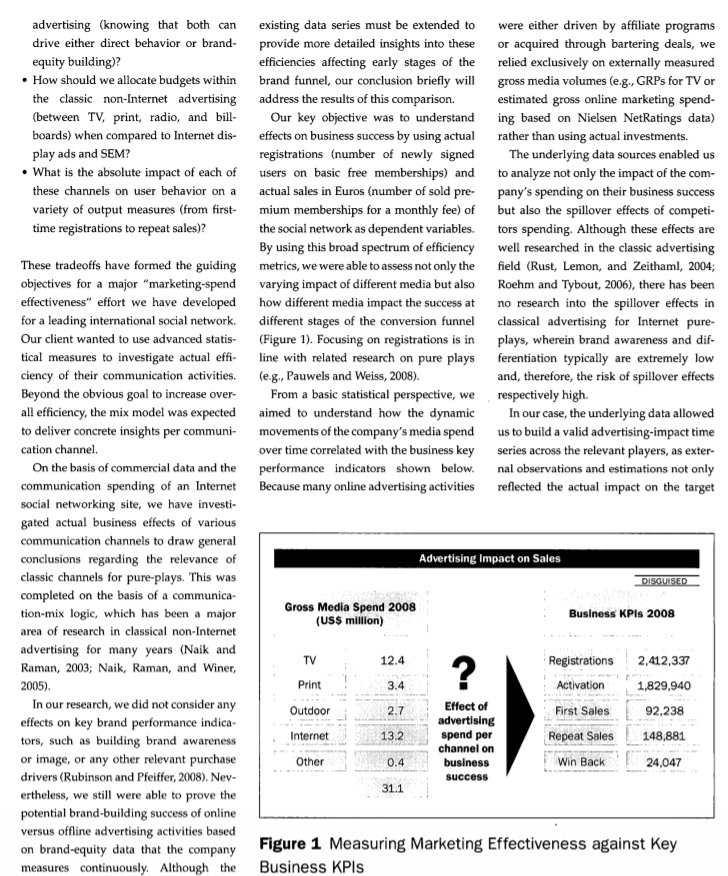
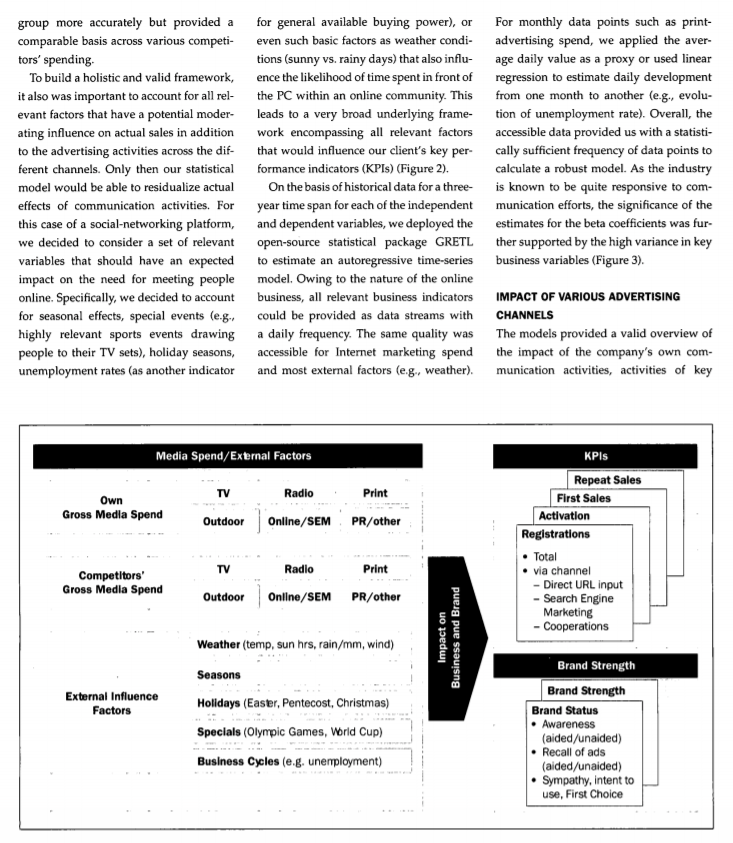
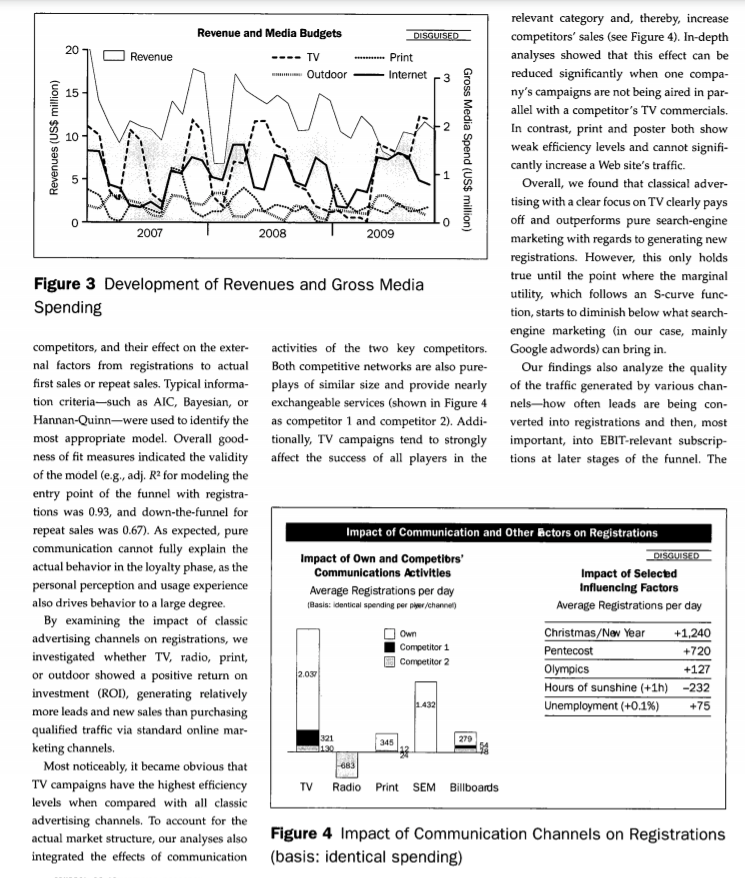
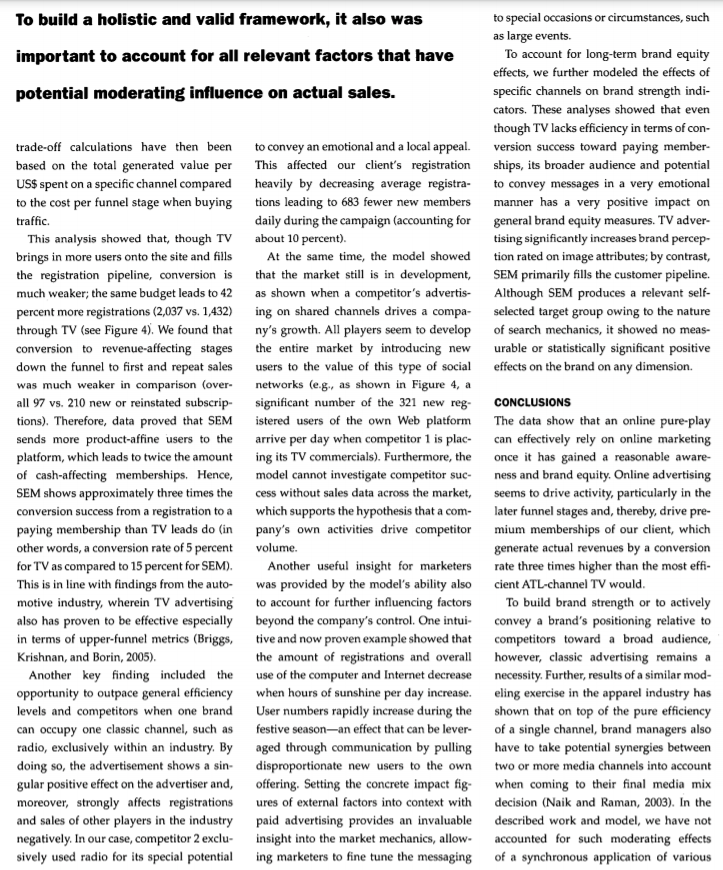
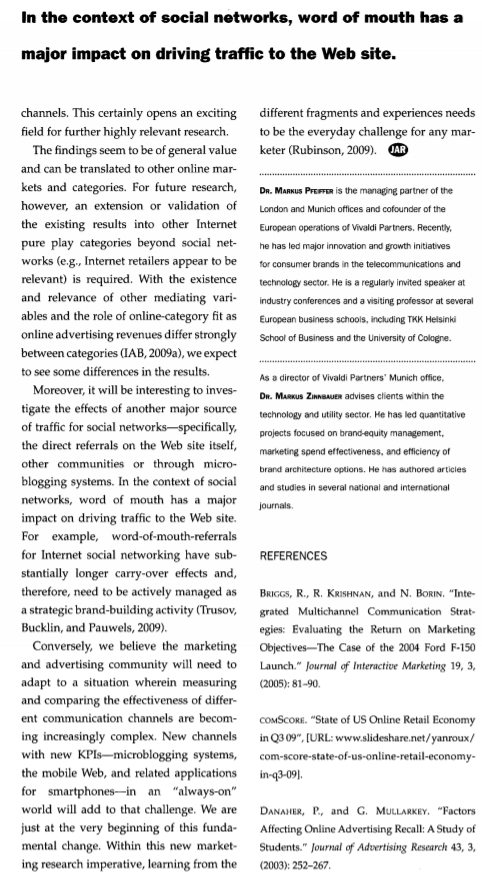
Can Old Media Enhance New Media? How Traditional Advertising Pays off for an Online Social Network Allocating marketing budgets in the most efficient way remains one of the key challenges for any marketing executive. Especially in cases of online pure plays such as social networks, the trade-off between online channels (display advertising and search engine marketing) versus classic communication (television, radio, print) has been fervently discussed during the last decade. In practice, online channels are often being favored for their direct accountability in terms of cost per click. To prove the actual value of various channels, the authors present a marketing mix modeling case study examining the business impact of various communication channels and the role of other external factors that influence usage of the website. INTRODUCTION AND REVIEW Insights on how cross-media campaigns are Advertising spend is experiencing its biggest using online and ofline advertising to create value decline in history. Online advertising has also for brands, however, are limited. One recent study been affected by an expected 5.4 percent year-to indicates potential advantages of cross-media year decrease in revenue in Q3 2009 (Interactive advertising over single-medium advertising but Advertising Bureau (IAB), 2009a). Online adver focused on a single-medium approach that used tising budgets, however, are expected to experi- only one online (banner ads) and one non-Internet ence major increases in the coming years. Today, advertising medium (print; Wakolbinger, Denk, in the United Kingdom (and six months ago in and Oberecker, 2009). Denmark), Internet has overtaken television as the Although these results provide very helpful biggest advertising sector by market share (LAB, insights for the single medium, a brand's success 2009b). often is driven by many different communica- In the academic world, the development of tion channels-online and offline at the same Internet advertising has led to a broad stream time. More specifically, companies using Internet of studies that focus on the economic perspec display advertisements typically also use search tive of display advertisements (Evans, 2009) and engine marketing tools. For example, display- implementation-oriented questions ranging from related advertising and search advertising together recall success factors (Danaher and Mullarkey, accounted for more than 80 percent of the U.S. Q2 2003) to design and implementation of banner ads 2009 online advertising revenues (IAB, 2009a). (Spalding Cole, and Fayer, 2009; Hong, Thong, Another factor that seems to have a major impact and Tam, 2004). Furthermore, there is existing on the need for cross-media campaigns combining research on single-medium effectiveness within Internet and non-Internet advertising means is online advertising and comparative studies of the the type of company (pure-play Internet vs. clas- effectiveness of online and traditional advertising sic "brick-and-mortar"). Looking at the specifics (Manchanda, Dub, Goh, and Chintagunta, 2006; of Internet pure-plays from a decade ago, classic Robinson, Wysocka, and Hand, 2007, Lin and marketing communication budgets represented Advertising spend is experiencing its biggest decline of search engines for online activity, trust, and buying decisions of consumers. Spon- in history. Online advertising also has been affected sored search-engine advertising is widely used, following the shift from mass adver- by an expected 5.4 percent year-to-year decrease in tising to more targeted advertising. Critics argue that such efforts are less effective revenue in Q3 2009. compared to non-sponsored advertising (Sen, 2005). It is widely accepted, however, that sponsored search-engine advertising typical business plan of an Internet ven in a direct way. With the click-through has positive long-term effects by increas- ture. At the time, J. G. Sandon, a director at rate (CTR) becoming a dominant forming a consumer's exposure and awareness Ogilvy, postulated that "you can't build a of measurement, data tracks the active of a brand or product, which eventually brand simply on the Internet. You have to response to the advertising, clearly indi- can lead to purchase and adoption (Ghose go offline" (Freeman, 1999). Typically, the cating cost-per-conversion (Hollis, 2005) and Yang, 2009). early Internet players had been allocating and, therefore, enabling a much bet- 65 percent to 75 percent of their commu ter comparison of campaign efficiency KEY RESEARCH QUESTIONS AND MODEL nication budgets to offline media to create compared to TV ratings and print read Tools such as SEM or search-engine opti- awareness for their brand and drive traffic ership estimates. mization (SEO), which ensures a top posi- to their web site (Freeman, 1999). tion placement in native search results, are In recent years, many new pure-play However, recent research has shown primary examples of how the Internet has ventures have been following the same that assessing only the click success rate opened up new opportunities for compa- approach, balancing their spend between does not provide a true picture. Banner nies to raise awareness and relevance with the different varieties of online marketing advertising can increase a site's traffic target groups and thereby drive sales and and communication activities and their even with low direct CTR (Fulgoni and increase brand equity. The means to reach classic TV, radio, print, or billboard cam Mrn, 2009). This brand-building effect a relevant target group also have become paigns. Still, many practitioners believe has been at the center of many studies, more sophisticated in the past few years, that commercial pure-plays need to rely first and foremost a 2008 Google study. Although the decision-making process on classic channels-especially TV-to furthermore, CTR as a measure of suc- for budget allocation has not changed sig- overcome the limitations of online adver cess are biased as users intrinsically avoid nificantly, the increase in complexity has tising, such as the limited access to new online advertising during their web site led to confusion about how to best create target groups to create awareness for the interactivity (Drze and Hussherr, 2003). efficiencies in marketing spending. Hence, brand and support of their online market- Following research on Web site effective efficient allocation of communication ing activities (McMains and Morrissey, ness by Song and Zinkhan (2008), further budgets to various channels-offline and 2009). research on online advertising, therefore, online-remains a key mystery to mar- Consideration of cross-media effects for should apply a more multi-dimensional keters and advertising experts, including Internet pure plays is significant for two construct of success. This has been an most Internet pure-plays. reasons. essential imperative for the development For online brands, the decision to rely of our dependent construct. only on digital marketing (SEM, SEO, and Internet pure-plays are becoming In addition to classic online advertis- banner advertising) or to invest in classic increasingly important, accounting for ing (display ads), other communication communication channels (TV, print, out- almost 60 percent of e-commerce rev formats and activities such as affiliate door, and radio) often is solved by man- enue opposed to multi-channels (Com programs, online sponsorships, coupon agement experience and intuition Online Score, 2009). ing, and referrals have become everyday brand marketers must consider the follow- Pure-play marketers can measure the tools for online marketers. And search ing tradeoffs: direct impact of all communication engine marketing (SEM) has become a channels on registrations and other met- major area of investment for driving traffic. How should we balance our invest- rics along the customer purchase funnel to Web sites, building on the integral role ments in traditional media versus online advertising (knowing that both can existing data series must be extended to were either driven by affiliate programs drive either direct behavior or brand provide more detailed insights into these or acquired through bartering deals, we equity building)? efficiencies affecting early stages of the relied exclusively on externally measured How should we allocate budgets within brand funnel, our conclusion briefly will gross media volumes (e.g., GRPs for TV or the classic non-Internet advertising address the results of this comparison estimated gross online marketing spend (between TV, print, radio, and bill Our key objective was to understand ing based on Nielsen NetRatings data) boards) when compared to Internet dis effects on business success by using actual rather than using actual investments. play ads and SEM? registrations (number of newly signed The underlying data sources enabled us What is the absolute impact of each of users on basic free memberships) and to analyze not only the impact of the com- these channels on user behavior on a actual sales in Euros (number of sold pre- pany's spending on their business success variety of output measures (from first mium memberships for a monthly fee) of but also the spillover effects of competi- time registrations to repeat sales)? the social network as dependent variables. tors spending. Although these effects are By using this broad spectrum of efficiency well researched in the classic advertising These tradeoffs have formed the guiding metrics, we were able to assess not only the field (Rust, Lemon, and Zeithaml, 2004; objectives for a major "marketing-spend varying impact of different media but also Roehm and Tybout, 2006), there has been effectiveness" effort we have developed how different media impact the success at no research into the spillover effects in for a leading international social network. different stages of the conversion funnel classical advertising for Internet pure Our client wanted to use advanced statis (Figure 1). Focusing on registrations is in plays, wherein brand awareness and dif- tical measures to investigate actual effi line with related research on pure plays ferentiation typically are extremely low ciency of their communication activities. (e.g., Pauwels and Weiss, 2008). and, therefore, the risk of spillover effects Beyond the obvious goal to increase over From a basic statistical perspective, we respectively high all efficiency, the mix model was expected aimed to understand how the dynamic In our case, the underlying data allowed to deliver concrete insights per communi movements of the company's media spend us to build a valid advertising-impact time cation channel over time correlated with the business key series across the relevant players, as exter- On the basis of commercial data and the performance indicators shown below. nal observations and estimations not only communication spending of an Internet Because many online advertising activities reflected the actual impact on the target social networking site, we have investi- gated actual business effects of various communication channels to draw general conclusions regarding the relevance of Advertising Impact on Sales classic channels for pure-plays. This was completed on the basis of a communica- Gross Media Spend 2008 tion-mix logic, which has been a major (US$ million) Business KPIs 2008 area of research in classical non-Internet advertising for many years (Naik and Registrations 2,412,337 Raman, 2003; Naik, Raman, and Winer, 2005). Activation 1,829,940 In our research, we did not consider any Outdoor Effect of First Sales 92,238 effects on key brand performance indica- advertising tors, such as building brand awareness Internet 13.2 spend per Repeat Sales 148,881 channel on or image, or any other relevant purchase Other 0.4 business Win Back 24,047 drivers (Rubinson and Pfeiffer, 2008). Nev- success ertheless, we still were able to prove the potential brand-building success of online versus offline advertising activities based on brand-equity data that the company Figure 1 Measuring Marketing Effectiveness against Key measures continuously. Although the Business KPIs DISGUISED TV 12.4 ? Print 3.4 2.7 31.1 group more accurately but provided a for general available buying power), or For monthly data points such as print- comparable basis across various competi even such basic factors as weather condi- advertising spend, we applied the aver- tors' spending tions (sunny vs. rainy days) that also influ age daily value as a proxy or used linear To build a holistic and valid framework, ence the likelihood of time spent in front of regression to estimate daily development it also was important to account for all rel- the PC within an online community. This from one month to another (e-g., evolu- evant factors that have a potential moder- leads to a very broad underlying frame- tion of unemployment rate). Overall, the ating influence on actual sales in addition work encompassing all relevant factors accessible data provided us with a statisti- to the advertising activities across the dif that would influence our client's key per-cally sufficient frequency of data points to ferent channels. Only then our statistical formance indicators (KPIs) (Figure 2). calculate a robust model. As the industry model would be able to residualize actual On the basis of historical data for a three- is known to be quite responsive to com- effects of communication activities. For year time span for each of the independent munication efforts, the significance of the this case of a social-networking platform, and dependent variables, we deployed the estimates for the beta coefficients was fur- we decided to consider a set of relevant open-source statistical package GRETLther supported by the high variance in key variables that should have an expected to estimate an autoregressive time-series business variables (Figure 3). impact on the need for meeting people model. Owing to the nature of the online online. Specifically, we decided to account business, all relevant business indicators IMPACT OF VARIOUS ADVERTISING for seasonal effects, special events (eg., could be provided as data streams with CHANNELS highly relevant sports events drawing a daily frequency. The same quality was The models provided a valid overview of people to their TV sets), holiday seasons, accessible for Internet marketing spend the impact of the company's own com- unemployment rates (as another indicator and most external factors (eg, weather). munication activities, activities of key Media Spend/External Factors Own Gross Media Spend TV Radio Print Outdoor Online/SEM PR/other KPIS Repeat Sales First Sales Activation Registrations Total via channel - Direct URL input - Search Engine Marketing - Cooperations TV Competitors' Gross Media Spend Radio Print Online/SEM PR/other Outdoor Weather (temp, sun hrs, rain/mm, wind) Impact on Business and Brand Seasons External Influence Factors Holidays (Easter, Pentecost, Christmas) Specials (Olympic Games, World Cup) Business Cycles (e.g. unemployment) Brand Strength Brand Strength Brand Status Awareness (aided/unaided) Recall of ads (aided/unaided) Sympathy, intent to use, First Choice DISGUISED 20 ---- TV ... Outdoor . Print Internet 3 15 10 man 0 0 2007 2009 relevant category and, thereby, increase Revenue and Media Budgets competitors' sales (see Figure 4). In-depth Revenue analyses showed that this effect can be reduced significantly when one compa- ny's campaigns are not being aired in par- allel with a competitor's TV commercials. In contrast, print and poster both show weak efficiency levels and cannot signifi- cantly increase a Web site's traffic. Overall, we found that classical adver- tising with a clear focus on TV clearly pays off and outperforms pure search-engine 2008 marketing with regards to generating new registrations. However, this only holds true until the point where the marginal Figure 3 Development of Revenues and Gross Media utility, which follows an S-curve func- Spending tion, starts to diminish below what search- engine marketing (in our case, mainly competitors, and their effect on the exter- activities of the two key competitors. Google adwords) can bring in. nal factors from registrations to actual Both competitive networks are also pure Our findings also analyze the quality first sales or repeat sales. Typical informa- plays of similar size and provide nearly of the traffic generated by various chan- tion criteriasuch as AIC, Bayesian, or exchangeable services (shown in Figure 4 nels-how often leads are being con- Hannan-Quinn-were used to identify the as competitor 1 and competitor 2). Addi verted into registrations and then, most most appropriate model. Overall good tionally, TV campaigns tend to strongly important, into EBIT-relevant subscrip- ness of fit measures indicated the validity affect the success of all players in the tions at later stages of the funnel. The of the model (e.g., adj. R2 for modeling the entry point of the funnel with registra- tions was 0.93, and down-the-funnel for repeat sales was 0.67). As expected, pure Impact of Communication and other actors on Registrations communication cannot fully explain the Impact of Own and Competibrs' actual behavior in the loyalty phase, as the Communications Activities Impact of Selected personal perception and usage experience Average Registrations per day Influencing Factors also drives behavior to a large degree. (Basis: identical spending per per/channe) Average Registrations per day By examining the impact of classic Christmas/New Year advertising channels on registrations, we Competitor 1 Pentecost +720 investigated whether TV, radio, print, Competitor 2 Olympics +127 or outdoor showed a positive return on Hours of sunshine (+1h) -232 investment (ROI), generating relatively more leads and new sales than purchasing Unemployment (+0.1%) qualified traffic via standard online mar- keting channels Most noticeably, it became obvious that TV campaigns have the highest efficiency TV Radio Print SEM Billboards levels when compared with all classic advertising channels. To account for the actual market structure, our analyses also Figure 4 Impact of Communication Channels on Registrations integrated the effects of communication (basis: identical spending) DISQUISED Own +1,240 2.03 1.4321 +75 321 1130 345 279 683 To build a holistic and valid framework, it also was to special occasions or circumstances, such as large events. important to account for all relevant factors that have To account for long-term brand equity effects, we further modeled the effects of potential moderating influence on actual sales. specific channels on brand strength indi- cators. These analyses showed that even though TV lacks efficiency in terms of con- trade-off calculations have then been to convey an emotional and a local appeal. version success toward paying member- based on the total generated value per This affected our client's registration ships, its broader audience and potential US$ spent on a specific channel compared heavily by decreasing average registra to convey messages in a very emotional to the cost per funnel stage when buying tions leading to 683 fewer new members manner has a very positive impact on traffic daily during the campaign (accounting for general brand equity measures. TV adver- This analysis showed that, though TV about 10 percent). tising significantly increases brand percep- brings in more users onto the site and fills At the same time, the model showed tion rated on image attributes; by contrast, the registration pipeline, conversion is that the market still is in development, SEM primarily fills the customer pipeline. much weaker; the same budget leads to 42 as shown when a competitor's advertis Although SEM produces a relevant self- percent more registrations (2,037 vs. 1,432) ing on shared channels drives a compa selected target group owing to the nature through TV (see Figure 4). We found that ny's growth. All players seem to develop of search mechanics, it showed no meas- conversion to revenue-affecting stages the entire market by introducing new urable or statistically significant positive down the funnel to first and repeat sales users to the value of this type of social effects on the brand on any dimension was much weaker in comparison (over networks (eg, as shown in Figure 4, a all 97 vs. 210 new or reinstated subscrip- significant number of the 321 new reg CONCLUSIONS tions). Therefore, data proved that SEM istered users of the own web platform The data show that an online pure-play sends more product-affine users to the arrive per day when competitor 1 is plac can effectively rely on online marketing platform, which leads to twice the amount ing its TV commercials). Furthermore, the once it has gained a reasonable aware- of cash-affecting memberships. Hence, model cannot investigate competitor suc ness and brand equity. Online advertising SEM shows approximately three times the cess without sales data across the market, seems to drive activity, particularly in the conversion success from a registration to a which supports the hypothesis that a com- later funnel stages and thereby, drive pre- paying membership than TV leads do (in pany's own activities drive competitor mium memberships of our client, which other words, a conversion rate of 5 percent volume. generate actual revenues by a conversion for TV as compared to 15 percent for SEM). Another useful insight for marketers rate three times higher than the most effi- This is in line with findings from the auto- was provided by the model's ability also cient ATL-channel TV would motive industry, wherein TV advertising to account for further influencing factors To build brand strength or to actively also has proven to be effective especially beyond the company's control. One intui convey a brand's positioning relative to in terms of upper-funnel metrics (Briggs, tive and now proven example showed that competitors toward a broad audience, Krishnan, and Borin, 2005) the amount of registrations and overall however, classic advertising remains a Another key finding included the use of the computer and Internet decrease necessity. Further, results of a similar mod- opportunity to outpace general efficiency when hours of sunshine per day increase. eling exercise in the apparel industry has levels and competitors when one brand User numbers rapidly increase during the shown that on top of the pure efficiency can occupy one classic channel, such as festive seasonan effect that can be lever- of a single channel, brand managers also radio, exclusively within an industry. By aged through communication by pulling have to take potential synergies between doing so, the advertisement shows a sin- disproportionate new users to the own two or more media channels into account gular positive effect on the advertiser and, offering. Setting the concrete impact fig. when coming to their final media mix moreover, strongly affects registrationsures of external factors into context with decision (Naik and Raman, 2003). In the and sales of other players in the industry paid advertising provides an invaluable described work and model, we have not negatively. In our case, competitor 2 exclu- insight into the market mechanics, allow accounted for such moderating effects sively used radio for its special potential ing marketers to fine tune the messaging of a synchronous application of various In the context of social networks, word of mouth has a major impact on driving traffic to the Web site. different fragments and experiences needs to be the everyday challenge for any mar- keter (Rubinson, 2009). CAR Dr. Markus PFEFFER is the managing partner of the London and Munich offices and cofounder of the European operations of Vivaldi Partners. Recently, he has led major innovation and growth initiatives for consumer brands in the telecommunications and technology sector. He is a regularly invited speaker at industry conferences and a visiting professor at several European business schools, including TKK Helsinki School of Business and the University of Cologne. channels. This certainly opens an exciting field for further highly relevant research. The findings seem to be of general value and can be translated to other online mar- kets and categories. For future research, however, an extension or validation of the existing results into other Internet pure play categories beyond social net- works (e.g., Internet retailers appear to be relevant) is required. With the existence and relevance of other mediating vari- ables and the role of online-category fit as online advertising revenues differ strongly between categories (IAB, 2009a), we expect to see some differences in the results. Moreover, it will be interesting to inves- tigate the effects of another major source of traffic for social networks-specifically, the direct referrals on the Web site itself, other communities or through micro- blogging systems. In the context of social networks, word of mouth has a major impact on driving traffic to the Web site. For example, word-of-mouth-referrals for Internet social networking have sub- stantially longer carry-over effects and, therefore, need to be actively managed as a strategic brand-building activity (Trusov, Bucklin, and Pauwels, 2009). Conversely, we believe the marketing and advertising community will need to adapt to a situation wherein measuring and comparing the effectiveness of differ- ent communication channels are becom- ing increasingly complex. New channels with new KPIs-microblogging systems, the mobile Web, and related applications for smartphones--in an "always-on" world will add to that challenge. We are just at the very beginning of this funda- mental change. Within this new market- ing research imperative, learning from the As a director of Vivaldi Partners" Munich office, Dr. Markus Zin BAUER advises clients within the technology and utility sector. He has led quantitative projects focused on brand equity management, marketing spend effectiveness, and efficiency of brand architecture options. He has authored articles and studies in several national and international journals. REFERENCES BRIGGS, R., R. KRISHNAN, and N. BORIN. "Inte- grated Multichannel Communication Strat- egies: Evaluating the Return on Marketing Objectives - The Case of the 2004 Ford F-150 Launch." Journal of Interactive Marketing 19, 3, (2005): 81-90 COMSCORE. State of US Online Retail Economy in Q3 09", (URL: www.slideshare.net/yanroux/ com-score-state-of-us-online-retail-economy. in-73-09) DANAHER, P, and G. MULLARKEY. "Factors Affecting Online Advertising Recall: A Study of Students." Journal of Advertising Research 43, 3, (2003): 252-267 Can Old Media Enhance New Media? How Traditional Advertising Pays off for an Online Social Network Allocating marketing budgets in the most efficient way remains one of the key challenges for any marketing executive. Especially in cases of online pure plays such as social networks, the trade-off between online channels (display advertising and search engine marketing) versus classic communication (television, radio, print) has been fervently discussed during the last decade. In practice, online channels are often being favored for their direct accountability in terms of cost per click. To prove the actual value of various channels, the authors present a marketing mix modeling case study examining the business impact of various communication channels and the role of other external factors that influence usage of the website. INTRODUCTION AND REVIEW Insights on how cross-media campaigns are Advertising spend is experiencing its biggest using online and ofline advertising to create value decline in history. Online advertising has also for brands, however, are limited. One recent study been affected by an expected 5.4 percent year-to indicates potential advantages of cross-media year decrease in revenue in Q3 2009 (Interactive advertising over single-medium advertising but Advertising Bureau (IAB), 2009a). Online adver focused on a single-medium approach that used tising budgets, however, are expected to experi- only one online (banner ads) and one non-Internet ence major increases in the coming years. Today, advertising medium (print; Wakolbinger, Denk, in the United Kingdom (and six months ago in and Oberecker, 2009). Denmark), Internet has overtaken television as the Although these results provide very helpful biggest advertising sector by market share (LAB, insights for the single medium, a brand's success 2009b). often is driven by many different communica- In the academic world, the development of tion channels-online and offline at the same Internet advertising has led to a broad stream time. More specifically, companies using Internet of studies that focus on the economic perspec display advertisements typically also use search tive of display advertisements (Evans, 2009) and engine marketing tools. For example, display- implementation-oriented questions ranging from related advertising and search advertising together recall success factors (Danaher and Mullarkey, accounted for more than 80 percent of the U.S. Q2 2003) to design and implementation of banner ads 2009 online advertising revenues (IAB, 2009a). (Spalding Cole, and Fayer, 2009; Hong, Thong, Another factor that seems to have a major impact and Tam, 2004). Furthermore, there is existing on the need for cross-media campaigns combining research on single-medium effectiveness within Internet and non-Internet advertising means is online advertising and comparative studies of the the type of company (pure-play Internet vs. clas- effectiveness of online and traditional advertising sic "brick-and-mortar"). Looking at the specifics (Manchanda, Dub, Goh, and Chintagunta, 2006; of Internet pure-plays from a decade ago, classic Robinson, Wysocka, and Hand, 2007, Lin and marketing communication budgets represented Advertising spend is experiencing its biggest decline of search engines for online activity, trust, and buying decisions of consumers. Spon- in history. Online advertising also has been affected sored search-engine advertising is widely used, following the shift from mass adver- by an expected 5.4 percent year-to-year decrease in tising to more targeted advertising. Critics argue that such efforts are less effective revenue in Q3 2009. compared to non-sponsored advertising (Sen, 2005). It is widely accepted, however, that sponsored search-engine advertising typical business plan of an Internet ven in a direct way. With the click-through has positive long-term effects by increas- ture. At the time, J. G. Sandon, a director at rate (CTR) becoming a dominant forming a consumer's exposure and awareness Ogilvy, postulated that "you can't build a of measurement, data tracks the active of a brand or product, which eventually brand simply on the Internet. You have to response to the advertising, clearly indi- can lead to purchase and adoption (Ghose go offline" (Freeman, 1999). Typically, the cating cost-per-conversion (Hollis, 2005) and Yang, 2009). early Internet players had been allocating and, therefore, enabling a much bet- 65 percent to 75 percent of their commu ter comparison of campaign efficiency KEY RESEARCH QUESTIONS AND MODEL nication budgets to offline media to create compared to TV ratings and print read Tools such as SEM or search-engine opti- awareness for their brand and drive traffic ership estimates. mization (SEO), which ensures a top posi- to their web site (Freeman, 1999). tion placement in native search results, are In recent years, many new pure-play However, recent research has shown primary examples of how the Internet has ventures have been following the same that assessing only the click success rate opened up new opportunities for compa- approach, balancing their spend between does not provide a true picture. Banner nies to raise awareness and relevance with the different varieties of online marketing advertising can increase a site's traffic target groups and thereby drive sales and and communication activities and their even with low direct CTR (Fulgoni and increase brand equity. The means to reach classic TV, radio, print, or billboard cam Mrn, 2009). This brand-building effect a relevant target group also have become paigns. Still, many practitioners believe has been at the center of many studies, more sophisticated in the past few years, that commercial pure-plays need to rely first and foremost a 2008 Google study. Although the decision-making process on classic channels-especially TV-to furthermore, CTR as a measure of suc- for budget allocation has not changed sig- overcome the limitations of online adver cess are biased as users intrinsically avoid nificantly, the increase in complexity has tising, such as the limited access to new online advertising during their web site led to confusion about how to best create target groups to create awareness for the interactivity (Drze and Hussherr, 2003). efficiencies in marketing spending. Hence, brand and support of their online market- Following research on Web site effective efficient allocation of communication ing activities (McMains and Morrissey, ness by Song and Zinkhan (2008), further budgets to various channels-offline and 2009). research on online advertising, therefore, online-remains a key mystery to mar- Consideration of cross-media effects for should apply a more multi-dimensional keters and advertising experts, including Internet pure plays is significant for two construct of success. This has been an most Internet pure-plays. reasons. essential imperative for the development For online brands, the decision to rely of our dependent construct. only on digital marketing (SEM, SEO, and Internet pure-plays are becoming In addition to classic online advertis- banner advertising) or to invest in classic increasingly important, accounting for ing (display ads), other communication communication channels (TV, print, out- almost 60 percent of e-commerce rev formats and activities such as affiliate door, and radio) often is solved by man- enue opposed to multi-channels (Com programs, online sponsorships, coupon agement experience and intuition Online Score, 2009). ing, and referrals have become everyday brand marketers must consider the follow- Pure-play marketers can measure the tools for online marketers. And search ing tradeoffs: direct impact of all communication engine marketing (SEM) has become a channels on registrations and other met- major area of investment for driving traffic. How should we balance our invest- rics along the customer purchase funnel to Web sites, building on the integral role ments in traditional media versus online advertising (knowing that both can existing data series must be extended to were either driven by affiliate programs drive either direct behavior or brand provide more detailed insights into these or acquired through bartering deals, we equity building)? efficiencies affecting early stages of the relied exclusively on externally measured How should we allocate budgets within brand funnel, our conclusion briefly will gross media volumes (e.g., GRPs for TV or the classic non-Internet advertising address the results of this comparison estimated gross online marketing spend (between TV, print, radio, and bill Our key objective was to understand ing based on Nielsen NetRatings data) boards) when compared to Internet dis effects on business success by using actual rather than using actual investments. play ads and SEM? registrations (number of newly signed The underlying data sources enabled us What is the absolute impact of each of users on basic free memberships) and to analyze not only the impact of the com- these channels on user behavior on a actual sales in Euros (number of sold pre- pany's spending on their business success variety of output measures (from first mium memberships for a monthly fee) of but also the spillover effects of competi- time registrations to repeat sales)? the social network as dependent variables. tors spending. Although these effects are By using this broad spectrum of efficiency well researched in the classic advertising These tradeoffs have formed the guiding metrics, we were able to assess not only the field (Rust, Lemon, and Zeithaml, 2004; objectives for a major "marketing-spend varying impact of different media but also Roehm and Tybout, 2006), there has been effectiveness" effort we have developed how different media impact the success at no research into the spillover effects in for a leading international social network. different stages of the conversion funnel classical advertising for Internet pure Our client wanted to use advanced statis (Figure 1). Focusing on registrations is in plays, wherein brand awareness and dif- tical measures to investigate actual effi line with related research on pure plays ferentiation typically are extremely low ciency of their communication activities. (e.g., Pauwels and Weiss, 2008). and, therefore, the risk of spillover effects Beyond the obvious goal to increase over From a basic statistical perspective, we respectively high all efficiency, the mix model was expected aimed to understand how the dynamic In our case, the underlying data allowed to deliver concrete insights per communi movements of the company's media spend us to build a valid advertising-impact time cation channel over time correlated with the business key series across the relevant players, as exter- On the basis of commercial data and the performance indicators shown below. nal observations and estimations not only communication spending of an Internet Because many online advertising activities reflected the actual impact on the target social networking site, we have investi- gated actual business effects of various communication channels to draw general conclusions regarding the relevance of Advertising Impact on Sales classic channels for pure-plays. This was completed on the basis of a communica- Gross Media Spend 2008 tion-mix logic, which has been a major (US$ million) Business KPIs 2008 area of research in classical non-Internet advertising for many years (Naik and Registrations 2,412,337 Raman, 2003; Naik, Raman, and Winer, 2005). Activation 1,829,940 In our research, we did not consider any Outdoor Effect of First Sales 92,238 effects on key brand performance indica- advertising tors, such as building brand awareness Internet 13.2 spend per Repeat Sales 148,881 channel on or image, or any other relevant purchase Other 0.4 business Win Back 24,047 drivers (Rubinson and Pfeiffer, 2008). Nev- success ertheless, we still were able to prove the potential brand-building success of online versus offline advertising activities based on brand-equity data that the company Figure 1 Measuring Marketing Effectiveness against Key measures continuously. Although the Business KPIs DISGUISED TV 12.4 ? Print 3.4 2.7 31.1 group more accurately but provided a for general available buying power), or For monthly data points such as print- comparable basis across various competi even such basic factors as weather condi- advertising spend, we applied the aver- tors' spending tions (sunny vs. rainy days) that also influ age daily value as a proxy or used linear To build a holistic and valid framework, ence the likelihood of time spent in front of regression to estimate daily development it also was important to account for all rel- the PC within an online community. This from one month to another (e-g., evolu- evant factors that have a potential moder- leads to a very broad underlying frame- tion of unemployment rate). Overall, the ating influence on actual sales in addition work encompassing all relevant factors accessible data provided us with a statisti- to the advertising activities across the dif that would influence our client's key per-cally sufficient frequency of data points to ferent channels. Only then our statistical formance indicators (KPIs) (Figure 2). calculate a robust model. As the industry model would be able to residualize actual On the basis of historical data for a three- is known to be quite responsive to com- effects of communication activities. For year time span for each of the independent munication efforts, the significance of the this case of a social-networking platform, and dependent variables, we deployed the estimates for the beta coefficients was fur- we decided to consider a set of relevant open-source statistical package GRETLther supported by the high variance in key variables that should have an expected to estimate an autoregressive time-series business variables (Figure 3). impact on the need for meeting people model. Owing to the nature of the online online. Specifically, we decided to account business, all relevant business indicators IMPACT OF VARIOUS ADVERTISING for seasonal effects, special events (eg., could be provided as data streams with CHANNELS highly relevant sports events drawing a daily frequency. The same quality was The models provided a valid overview of people to their TV sets), holiday seasons, accessible for Internet marketing spend the impact of the company's own com- unemployment rates (as another indicator and most external factors (eg, weather). munication activities, activities of key Media Spend/External Factors Own Gross Media Spend TV Radio Print Outdoor Online/SEM PR/other KPIS Repeat Sales First Sales Activation Registrations Total via channel - Direct URL input - Search Engine Marketing - Cooperations TV Competitors' Gross Media Spend Radio Print Online/SEM PR/other Outdoor Weather (temp, sun hrs, rain/mm, wind) Impact on Business and Brand Seasons External Influence Factors Holidays (Easter, Pentecost, Christmas) Specials (Olympic Games, World Cup) Business Cycles (e.g. unemployment) Brand Strength Brand Strength Brand Status Awareness (aided/unaided) Recall of ads (aided/unaided) Sympathy, intent to use, First Choice DISGUISED 20 ---- TV ... Outdoor . Print Internet 3 15 10 man 0 0 2007 2009 relevant category and, thereby, increase Revenue and Media Budgets competitors' sales (see Figure 4). In-depth Revenue analyses showed that this effect can be reduced significantly when one compa- ny's campaigns are not being aired in par- allel with a competitor's TV commercials. In contrast, print and poster both show weak efficiency levels and cannot signifi- cantly increase a Web site's traffic. Overall, we found that classical adver- tising with a clear focus on TV clearly pays off and outperforms pure search-engine 2008 marketing with regards to generating new registrations. However, this only holds true until the point where the marginal Figure 3 Development of Revenues and Gross Media utility, which follows an S-curve func- Spending tion, starts to diminish below what search- engine marketing (in our case, mainly competitors, and their effect on the exter- activities of the two key competitors. Google adwords) can bring in. nal factors from registrations to actual Both competitive networks are also pure Our findings also analyze the quality first sales or repeat sales. Typical informa- plays of similar size and provide nearly of the traffic generated by various chan- tion criteriasuch as AIC, Bayesian, or exchangeable services (shown in Figure 4 nels-how often leads are being con- Hannan-Quinn-were used to identify the as competitor 1 and competitor 2). Addi verted into registrations and then, most most appropriate model. Overall good tionally, TV campaigns tend to strongly important, into EBIT-relevant subscrip- ness of fit measures indicated the validity affect the success of all players in the tions at later stages of the funnel. The of the model (e.g., adj. R2 for modeling the entry point of the funnel with registra- tions was 0.93, and down-the-funnel for repeat sales was 0.67). As expected, pure Impact of Communication and other actors on Registrations communication cannot fully explain the Impact of Own and Competibrs' actual behavior in the loyalty phase, as the Communications Activities Impact of Selected personal perception and usage experience Average Registrations per day Influencing Factors also drives behavior to a large degree. (Basis: identical spending per per/channe) Average Registrations per day By examining the impact of classic Christmas/New Year advertising channels on registrations, we Competitor 1 Pentecost +720 investigated whether TV, radio, print, Competitor 2 Olympics +127 or outdoor showed a positive return on Hours of sunshine (+1h) -232 investment (ROI), generating relatively more leads and new sales than purchasing Unemployment (+0.1%) qualified traffic via standard online mar- keting channels Most noticeably, it became obvious that TV campaigns have the highest efficiency TV Radio Print SEM Billboards levels when compared with all classic advertising channels. To account for the actual market structure, our analyses also Figure 4 Impact of Communication Channels on Registrations integrated the effects of communication (basis: identical spending) DISQUISED Own +1,240 2.03 1.4321 +75 321 1130 345 279 683 To build a holistic and valid framework, it also was to special occasions or circumstances, such as large events. important to account for all relevant factors that have To account for long-term brand equity effects, we further modeled the effects of potential moderating influence on actual sales. specific channels on brand strength indi- cators. These analyses showed that even though TV lacks efficiency in terms of con- trade-off calculations have then been to convey an emotional and a local appeal. version success toward paying member- based on the total generated value per This affected our client's registration ships, its broader audience and potential US$ spent on a specific channel compared heavily by decreasing average registra to convey messages in a very emotional to the cost per funnel stage when buying tions leading to 683 fewer new members manner has a very positive impact on traffic daily during the campaign (accounting for general brand equity measures. TV adver- This analysis showed that, though TV about 10 percent). tising significantly increases brand percep- brings in more users onto the site and fills At the same time, the model showed tion rated on image attributes; by contrast, the registration pipeline, conversion is that the market still is in development, SEM primarily fills the customer pipeline. much weaker; the same budget leads to 42 as shown when a competitor's advertis Although SEM produces a relevant self- percent more registrations (2,037 vs. 1,432) ing on shared channels drives a compa selected target group owing to the nature through TV (see Figure 4). We found that ny's growth. All players seem to develop of search mechanics, it showed no meas- conversion to revenue-affecting stages the entire market by introducing new urable or statistically significant positive down the funnel to first and repeat sales users to the value of this type of social effects on the brand on any dimension was much weaker in comparison (over networks (eg, as shown in Figure 4, a all 97 vs. 210 new or reinstated subscrip- significant number of the 321 new reg CONCLUSIONS tions). Therefore, data proved that SEM istered users of the own web platform The data show that an online pure-play sends more product-affine users to the arrive per day when competitor 1 is plac can effectively rely on online marketing platform, which leads to twice the amount ing its TV commercials). Furthermore, the once it has gained a reasonable aware- of cash-affecting memberships. Hence, model cannot investigate competitor suc ness and brand equity. Online advertising SEM shows approximately three times the cess without sales data across the market, seems to drive activity, particularly in the conversion success from a registration to a which supports the hypothesis that a com- later funnel stages and thereby, drive pre- paying membership than TV leads do (in pany's own activities drive competitor mium memberships of our client, which other words, a conversion rate of 5 percent volume. generate actual revenues by a conversion for TV as compared to 15 percent for SEM). Another useful insight for marketers rate three times higher than the most effi- This is in line with findings from the auto- was provided by the model's ability also cient ATL-channel TV would motive industry, wherein TV advertising to account for further influencing factors To build brand strength or to actively also has proven to be effective especially beyond the company's control. One intui convey a brand's positioning relative to in terms of upper-funnel metrics (Briggs, tive and now proven example showed that competitors toward a broad audience, Krishnan, and Borin, 2005) the amount of registrations and overall however, classic advertising remains a Another key finding included the use of the computer and Internet decrease necessity. Further, results of a similar mod- opportunity to outpace general efficiency when hours of sunshine per day increase. eling exercise in the apparel industry has levels and competitors when one brand User numbers rapidly increase during the shown that on top of the pure efficiency can occupy one classic channel, such as festive seasonan effect that can be lever- of a single channel, brand managers also radio, exclusively within an industry. By aged through communication by pulling have to take potential synergies between doing so, the advertisement shows a sin- disproportionate new users to the own two or more media channels into account gular positive effect on the advertiser and, offering. Setting the concrete impact fig. when coming to their final media mix moreover, strongly affects registrationsures of external factors into context with decision (Naik and Raman, 2003). In the and sales of other players in the industry paid advertising provides an invaluable described work and model, we have not negatively. In our case, competitor 2 exclu- insight into the market mechanics, allow accounted for such moderating effects sively used radio for its special potential ing marketers to fine tune the messaging of a synchronous application of various In the context of social networks, word of mouth has a major impact on driving traffic to the Web site. different fragments and experiences needs to be the everyday challenge for any mar- keter (Rubinson, 2009). CAR Dr. Markus PFEFFER is the managing partner of the London and Munich offices and cofounder of the European operations of Vivaldi Partners. Recently, he has led major innovation and growth initiatives for consumer brands in the telecommunications and technology sector. He is a regularly invited speaker at industry conferences and a visiting professor at several European business schools, including TKK Helsinki School of Business and the University of Cologne. channels. This certainly opens an exciting field for further highly relevant research. The findings seem to be of general value and can be translated to other online mar- kets and categories. For future research, however, an extension or validation of the existing results into other Internet pure play categories beyond social net- works (e.g., Internet retailers appear to be relevant) is required. With the existence and relevance of other mediating vari- ables and the role of online-category fit as online advertising revenues differ strongly between categories (IAB, 2009a), we expect to see some differences in the results. Moreover, it will be interesting to inves- tigate the effects of another major source of traffic for social networks-specifically, the direct referrals on the Web site itself, other communities or through micro- blogging systems. In the context of social networks, word of mouth has a major impact on driving traffic to the Web site. For example, word-of-mouth-referrals for Internet social networking have sub- stantially longer carry-over effects and, therefore, need to be actively managed as a strategic brand-building activity (Trusov, Bucklin, and Pauwels, 2009). Conversely, we believe the marketing and advertising community will need to adapt to a situation wherein measuring and comparing the effectiveness of differ- ent communication channels are becom- ing increasingly complex. New channels with new KPIs-microblogging systems, the mobile Web, and related applications for smartphones--in an "always-on" world will add to that challenge. We are just at the very beginning of this funda- mental change. Within this new market- ing research imperative, learning from the As a director of Vivaldi Partners" Munich office, Dr. Markus Zin BAUER advises clients within the technology and utility sector. He has led quantitative projects focused on brand equity management, marketing spend effectiveness, and efficiency of brand architecture options. He has authored articles and studies in several national and international journals. REFERENCES BRIGGS, R., R. KRISHNAN, and N. BORIN. "Inte- grated Multichannel Communication Strat- egies: Evaluating the Return on Marketing Objectives - The Case of the 2004 Ford F-150 Launch." Journal of Interactive Marketing 19, 3, (2005): 81-90 COMSCORE. State of US Online Retail Economy in Q3 09", (URL: www.slideshare.net/yanroux/ com-score-state-of-us-online-retail-economy. in-73-09) DANAHER, P, and G. MULLARKEY. "Factors Affecting Online Advertising Recall: A Study of Students." Journal of Advertising Research 43, 3, (2003): 252-267









 Study Help