







Question: please read the artical below and answer the question. the question has more then one part and should be answered between 150-250 words. question: What
please read the artical below and answer the question. the question has more then one part and should be answered between 150-250 words. 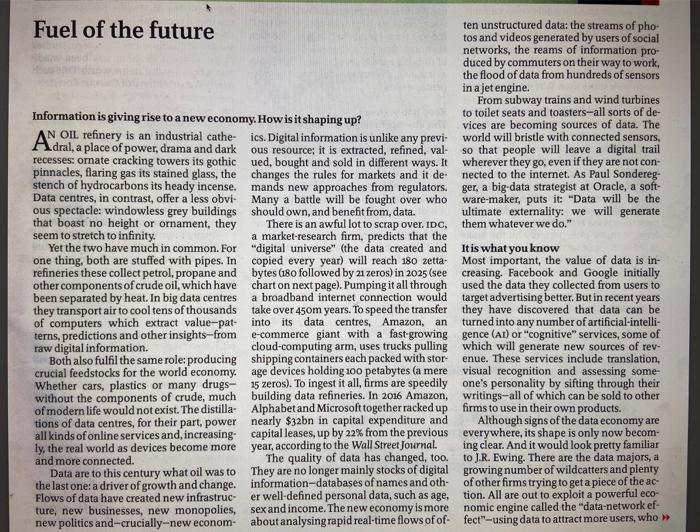
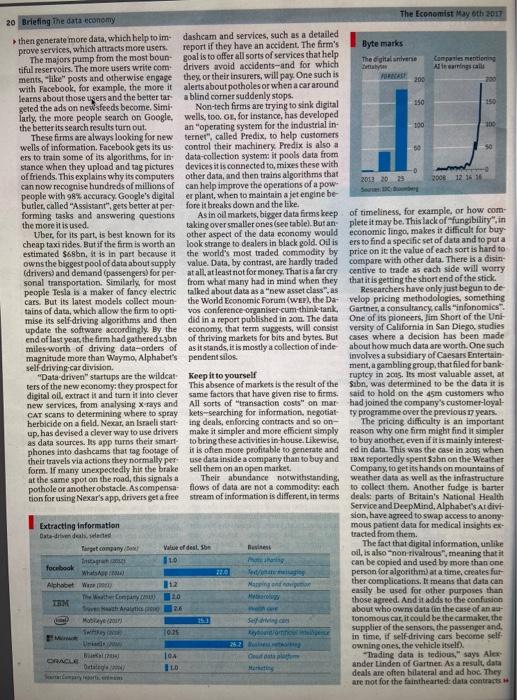
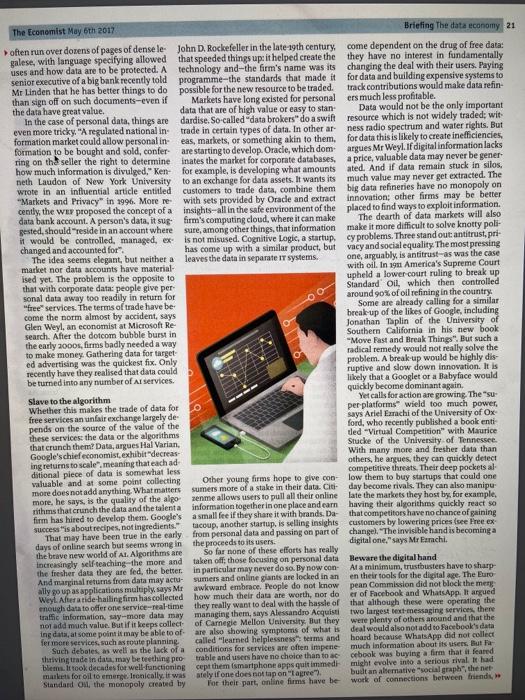
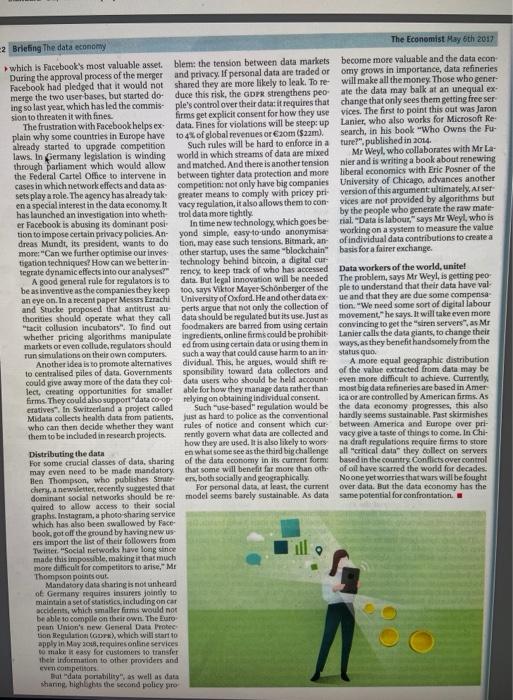
Andral, a place of power, drama and dark Fuel of the future ten unstructured data: the streams of pho- tos and videos generated by users of social networks, the reams of information pro- duced by commuters on their way to work, the flood of data from hundreds of sensors in a jet engine. From subway trains and wind turbines Information is giving rise to a new economy. How is it shaping up? to toilet seats and toasters-all sorts of de- vices are becoming sources of data. The OIL refinery is an industrial cathe ics. Digital information is unlike any previ world will bristle with connected sensors, ous resource: it is extracted, refined, val- so that people will leave a digital trail recesses: ornate cracking towers its gothic ued, bought and sold in different ways. It wherever they go, even if they are not con- pinnacles, faring gas its stained glass, the changes the rules for markets and it de nected to the internet. As Paul Sondereg- stench of hydrocarbons its heady incense. mands new approaches from regulators. ger, a big data strategist at Oracle, a soft- Data centres, in contrast, offer a less obvi- Many a battle will be fought over who ware-maker, puts it: "Data will be the ous spectacle: windowless grey buildings should own, and benefit from data. ultimate externality: we will generate that boast no height or ornament, they There is an awful lot to scrap over.IDC, them whatever we do." seem to stretch to infinity. a market-research firm, predicts that the Yet the two have much in common. For "digital universe" (the data created and It is what you know one thing, both are stuffed with pipes. In copied every year) will reach 180 zetta- Most important, the value of data is in- refineries these collect petrol, propane and bytes (180 followed by 21 zeros) in 2025 (see creasing. Facebook and Google initially other components of crude oil, which have chart on next page). Pumping it all through used the data they collected from users to been separated by heat. In big data centres a broadband internet connection would target advertising better. But in recent years they transport air to cool tens of thousands take over 450m years. To speed the transfer they have discovered that data can be of computers which extract value-pat- into its data centres, Amazon, an turned into any number of artificial-intelli- terns, predictions and other insights-from e-commerce giant with a fast-growing gence (At) or "cognitive" services, some of raw digital information. cloud-computing arm, uses trucks pulling which will generate new sources of rev- Both also fulfil the same role: producing shipping containers each packed with stor enue. These services include translation, crucial feedstocks for the world economy. age devices holding 100 petabytes (a mere visual recognition and assessing some Whether cars, plastics or many drugs- 15 zeros). To ingest it all, firms are speedily one's personality by sifting through their without the components of crude, much building data refineries. In 2016 Amazon, writings-all of which can be sold to other of modern life would not exist. The distilla- Alphabet and Microsoft together racked up firms to use in their own products. tions of data centres, for their part, power nearly $32bn in capital expenditure and Although signs of the data economy are all kinds of online services and increasing capital leases, up by 22% from the previous everywhere, its shape is only now becom- ly, the real world as devices become more year, according to the Wall Street Journal ing clear. And it would look pretty familiar and more connected. The quality of data has changed, too. to J.R. Ewing. There are the data majors, a Data are to this century what oil was to They are no longer mainly stocks of digital growing number of wildcatters and plenty the last one: a driver of growth and change. information-databases of names and oth of other firms trying to get a piece of the ac Flows of data have created new infrastruc er well-defined personal data, such as age, tion. All are out to exploit a powerful eco- ture, new businesses, new monopolies, sex and income. The new economy is more nomic engine called the "data-network ef- new politics and-crucially-new econom- about analysing rapid real-time flows of of- fect-using data to attract more users, who 20 Briefing The data economy The Economist May oth 2017 then generate more data, which help to im dashcam and services, such as a detailed prove services, which attracts more users. report if they have an accident. The firm's Byte marks The majors pump from the most boun- goal is to offer all sorts of services that help The digitalne Componenti tiful reservoirs. The more users write com drivers avoid accidents-and for which Alingscal ments, like posts and otherwise engage they, or their insurers, will pay. One such is 200 with Facebook, for example, the more it alerts about potholes or when a car around learns about those users and the better tar a blind corner suddenly stops. 150 geted the ads on newsfeeds become. Simi- Non-tech firms are trying to sink digital larly, the more people search on Google, wells, too. Gr, for instance, has developed the better its search results turn out. an operating system for the industrial in 100 100 These firms are always looking for new ternet", called Predix, to help customers wells of information. Facebook gets its us control their machinery. Predix is also a ers to train some of its algorithms, for in data-collection system: it pools data from stance when they upload and tag pictures devices it is connected to, mixes these with of friends. This explains why its computers other data, and then trains algorithms that 2013 2013 2008 12.16 16 can now recognise hundreds of millions of can help improve the operations of a pow people with 98% accuracy. Google's digital er plant, when to maintain a jet engine be butler, called "Assistant". gets better at per fore it breaks down and the like. forming tasks and answering questions Asin oil markets, bigger data firms keep of timeliness, for example, or how com- the more it is used taking over smaller ones(see table. Butan plete it may be. This lack of fungibility", in Uber, for its part, is best known for its other aspect of the data economy would economic lingo, makes it difficult for buy cheap taxi rides. But if the firm is worth an look strange to dealers in black gold. Oil is ers to find a specific set of data and to put a estimated $68bn, it is in part because it the world's most traded commodity by price on it the value of each sort is hard to owns the biggest pool of data about supply value. Data, by contrast, are hardly traded compare with other data. There is a disin Idrivers and demand (passengers) for per- at all, at least not for money. That is a far cry centive to trade as each side will worry sonal transportation. Similarly, for most from what many had in mind when they that it is getting the short end of the stick people Tesla is a maker of fancy electric talked about data as a "new asset class", as Researchers have only just begun to de cars. But its latest models collect moun the World Economic Forum (WEP), the Da-velop pricing methodologies, something tains of data, which allow the firm to opt vos conference organiser cum-think-tank. Gartner, a consultancy calls'infonomics". mise its self-driving algorithms and then did in a report published in 2on. The data One of its pioneers, Jim Short of the Unit update the software accordingly. By the economy, that term suggests, will consist versity of California in San Diego, studies end of last year, the firm had gathered L3bn of thriving markets for bits and bytes. But cases where a decision has been made miles worth of driving data-orders of as it stands, it is mostly a collection of inde about how much data are worth. One such magnitude more than Waymo, Alphabet's pendentsilos involves a subsidiary of Caesars Entertain self-driving-car division ment, a gambling group, that filed for bank "Data-driven" startups are the wildcat Keep it to yourself ruptcy in 2015. Its most valuable asset, at ters of the new economy: they prospect for This absence of markets is the result of the Sabn, was determined to be the data it is digital oil extract it and turn it into dever same factors that have given rise to firms.said to hold on the 45m customers who new services, from analysing X-rays and All sorts of transaction costs" on marhad joined the company's customer loyal- CAT Scans to determining where to spray kets--searching for information, negotiat ty programme over the previous 17 years. herbicide on a field. Nexcar, an Israeli starting deals, enforcing contracts and so on The pricing difficulty is an important up, has devised a clever way to use drivers make it simpler and more efficient simply reason why one firm might find it simpler as data sources. Its app turns their smart- to bring these activities in-house. Likewise, to buy another, even if it is mainly interest phones into dashcams that tag footage of it is often more profitable to generate and ed in data. This was the case in 2015 when their travels via actions they normally per use data inside a company than to buy and IBM reportedly spentsan on the Weather form. If many unexpectedly hit the brake sell them on an open market. Company, to get its hands on mountains of at the same spot on the road, this signals a Their abundance notwithstanding, weather data as well as the infrastructure pothole or another obstacle. As compensa flows of data are not a commodity each to collect them. Another fudge is barter tion for using Nexar's app, drivers get a free stream of information is different, in terms deals parts of Britain's National Health Service and DeepMind, Alphabet's A divi sion, have agreed to swap access to anony Extracting information mous patient data for medical insightsex Data-didade tracted from them. Target company Vale dest. She Business The fact that digital information, unlike oil, is also "non-rivalrous", meaning that it 110 focebook can be copied and used by more than one What person for algorithm) at a time.creates fur Alphabet We Manor ther complications. It means that data can easily be used for other purposes than TEM The Wonymus those agreed. And it adds to the confusion the 2 about who owns data in the case of an au- Motye eagirl tonomous car, it could be the carmaker, the 1025 supplier of the sensets the passenger and in time, if self-driving cars become self owning ones, the vehicle itself 10 Crust Trading data is tedious," says Aler Outlet 10 ander Linden of Gartnet. As a result, data deals are often bilateral and ad hoc. They are not for the finthearted data contracts The Economist May 6th 2017 Briefing The data economy 21 often run over dozens of pages of densele-John D. Rockefeller in the late 19th century, come dependent on the drug of free data: galese, with language specifying allowed that speeded things up: it helped create the they have no interest in fundamentally uses and how data are to be protected. A technology and the firm's name was its changing the deal with their users. Paying senior executive of a big bank recently told programme-the standards that made it for data and building expensive systems to Mr Linden that he has better things to do possible for the new resource to be traded. track contributions would make data refin than sign off on such documents-even if Markets have long existed for personal ers much less profitable. the data have great value. data that are of high value or easy to stan Data would not be the only important In the case of personal data, things are dardise. So-called data brokers" do a swift resource which is not widely traded: wit even more tricky. "A regulated national in trade in certain types of data. In other ar ness radio spectrum and water rights. But formation market could allow personal in eas, markets, or something akin to them, for data this is likely to create inefficiencies, formation to be bought and sold, confer are starting to develop. Oracle, which dom argues Mr Weyl. If digital information lacks ring on the seller the right to determine inates the market for corporate databases, a price, valuable data may never be gener how much information is divulged." Ken for example, is developing what amounts ated. And if data remain stuck in silos, neth Laudon of New York University to an exchange for data assets. It wants its much value may never get extracted. The wrote in an influential article entitled customers to trade data, combine them big data refineries have no monopoly on "Markets and Privacy" in 1996. More re with sets provided by Oracle and extract Innovation other firms may be better cently, the wet proposed the concept of a insights-all in the safe environment of the placed to find ways to exploit information. data bank account. A person's data, it sug: firm's computing cloud, where it can make The dearth of data markets will also gested, should reside an account where sure, among other things, that information make it more difficult to solve knotty poll- it would be controlled, managed, ex is not misused. Cognitive Logic, a startup. cy problems. Three stand out antitrust, pri- changed and accounted for". has come up with a similar product, but vacy and social equality. The most pressing The idea seems elegant, but neither a leaves the data in separate IT systems. one, arguably, is antitrust-as was the case market nor data accounts have material with oil. In im America's Supreme Court ised yet. The problem is the opposite to upheld a lower court ruling to break up that with corporate data: people give per Standard oil, which then controlled sonal data away too readily in return for around 90% of oil refining in the country. "free" services. The terms of trade have be- Some are already calling for a similar come the norm almost by accident, says break up of the likes of Google, including Glen Weyl, an economist at Microsoft Re Jonathan Taplin of the University of search. After the dotcom bubble burst in Southern California in his new book the early aooos, firms badly needed a way "Move Fast and Break Things. But such a to make money. Gathering data for target radical remedy would not really solve the ed advertising was the quickest fix. Only problem. A break-up would be highly dis- recently have they realised that data could ruptive and slow down innovation. It is be turned into any number of Ar services. likely that a Googlet or a Babyface would quickly become dominant again. Slave to the algorithm Yet calls for action are growing The "su Whether this makes the trade of data for per platforms" wield too much power, free services an unfair exchange largely de says Ariel Earachi of the University of Ox pends on the source of the value of the ford, who recently published a book enti these services the data or the algorithms tled "Virtual Competition with Maurice that crunch them? Data, argues Hal Varian, Stucke of the University of Tennessee. Google's chief economist, exhibit decreas With many more and fresher data than ing returns to scale"meaning that each ad others, he argues, they can quickly detect ditional piece of data is somewhat less competitive threats. Their deep pockets al valuable and at some point collecting Other young firms hope to give con low them to buy startups that could one more does not add anything. What matters sumers more of a stake in their data. Citi- day become rivals. They can also manipu- more, he says, is the quality of the algo senme allows users to pull all their online late the markets they host by, for example, rithms that crunch the data and the talenta information together in one place and earn having their algorithms quickly react so firm has hired to develop them. Google's a small fee if they share it with brands. Da- that competitors have no chance of gaining success is about recipes, not ingredients.tucoup, another startup.is selling insights customers by lowering prices (see Free ex That may have been true in the early from personal data and passing on part of changel. "The invisible hand is becoming a days of online search but seems wrong in the proceeds to its users. digital one." says Mr Eamchi. the brave new world of Al. Algorithms are So far none of these efforts has really increasingly self-teaching the more and taken off those focusing on personal data Beware the digital hand the fresher data they are fed, the better. in particular may never do so. By now con As a minimum, trustbusters have to sharp- And marginal returns from data may actu- sumers and online giants are locked in an en their tools for the digital age. The Euro ally go up as applications multiply, says Mr awkward embrace. People do not know pean Commission did not block the merg Weyl. After at de hallingfirm has collected how much their data are worth, nor do er of Facebook and WhatsApp. It argued enough data to offer one service-real-time they really want to deal with the hassle of that although these were operating the traffic information, say-more data may managing them, says Alessandro Acquisti two largest text messaging services, there no add much value. But if it keeps collect of Carnegie Mellon University, But they were plenty of others around and that the ing data, at some point it may be able to of are also showing symptoms of what is deal would also not add to Facebook's data more services, such as toute planning called "learned helplessness terms and hoard because WhatsApp did not collect Such debates, as well as the lack of a conditions for services are often impene much information about its users. But a thriving trade in dat may be teething pro trable and users have no choice than to ac cebook was buying a firm that it feared blems. It took decades for well-functioning cept them smartphone apps quit immedi- might evolve into a serious rival. It had markets for oil to emerge. Ironically, it was ately if one does not tap on "Lagree buut an alternative social graph, the net Standard Oil, the monopoly created by For the part online firms have be work of connections between friends, -2 Briefing The data economy The Economist May 6th 2017 which is Facebook's most valuable asset. blem: the tension between data markets become more valuable and the data econ During the approval process of the merger and privacy. If personal data are traded or omy grows in importance, data refineries Facebook had pledged that it would not shared they are more likely to leak. To re will make all the money. Those who gener merge the two user bases, but started do- duce this risk, the app strengthens peo ate the data may balk at an unequal ex ing so last year, which has led the commis- ple's control over their datacit requires that change that only sees them getting free ser sion to threaten it with fines firms get explicit consent for how they use vices. The first to point this out was Jaron The frustration with Facebook helps ex data. Fines for violations will be steep: up Lanier, who also works for Microsoft Re plain why some countries in Europe have to 4% of global revenues or Exom ($22m), search, in his book "Who Owns the Fu- already started to upgrade competition Such rules will be hard to enforce in a turet".published in 2014. laws. In Germany legislation is winding world in which streams of data are mixed Mr Weyl, who collaborates with Mr La- through Parliament which would allow and matched. And there is another tension nier and is writing a book about renewing the Federal Cartel Office to intervene in between tighter data protection and more liberal economics with Eric Posner of the cases in which network effects and data as- competition not only have big companies University of Chicago, advances another Sets play a role. The agency has already take greater means to comply with pricey pri version of this argument ultimately. Alser en a special interest in the data economy. It vacy regulation, it also allows them to con vices are not provided by algorithms but has launched an investigation into wheth- troldata more tightly. by the people who generate the raw mate- er Facebook is abusing its dominant posi In time new technology, which goes be rial. "Data is labour," says Mr Weyl, who is tion to impose certain privacy policies. Anyond simple, easy to undo anonymisa working on a system to measure the value dreas Mundi, its president wants to do tion, may case such tensions. Bitmark, an of individual data contributions to create a more: "Can we further optimise our inves other startup, uses the same blockchain" basis for a fairer exchange. tigation techniques? How can we better in technology behind bitcoin, a digital cur tegrate dynamic effects into our analyses?" rency to keep track of who has accessed Data workers of the world, unite! A good general rule for regulators is to data. But legal innovation will be needed The problem, says Mr Weyl, is getting peo be as inventive as the companies they keep too, says Viktor Mayer Schnberger of the ple to understand that their data have val an eye on. In a recent paper Messes Ezrachi University of Oxford. He and other data ex ue and that they are due some compensa and Stucke proposed that antitrust au peris argue that not only the collection of tion. We need some sort of digital Labour thorities should operate what they call data should be regulated but its use. Just as movement" he says. It will take even more tacit collusion incubators". To find out foodmakers are barred from using certain convincing to get the "siren servers", as Mr whether pricing algorithms manipulate ingredients, online firms could be prohibit Lanier calls the data giants, to change their markets or even collude, regulators should od from using certain data or using them in ways, as they benefit handsomely from the run simulations on their own computers. such a way that could cause harm to an in status quo Another idea is to promote alternatives dividual. This, he argues, would shift te A more equal geographic distribution to centralised piles of data. Governments sponsibility toward data collectors and of the value extracted from date may be could give away more of the data they cal data users who should be held account even more difficult to achieve. Currently lect, creating opportunities for smaller able for how they manage data rather than most big data refineries are based in Amer firms. They could also support"data coop relying on obtaining individual consent. sca or are controlled by American firms. As eratives in Switzerland a project called Such use based" regulation would be the data economy progresses, this also Midata collects health data from patients, just as hard to police as the conventional hardly seems sustainable. Past skirmishes who can then decide whether they want rules of notice and consent which cur between America and Europe over pri- them to be included in research projects. rently govem what data are collected and vacy give a taste of things to come. In Chi how they are used. It is also likely to wors na draft regulations require firms to store Distributing the data en whatsome see as the third big challenge all critical data" they collect on servers For some crucial classes of data, sharing of the data economy in its current form based in the country Conflicts over control may even need to be made mandatory that some will benefit far more than oth of oil have scarred the world for decades. Hen Thompson, who publishes Strateers, both socially and geographically No one yet worries that wars will be fought chery, a newsletter recently suggested that For personal data, at least, the current over data. But the data economy has the dominant social networks should be re model seems barely sustainable. As data same potential for confrontations quired to allow access to their social graphs. Instagram, a photo sharing service which has also been swallowed by Face book, got off the ground by having new us ers import the list of their followers from Twitter. "Social networks have long since made this impossible, making it that much more difficult for competitors to arise," Me Thompson points out Mandatory data sharing is not unheard of Germany requires insurers jointly to maintain a set of statistics, including on car accidents, which smaller firms would not be able to compile on their own. The Euro pean Union's new General Data Protec tion Begulation Dr, which will start to apply in May 20, requires only Services to make it easy for customers to transfer their indurmation to other providers and even competitors sharing, highbghts the second policy pro Bat data portatiliny", as well as data
question: What are the main points or arguments the author(s) make in the artical? what are the key inferences and conclusion the author(s) make?
Step by Step Solution
There are 3 Steps involved in it
1 Expert Approved Answer
Step: 1 Unlock

Question Has Been Solved by an Expert!
Get step-by-step solutions from verified subject matter experts
Step: 2 Unlock
Step: 3 Unlock
 Study Help