







Question: Please read the attached post, and respond to it asking follow-up questions or provide additional ideas that expand on the topic. At my current role
Please read the attached post, and respond to it asking follow-up questions or provide additional ideas that expand on the topic.
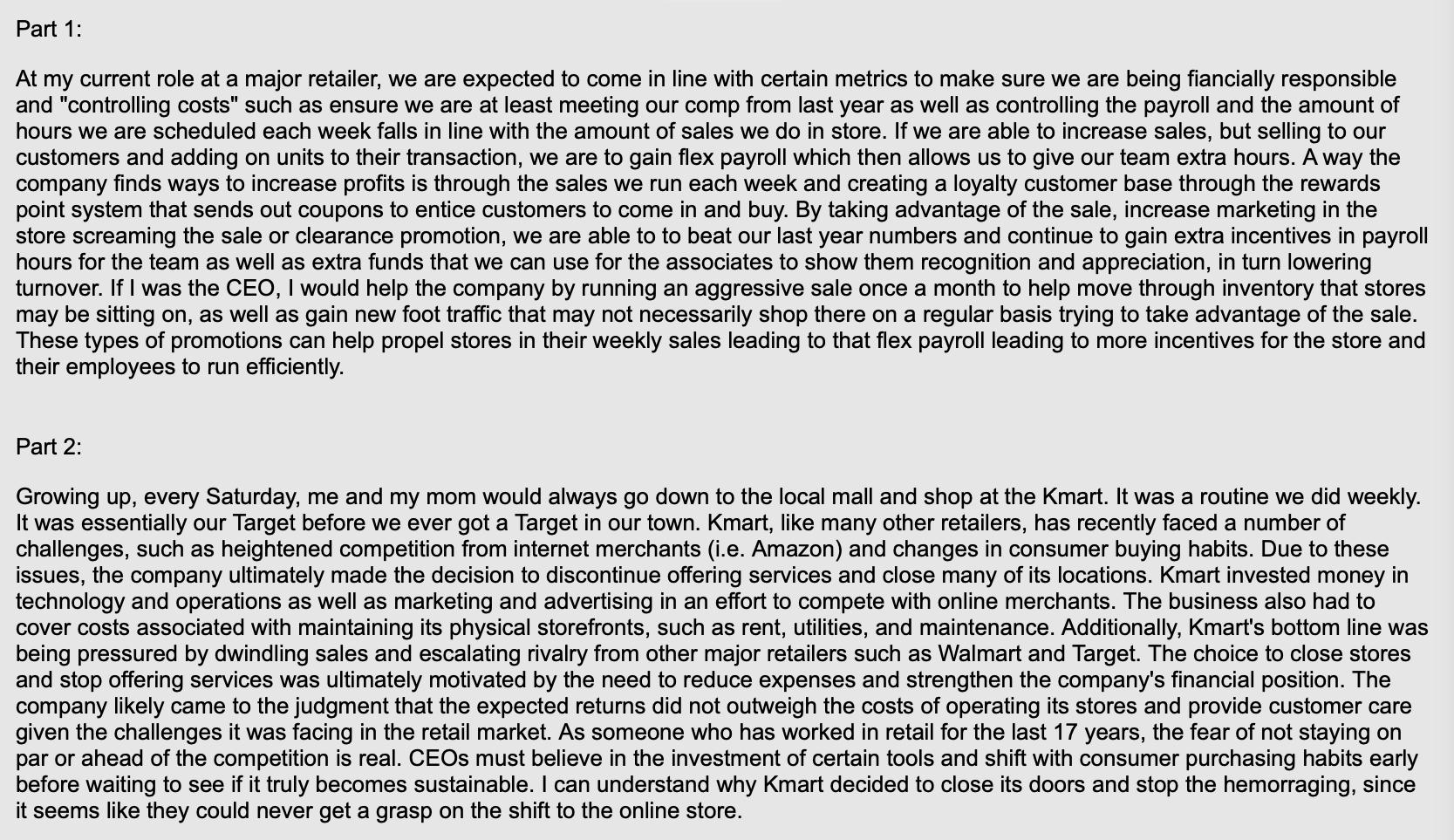
At my current role at a major retailer, we are expected to come in line with certain metrics to make sure we are being fiancially responsible and "controlling costs" such as ensure we are at least meeting our comp from last year as well as controlling the payroll and the amount of hours we are scheduled each week falls in line with the amount of sales we do in store. If we are able to increase sales, but selling to our customers and adding on units to their transaction, we are to gain flex payroll which then allows us to give our team extra hours. A way the company finds ways to increase profits is through the sales we run each week and creating a loyalty customer base through the rewards point system that sends out coupons to entice customers to come in and buy. By taking advantage of the sale, increase marketing in the store screaming the sale or clearance promotion, we are able to to beat our last year numbers and continue to gain extra incentives in payroll hours for the team as well as extra funds that we can use for the associates to show them recognition and appreciation, in turn lowering turnover. If I was the CEO, I would help the company by running an aggressive sale once a month to help move through inventory that stores may be sitting on, as well as gain new foot traffic that may not necessarily shop there on a regular basis trying to take advantage of the sale. These types of promotions can help propel stores in their weekly sales leading to that flex payroll leading to more incentives for the store and their employees to run efficiently. Part 2: Growing up, every Saturday, me and my mom would always go down to the local mall and shop at the Kmart. It was a routine we did weekly. It was essentially our Target before we ever got a Target in our town. Kmart, like many other retailers, has recently faced a number of challenges, such as heightened competition from internet merchants (i.e. Amazon) and changes in consumer buying habits. Due to these issues, the company ultimately made the decision to discontinue offering services and close many of its locations. Kmart invested money in technology and operations as well as marketing and advertising in an effort to compete with online merchants. The business also had to cover costs associated with maintaining its physical storefronts, such as rent, utilities, and maintenance. Additionally, Kmart's bottom line was being pressured by dwindling sales and escalating rivalry from other major retailers such as Walmart and Target. The choice to close stores and stop offering services was ultimately motivated by the need to reduce expenses and strengthen the company's financial position. The company likely came to the judgment that the expected returns did not outweigh the costs of operating its stores and provide customer care given the challenges it was facing in the retail market. As someone who has worked in retail for the last 17 years, the fear of not staying on par or ahead of the competition is real. CEOs must believe in the investment of certain tools and shift with consumer purchasing habits early before waiting to see if it truly becomes sustainable. I can understand why Kmart decided to close its doors and stop the hemorraging, since it seems like they could never get a grasp on the shift to the online store
Step by Step Solution
There are 3 Steps involved in it

Get step-by-step solutions from verified subject matter experts
 Study Help