







Question: Please, read the following case study and answer the questions in detail. Apple: The iPhone Turns 10, so What's Next? At Apple's new headquarters i
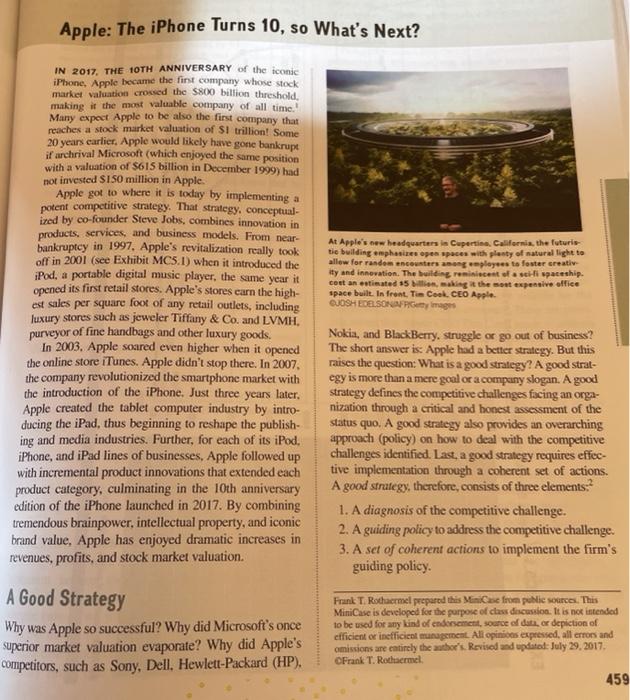
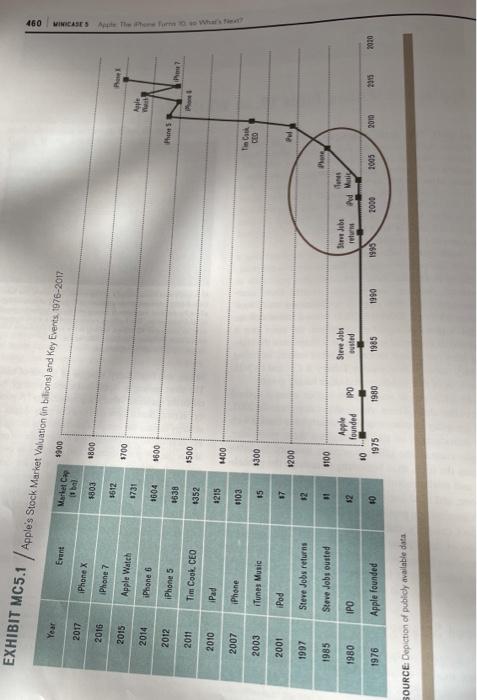
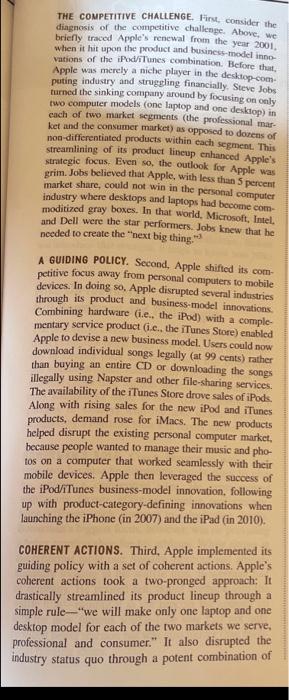
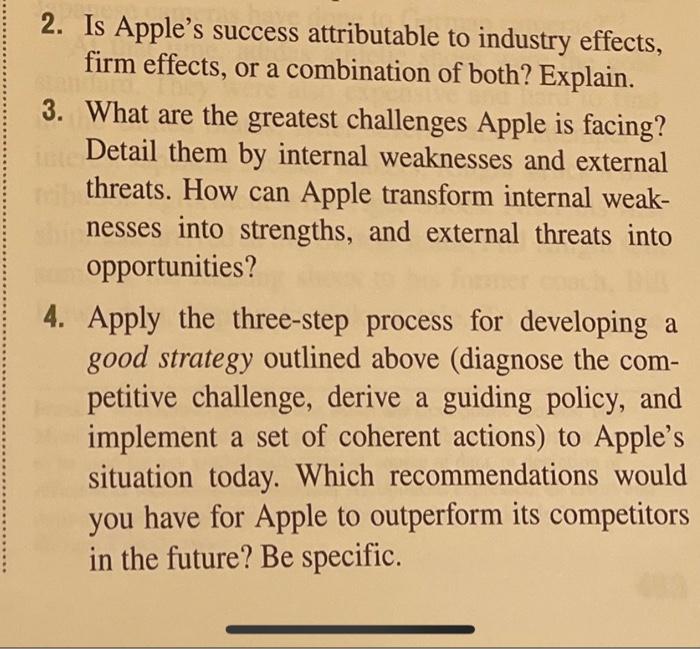
Apple: The iPhone Turns 10, so What's Next? At Apple's new headquarters i Cupertina, California, the futuris tie building emphasizes open space with plenty of natural light to allow for random encounter anong employees to foster creativ ity and innovation. The building reminiscent of a sci-fi spaceship. cost an estimated 15 Million, making it the sout expensive office space built. In front. Tim Cook, CEO Apple QJOSH EDEL.SONAFGetty Images IN 2017, THE 10TH ANNIVERSARY of the iconic iPhone, Apple became the first company whose stock market valuation crossed the $800 billion threshold. making it the most valuable company of all time. Many expect Apple to be also the first company that reaches a stock market valuation of Si trillion! Some 20 years earlier. Apple would likely have gone bankrupt if archrival Microsoft (which enjoyed the same position with a valuation of $615 billion in December 1999) had not invested SI50 million in Apple. Apple got to where it is today by implementing a potent competitive strategy. That strategy, conceptual- ired by co-founder Steve Jobs, combines innovation in products, services, and business models. From near- bankruptcy in 1997. Apple's revitalization really took off in 2001 (see Exhibit MC5.1) when it introduced the iPod, a portable digital music player, the same year it opened its first retail stores. Apple's stores earn the high- est sales per square foot of any retail outlets, including luxury stores such as jeweler Tiffany & Co. and LVMH. purveyor of fine handbags and other luxury goods. In 2003, Apple soared even higher when it opened the online store iTunes. Apple didn't stop there. In 2007, the company revolutionized the smartphone market with the introduction of the iPhone. Just three years later, Apple created the tablet computer industry by intro- ducing the iPad, thus beginning to reshape the publish- ing and media industries. Further, for each of its iPod. iPhone, and iPad lines of businesses, Apple followed up with incremental product innovations that extended each product category, culminating in the 10th anniversary edition of the iPhone launched in 2017. By combining tremendous brainpower, intellectual property, and iconic brand value, Apple has enjoyed dramatic increases in revenues, profits, and stock market valuation. Nokia, and BlackBerry struggle ar go out of business? The short answer is: Apple had a better strategy. But this raises the question: What is a good strategy? A good stral- egy is more than a mere goal or a company slogan. A good strategy defines the competitive challenges facing an orga- nization through a critical and honest assessment of the status quo. A good strategy also provides an overarching approach (policy) on how to deal with the competitive challenges identified. Last, a good strategy requires effec- tive implementation through a coherent set of actions. A good strategy, therefore, consists of three elements: 1. A diagnosis of the competitive challenge. 2. A guiding policy to address the competitive challenge. 3. A set of coherent actions to implement the firm's guiding policy. A Good Strategy Why was Apple so successful? Why did Microsoft's once superior market valuation evaporate? Why did Apple's competitors, such as Sony, Dell, Hewlett-Packard (HP). Frank T. Rothaermel prepared this MiniCase from public sources. This MiniCase is developed for the purpose of class discussion. It is not intended to be used for any kind of endorsement source of data or depiction of cfficient or inefficient management. All opinions expressed, all errors and omissions are entirely the author's Revised and updated: July 29, 2017 Frank T. Rothaermel. 459 EXHIBIT MC5.1 Year Market 9900 Apple's Stock Market Valuation in bilions) and Key Events. 1976-2017 2017 bal iPhone X 5803 2016 1800 Phone 7 1612 2015 Apple Watch 5100 1731 460 WINCASES What 2014 Apple iPhone 6 1004 1600 2012 iPhone 5 1638 2011 Tim Cook CEO 1500 4352 2010 Pad 1215 1400 2007 iPhone 1103 to Cook 2003 iTunes Music CEO 15 $300 2001 iPod 17 1200 Pul 1997 Steve Jobs returns 12 1985 Steve Jobs ousted #1 1980 IPO 32 1100 Apple founded 30 1975 IPO Steve Jobs wusted St Jobs rem And Mary 1976 Apple founded 1980 1985 1990 1990 2000 2005 2010 2013 2010 SOURCE: Depiction of publicly available data THE COMPETITIVE CHALLENGE. Fit consider the diagnosis of the competitive challenge. Above, we briefly traced Apples renewal from the year 2001, when it hit upon the product and business model inno vations of the iPod/iTunes combination. Before that Apple was merely a niche player in the desktop.com puting industry and struggling financially. Steve Jobs turned the sinking company around by focusing on only two computer models (one laptop and one desktop) in each of two market segments the professional mar- ket and the consumer market) as opposed to donens of noa-differentiated products within each segment. This streamlining of its product lineup enhanced Apple's strategic focus. Even so, the outlook for Apple was grim. Jobs believed that Apple, with less than 5 percent market share, could not win in the personal computer industry where desktops and laptops had become com- moditized gray boxes. In that world, Microsoft, Intel. and Dell were the star performers. Jobs knew that he needed to create the next big thing." A GUIDING POLICY. Second, Apple shifted its com petitive focus away from personal computers to mobile devices. In doing so, Apple disrupted several industries through its product and business model innovations Combining hardware (ie, the iPod) with a comple- mentary service product i.e., the iTunes Store) enabled Apple to devise a new business model. Users could now download individual songs legally (at 99 cents) rather than buying an entire CD or downloading the songs illegally using Napster and other file sharing services. The availability of the iTunes Store drove sales of iPods. Along with rising sales for the new iPod and iTunes products, demand rose for iMacs. The new products helped disrupt the existing personal computer market, because people wanted to manage their music and pho- tos on a computer that worked seamlessly with their mobile devices. Apple then leveraged the success of the iPod/iTunes business model innovation, following up with product-category-defining innovations when launching the iPhone (in 2007) and the iPad (in 2010). COHERENT ACTIONS. Third, Apple implemented its guiding policy with a set of coherent actions. Apple's coherent actions took a two-pronged approach: It drastically streamlined its product lineup through a simple rule--"we will make only one laptop and one desktop model for each of the two markets we serve, professional and consumer." It also disrupted the industry status quo through a potent combination of product and business-model innovations, executed at planned intervals. These actions allowed Apple to cre- ate a string of temporary competitive advantages (see Exhibit MC5.1). Taken together, this allowed Apple to sustain its superior performance for over a decade, making it the most valuable company on the planet in the process. Past performance, however, is no guarantee of future performance. Microsoft was once the most valuable company in the world but has since struggled to keep up with Apple. At the same time, Microsoft, as well as Google, Samsung, Amazon, and others, are working hard to neutralize Apple's competitive advantage. The trillion-dollar question is whether Apple can continue to maintain a competitive advantage in the face of increasingly strong competition and rapidly changing industry environments. In both mobile pay- ment systems (Apple Pay launched in 2014) and music streaming (Apple Music launched in 2015), Apple was a late mover. The Apple Watch, introduced in 2015, is the first new product category Apple launched since the iPad in 2010. Although Apple continues to capture over 90 percent of profits in the smartphone industry, more than 60 percent of Apple's $220 billion revenue comes from the iPhone. Moreover, China accounts for more than 20 percent of Apple's total revenues, a mar- ket that is becoming more and more volatile for the Cupertino, California, tech company. These are press- ing issues that Apple CEO Tim Cook needs to address in order to sustain Apple's competitive advantage. 2. Is Apple's success attributable to industry effects, firm effects, or a combination of both? Explain. 3. What are the greatest challenges Apple is facing? Detail them by internal weaknesses and external threats. How can Apple transform internal weak- nesses into strengths, and external threats into opportunities? 4. Apply the three-step process for developing a good strategy outlined above (diagnose the com- petitive challenge, derive a guiding policy, and implement a set of coherent actions) to Apple's situation today. Which recommendations would you have for Apple to outperform its competitors in the future? Be specific. Apple: The iPhone Turns 10, so What's Next? At Apple's new headquarters i Cupertina, California, the futuris tie building emphasizes open space with plenty of natural light to allow for random encounter anong employees to foster creativ ity and innovation. The building reminiscent of a sci-fi spaceship. cost an estimated 15 Million, making it the sout expensive office space built. In front. Tim Cook, CEO Apple QJOSH EDEL.SONAFGetty Images IN 2017, THE 10TH ANNIVERSARY of the iconic iPhone, Apple became the first company whose stock market valuation crossed the $800 billion threshold. making it the most valuable company of all time. Many expect Apple to be also the first company that reaches a stock market valuation of Si trillion! Some 20 years earlier. Apple would likely have gone bankrupt if archrival Microsoft (which enjoyed the same position with a valuation of $615 billion in December 1999) had not invested SI50 million in Apple. Apple got to where it is today by implementing a potent competitive strategy. That strategy, conceptual- ired by co-founder Steve Jobs, combines innovation in products, services, and business models. From near- bankruptcy in 1997. Apple's revitalization really took off in 2001 (see Exhibit MC5.1) when it introduced the iPod, a portable digital music player, the same year it opened its first retail stores. Apple's stores earn the high- est sales per square foot of any retail outlets, including luxury stores such as jeweler Tiffany & Co. and LVMH. purveyor of fine handbags and other luxury goods. In 2003, Apple soared even higher when it opened the online store iTunes. Apple didn't stop there. In 2007, the company revolutionized the smartphone market with the introduction of the iPhone. Just three years later, Apple created the tablet computer industry by intro- ducing the iPad, thus beginning to reshape the publish- ing and media industries. Further, for each of its iPod. iPhone, and iPad lines of businesses, Apple followed up with incremental product innovations that extended each product category, culminating in the 10th anniversary edition of the iPhone launched in 2017. By combining tremendous brainpower, intellectual property, and iconic brand value, Apple has enjoyed dramatic increases in revenues, profits, and stock market valuation. Nokia, and BlackBerry struggle ar go out of business? The short answer is: Apple had a better strategy. But this raises the question: What is a good strategy? A good stral- egy is more than a mere goal or a company slogan. A good strategy defines the competitive challenges facing an orga- nization through a critical and honest assessment of the status quo. A good strategy also provides an overarching approach (policy) on how to deal with the competitive challenges identified. Last, a good strategy requires effec- tive implementation through a coherent set of actions. A good strategy, therefore, consists of three elements: 1. A diagnosis of the competitive challenge. 2. A guiding policy to address the competitive challenge. 3. A set of coherent actions to implement the firm's guiding policy. A Good Strategy Why was Apple so successful? Why did Microsoft's once superior market valuation evaporate? Why did Apple's competitors, such as Sony, Dell, Hewlett-Packard (HP). Frank T. Rothaermel prepared this MiniCase from public sources. This MiniCase is developed for the purpose of class discussion. It is not intended to be used for any kind of endorsement source of data or depiction of cfficient or inefficient management. All opinions expressed, all errors and omissions are entirely the author's Revised and updated: July 29, 2017 Frank T. Rothaermel. 459 EXHIBIT MC5.1 Year Market 9900 Apple's Stock Market Valuation in bilions) and Key Events. 1976-2017 2017 bal iPhone X 5803 2016 1800 Phone 7 1612 2015 Apple Watch 5100 1731 460 WINCASES What 2014 Apple iPhone 6 1004 1600 2012 iPhone 5 1638 2011 Tim Cook CEO 1500 4352 2010 Pad 1215 1400 2007 iPhone 1103 to Cook 2003 iTunes Music CEO 15 $300 2001 iPod 17 1200 Pul 1997 Steve Jobs returns 12 1985 Steve Jobs ousted #1 1980 IPO 32 1100 Apple founded 30 1975 IPO Steve Jobs wusted St Jobs rem And Mary 1976 Apple founded 1980 1985 1990 1990 2000 2005 2010 2013 2010 SOURCE: Depiction of publicly available data THE COMPETITIVE CHALLENGE. Fit consider the diagnosis of the competitive challenge. Above, we briefly traced Apples renewal from the year 2001, when it hit upon the product and business model inno vations of the iPod/iTunes combination. Before that Apple was merely a niche player in the desktop.com puting industry and struggling financially. Steve Jobs turned the sinking company around by focusing on only two computer models (one laptop and one desktop) in each of two market segments the professional mar- ket and the consumer market) as opposed to donens of noa-differentiated products within each segment. This streamlining of its product lineup enhanced Apple's strategic focus. Even so, the outlook for Apple was grim. Jobs believed that Apple, with less than 5 percent market share, could not win in the personal computer industry where desktops and laptops had become com- moditized gray boxes. In that world, Microsoft, Intel. and Dell were the star performers. Jobs knew that he needed to create the next big thing." A GUIDING POLICY. Second, Apple shifted its com petitive focus away from personal computers to mobile devices. In doing so, Apple disrupted several industries through its product and business model innovations Combining hardware (ie, the iPod) with a comple- mentary service product i.e., the iTunes Store) enabled Apple to devise a new business model. Users could now download individual songs legally (at 99 cents) rather than buying an entire CD or downloading the songs illegally using Napster and other file sharing services. The availability of the iTunes Store drove sales of iPods. Along with rising sales for the new iPod and iTunes products, demand rose for iMacs. The new products helped disrupt the existing personal computer market, because people wanted to manage their music and pho- tos on a computer that worked seamlessly with their mobile devices. Apple then leveraged the success of the iPod/iTunes business model innovation, following up with product-category-defining innovations when launching the iPhone (in 2007) and the iPad (in 2010). COHERENT ACTIONS. Third, Apple implemented its guiding policy with a set of coherent actions. Apple's coherent actions took a two-pronged approach: It drastically streamlined its product lineup through a simple rule--"we will make only one laptop and one desktop model for each of the two markets we serve, professional and consumer." It also disrupted the industry status quo through a potent combination of product and business-model innovations, executed at planned intervals. These actions allowed Apple to cre- ate a string of temporary competitive advantages (see Exhibit MC5.1). Taken together, this allowed Apple to sustain its superior performance for over a decade, making it the most valuable company on the planet in the process. Past performance, however, is no guarantee of future performance. Microsoft was once the most valuable company in the world but has since struggled to keep up with Apple. At the same time, Microsoft, as well as Google, Samsung, Amazon, and others, are working hard to neutralize Apple's competitive advantage. The trillion-dollar question is whether Apple can continue to maintain a competitive advantage in the face of increasingly strong competition and rapidly changing industry environments. In both mobile pay- ment systems (Apple Pay launched in 2014) and music streaming (Apple Music launched in 2015), Apple was a late mover. The Apple Watch, introduced in 2015, is the first new product category Apple launched since the iPad in 2010. Although Apple continues to capture over 90 percent of profits in the smartphone industry, more than 60 percent of Apple's $220 billion revenue comes from the iPhone. Moreover, China accounts for more than 20 percent of Apple's total revenues, a mar- ket that is becoming more and more volatile for the Cupertino, California, tech company. These are press- ing issues that Apple CEO Tim Cook needs to address in order to sustain Apple's competitive advantage. 2. Is Apple's success attributable to industry effects, firm effects, or a combination of both? Explain. 3. What are the greatest challenges Apple is facing? Detail them by internal weaknesses and external threats. How can Apple transform internal weak- nesses into strengths, and external threats into opportunities? 4. Apply the three-step process for developing a good strategy outlined above (diagnose the com- petitive challenge, derive a guiding policy, and implement a set of coherent actions) to Apple's situation today. Which recommendations would you have for Apple to outperform its competitors in the future? Be specific
Step by Step Solution
There are 3 Steps involved in it

Get step-by-step solutions from verified subject matter experts
 Study Help