



Question: Please read the two short articles that follow: What is your response to the findings of this study? Might those findings have a more universal
Please read the two short articles that follow:
What is your response to the findings of this study? Might those findings have a more universal application? What factor or factors would make you cautious about going to work for a small business? Could these reasons for hesitation be overcome? How?
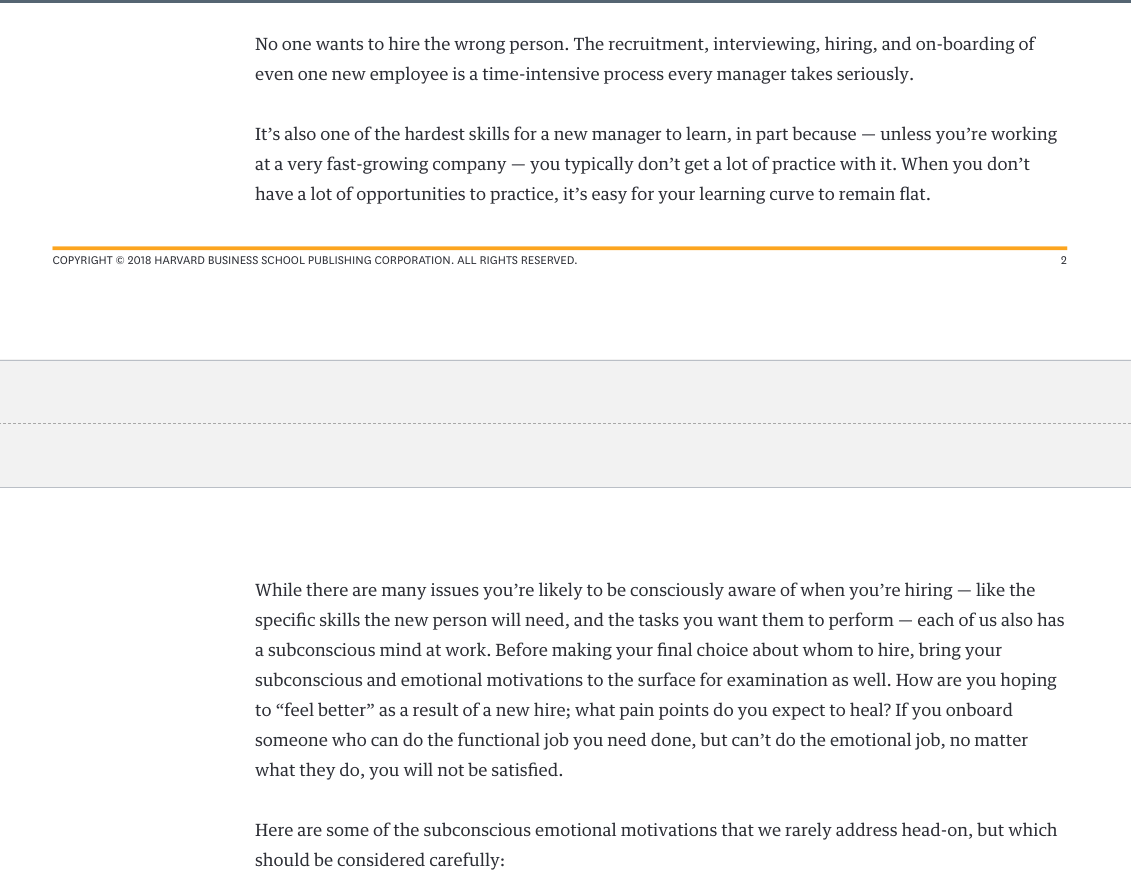
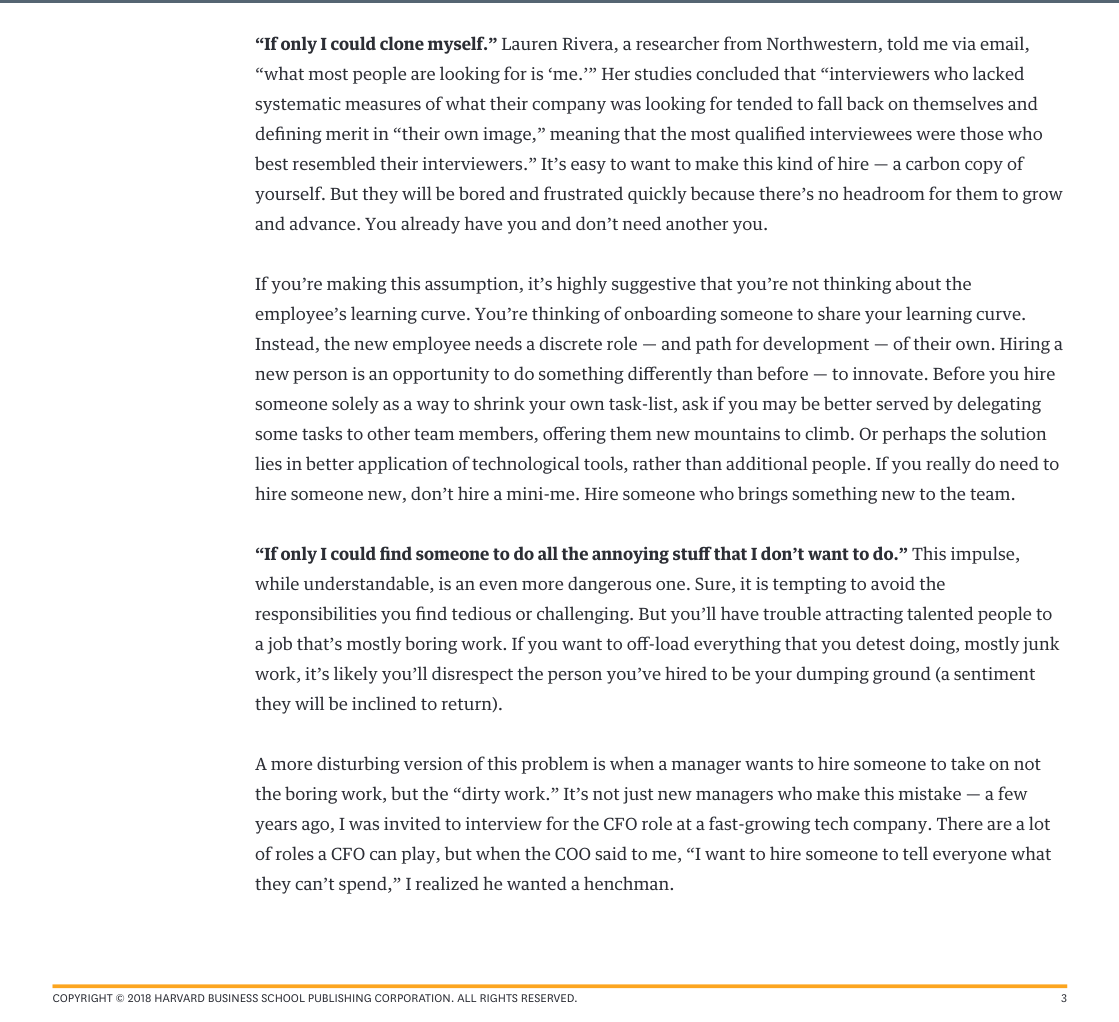
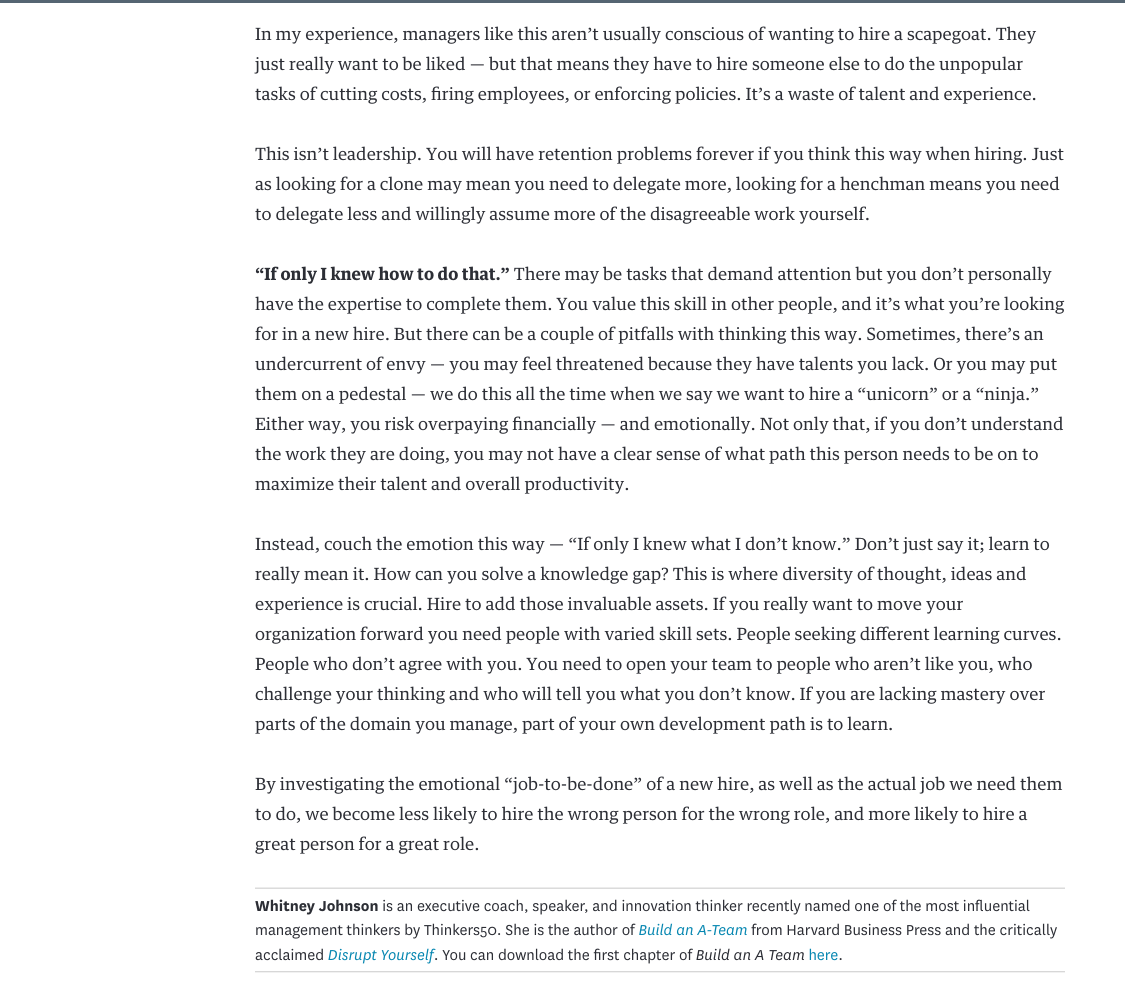
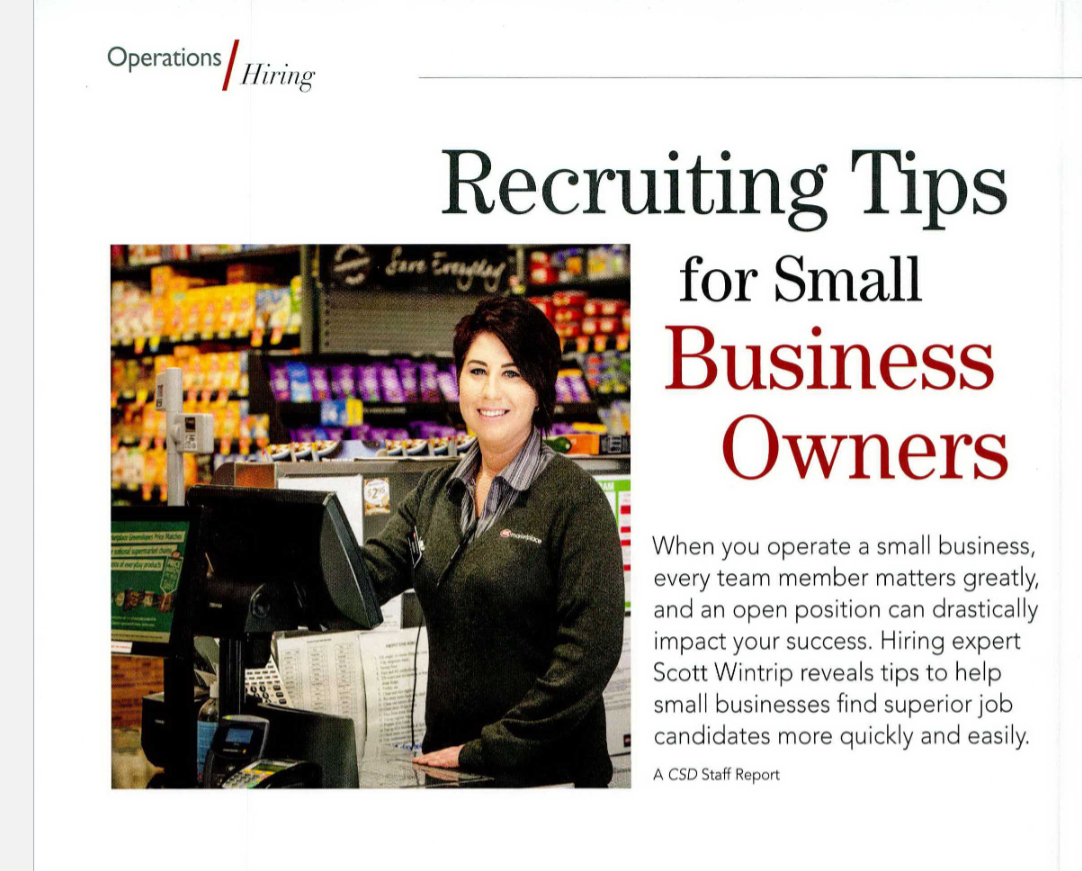
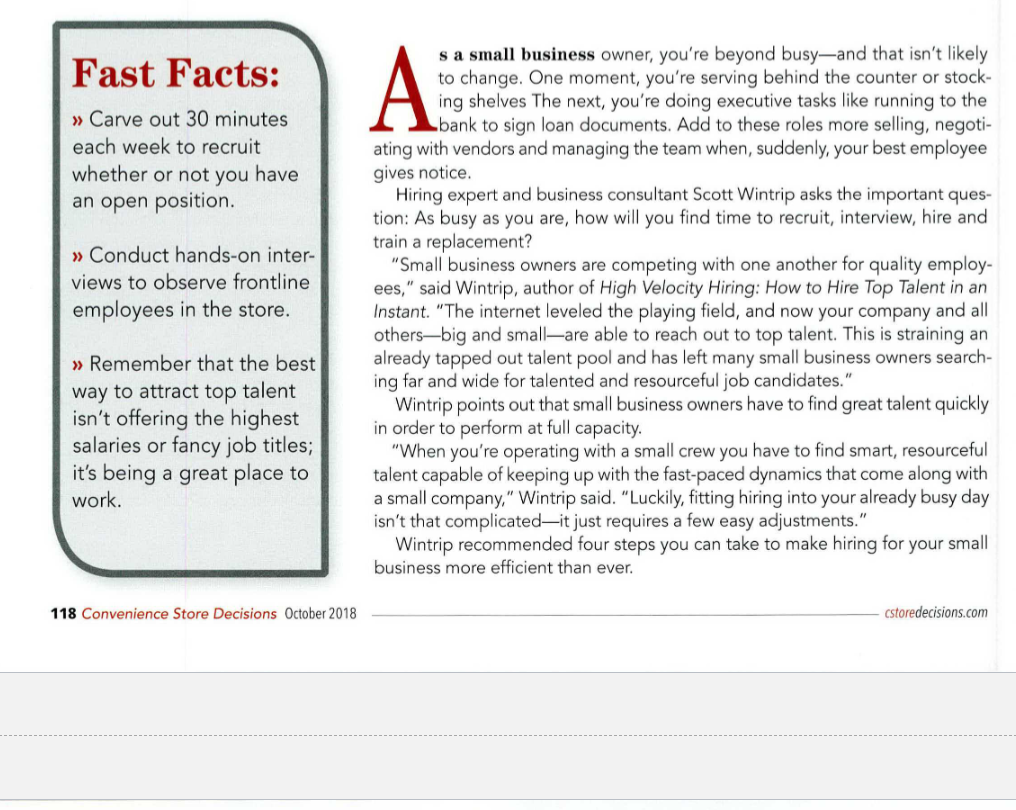
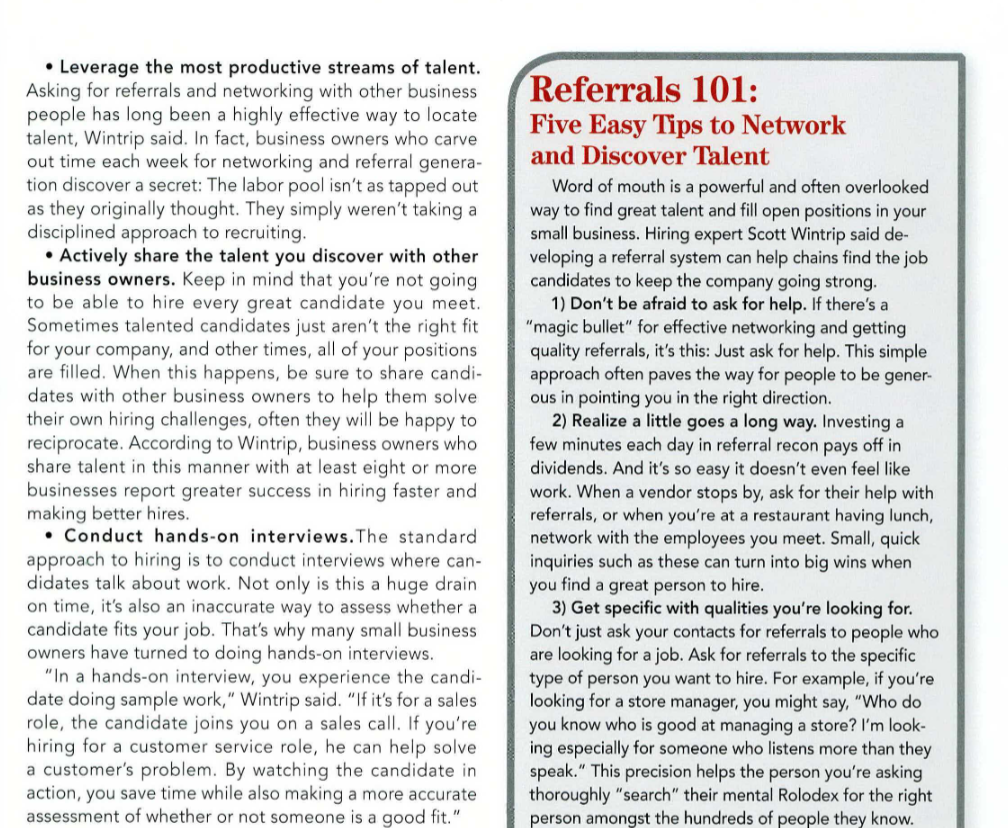
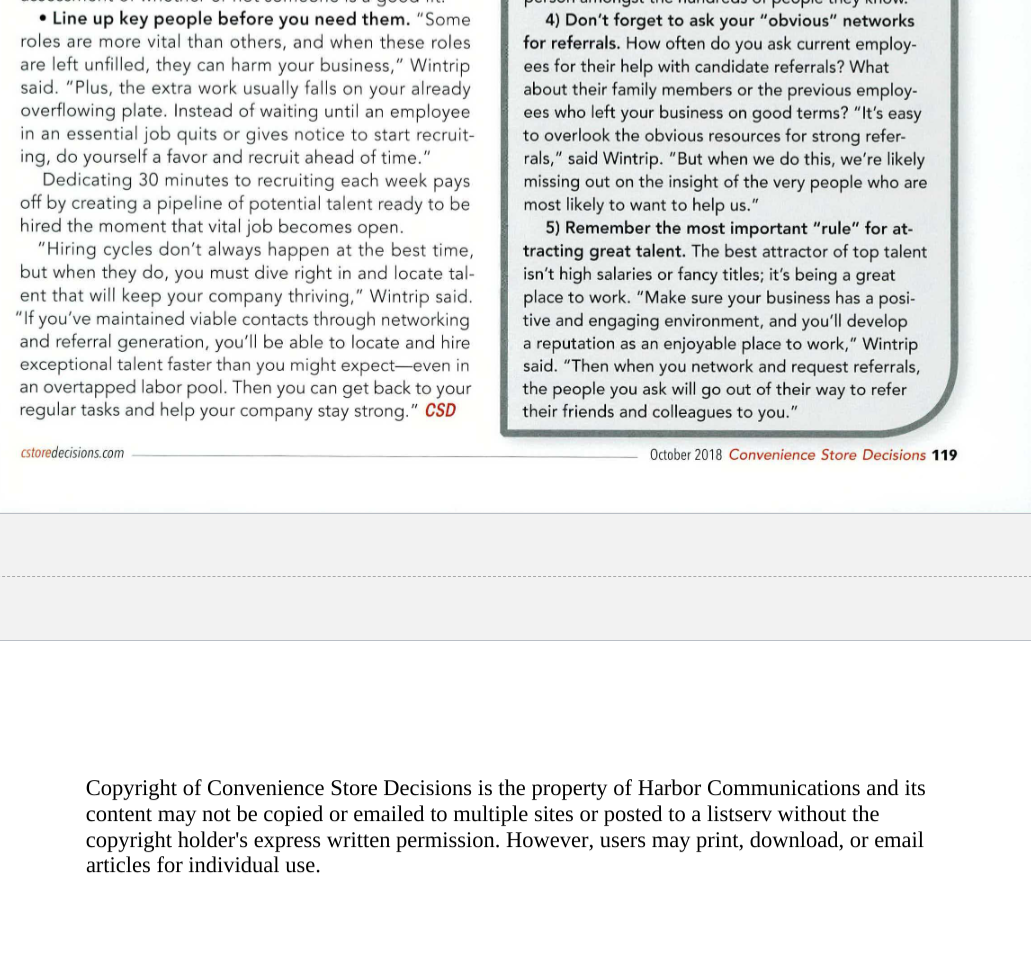
Harvard Business Review HIRING 3 Common Hiring Mistakes New Managers Should Avoid by Whitney Johnson JULY 04, 2018 No one wants to hire the wrong person. The recruitment, interviewing, hiring, and on-boarding of even one new employee is a time-intensive process every manager takes seriously. It's also one of the hardest skills for a new manager to learn, in part because unless you're working at a very fast-growing company - you typically don't get a lot of practice with it. When you don't have a lot of opportunities to practice, it's easy for your learning curve to remain flat. COPYRIGHT 2018 HARVARD BUSINESS SCHOOL PUBLISHING CORPORATION. ALL RIGHTS RESERVED. 2 While there are many issues you're likely to be consciously aware of when you're hiring like the specific skills the new person will need, and the tasks you want them to perform - each of us also has a subconscious mind at work. Before making your final choice about whom to hire, bring your subconscious and emotional motivations to the surface for examination as well. How are you hoping to feel better as a result of a new hire; what pain points do you expect to heal? If you onboard someone who can do the functional job you need done, but can't do the emotional job, no matter what they do, you will not be satisfied. Here are some of the subconscious emotional motivations that we rarely address head-on, but which should be considered carefully: If only I could clone myself. Lauren Rivera, a researcher from Northwestern, told me via email, what most people are looking for is me. Her studies concluded that interviewers who lacked systematic measures of what their company was looking for tended to fall back on themselves and defining merit in their own image, meaning that the most qualified interviewees were those who best resembled their interviewers." It's easy to want to make this kind of hire - a carbon copy of yourself. But they will be bored and frustrated quickly because there's no headroom for them to grow and advance. You already have you and don't need another you. If you're making this assumption, it's highly suggestive that you're not thinking about the employee's learning curve. You're thinking of onboarding someone to share your learning curve. Instead, the new employee needs a discrete role and path for development - of their own. Hiring a new person is an opportunity to do something differently than before to innovate. Before you hire someone solely as a way to shrink your own task-list, ask if you may be better served by delegating some tasks to other team members, offering them new mountains to climb. Or perhaps the solution lies in better application of technological tools, rather than additional people. If you really do need to hire someone new, don't hire a mini-me. Hire someone who brings something new to the team. "If only I could find someone to do all the annoying stuff that I don't want to do. This impulse, while understandable, is an even more dangerous one. Sure, it is tempting to avoid the responsibilities you find tedious or challenging. But you'll have trouble attracting talented people to a job that's mostly boring work. If you want to off-load everything that you detest doing, mostly junk work, it's likely you'll disrespect the person you've hired to be your dumping ground (a sentiment they will be inclined to return). A more disturbing version of this problem is when a manager wants to hire someone to take on not the boring work, but the "dirty work. It's not just new managers who make this mistake - a few years ago, I was invited to interview for the CFO role at a fast-growing tech company. There are a lot of roles a CFO can play, but when the COO said to me, I want to hire someone to tell everyone what they can't spend," I realized he wanted a henchman. COPYRIGHT 2018 HARVARD BUSINESS SCHOOL PUBLISHING CORPORATION. ALL RIGHTS RESERVED. 3 In my experience, managers like this aren't usually conscious of wanting to hire a scapegoat. They just really want to be liked but that means they have to hire someone else to do the unpopular tasks of cutting costs, firing employees, or enforcing policies. It's a waste of talent and experience. This isn't leadership. You will have retention problems forever if you think this way when hiring. Just as looking for a clone may mean you need to delegate more, looking for a henchman means you need to delegate less and willingly assume more of the disagreeable work yourself. "If only I knew how to do that. There may be tasks that demand attention but you don't personally have the expertise to complete them. You value this skill in other people, and it's what you're looking for in a new hire. But there can be a couple of pitfalls with thinking this way. Sometimes, there's an undercurrent of envy - you may feel threatened because they have talents you lack. Or you may put them on a pedestal we do this all the time when we say we want to hire a unicorn or a ninja. Either way, you risk overpaying financially - and emotionally. Not only that, if you don't understand the work they are doing, you may not have a clear sense of what path this person needs to be on to maximize their talent and overall productivity. Instead, couch the emotion this way If only I knew what I don't know." Don't just say it; learn to really mean it. How can you solve a knowledge gap? This is where diversity of thought, ideas and experience is crucial. Hire to add those invaluable assets. If you really want to move your organization forward you need people with varied skill sets. People seeking different learning curves. People who don't agree with you. You need to open your team to people who aren't like you, who challenge your thinking and who will tell you what you don't know. If you are lacking mastery over parts of the domain you manage, part of your own development path is to learn. By investigating the emotional job-to-be-done of a new hire, as well as the actual job we need them to do, we become less likely to hire the wrong person for the wrong role, and more likely to hire a great person for a great role. Whitney Johnson is an executive coach, speaker, and innovation thinker recently named one of the most influential management thinkers by Thinkers5o. She is the author of Build an A-Team from Harvard Business Press and the critically acclaimed Disrupt Yourself. You can download the first chapter of Build an A Team here. COPYRIGHT 2018 HARVARD BUSINESS SCHOOL PUBLISHING CORPORATION. ALL RIGHTS RESERVED. 4 Copyright 2018 Harvard Busi Publishing. All Rights Reserved. Additional restrictions may apply including the use of this content as assigned course material. Please consult your institution's librarian about any restrictions that might apply under the license with your institution. For more information and teaching resources from Harvard Business Publishing including Harvard Business School Cases, eLearning products, and business simulations please visit hbsp.harvard.edu. Operations ions/Hir Hiring Sare Everything Recruiting Tips for Small Business Owners When you operate a small business, every team member matters greatly, and an open position can drastically impact your success. Hiring expert Scott Wintrip reveals tips to help small businesses find superior job candidates more quickly and easily. A CSD Staff Report Fast Facts: A Carve out 30 minutes each week to recruit whether or not you have an open position. >> Conduct hands-on inter- views to observe frontline employees in the store. s a small business owner, you're beyond busyand that isn't likely to change. One moment, you're serving behind the counter or stock- ing shelves The next, you're doing executive tasks like running to the bank to sign loan documents. Add to these roles mo more selling, negoti- ating with vendors and managing the team when, suddenly, your best employee gives notice. Hiring expert and business consultant Scott Wintrip asks the important ques- tion: As busy as you are, how will you find time to recruit, interview, hire and train a replacement? "Small business owners are competing with one another for quality employ- ees," said Wintrip, author of High Velocity Hiring: How to Hire Top Talent in an Instant. "The internet leveled the playing field, and now your company and all others-big and small-are able to reach out to top talent. This is straining an already tapped out talent pool and has left many small business owners search- ing far and wide for talented and resourceful job candidates." Wintrip points out that small business owners have to find great talent quickly in order to perform at full capacity. "When you're operating with a small crew you have to find smart, resourceful talent capable of keeping up with the fast-paced dynamics that come along with a small company," Wintrip said. "Luckily, fitting hiring into your already busy day isn't that complicatedit just requires a few easy adjustments." Wintrip recommended four steps you can take to make hiring for your small business more efficient than ever. Remember that the best way to attract top talent isn't offering the highest salaries or fancy job titles; it's being a great place to work. 118 Convenience Store Decisions October 2018 cstoredecisions.com Leverage the most productive streams of talent. Asking for referrals and networking with other business people has long been a highly effective way to locate talent, Wintrip said. In fact, business owners who carve out time each week for networking and referral genera- tion discover a secret: The labor pool isn't as tapped out as they originally thought. They simply weren't taking a disciplined approach to recruiting. Actively share the talent you discover with other business owners. Keep in mind that you're not going to be able to hire every great candidate you meet. Sometimes talented candidates just aren't the right fit for your company, and other times, all of your positions are filled. When this happens, be sure to share candi- dates with other business owners to help them solve their own hiring challenges, often they will be happy to reciprocate. According to Wintrip, business owners who share talent in this manner with at least eight or more businesses report greater success in hiring faster and making better hires. Conduct hands-on interviews. The standard approach to hiring is to conduct interviews where can- didates talk about work. Not only is this a huge drain on time, it's also an inaccurate way to assess whether a candidate fits your job. That's why many small business owners have turned to doing hands-on interviews. "In a hands-on interview, you experience the candi- date doing sample work," Wintrip said. "If it's for a sales role, the candidate joins you on a sales call. If you're hiring for a customer service role, he can help solve a customer's problem. By watching the candidate in action, you save time while also making a more accurate assessment of whether or not someone is a good fit." Referrals 101: Five Easy Tips to Network and Discover Talent Word of mouth is a powerful and often overlooked way to find great talent and fill open positions in your small business. Hiring expert Scott Wintrip said de- veloping a referral system can help chains find the job candidates to keep the company going strong, 1) Don't be afraid to ask for help. If there's a "magic bullet" for effective networking and getting quality referrals, it's this: Just ask for help. This simple approach often paves the way for people to be gener- ous in pointing you in the right direction. 2) Realize a little goes a long way. Investing a few minutes each day in referral recon pays off in dividends. And it's so easy it doesn't even feel like work. When a vendor stops by, ask for their help with referrals, or when you're at a restaurant having lunch, network with the employees you meet. Small, quick inquiries such as these can turn into big wins when you find a great person to hire. 3) Get specific with qualities you're looking for. Don't just ask your contacts for referrals to people who are looking for a job. Ask for referrals to the specific type of person you want to hire. For example, if you're looking for a store manager, you might say, "Who do you know who is good at managing a store? I'm look- ing especially for someone who listens more than they speak." This precision helps the person you're asking thoroughly "search" their mental Rolodex for the right person amongst the hundreds of people they know. Line up key people before you need them. "Some roles are more vital than others, and when these roles are left unfilled, they can harm your business," Wintrip said. "Plus, the extra work usually falls on your already overflowing plate. Instead of waiting until an employee in an essential job quits or gives notice to start recruit- ing, do yourself a favor and recruit ahead of time." Dedicating 30 minutes to recruiting each week pays off by creating a pipeline of potential talent ready to be hired the moment that vital job becomes open. "Hiring cycles don't always happen at the best time, but when they do, you must dive right in and locate tal- ent that will keep your company thriving," Wintrip said. " "If you've maintained viable contacts through networking and referral generation, you'll be able to locate and hire exceptional talent faster than you might expect-even in an overtapped labor pool. Then you can get back to your regular tasks and help your company stay strong." CSD 4) Don't forget to ask your "obvious" networks for referrals. How often do you ask current employ- ees for their help with candidate referrals? What about their family members or the previous employ- ees who left your business on good terms? "It's easy to overlook the obvious resources for strong refer- rals," said Wintrip. "But when we do this, we're likely missing out on the insight of the very people who are most likely to want to help us." 5) Remember the most important "rule" for at- tracting great talent. The best attractor of top talent isn't high salaries or fancy titles; it's being a great place to work. Make sure your business has a posi- tive and engaging environment, and you'll develop a reputation as an enjoyable place to work," Wintrip said. "Then when you network and request referrals, the people you ask will go out of their way to refer their friends and colleagues to you." cstoredecisions.com October 2018 Convenience Store Decisions 119 Copyright of Convenience Store Decisions is the property of Harbor Communications and its content may not be copied or emailed to multiple sites or posted to a listserv without the copyright holder's express written permission. However, users may print, download, or email articles for individual useStep by Step Solution
There are 3 Steps involved in it
1 Expert Approved Answer
Step: 1 Unlock

Question Has Been Solved by an Expert!
Get step-by-step solutions from verified subject matter experts
Step: 2 Unlock
Step: 3 Unlock