



Question: PLEASE USE THE FILLED OUT INFORMATION FOR THE LAST 3 PART QUESTION b. What is the minimum $ of annual salary you expect to earn
 PLEASE USE THE FILLED OUT INFORMATION FOR THE LAST 3 PART QUESTION
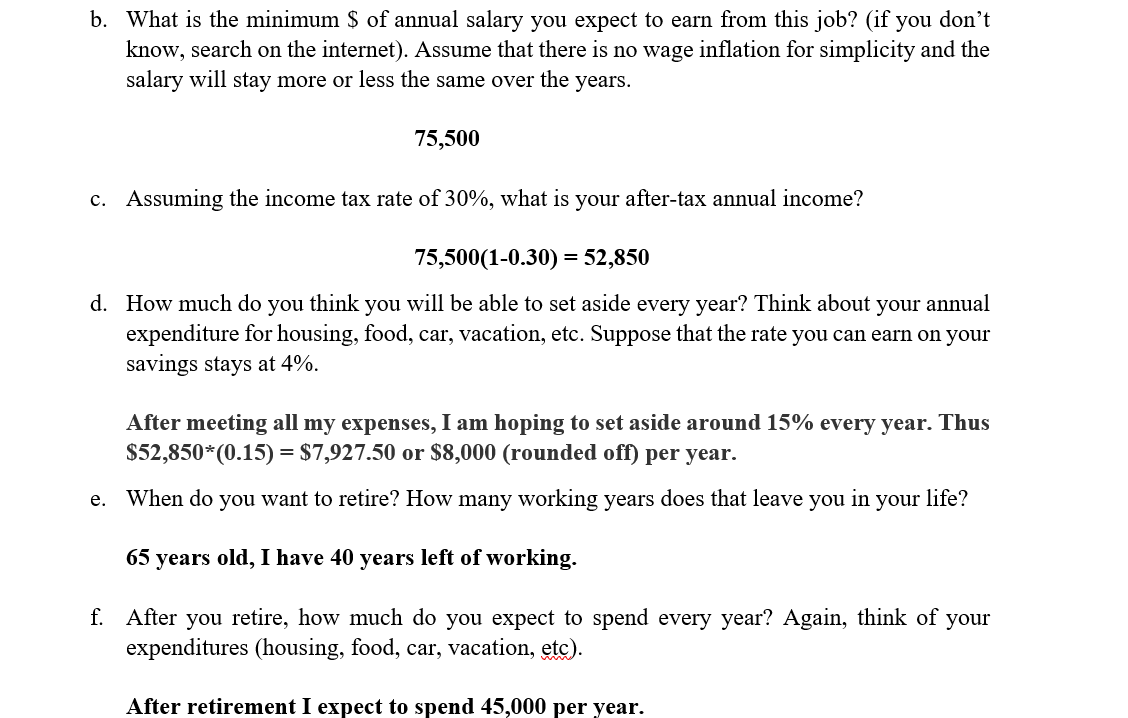
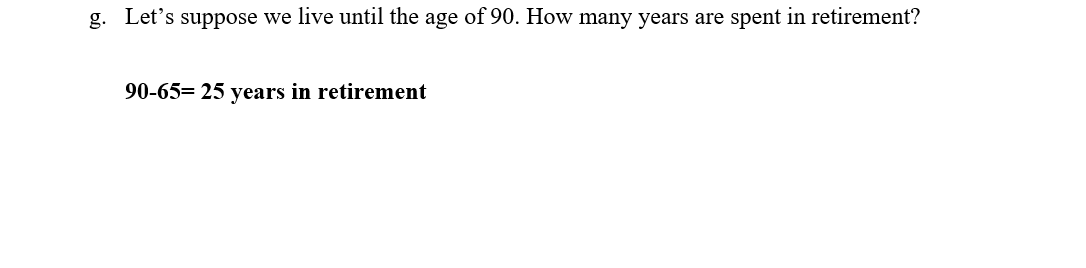
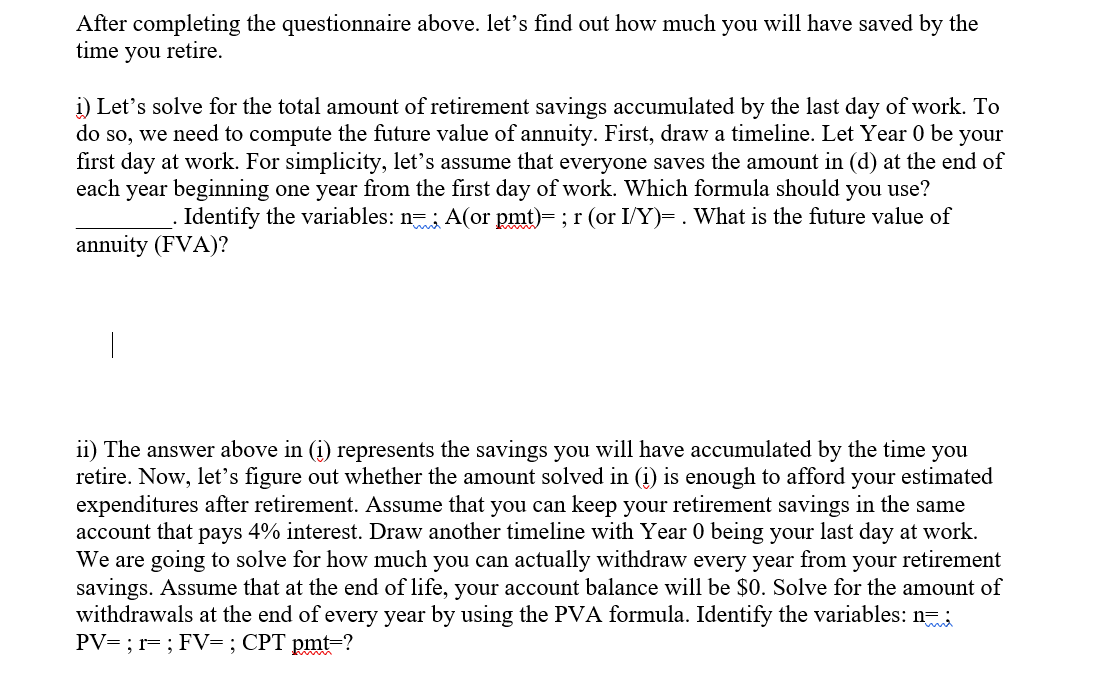
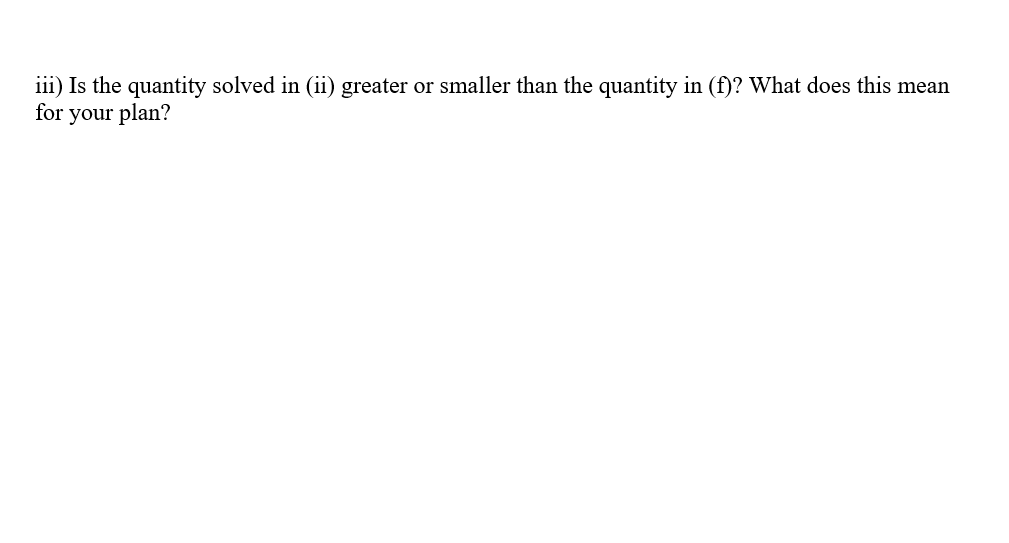
b. What is the minimum $ of annual salary you expect to earn from this job? (if you don't know, search on the internet). Assume that there is no wage inflation for simplicity and the salary will stay more or less the same over the years. 75,500 c. Assuming the income tax rate of 30%, what is your after-tax annual income? 75,500(1-0.30) = 52,850 d. How much do you think you will be able to set aside every year? Think about your annual expenditure for housing, food, car, vacation, etc. Suppose that the rate you can earn on your savings stays at 4%. After meeting all my expenses, I am hoping to set aside around 15% every year. Thus $52,850*(0.15) = $7,927.50 or $8,000 (rounded off) per year. When do you want to retire? How many working years does that leave you in your life? e. 65 years old, I have 40 years left of working. f. After you retire, how much do you expect to spend every year? Again, think of your expenditures (housing, food, car, vacation, etc). After retirement I expect to spend 45,000 per year. g. Let's suppose we live until the age of 90. How many years are spent in retirement? 90-65= 25 years in retirement After completing the questionnaire above. let's find out how much you will have saved by the time you retire. 1) Let's solve for the total amount of retirement savings accumulated by the last day of work. To do so, we need to compute the future value of annuity. First, draw a timeline. Let Year 0 be your first day at work. For simplicity, let's assume that everyone saves the amount in (d) at the end of each year beginning one year from the first day of work. Which formula should you use? Identify the variables: ne A(or pmt)=;r (or I/Y)=. What is the future value of annuity (FVA)? ii) The answer above in (i) represents the savings you will have accumulated by the time you retire. Now, let's figure out whether the amount solved in (i) is enough to afford your estimated expenditures after retirement. Assume that you can keep your retirement savings in the same account that pays 4% interest. Draw another timeline with Year ( being your last day at work. We are going to solve for how much you can actually withdraw every year from your retirement savings. Assume that at the end of life, your account balance will be $0. Solve for the amount of withdrawals at the end of every year by using the PVA formula. Identify the variables: nie PV=;r=;FV=;CPT pmt=? iii) Is the quantity solved in (ii) greater or smaller than the quantity in (f)? What does this mean for your plan
Step by Step Solution
There are 3 Steps involved in it

Get step-by-step solutions from verified subject matter experts