



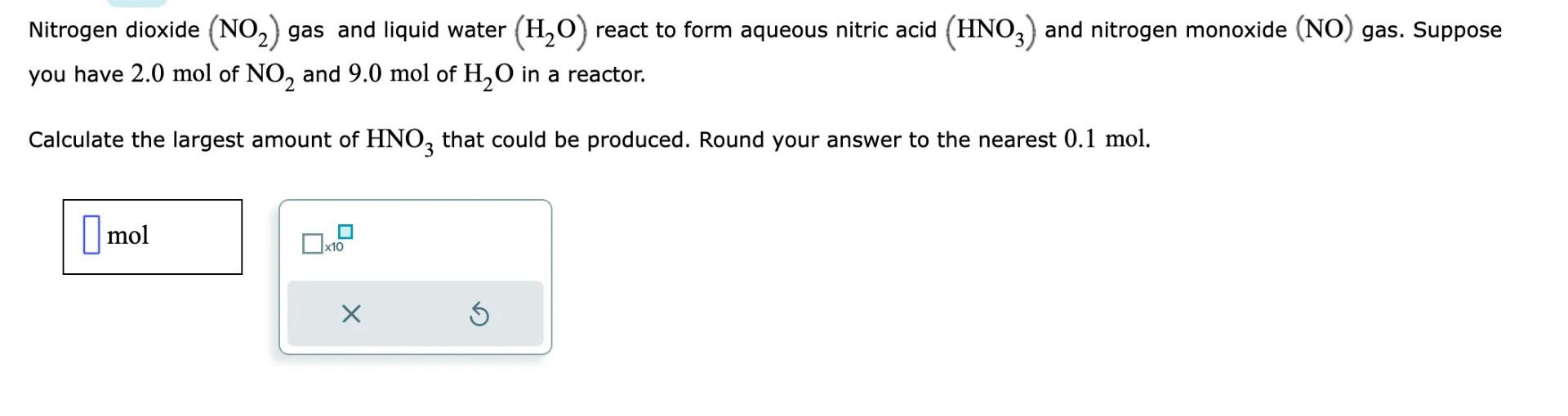
Question: pleaseeeeeee answer this ill give thumbs up Nitrogen dioxide (NO2) gas and liquid water (H2O) react to form aqueous nitric acid (HNO3) and nitrogen monoxide
pleaseeeeeee answer this ill give thumbs up
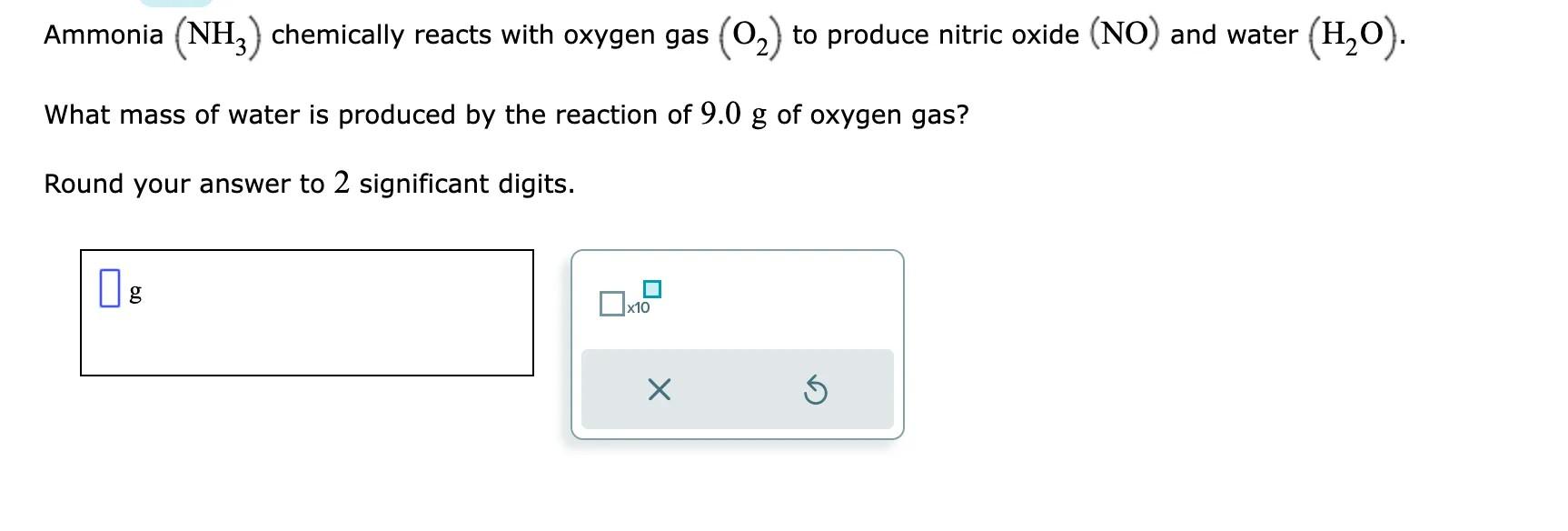
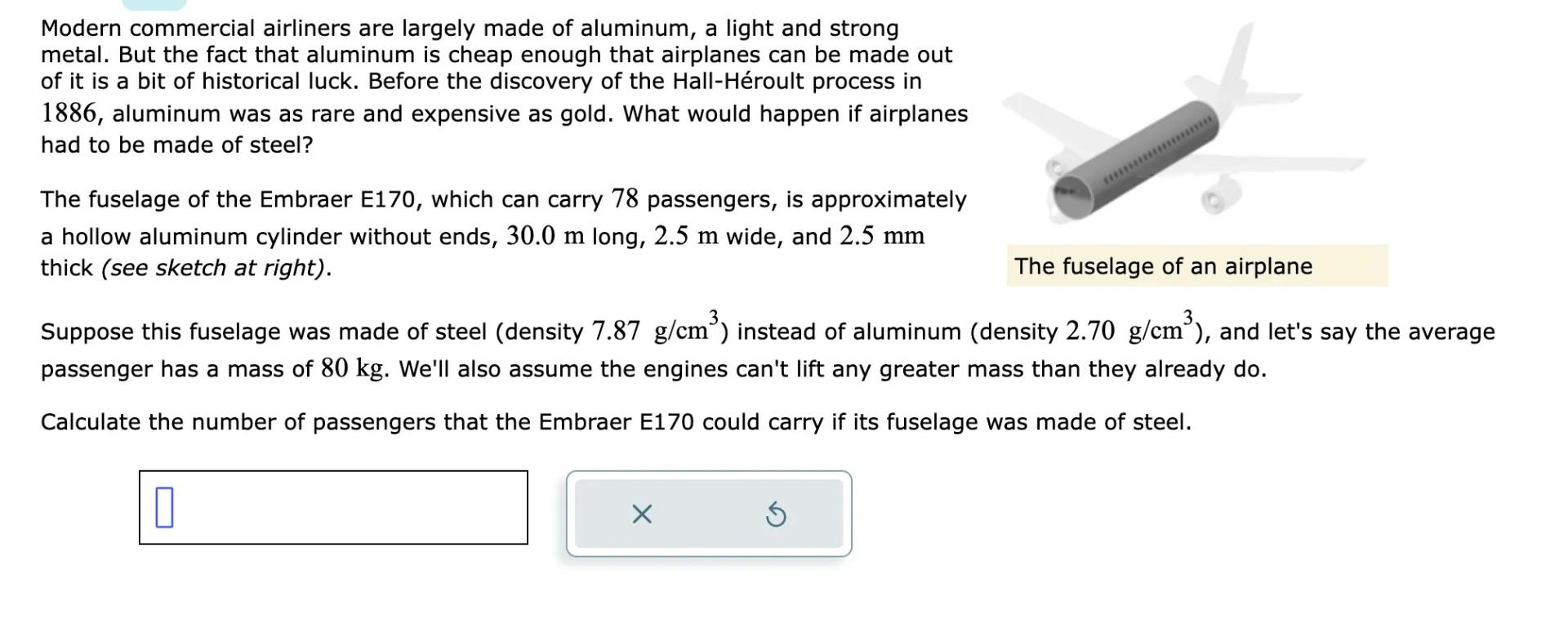
Nitrogen dioxide (NO2) gas and liquid water (H2O) react to form aqueous nitric acid (HNO3) and nitrogen monoxide (NO) gas. Suppose you have 2.0mol of NO2 and 9.0mol of H2O in a reactor. Calculate the largest amount of HNO3 that could be produced. Round your answer to the nearest 0.1mol. Ammonia (NH3) chemically reacts with oxygen gas (O2) to produce nitric oxide (NO) and water (H2O). What mass of water is produced by the reaction of 9.0g of oxygen gas? Round your answer to 2 significant digits. Modern commercial airliners are largely made of aluminum, a light and strong metal. But the fact that aluminum is cheap enough that airplanes can be made out of it is a bit of historical luck. Before the discovery of the Hall-Hroult process in 1886, aluminum was as rare and expensive as gold. What would happen if airplanes had to be made of steel? The fuselage of the Embraer E170, which can carry 78 passengers, is approximately a hollow aluminum cylinder without ends, 30.0m long, 2.5m wide, and 2.5mm thick (see sketch at right). Suppose this fuselage was made of steel (density 7.87g/cm3 ) instead of aluminum (density 2.70g/cm3 ), and let's say the average passenger has a mass of 80kg. We'll also assume the engines can't lift any greater mass than they already do. Calculate the number of passengers that the Embraer E170 could carry if its fuselage was made of steel
Step by Step Solution
There are 3 Steps involved in it

Get step-by-step solutions from verified subject matter experts