







Question: Pls help me to answer them all correctly for an upvote and positive ratings. pls follow the instruction or what is asked. AGAIN: THE PROPOSED
Pls help me to answer them all correctly for an upvote and positive ratings. pls follow the instruction or what is asked.
AGAIN: THE PROPOSED PRODUCTS IS SWEETS AND TREATS (gummies, yemma, tarts, grahams, etc. anything sweets)
REFERENCES ?
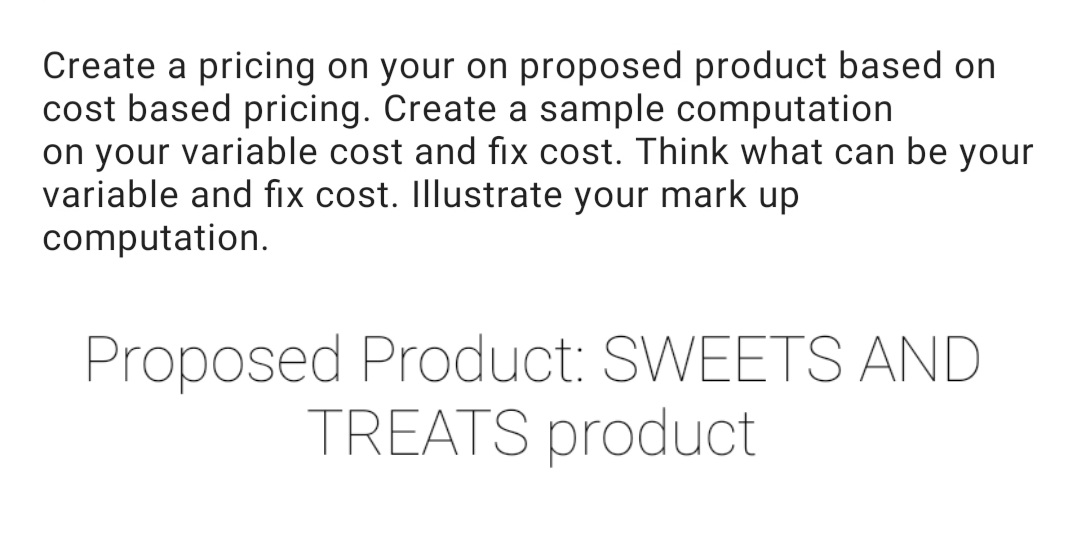
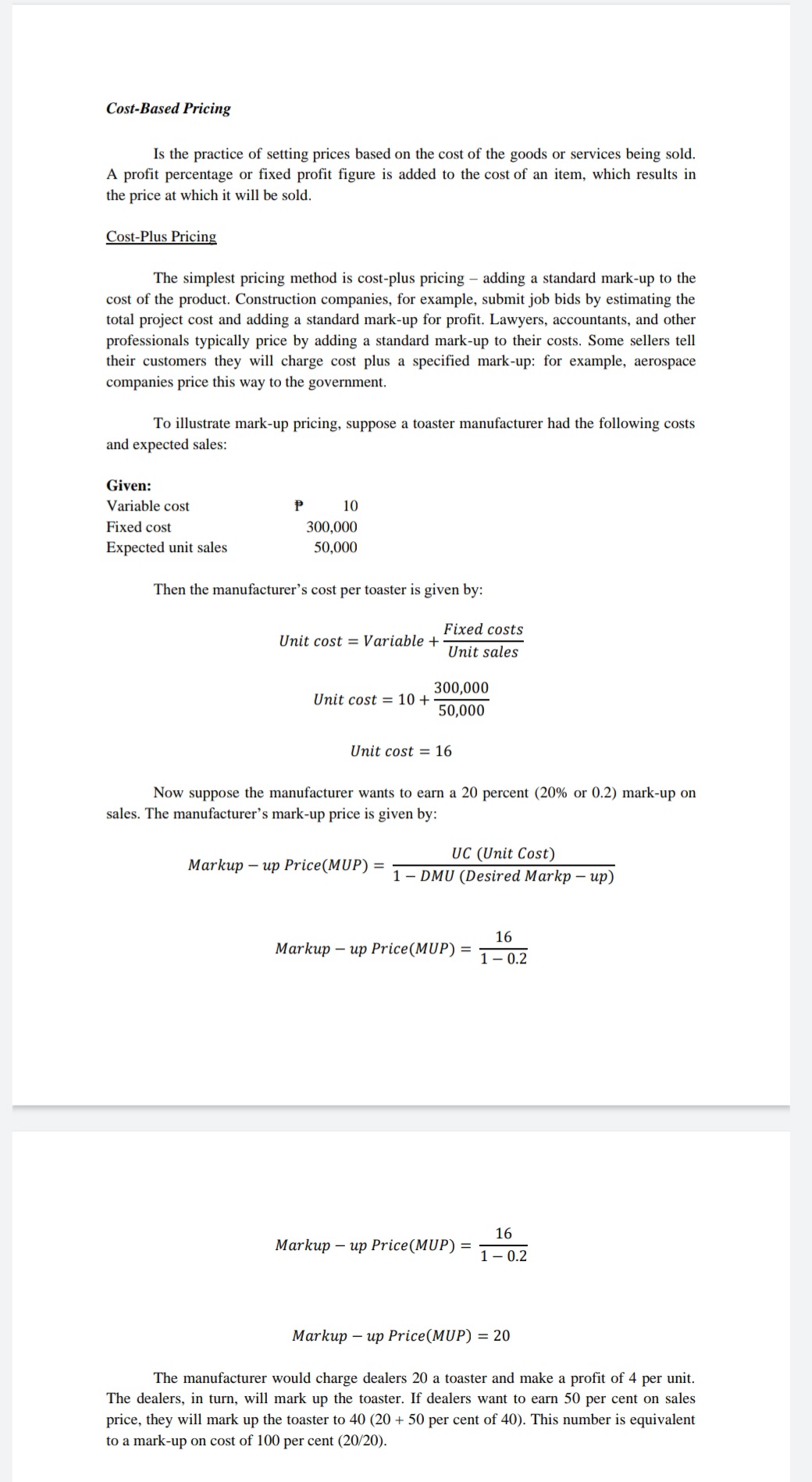
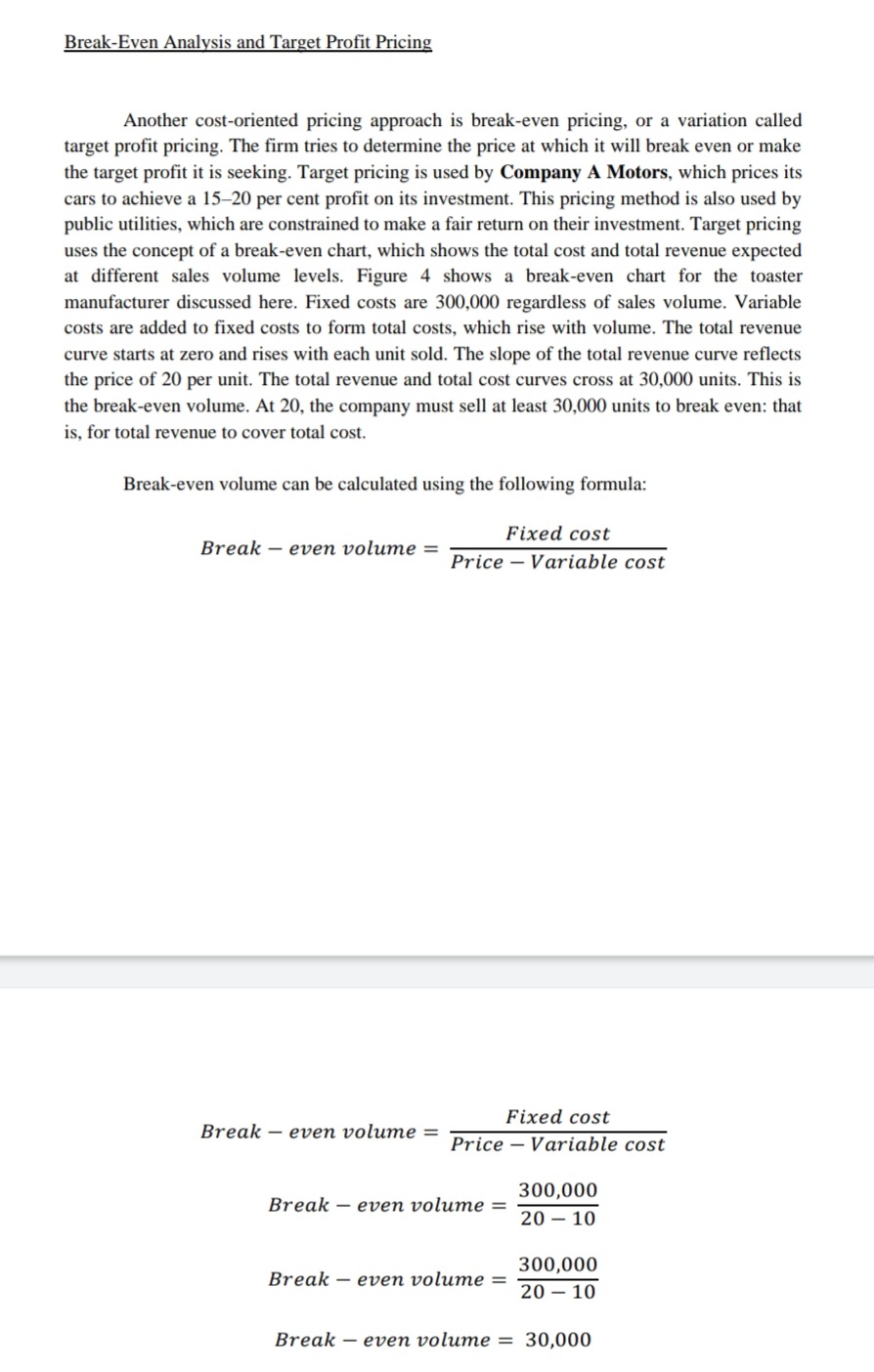
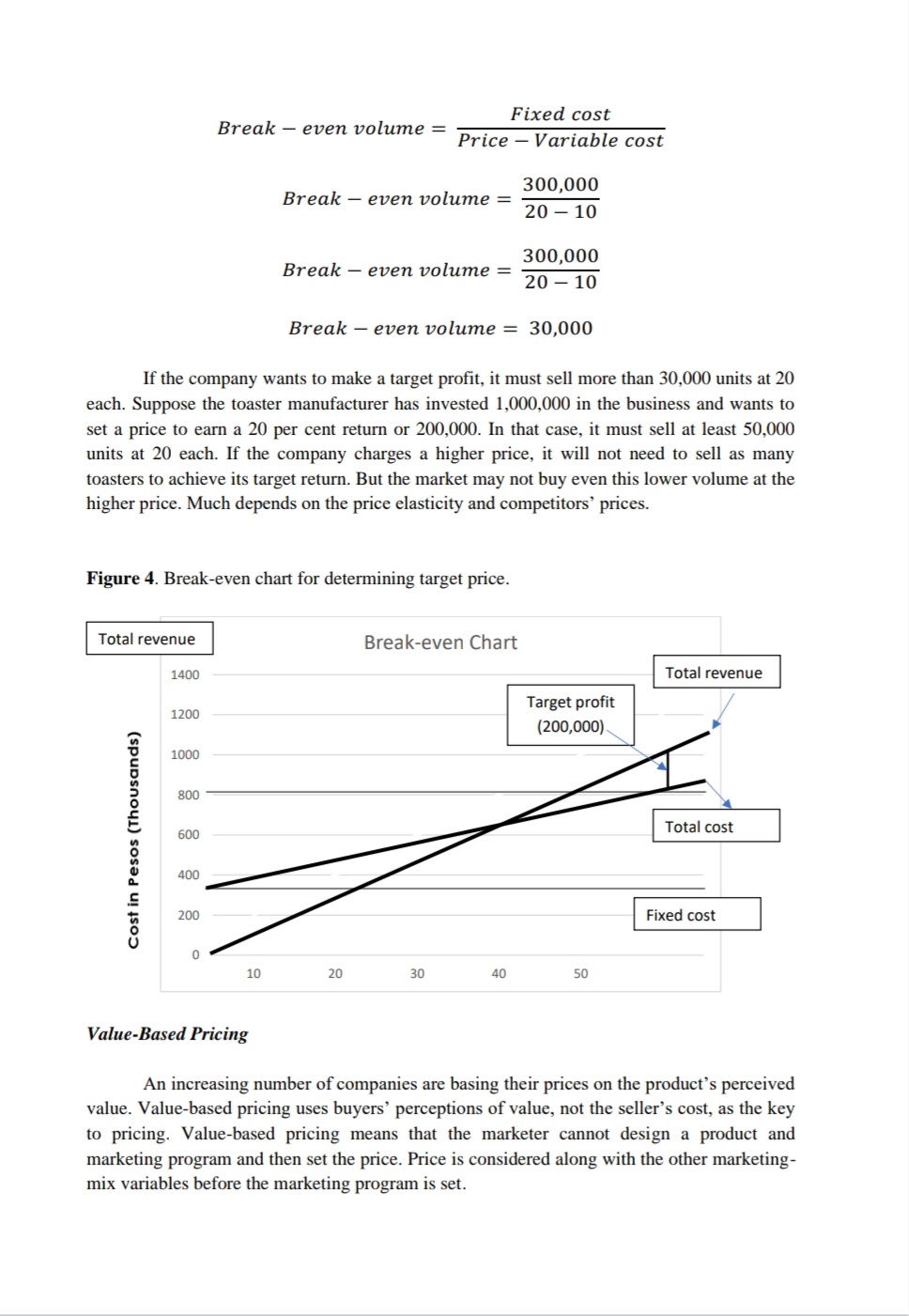
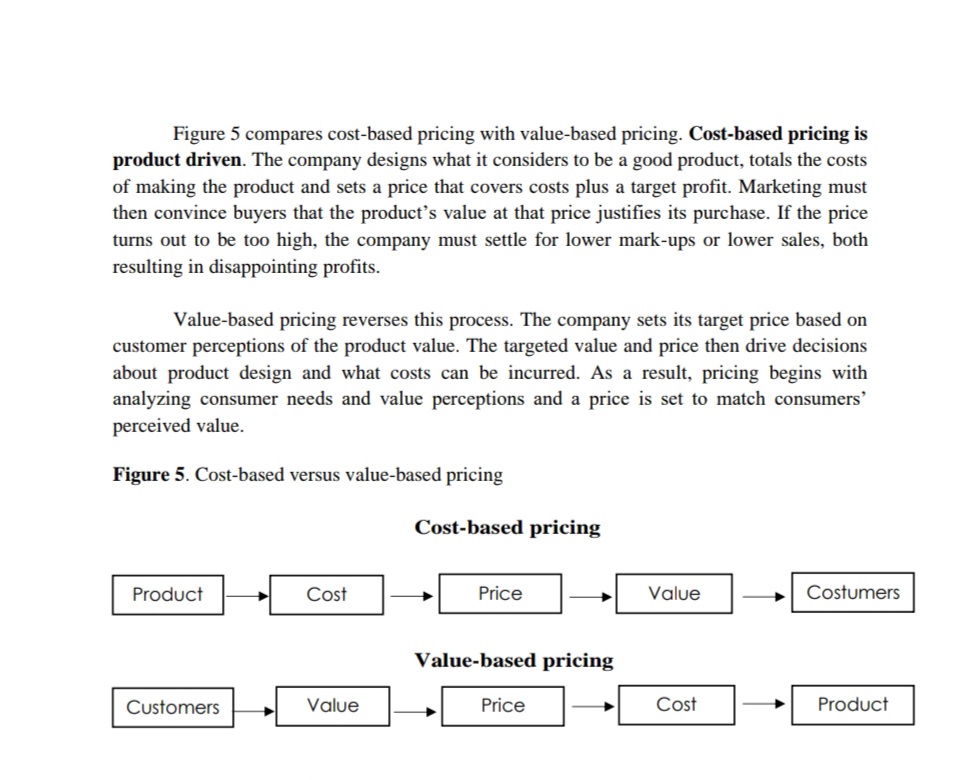
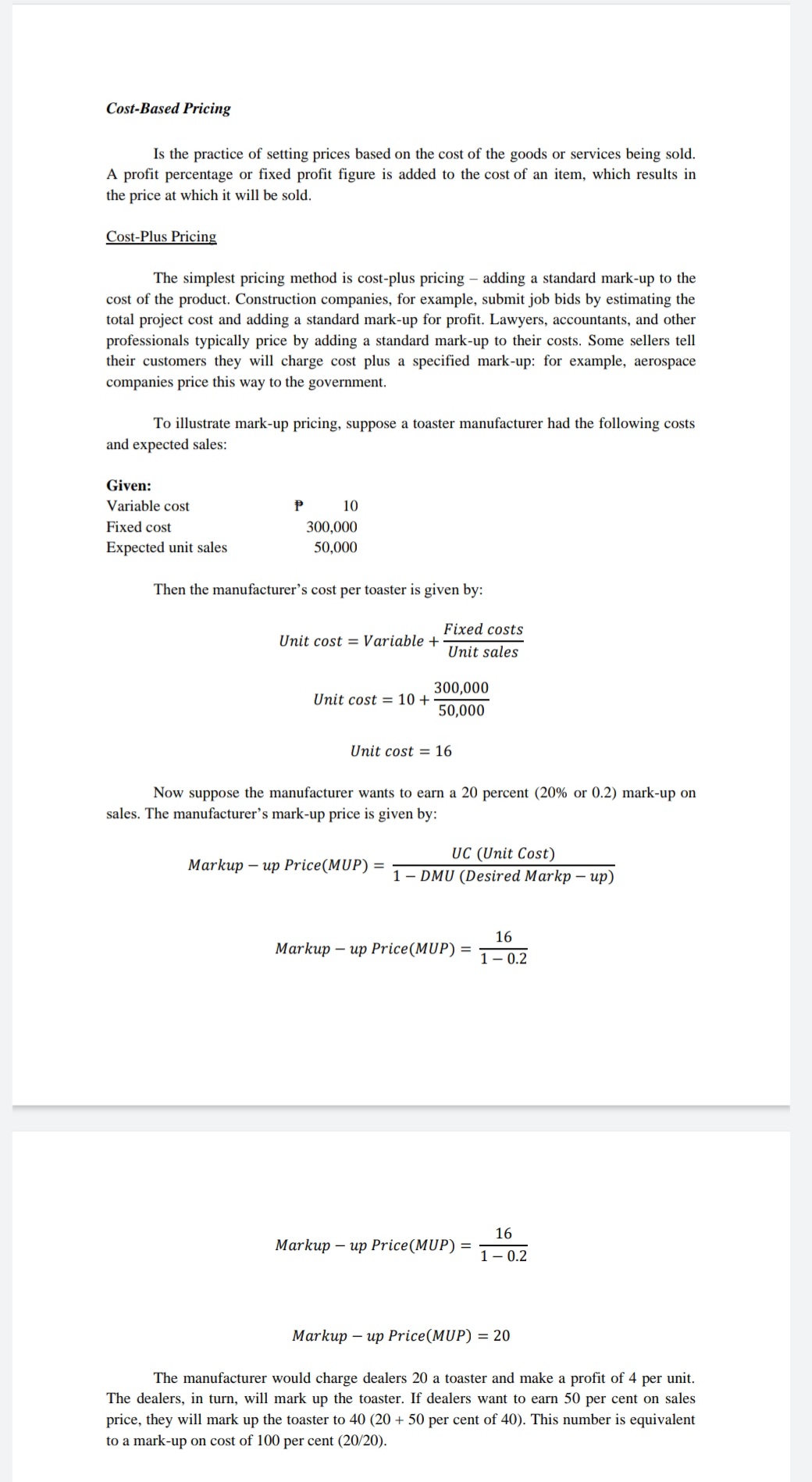
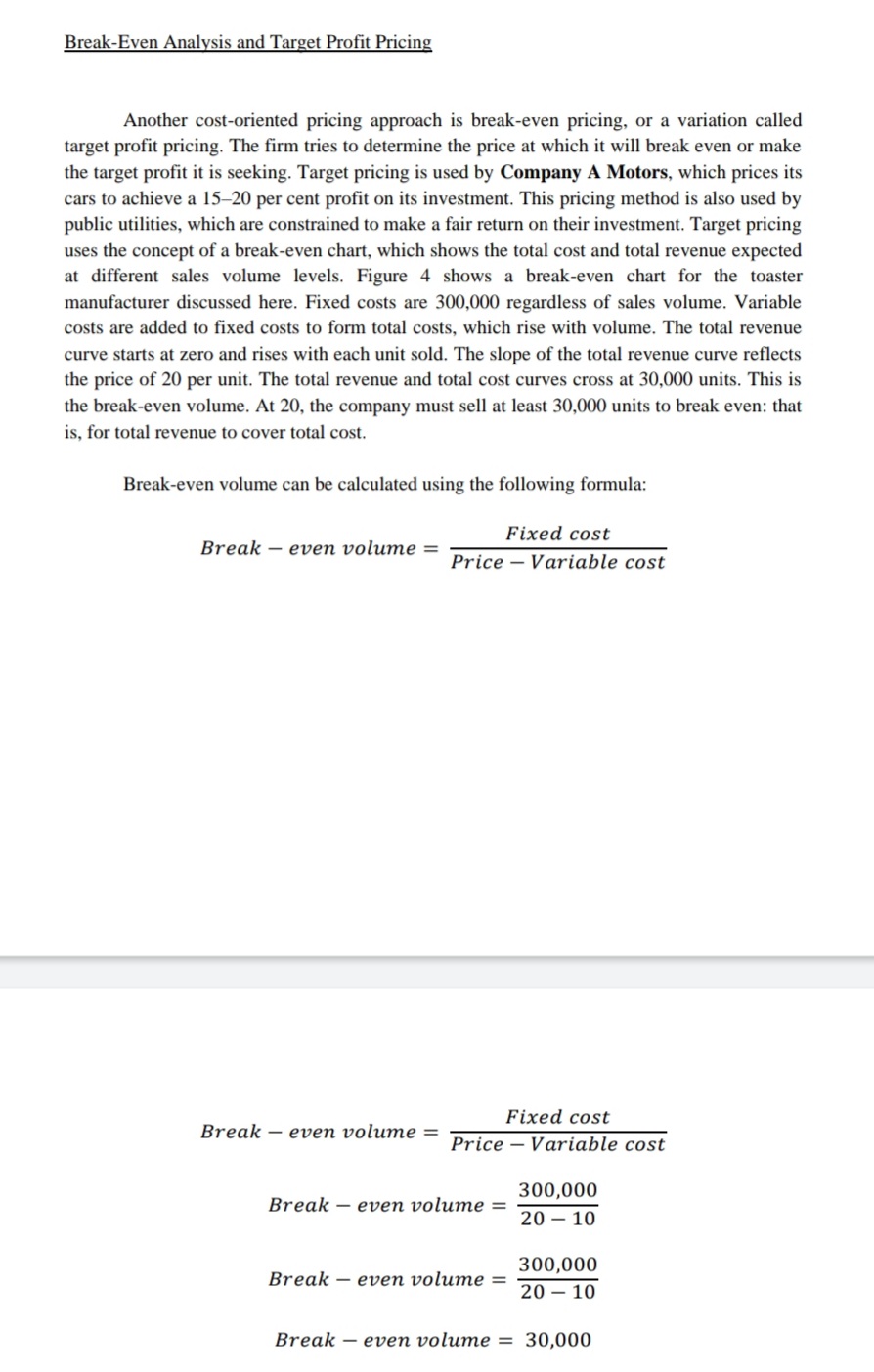
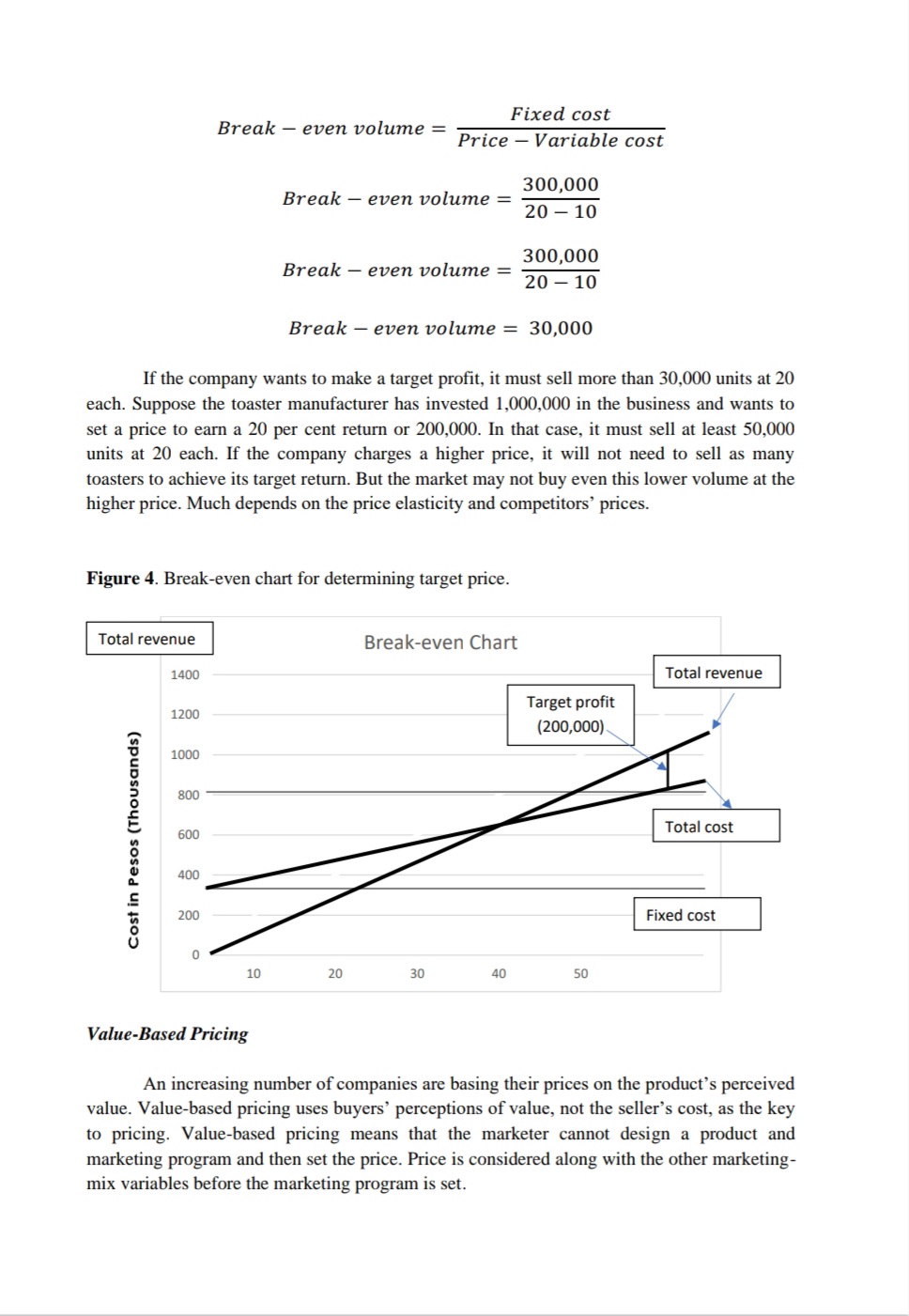
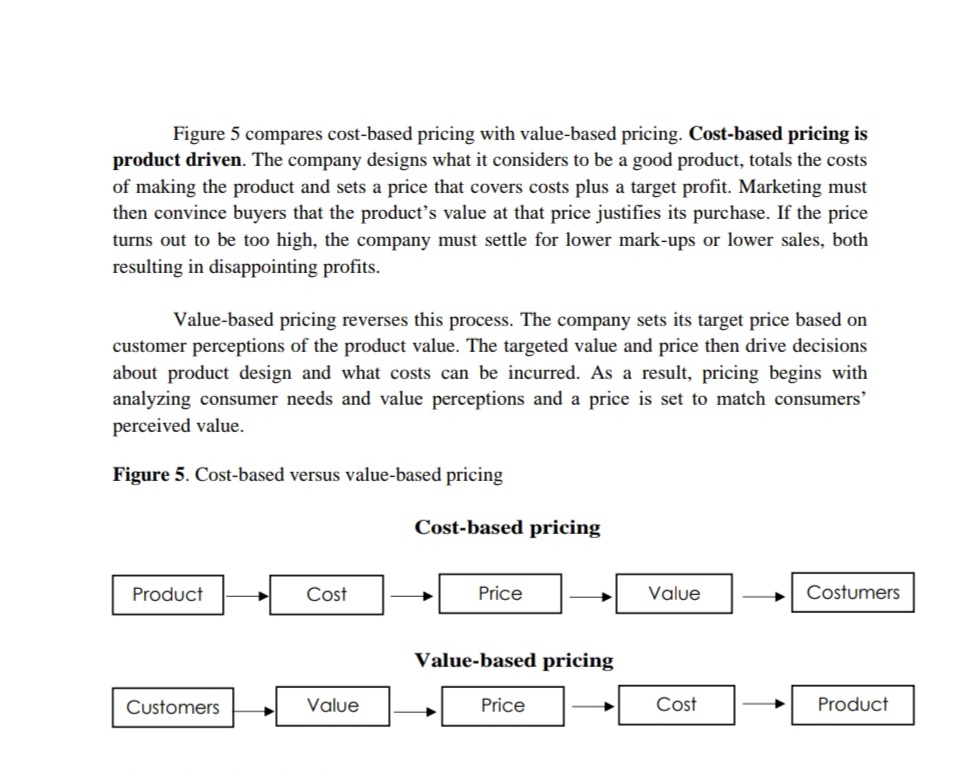
Create a pricing on your on proposed product based on cost based pricing. Create a sample computation on your variable cost and x cost. Think what can be your variable and x cost. Illustrate your mark up computation. Proposed Product: SWEETS AND TREATS product Cost-Based Pricing Is the practice of setting prices based on the cost of the goods or services being sold. A prot percentage or xed prot gure is added to the cost of an item, which results in the price at which it will be sold. Cost-Plus Pricing The simplest pricing method is cost-plus pricing adding a standard mark-up to the cost of the product. Construction companies, for example, submit job bids by estimating the total project cost and adding a standard mark-up for prot. Lawyers, accountants, and other professionals typically price by adding a standard mark-up to their costs. Some sellers tell their customers they will charge cost plus a specied mark-up: for example. aerospace companies price this way to the government. To illustrate mark-up pricing. suppose a toaster manufacturer had the following costs and expected sales: Given: Variable cost 1' 10 Fixed cost 300.000 Expected unit sales 50,000 Then the manufacturer's cost per toaster is given by: Fixed costs Unit cost = Variable + , Unit sates 300,000 Unit cost = 10 + 50.000 Unit cost = 16 Now suppose the manufacturer wants to earn a 20 percent (20% or 0.2) mark-up on sales. The manufacturer's mark-up price is given by: UC (Unit Cost) Markup ' \"p \"\"90\" UP) = 1 - DMU (Desired Markp - up) , 16 Markup up Price(MUP) 1 _ 0.2 M ku P ' MUP - 16 ar 1:: up rtce( ) 1_0_2 Markup up Price(M UP) = 20 The manufacturer would charge dealers 20 a toaster and make a prot of 4 per unit. The dealers, in turn, will mark up the toaster. If dealers want to earn 50 per cent on sales price. they will mark up the toaster to 40 (20 + 50 per cent of 40). This number is equivalent to a mark-up on cost of 100 per cent (20/20). Break-Even Analysis and Target Prot Pricing Another cost-oriented pricing approach is break-even pricing. or a variation called target prot pricing. The film tries to determine the price at which it will break even or make the target prot it is seeking. Target pricing is used by Company A Motors, which prices its cars to achieve a 1520 per cent profit on its investment. This pricing method is also used by public utilities. which are constrained to make a fair return on their investment. Target pricing uses the concept of a break-even chart. which shows the total cost and total revenue expected at different sales volume levels. Figure 4 shows a break-even chart for the toaster manufacturer discussed here. Fixed costs are 300,000 regardless of sales volume. Variable costs are added to fixed costs to form total costs. which rise with volume. The total revenue curve starts at zero and rises with each unit sold. The slope of the total revenue curve reflects the price of 20 per unit. The total revenue and total cost curves cross at 30,000 units. This is the break-even volume. At 20. the company must sell at least 30.000 units to break even: that is. for total revenue to cover total cost. Break-even volume can be calculated using the following formula: Fixed cost Break .. even volume = m Fixed cost Break \" 91'9" \"0mm\" = m 300,000 Break even volume = 300.000 Break even volume = Break even volume = 30,000 Fixed cost: Break even volume = + Prrce Variable cost 300,000 Break even votume 4, 300,000 Break even volume .... Break even volume a 30,000 If the company wants to make a target prot, it must sell more than 30,000 units at 20 each. Suppose the toaster manufacturer has invested l,m,0 in the business and wants to set a price to earn a 20 per cent return or 2m,(KX). In that case, it must sell at least 50,000 units at 20 each. If the company charges a higher price, it will not need to sell as many toasters to achieve its target return. But the market may not buy even this lower volume at the higher price. Much depends on the price elasticity and competitors' prices. Figure 4. Break-even chart for determining target price. Break-even Chart m Target prot [200,000] 1200 1000 Carl in Pesos (Thousands) 1t} 20 30 40 SD Value-Based Pricing An increasing number of companies are basing their prices on the product's perceived value. Valueubased pricing uses buyers' perceptions of value, not the seller's cost, as the key to pricing. Valuehased pricing means that the marketer cannot design a product and marketing program and then set the price. Price is considered along with the other marketing- mix variables before the marketing program is set. Figure 5 compares cost-based pricing with value-based pricing. Cost-based pricing is product driven. The company designs what it considers to be a good product, totals the costs of making the product and sets a price that covers costs plus a target profit. Marketing must then convince buyers that the product's value at that price justifies its purchase. If the price turns out to be too high, the company must settle for lower mark-ups or lower sales, both resulting in disappointing profits. Value-based pricing reverses this process. The company sets its target price based on customer perceptions of the product value. The targeted value and price then drive decisions about product design and what costs can be incurred. As a result, pricing begins with analyzing consumer needs and value perceptions and a price is set to match consumers' perceived value. Figure 5. Cost-based versus value-based pricing Cost-based pricing Product Cost Price Value Costumers Value-based pricing Customers Value Price Cost Product
Step by Step Solution
There are 3 Steps involved in it

Get step-by-step solutions from verified subject matter experts
 Study Help