







Question: Problem 2 2 1 1 1 2 d ( a ) Find VOUT as a function of time, i . e . (
Problem d
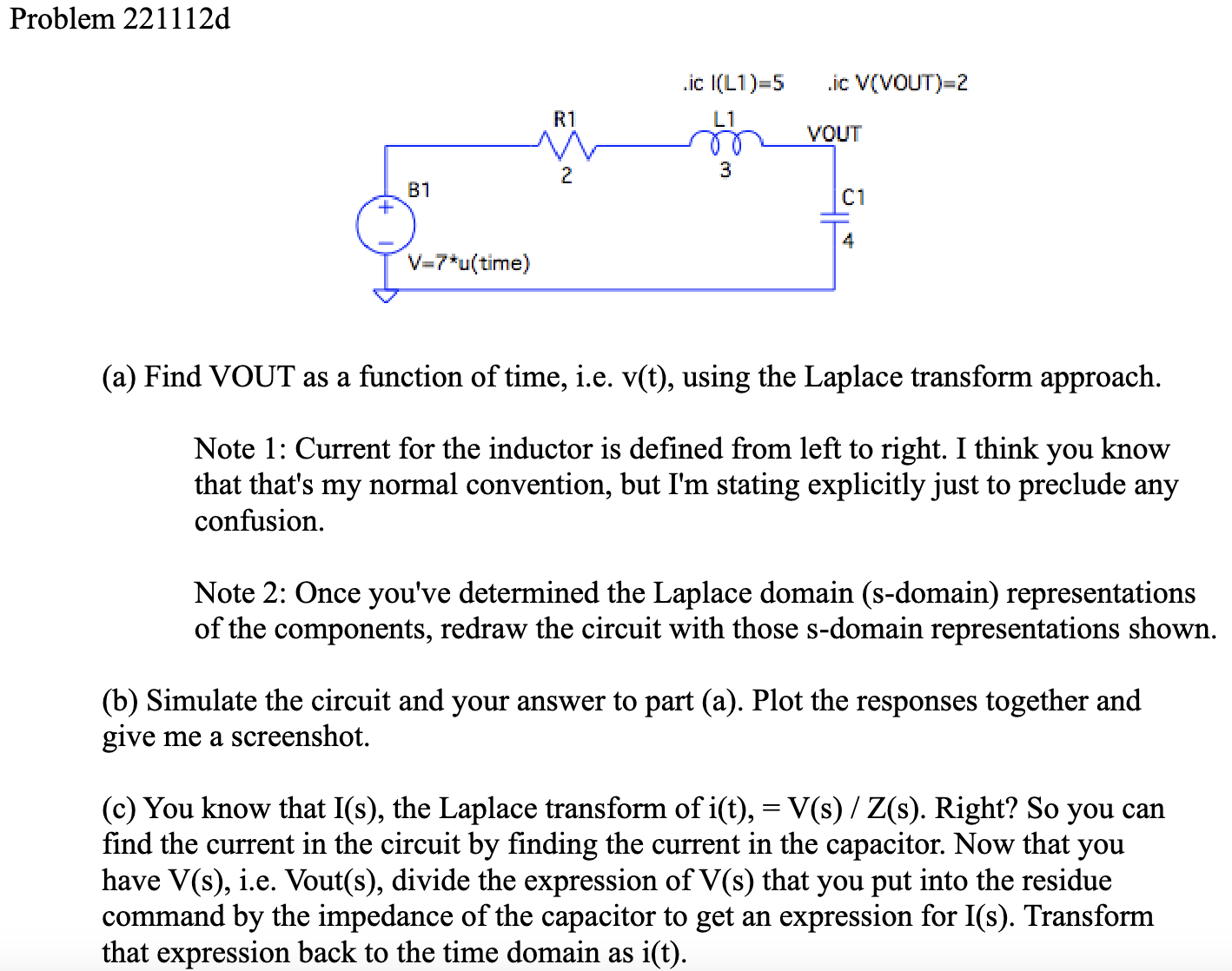
a Find VOUT as a function of time, iemathrmvmathrmt using the Laplace transform approach.
Note : Current for the inductor is defined from left to right. I think you know that that's my normal convention, but Im stating explicitly just to preclude any confusion.
Note : Once you've determined the Laplace domain sdomain representations of the components, redraw the circuit with those sdomain representations shown.
b Simulate the circuit and your answer to part a Plot the responses together and give me a screenshot.
c You know that mathrmImathrms the Laplace transform of mathrmimathrmtmathrmVmathrmsmathrmZmathrms Right? So you can find the current in the circuit by finding the current in the capacitor. Now that you have mathrmVmathrms ie Vouts divide the expression of mathrmVmathrms that you put into the residue command by the impedance of the capacitor to get an expression for Is Transform that expression back to the time domain as it
Step by Step Solution
There are 3 Steps involved in it
1 Expert Approved Answer
Step: 1 Unlock

Question Has Been Solved by an Expert!
Get step-by-step solutions from verified subject matter experts
Step: 2 Unlock
Step: 3 Unlock
 Study Help