







Question: Problem 2. Evaluating Relative Efficiencies of Decision Making Units Data Envelopment Analysis (DEA) is an application of linear programming used to measure the relative efficiency
Problem 2. Evaluating Relative Efficiencies of Decision Making Units
Data Envelopment Analysis (DEA) is an application of linear programming used to measure the relative efficiency of operating units with the same goals and objectives. As explained in the course, DEA can measure the relative efficiency of a group of hospitals. The data seen below involving seven teaching hospitals include three input measures and four output measures.
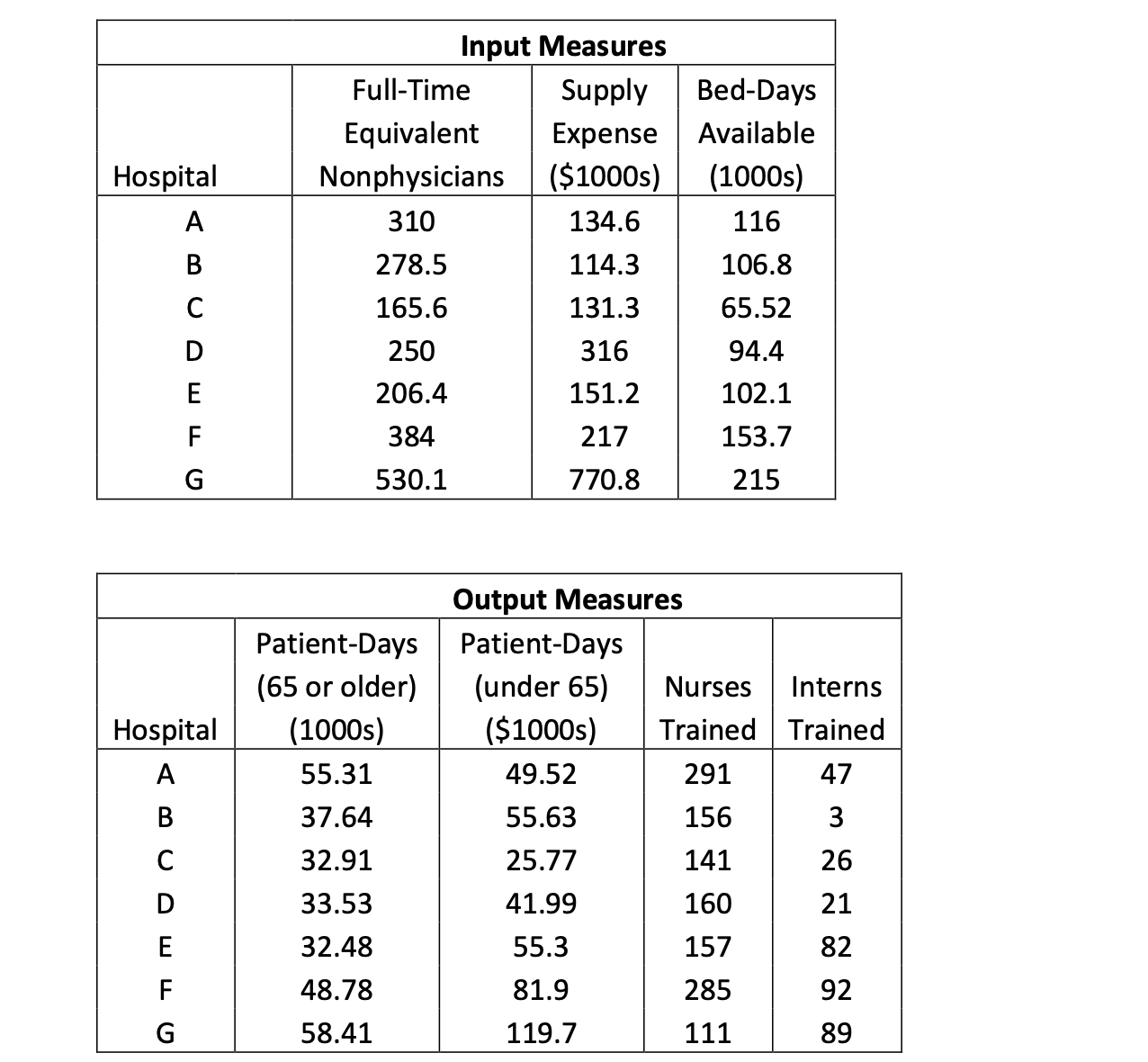
Input Measures Full-Time Supply Bed-Days Equivalent Expense Available Hospital Nonphysicians ($1000s) (1000s) A 310 134.6 116 278.5 114.3 106.8 165.6 131.3 65.52 250 316 94.4 206.4 151.2 102.1 384 217 153.7 530.1 770.8 215 Output Measures Patient-Days Patient-Days (65 or older) (under 65) Nurses Interns Hospital (1000s) ($1000s) Trained Trained 55.31 49.52 291 47 37.64 55.63 156 3 32.91 25.77 141 26 33.53 41.99 160 21 32.48 55.3 157 82 48.78 81.9 285 92 58.41 119.7 111 89
Step by Step Solution
There are 3 Steps involved in it

Get step-by-step solutions from verified subject matter experts
 Study Help