







Question: Problem 4 . 1 . 1 4 When making changes to optimize part of a processor, it is often the case that speeding up one
Problem
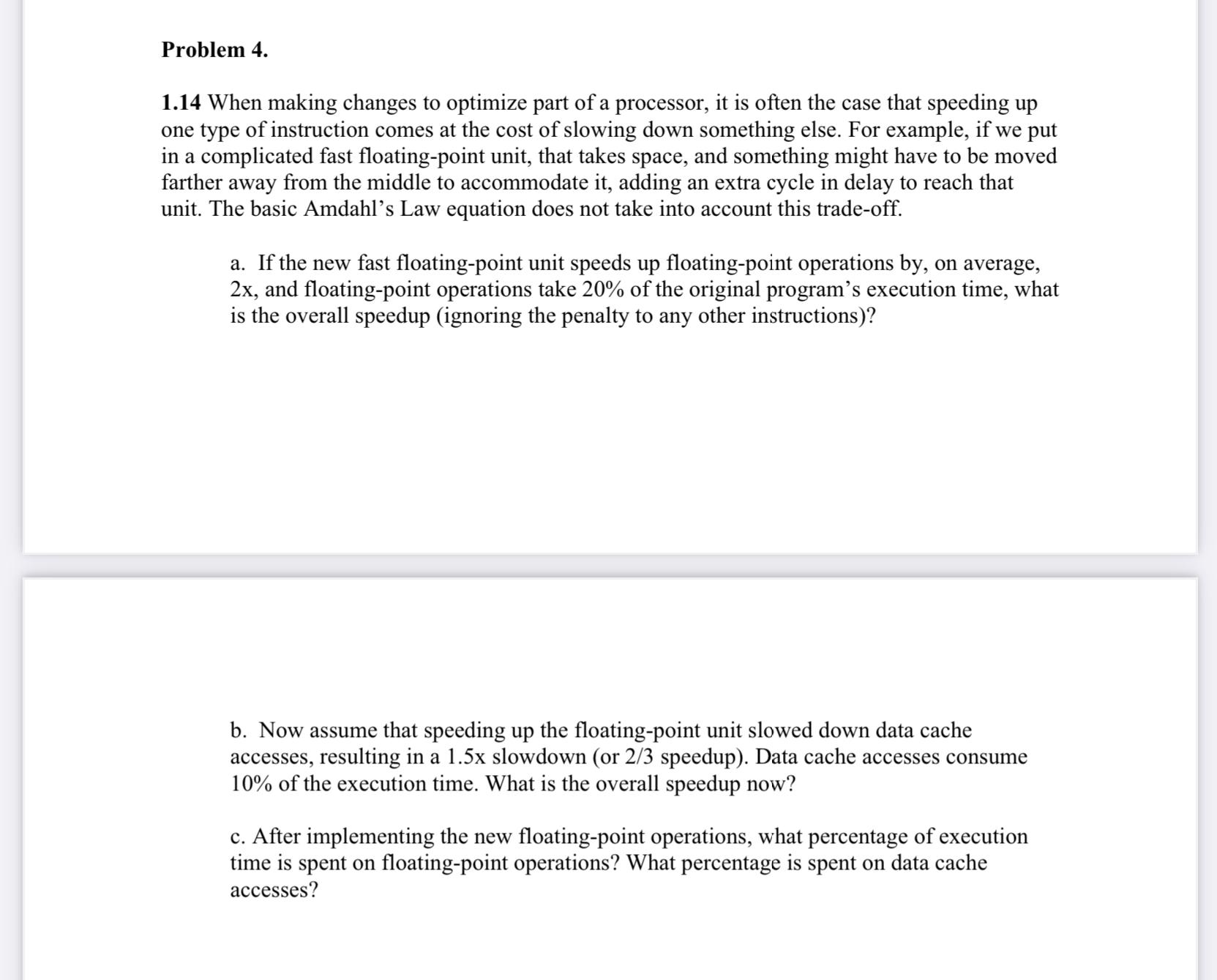
When making changes to optimize part of a processor, it is often the case that speeding up one type of instruction comes at the cost of slowing down something else. For example, if we put in a complicated fast floatingpoint unit, that takes space, and something might have to be moved farther away from the middle to accommodate it adding an extra cycle in delay to reach that unit. The basic Amdahl's Law equation does not take into account this tradeoff.
a If the new fast floatingpoint unit speeds up floatingpoint operations by on average, and floatingpoint operations take of the original program's execution time, what is the overall speedup ignoring the penalty to any other instructions
b Now assume that speeding up the floatingpoint unit slowed down data cache accesses, resulting in a slowdown or speedup Data cache accesses consume of the execution time. What is the overall speedup now?
c After implementing the new floatingpoint operations, what percentage of execution time is spent on floatingpoint operations? What percentage is spent on data cache accesses?
Step by Step Solution
There are 3 Steps involved in it
1 Expert Approved Answer
Step: 1 Unlock

Question Has Been Solved by an Expert!
Get step-by-step solutions from verified subject matter experts
Step: 2 Unlock
Step: 3 Unlock
 Study Help