







Question: Problem statement A hydrogen fuel cell typically uses a semi solid electrolyte to conduct protons ( H + ions ) across the fuel system. This
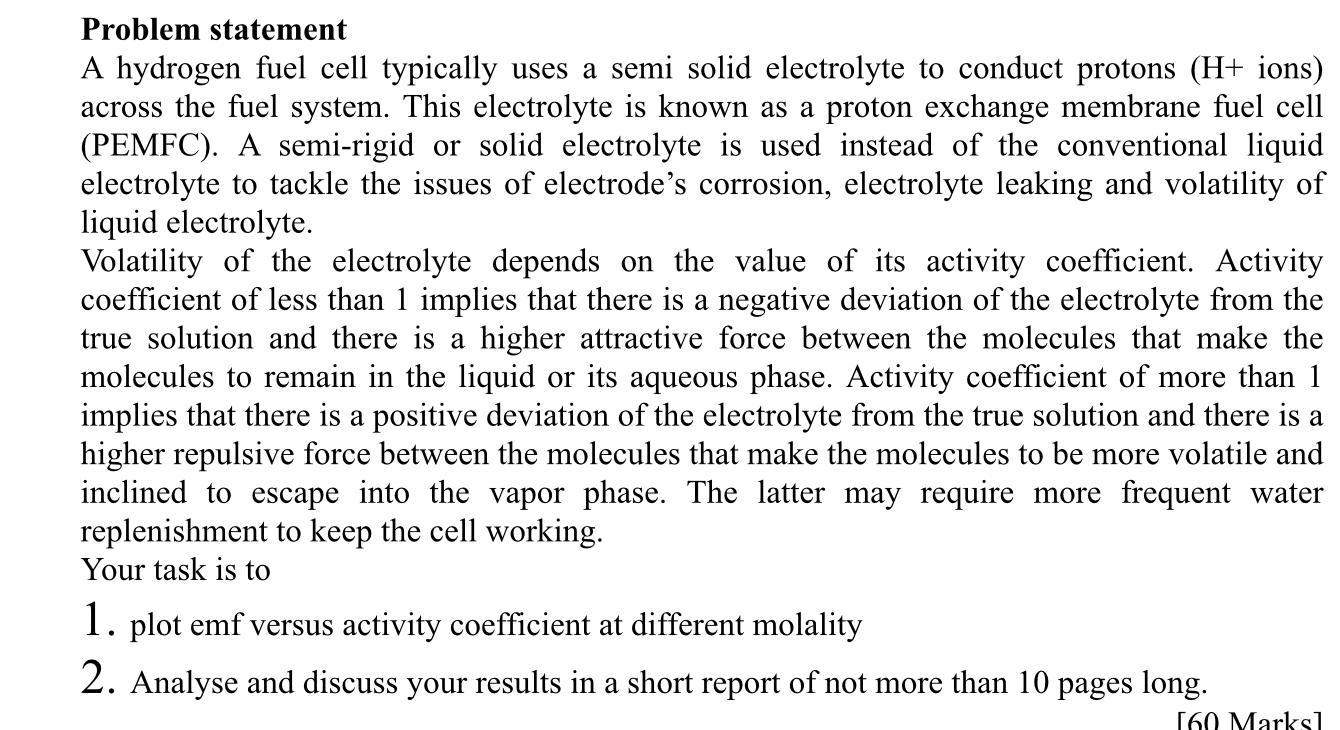
Problem statement
A hydrogen fuel cell typically uses a semi solid electrolyte to conduct protons H ions across the fuel system. This electrolyte is known as a proton exchange membrane fuel cell PEMFC A semirigid or solid electrolyte is used instead of the conventional liquid electrolyte to tackle the issues of electrode's corrosion, electrolyte leaking and volatility of liquid electrolyte.
Volatility of the electrolyte depends on the value of its activity coefficient. Activity coefficient of less than implies that there is a negative deviation of the electrolyte from the true solution and there is a higher attractive force between the molecules that make the molecules to remain in the liquid or its aqueous phase. Activity coefficient of more than implies that there is a positive deviation of the electrolyte from the true solution and there is a higher repulsive force between the molecules that make the molecules to be more volatile and inclined to escape into the vapor phase. The latter may require more frequent water replenishment to keep the cell working.
Your task is to
plot emf versus activity coefficient at different molality
Analyse and discuss your results in a short report of not more than pages long.
Step by Step Solution
There are 3 Steps involved in it
1 Expert Approved Answer
Step: 1 Unlock

Question Has Been Solved by an Expert!
Get step-by-step solutions from verified subject matter experts
Step: 2 Unlock
Step: 3 Unlock
 Study Help